
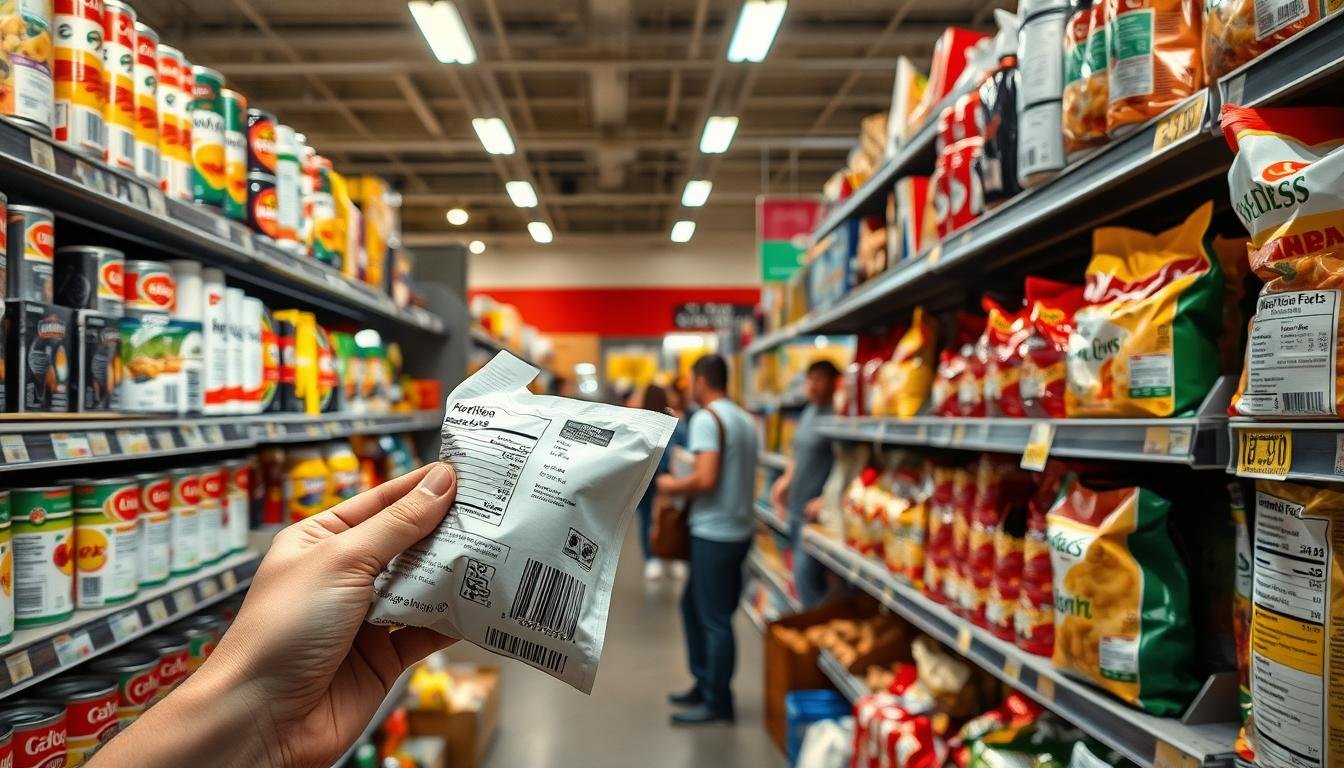
Ever felt lost in a grocery store, unsure which products are healthy? You’re not alone in this feeling.
Shopping for food can be like trying to find your way through a maze. Food makers often hide the truth behind bright packaging and words like “natural” or “low-fat”. These tricks can fool even the most careful shoppers.
I’ve learned how to read food labels to help you stay healthy. In this guide, I’ll teach you how to spot fake promises. You’ll learn to choose foods that really support your health.
Ready to shop smarter? Let’s learn how to read food labels together.
Key Takeaways
- Food manufacturers use marketing tactics to make processed products appear healthier than they actually are
- Learning to read nutrition labels properly empowers you to make better food choices for your health
- Understanding ingredient lists helps you identify hidden sugars, unhealthy fats, and artificial additives
- Grocery shopping becomes less overwhelming when you know what to look for on product packaging
- Developing label-reading skills supports your long-term wellness and nutrition goals
🔍 Understanding the Nutrition Facts Panel
Learning to read nutrition facts can change how you shop for groceries. This label is on every packaged food in America. It gives you key info to make better food choices.
The nutrition facts panel has four main parts. These include serving info, calorie count, nutrient amounts, and percent daily values. Knowing how to read these sections helps you compare products and pick healthy foods.
Reading Serving Sizes and Servings Per Container
The serving size is at the top of every label. It shows how much food you usually eat at once. But, many people miss this important detail.
Serving sizes often don’t match what we really eat. For example, a bag of chips might list one serving as 15 chips. But, you might eat the whole bag, which has four servings. So, you need to multiply the nutritional values by four to get the right info.
The “servings per container” tells you how many servings the whole package has. This info helps you figure out the total nutritional content if you eat the whole package. Always check this before assuming about calories or nutrients.
Interpreting Calories and Daily Values
Calories show the energy from one serving of food. The number is in bold text for easy spotting. Remember, this calorie count is for the listed serving size only.
The percent daily values show how much each nutrient adds to your daily needs. These percentages are based on a 2,000-calorie diet. If you eat more or less, adjust these percentages.
A daily value of 5% or less is low for any nutrient. Values of 20% or higher are high. This simple rule helps you see if a food is good or too much.
Key Nutrients to Focus On
Some nutrients are more important when reading labels. Focus on getting enough dietary fiber, vitamin D, calcium, potassium, and iron. These nutrients are important for your body, and many people don’t get enough.
On the other hand, limit saturated fats, trans fats, added sugars, and sodium. Too much of these can lead to health issues. The daily values help you keep track of your intake.
Protein is on every label, but it doesn’t always have a percent daily value. Most people get enough protein, so the FDA doesn’t require this percentage unless the product makes specific protein claims.
📋 Mastering Ingredient Lists for Healthier Choices
Learning to read ingredient lists turns you into a savvy shopper. These lists show what’s really in packaged foods. This knowledge helps you make better choices for your health.
Knowing how to read labels is key. Ingredient lists have rules that make shopping for healthy foods easier. I’ll show you how to master this skill for better grocery shopping.
The Order of Ingredients Matters
Ingredient lists list items in order of weight. The first ingredient is the biggest part. I focus on the first three ingredients, as they make up most of the product.
Seeing refined flour, sugar, or hydrogenated oils first means the product is less healthy. Products with whole grains, fruits, or vegetables as main ingredients are usually better. This simple rule helps you quickly judge a product’s quality.
Long lists often mean highly processed foods. I avoid products with long lists, as they have many additives and preservatives.
Identifying Whole Foods vs. Processed Components
With practice, you can tell whole foods from processed ones. Whole foods have simple names like “oats,” “chicken,” or “blueberries.” They need little processing and keep their nutrients.
Processed foods have complex names or many components. Names like “modified corn starch,” “natural flavors,” or “sodium benzoate” mean it’s processed. Look for products with more whole foods.
The best choices have ingredients you find at home. If you can’t pronounce an ingredient or wouldn’t use it at home, think twice about buying it.
Spotting Different Names for Sugar and Salt
Manufacturers use many names for sugar and salt, making them hard to spot. Sugar is called high fructose corn syrup, evaporated cane juice, and more. I know over 50 different names for sugar.
Salt is hidden in names like sodium chloride, monosodium glutamate, and sodium citrate. Any ingredient with “sodium” adds salt. Knowing this helps me avoid too much salt.
Seeing many sugar or salt names in a list means there’s a lot. I add up these amounts to understand the product’s sugar and salt. This helps me pick healthier options and cut down on additives for my family.
⚠️ Decoding Food Labels: Hidden Additives and Preservatives
Many hidden additives and preservatives are found in food packages. These can affect your health. Food makers use long chemical names that confuse us. Knowing about these additives helps us make better food choices.
The food industry uses these substances to keep food fresh, look better, and taste better. But, not all additives are safe. Some might harm your health, while others are okay.
Common Artificial Preservatives to Avoid
When I check ingredient lists, I look for certain preservatives to avoid. BHA and BHT are found in many foods. They might be linked to cancer in animal studies.
Sodium benzoate is another one to watch out for, in foods like sodas and fruit juices. It can form benzene, a known cancer-causing substance. Potassium sorbate is safer but can cause allergies in some.
Nitrates and nitrites in processed meats are also a concern. They can turn into harmful compounds in our bodies. I choose “uncured” or “no nitrates added” labels for meats and hot dogs.
Understanding Food Coloring and Flavor Enhancers
Artificial ingredients include colors and flavor enhancers. Red Dye #40, Yellow #5, and Blue #1 are common. They can cause hyperactivity in kids and allergies in some.
Monosodium glutamate (MSG) is another enhancer to watch for. It’s listed as “natural flavoring,” “yeast extract,” or “hydrolyzed protein.” While the FDA says it’s safe, some people get headaches or nausea after eating it.
Artificial flavors are complex mixes of chemicals. They often replace real flavors like vanilla or strawberry. I choose products with natural flavoring instead.
Natural vs. Artificial Additives
The difference between natural and artificial additives isn’t always clear. Natural doesn’t always mean better. For example, natural vanilla extract has alcohol, while artificial vanilla might come from wood pulp.
Natural preservatives like vitamin E and vitamin C are safer than synthetic ones. They offer antioxidant benefits and keep food fresh longer.
But, some natural additives can also cause problems. Carrageenan, from seaweed, might cause digestive issues in some. This shows why we should look at an additive’s safety, not just if it’s natural or artificial.
| Additive Type | Common Examples | Potential Concerns | Healthier Alternatives |
|---|---|---|---|
| Artificial Preservatives | BHA, BHT, Sodium Benzoate | Cancer risk, allergic reactions | Vitamin E, Rosemary Extract |
| Artificial Colors | Red #40, Yellow #5, Blue #1 | Hyperactivity, allergies | Beet juice, Turmeric, Spirulina |
| Flavor Enhancers | MSG, Artificial Flavors | Headaches, sensitivity reactions | Natural spices, Real fruit extracts |
| Synthetic Sweeteners | Aspartame, Sucralose | Digestive issues, headaches | Stevia, Monk fruit, Raw honey |
Choosing wisely about hidden additives takes time and effort. Start by focusing on the most concerning preservatives. Gradually learn more. Remember, occasional use of foods with additives is usually okay. But, reducing your exposure helps your health in the long run.
🥜 Navigating Allergen Information and Warnings
When I shop for groceries, allergen information is key for safe choices. It’s vital for those with food allergies or for shopping for them. Knowing how to read these warnings can prevent serious health issues. The FDA has clear rules for displaying this info, but knowing what to look for is essential.
Food labels have different types of allergen warnings. Some say an allergen is in the product, while others warn of possible contamination. Learning to spot these warnings helps you make safe food choices.
FDA-Required Allergen Declarations
The FDA requires labels to list eight major allergens. These are milk, eggs, fish, shellfish, tree nuts, peanuts, wheat, and soybeans. You’ll find this in a “Contains” statement after the ingredient list.
This statement is clear and easy to understand. Labels use common names like “milk” instead of “casein.” So, seeing “Contains: Milk, Wheat” means these allergens are in the product.
Some labels also highlight allergens in bold or capital letters. This makes it easier to spot important food allergies info quickly.
Cross-Contamination Warnings
Cross-contamination occurs when allergens from one product get into another during making. Factories often use the same equipment for different products, posing risks for those with severe allergies.
These warnings say things like “Manufactured in a facility that also processes nuts.” While not required, many companies include them to protect consumers and avoid legal issues.
The risk level varies by the manufacturing process. Some facilities clean well between products, while others may have higher risks. If unsure, I contact the manufacturer for more details.
Understanding “May Contain” Statements
“May contain” statements are warnings about possible allergen presence. They might say “May contain traces of peanuts” or “Produced in a facility that processes soy.”
The problem with these statements is they don’t show the actual risk level. Some products have little chance of contamination, while others may have higher risks. For those with severe food allergies, these warnings often mean avoiding the product.
| Warning Type | Meaning | Risk Level | Decision Guide |
|---|---|---|---|
| Contains Statement | Allergen is an ingredient | Definite presence | Avoid completely |
| May Contain | Possible contamination | Unknown level | Consider severity of allergy |
| Facility Warning | Shared manufacturing space | Low to moderate | Assess individual tolerance |
| Equipment Warning | Shared processing equipment | Moderate | Use caution, contact manufacturer |
Remember, these statements help you make informed choices. But they’re not perfect. When dealing with serious allergies, I always choose products with clear labels.
✅ Evaluating Health Claims and Marketing Language
Smart shoppers know that flashy health claims on food packaging can be more about marketing than actual nutrition. The front of packages often creates a “halo effect” that makes even unhealthy products seem better for you. Food companies spend millions crafting messages that catch your eye and influence your buying decisions.
The key is understanding which claims have real meaning and which ones are just clever wordplay. Some health claims are backed by science and regulated by the FDA. Others are simply marketing tactics designed to make products more appealing.
FDA-Regulated vs. Marketing Claims
The FDA strictly controls certain health claims that appear on food labels. These regulated claims must have scientific evidence to support them. For example, when a product says “may reduce the risk of heart disease,” that statement has been reviewed and approved.
Marketing claims, on the other hand, face much less oversight. Terms like “superfood,” “immune-boosting,” or “detoxifying” sound impressive but have no legal definition. Companies can use these buzzwords freely without proving their benefits.
I always look for specific, measurable claims. A product that states “contains 3 grams of fiber per serving” gives me concrete information. One that simply says “supports digestive health” tells me very little.
Understanding “Natural,” “Healthy,” and “Low-Fat” Labels
These common food marketing terms can be surprisingly misleading. “Natural” has no standardized definition for most foods. A product can contain artificial flavors, preservatives, and highly processed ingredients while claiming to be natural.
“Healthy” is another tricky term. The FDA has specific requirements for this claim, but many products use it loosely. A “healthy” snack might be high in sugar or sodium. I’ve seen cookies labeled as healthy simply because they contain some whole grains.
“Low-fat” products often add extra sugar or sodium for flavor. These items might have fewer calories from fat, but they’re not necessarily better for you overall. I always check the full nutrition panel, not just the front-package claims.
Spotting Misleading Health Promises
Some of the most misleading health promises use scientific-sounding language without real substance. Terms like “clinically proven” or “doctor recommended” might refer to tiny studies or surveys with questionable methodology.
I’m wary of products that claim to cure or prevent diseases. The FDA prohibits these types of medical claims on food products. If a breakfast cereal promises to “boost your immune system” or “fight inflammation,” that’s a red flag.
Watch out for these common misleading tactics:
- Using health buzzwords without scientific backing
- Highlighting one positive ingredient while ignoring negative ones
- Making vague promises about energy, mood, or wellness
- Comparing to obviously unhealthy alternatives
| Claim Type | FDA Regulation Level | What It Really Means | Red Flags to Watch |
|---|---|---|---|
| Heart Health Claims | Strictly Regulated | Scientific evidence required | Vague wording without specifics |
| Natural | Minimal Oversight | No artificial flavors or colors | Highly processed ingredients are allowed |
| Low-Fat | Defined Standards | 3 grams or less per serving | Often higher in sugar or sodium |
| Superfood | No Regulation | Marketing term only | No legal definition or requirements |
The most effective approach I’ve found is to ignore front-package marketing claims entirely. Instead, I focus on the nutrition facts panel and ingredient list. These sections give me the real story about what I’m buying.
Remember that healthy eating comes from your overall diet pattern, not from individual “superfoods” or products with impressive marketing claims. A balanced approach based on whole foods will always beat relying on processed products with health halos.
🌱 Understanding Organic and GMO Labeling
Understanding organic and GMO labels can be tough. But knowing what they mean helps you choose better food. These labels show how food is made and what’s in it.
Many people buy organic without knowing what it means. GMO labels also confuse some folks about their importance.
Let’s dive into these labels so you can shop smart. This way, you can pick foods that fit your health and values.
USDA Organic Certification Standards
The USDA organic seal is a top food certification in the U.S. It means the product meets strict rules.
Organic farming avoids synthetic chemicals and GMOs. It also bans antibiotics and growth hormones.
When shopping, look for these organic labels:
- “100% Organic” – Only organic ingredients
- “Organic” – At least 95% organic
- “Made with Organic” – At least 70% organic
“Organic agriculture is a production system that sustains the health of soils, ecosystems and people.”
GMO Labeling Requirements
In 2022, GMO labeling rules changed in the U.S. Now, foods with GMOs must clearly say so.
GMO labels come in different forms. You might see text, a bioengineered symbol, or a QR code.
These rules apply to foods with more than 5% GMOs. Common GMO crops include corn and soybeans.
Non-GMO Project Verification
The Non-GMO Project Verified seal is more than GMO laws. It’s a third-party check.
This seal means products have less than 0.9% GMOs. It also checks for non-GMO ingredients in high-risk foods.
This label is great for processed foods. It shows ongoing testing and checks on where ingredients come from.
These labels help me choose between similar products. They show me the difference in how food is made and what’s in it.
📏 Mastering Serving Sizes and Portion Control
Learning about serving sizes is key to making smart food choices. Many people get confused by nutrition labels because the numbers don’t match what they eat. This is because food companies often use small serving sizes to make their products seem healthier.
Knowing how to read and understand nutritional content helps you shop better. It also aids in planning meals and controlling portions.
Realistic vs. Listed Serving Sizes
The serving sizes on food packages are often not what we actually eat. For example, a cookie might be half a serving, a muffin a quarter, or just two crackers. These small portions make the calories and sugar seem lower than they really are.
Here are some examples of serving sizes that are not realistic:
- Soda bottles list 2.5 servings per container
- Ice cream containers say 4 servings in a pint
- Cereal boxes show 3/4 cup as one serving
- Granola bars are split into half-bar servings
Most of us eat more than what’s listed. This means we consume more calories, sugar, and sodium than the label says.
Calculating Actual Nutritional Content
It’s helpful to learn simple math to figure out the real nutritional content of what you eat. If you plan to eat the whole package, multiply all the nutrition facts by the number of servings listed.
For example, if a bag of chips has 2.5 servings and you eat the whole bag:
- Take the calories per serving (150)
- Multiply by total servings (2.5)
- Your actual intake is 375 calories
This method works for sugar, sodium, and fat too. Many apps can help with these calculations while you shop.
The key to successful portion control is knowing exactly what you’re consuming, not what the package wants you to think you’re consuming.
Using Serving Sizes for Meal Planning
Understanding real serving sizes helps with meal planning and portion control. I suggest measuring out actual serving sizes at home to see what they look like on your plate.
This practice helps you:
- Plan balanced meals with the right portions
- Budget calories throughout your day
- Compare products more accurately
- Control your food costs better
Remember, the serving size on the label is just a guide. You can choose to eat more or less based on your needs and health goals.
📅 Deciphering Expiration Dates and Freshness Indicators
Many people get confused by the dates on food, leading to a lot of waste. This confusion costs families a lot of money. Learning to understand these labels can help you save money and reduce waste.
Most people don’t know that expiration dates don’t always mean food is unsafe. These dates usually show when the food might not taste as good anymore. Knowing this can change how you shop and store food.
Best By vs. Use By vs. Sell By Dates
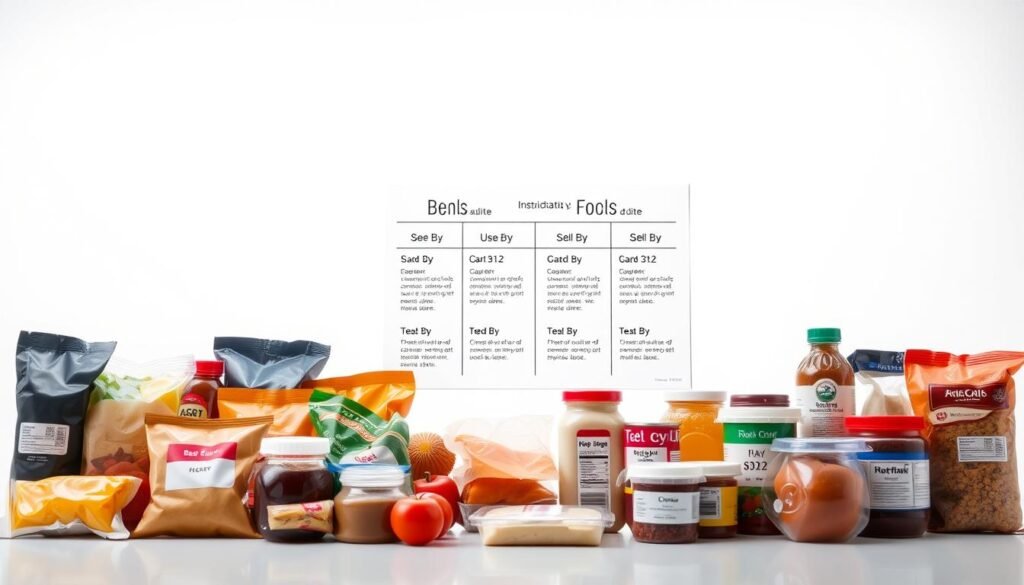
Each date has a different meaning. “Best By” dates tell you when food tastes best, not when it’s bad. You can safely eat these items long after the date.
“Use By” dates are more about quality, like for dairy and meat. But, these dates also have safety margins. “Sell By” dates help stores manage stock and aren’t for you to worry about.
Quality and safety have different timelines. A cereal might lose crispness after its “Best By” date, but it’s safe. I always check food’s condition, not just the date.
Food Safety and Quality Indicators
Your senses are better at checking food safety than most dates. I use sight, smell, and touch to see if food is bad. Fresh produce shows signs of spoilage like color changes or smells.
Canned goods are safe for years if the cans are okay. Look for damage like rust or bulges. Dry goods like pasta and cereals stay good forever if stored right, but might lose some nutrients.
Dairy needs care, but milk is often good for days after its date if kept cold. I smell it and check for odd thickness before throwing it away.
Storage Instructions and Shelf Life
Storing food right can make it last longer than the date says. I keep food in the right temperature and humidity. This keeps it fresh longer.
Pantry items need a cool, dry place away from sunlight. I put opened packages in airtight containers to keep them fresh. This simple step can make many foods last longer.
| Food Category | Typical Shelf Life Beyond Date | Storage Requirements | Safety Indicators |
|---|---|---|---|
| Canned Goods | 2-5 years | Cool, dry pantry | No rust, dents, or bulging |
| Dry Pasta/Rice | 1-3 years | Airtight containers | No insects or unusual odors |
| Dairy Products | 3-7 days | Refrigerate below 40°F | Normal smell and texture |
| Frozen Foods | 3-12 months | Freezer at 0°F | No freezer burn or ice crystals |
Understanding these tips helps me make better choices about food safety and waste. Most foods are safe to eat long after their dates if stored right and look good.
🛒 Practical Shopping Strategies Using Label Knowledge
Understanding food labels is powerful when I use it to make better choices at the grocery store. I’ve learned the basics of reading labels, and now I need strategies that work in real-life shopping. These tips help me pick healthier options while keeping my budget in check.
Before I go shopping, I do my homework. I look up products online and plan my shopping route. This saves time and helps me avoid buying things I don’t need.
Creating a Smart Shopping List
My shopping list is a key tool when I organize it well. I split it into sections like produce, dairy, and meat. This makes shopping faster and more efficient.
For each item, I write down what I’m looking for. Instead of just “cereal,” I look for “whole grain cereal with less than 6g sugar.” This helps me make quick choices when I see many options.
I start with whole foods that don’t need a lot of label reading. Fresh fruits, veggies, lean meats, and plain dairy are my base. They’re usually the healthiest without added extras.
For packaged foods, I research brands before shopping. I find three good options for each item, ranked by nutrition. This saves time in the store.
Comparing Similar Products Effectively
When comparing similar products, I follow a clear plan. I start with the nutrition facts to ensure I’m comparing the same sizes. Many products use different sizes to look better.
I prioritize certain factors when comparing. I check calories first, then nutrients like fiber, protein, and sodium. I ignore marketing claims and focus on the facts.
| Comparison Factor | Priority Level | What to Look For | Red Flags |
|---|---|---|---|
| Serving Size | High | Realistic portions | Unusually small servings |
| Added Sugars | High | Less than 6g per serving | Multiple sugar sources |
| Sodium Content | High | Under 600mg per serving | Over 20% daily value |
| Fiber Content | Medium | At least 3g per serving | Less than 1g per serving |
| Ingredient List | Medium | Recognizable ingredients | Long chemical names |
I use my phone to compare prices when shopping. Sometimes, the healthier option is only a little more expensive. I also take photos of labels to check them later.
Budget-Friendly Healthy Choices
Healthy choices don’t have to cost more if I shop smart. I focus on foods that are rich in nutrients but not expensive. Dried beans, lentils, oats, and seasonal produce are great values.
Store brands are often just as good as name brands but cheaper. I compare their ingredients and nutrition facts. Usually, the differences are small, but the savings are big.
I buy healthy staples when they’re on sale. Canned tomatoes, frozen veggies, and whole grain pasta often go on sale. I stock up when prices drop.
Shopping for seasonal produce helps me save money and keep my diet interesting. I plan meals around what’s in season and on sale. This way, I get fresh, nutritious food at the best prices.
I compare the cost per serving of different proteins to find the best deals. Chicken thighs, eggs, and canned fish are often cheaper than meat. These alternatives help me get enough protein without spending too much.
Generic or store-brand frozen veggies are just as nutritious as name brands but much cheaper. I fill my freezer with these versatile ingredients. They’re great in many recipes and often have more nutrients than fresh produce that’s traveled far.
By using my label-reading skills and these shopping strategies, I make healthy choices that fit my budget. Preparation, focus, and knowing that good nutrition doesn’t have to be expensive are key.
🎯 Conclusion
Mastering food label knowledge changes how you shop for groceries. The skills you’ve learned will help your whole family eat better.
Begin with small steps. Try one or two new label-reading skills on your next shopping trip. Start with ingredient lists, then move to nutrition panels. Each trip will make you more confident.
Small changes lead to big improvements. Knowing what’s in your food and where it comes from helps you make better choices. Your family will see the difference in your meals and health.
Practice makes it easier. The more you read labels, the quicker you’ll find healthy foods and avoid bad ones. Soon, shopping for healthy food will feel natural.
Want to improve your wellness even more? Check out www.healthyvibeslife.com for more nutrition tips. Subscribe to our newsletter for health advice, travel deals, and fitness product recommendations.
Your journey to better nutrition begins with the knowledge you now have. Use it well, and watch your health improve with each shopping trip.