

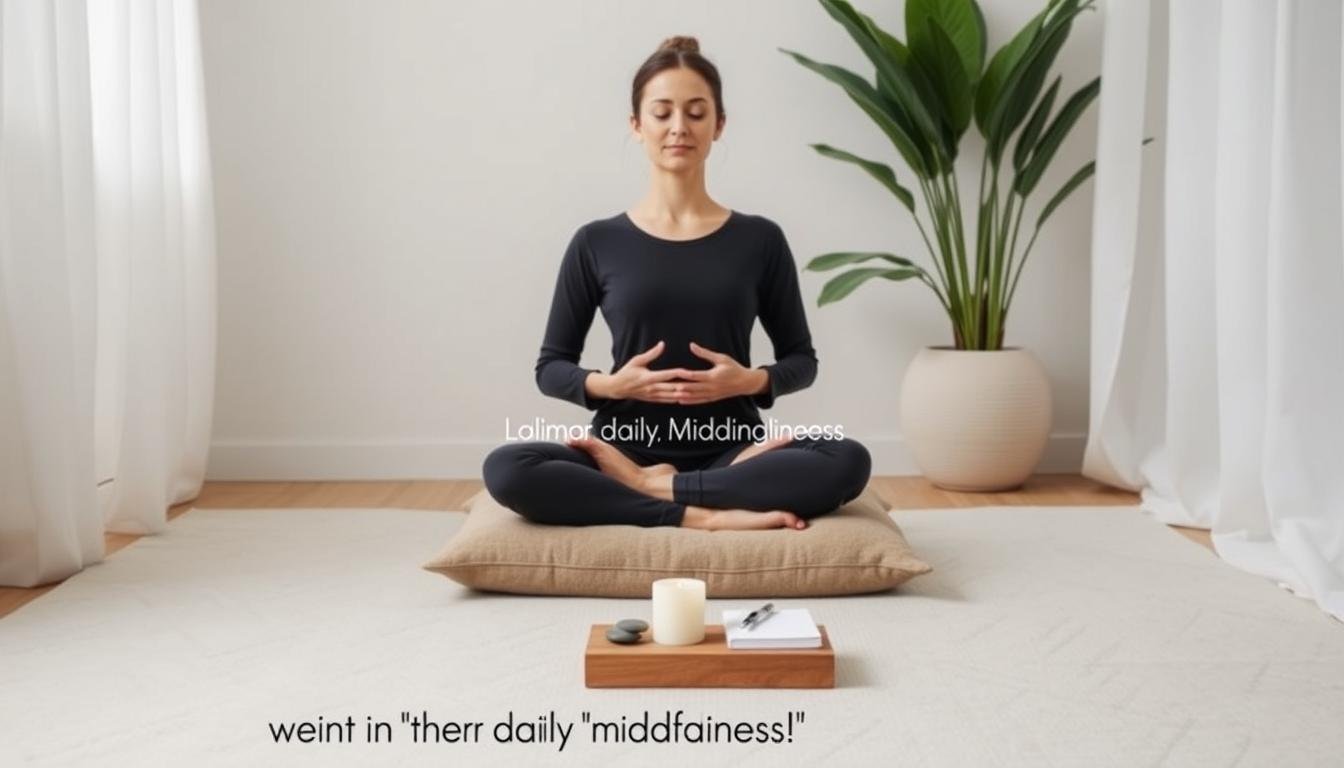
“The present moment is the only time over which we have dominion,” said Vietnamese Zen master Thich Nhat Hanh. This profound wisdom captures the essence of what I want to share with you today.
Many people think mindfulness for beginners needs hours of meditation or complex techniques. But that’s not true. You can start simple awareness practices in your routine right now.
Scientific research shows amazing benefits from regular mindful living. Studies show daily mindfulness exercises can cut anxiety by up to 60%. They also improve focus, lower blood pressure, and boost mental health.
I’ve found that the best approach is to add small moments of awareness to your day. Whether it’s drinking morning coffee or walking to work, these moments connect you to the present.
In this guide, I’ll share practical strategies that fit into your schedule. No special equipment needed – just your willingness to start this journey toward inner peace and wellness.
Key Takeaways
- Mindfulness doesn’t require extensive time commitments or complex meditation techniques
- Simple daily awareness practices can be integrated into existing routines like drinking coffee or walking
- Scientific studies show mindfulness reduces anxiety by up to 60% and improves focus significantly
- Regular practice lowers blood pressure and enhances overall mental and physical health
- Present-moment awareness can transform ordinary activities into opportunities for inner peace
- Beginners can start immediately without special equipment or prior experience
🧘 Understanding What Mindfulness Really Means for Beginners
Mindfulness is simple: it’s about paying attention. When I talk about mindfulness for beginners, I start with this truth. You don’t need special skills or years of training to begin.
Mindfulness means noticing what’s happening right now. This includes what’s happening inside you and around you. It’s not about emptying your mind or reaching some zen-like state that you see in movies.
Many people think mindfulness is the same as meditation, but that’s not quite right. Meditation is just one way to practice mindfulness. You can be mindful while washing dishes, walking to work, or even during a conversation with a friend.
The mindfulness benefits become clear once you understand what you’re actually doing. You’re training your brain to focus on the present instead of worrying about tomorrow or replaying yesterday’s events.
I love teaching people the “5 R’s of mindfulness” because it gives you a practical framework to work with. This system helps you develop present-moment awareness in any situation throughout your day.
| The 5 R’s | What It Means | Daily Example | Benefits |
|---|---|---|---|
| Recognize | Notice what’s happening inside and around you | Feeling your shoulders tense during a meeting | Increased self-awareness |
| Respond | Choose thoughtful actions instead of automatic reactions | Taking a breath before replying to a frustrating email | Better decision-making |
| Relax | Release tension in your mind and body | Loosening tight jaw muscles while stuck in traffic | Reduced stress levels |
| Reflect | Think about your feelings and experiences without judgment | Understanding why certain situations trigger anxiety | Emotional intelligence growth |
| Reframe | See challenges as opportunities to learn and grow | Viewing a work setback as a chance to improve skills | Resilience building |
Here’s what I want you to remember: mindfulness isn’t a religious or spiritual practice unless you want it to be. It’s a science-backed approach to mental wellness that anyone can use.
You don’t need to sit cross-legged on a cushion or chant special words. You can practice mindfulness while brushing your teeth, eating lunch, or waiting for the bus. The key is simply paying attention to what you’re doing while you’re doing it.
This gentle awareness of the present moment is what makes mindfulness so powerful for beginners. You’re not trying to stop your thoughts or feel a certain way. You’re just noticing what’s already there.
🌅 How to Practice Mindfulness Through Morning Routines
The first moments after waking are special. They set the tone for your day. By practicing mindfulness in the morning, you build a strong foundation for well-being.
Morning mindfulness is simple and quick. Just five to ten minutes can change your day. Focus on your morning routine with care and attention.
Creating a Mindful Wake-Up Ritual
Wake up slowly and mindfully. Don’t rush to your phone or tasks. Instead, create a calm buffer zone.
Start by sitting comfortably. Keep your spine straight but relaxed. Take three deep breaths that fill your chest and belly.
Then, ask yourself, “What is my intention for today?” Let your answer come naturally. Your intention could be kindness, patience, or being present. This aligns your actions with your values.
Keep checking in with your morning intention throughout the day. This connects your morning practice to your daily life.
Mindful Breathing Practices to Start Your Day
Breathing exercises bring you into the present moment. They calm your nervous system and energize you.
The Three-Breath Reset is a great start. Inhale for four counts, hold for two, then exhale for six. Repeat three times. This balances your nervous system and clears your mind.
For deeper practice, try the 4-7-8 pattern. Inhale for four counts, hold for seven, then exhale for eight. This calms anxiety and focuses your mind.
| Breathing Technique | Duration | Primary Benefits | Best For |
|---|---|---|---|
| Three-Breath Reset | 1-2 minutes | Quick centering, stress relief | Busy mornings, beginners |
| 4-7-8 Pattern | 3-5 minutes | Deep relaxation, anxiety reduction | High stress periods, sleep issues |
| Box Breathing | 5-10 minutes | Mental clarity, focus enhancement | Important days, concentration needs |
| Natural Breath Awareness | 5-15 minutes | Present moment connection, mindfulness | Daily practice, meditation foundation |
Box breathing helps you stay focused. Breathe in for four, hold for four, exhale for four, then pause for four. This pattern keeps your attention steady.
Consistency is key, not perfection. Even two minutes of morning breathing practice is beneficial. Start small and grow your practice over time.
🍽️ Mindful Eating: Transform Your Relationship with Food
Mindful eating is a powerful daily practice that’s often overlooked. We often eat while distracted, like checking emails or watching TV. This can harm our health and well-being.
By focusing on present moment awareness during meals, every bite becomes a mindful experience. Your body knows what it needs. You just need to listen.
Changing how you view food starts with a simple rule: if you don’t love it, don’t eat it. This helps you choose foods that truly nourish you.
Present Moment Awareness During Meals
Before eating, take a moment to breathe deeply. This helps shift your focus to the food. Try taking three conscious breaths before each meal.
Pay attention to your body’s hunger signals. Ask yourself if you’re hungry or eating for other reasons. Your body clearly communicates its needs.
Make meals peaceful by removing distractions. Turn off the TV and put away your phone. This lets you fully enjoy your food.
Eat when you’re moderately hungry and stop when you’re satisfied. This natural approach supports digestion and well-being.
Simple Techniques for Mindful Eating
The “three mindful bites” practice is great for beginners. Take your first three bites slowly, focusing on taste, texture, and temperature.
Use all your senses while eating. Notice the colors, smells, sounds, textures, and flavors. This makes meals more enjoyable.
Chew your food well. Aim for 20-30 chews per bite. This slows down your eating and aids digestion.
Put your fork down between bites. This creates pauses to check your hunger and enjoy your food.
| Mindless Eating Habits | Mindful Eating Practices | Benefits |
|---|---|---|
| Eating while distracted | Focused attention on food | Better digestion and satisfaction |
| Rushing through meals | Eating slowly and deliberately | Improved hunger awareness |
| Ignoring hunger cues | Listening to body signals | Natural portion control |
| Emotional eating patterns | Conscious food choices | Healthier relationship with food |
Mindful eating turns meals into chances for mindfulness in daily life. Start with one mindful meal a day. Then, make all meals mindful.
🚶 Walking Meditation: Mindfulness in Motion
Every step can lead to being present in the moment with walking meditation. This daily mindfulness exercise turns walking into a way to clear your mind and find balance.
Walking meditation is great for those who find it hard to sit quietly. It lets you stay focused while moving, blending physical activity with calmness.
“Be clear about your aim, warm up, settle into a rhythm, coordinate your breath and movement.”
This method makes you feel grounded and focused. It helps you stay calm and alert at the same time.

Basic Walking Meditation Techniques
Start in a quiet place where you can walk freely for 10-20 steps. Stand and take three deep breaths to get centered.
Walk slowly, about half your usual pace. Pay attention to each step’s sensation. Notice your heel touching the ground and your toe lifting off.
Match your breathing with your steps. You might breathe in for two steps and out for two. Find a rhythm that feels right to you.
If your mind wanders, bring it back to your feet and breath. This is the heart of mindfulness meditation techniques. Each time you focus again, you get better at staying present.
When you finish walking, turn around mindfully. Pause, breathe, and slowly walk back. This moment presents an opportunity to stay in the present.
Incorporating Mindful Walking into Daily Commutes
Your daily commute is a perfect chance to use walking meditation. Even busy streets can be mindful spaces with the right mindset.
Start by walking the first block mindfully. Focus on your breath and steps. See how it changes your commute.
Use traffic lights and crosswalks as visual cues for meditation. When you stop, breathe deeply and feel your body. Notice any tension.
Stay aware of your surroundings while focusing on your walk. This skill improves with practice, making you safer and more mindful.
Turn waiting times into mini-meditations. Use these moments to reconnect with your breath and body.
End your commute by setting a positive intention for the day. This helps you smoothly transition from travel to work, carrying calm awareness with you.
💻 Practicing Mindfulness at Work and During Screen Time
I’ve found that adding mindfulness to work and screen time changes stressful moments into chances for growth and calm. The busy workplace, with its endless alerts and tight deadlines, is a great place to learn how to practice mindfulness in tough spots.
Studies show that 95% of our actions are on autopilot. This means most of our workday is done without us even thinking about it. But, we can use simple cues to switch from autopilot to being fully present.
“If office door, then deep breath” – a simple cue that turns routine moments into mindfulness chances.
The trick is to set up “if this, then that” reminders around your workspace. These cues help you move from stress responses to being fully aware.
Quick Breathing Techniques for Workplace Stress
Mindful breathing practices give quick relief from work stress without bothering others. I suggest starting with the 4-7-8 technique, which takes less than a minute.
Here’s how it works: Breathe in through your nose for 4 counts, hold for 7 counts, then breathe out through your mouth for 8 counts. This method calms your nervous system, lowering stress hormones.
For quick relief, try the “desk breath” method. Place one hand on your chest and another on your belly. Focus on making the bottom hand move more as you breathe slowly and deeply.
Between meetings, use the “elevator breath” technique. As you wait for or ride the elevator, take three conscious breaths, feeling your feet on the ground and your breath moving in and out.
Managing Digital Overwhelm Mindfully
Digital mindfulness begins with using technology with awareness, not mindlessly scrolling. I suggest using the “pause before click” rule – take one conscious breath before opening emails, social media, or any app.
Set specific times to check messages instead of answering every alert right away. This mindfulness for stress reduction stops the constant alertness digital devices often cause.
Try the “20-20-20 rule” with awareness: Every 20 minutes, look at something 20 feet away for 20 seconds while taking three mindful breaths. This protects your eyes and mental state from screen weariness.
When using your phone, hold it at eye level to keep better posture and breathe consciously while scrolling. Notice when you’re using technology on purpose versus mindlessly.
Designing Your Personal Break System
Creating mindful breaks in your workday needs planning and cues. Start by finding natural points in your schedule for brief mindfulness moments.
Set up “mindfulness anchors” around your workspace. For example, every time you see your water bottle, take three conscious breaths. When you hear your phone buzz, pause and notice your breath before responding.
I recommend the “micro-break” approach: 30-second breathing spaces every hour, 2-minute body scans every two hours, and a 5-minute walking meditation during lunch. These small practices add up throughout the day.
Use your commute as transition time. Whether driving, walking, or using public transport, practice how to practice mindfulness by focusing on physical sensations, sounds, or breath awareness instead of checking your phone right away.
Remember, being consistent is more important than the duration of your meditation. Taking three conscious breaths regularly throughout your workday is more beneficial than one long meditation session.
🛁 Evening Mindfulness Practices for Better Sleep
Ending your day with mindfulness can greatly improve your sleep and well-being. Daily mindfulness exercises in the evening calm your mind and body. This helps you relax and get ready for sleep.
Evening mindfulness helps you smoothly move from an active day to a calm night. Instead of checking your phone, you can focus on yourself. Studies show it lowers stress hormones and boosts sleep hormones.
Progressive Body Awareness Techniques
Body scan meditation is a top mindfulness meditation technique for evening calm. Start by lying in bed and focus on your toes. Notice any feelings without changing them.
Move your attention up your body, starting with your feet, then ankles, and so on. Present moment awareness means just observing what you feel. It’s okay if some parts feel tight and others relaxed.
Continue the scan through your torso, arms, and head. Breathe naturally and let each part relax. This not only relaxes your body but also increases self-awareness and kindness towards yourself.
Evening Gratitude and Reflection Methods
Gratitude practices change your evening mindset to one of appreciation. Identify three good things from your day, no matter how small. This exercise shifts your focus to the positive, making you feel content before sleep.
Reflection helps you process your day mindfully. Ask yourself questions like “What did I learn today?” or “How did I show kindness?” These daily mindfulness exercises close your day on a positive note.
Some keep a gratitude journal, while others reflect quietly. The important thing is to be consistent. Even a few minutes of gratitude and reflection can improve your sleep and well-being. These practices end your day with a mindful note, reinforcing your present moment awareness.
😤 Mindfulness for Stress Reduction and Emotional Regulation
The human brain often reacts to stress in ways that aren’t helpful. Mindfulness can break these cycles. It helps connect your fast, unconscious reactions with your slower, wiser thoughts.
Understanding how your brain works makes mindfulness more meaningful. Your amygdala can make you feel scared even when you’re safe. At the same time, your prefrontal cortex wants you to stay calm.
This gap can lead to emotional turmoil. Mindfulness benefits include bridging these brain areas, giving you more control over your feelings.
Setting intentions during mindfulness practice changes your brain. This change, called neuroplasticity, lets you pause before reacting. The more you practice, the stronger this ability becomes.
Quick Relief Techniques for Anxious Moments
When anxiety hits, you need fast solutions. Try the 4-7-8 breathing technique. Breathe in for 4 counts, hold for 7, then exhale for 8.
This simple method calms your brain quickly. You can do it anywhere without anyone noticing. Mindfulness for beginners often starts with breath work because it’s always available.
Grounding exercises are another great tool. Name 5 things you see, 4 things you touch, 3 things you hear, 2 things you smell, and 1 thing you taste. This helps you focus on the present.
Body awareness is also effective for stress relief. Place one hand on your chest and one on your belly. Notice which hand moves more as you breathe. Then, focus on deeper belly breathing to calm your nervous system.
| Technique | Time Required | Best Used For | Effectiveness Rating |
|---|---|---|---|
| 4-7-8 Breathing | 2-3 minutes | Acute anxiety, panic | 9/10 |
| 5-4-3-2-1 Grounding | 3-5 minutes | Racing thoughts, overwhelm | 8/10 |
| Body Scan Check-in | 1-2 minutes | Physical tension, stress | 7/10 |
| Mindful Hand Placement | 30 seconds | Immediate grounding | 8/10 |
Progressive muscle relaxation is another quick option. Tense your shoulders for 5 seconds, then release completely. Notice the difference between tension and relaxation. This helps you recognize when stress is building in your body.
Working with Challenging Emotions Through Present Moment Awareness
Difficult emotions like anger, sadness, or frustration don’t have to overwhelm you. View emotions as temporary visitors, not permanent residents. Present moment awareness lets you experience feelings without being consumed by them.
The RAIN technique helps with emotional regulation. Recognize what you’re feeling without judgment. Allow the emotion to exist without trying to fix it right away. Investigate where you feel it in your body and what thoughts come with it.
Practice Non-attachment by observing the emotion with curiosity. This doesn’t mean becoming emotionally numb. Instead, you can feel deeply while staying emotionally balanced.
When anger arises, try the STOP technique. Stop what you’re doing. Take a breath. Observe your thoughts, feelings, and body sensations. Proceed with awareness and intention.
For sadness or grief, gentle self-compassion works better than resistance. Place your hand on your heart and acknowledge your pain with kindness. Remind yourself that suffering is part of being human, and you’re not alone.
Mindfulness for stress reduction is most powerful when practiced during calm moments. Regular practice builds your emotional resilience, making you less reactive to daily stressors. Even five minutes of daily mindfulness can change your brain’s stress response system.
Remember, emotions are temporary energy patterns moving through your body. They have a beginning, middle, and end. By staying present with difficult feelings instead of fighting them, you allow them to complete their natural cycle and dissolve on their own.
🏠 Creating a Mindful Home Environment
Your living space can be a great place for daily mindfulness exercises. The environment around you can either help or hinder your practice. I’ve found that making small changes at home can turn everyday moments into chances for deeper awareness.
Creating a mindful home doesn’t require big changes or a lot of money. It’s about setting up spaces and routines that help you pause and focus on the present. When you know how to practice mindfulness at home, every room can become a peaceful retreat.
Designing Spaces for Daily Mindfulness Exercises
To practice mindfulness regularly, make it hard to ignore. Place your meditation cushion, yoga mat, or journal in a spot where you’ll trip over it. This simple trick helps because it reminds you to stop and be present.
Choose a corner of any room for your mindfulness spot. It doesn’t have to be big or fancy. A small area with a cushion, a plant, or a special object can be your anchor. The goal is to have a visual cue that reminds you to practice.
Natural elements are great for supporting mindfulness in daily life. Add a small stone, driftwood, or succulent in your favorite spots. These objects gently remind you to stay present throughout the day.
Change your environmental triggers often to keep them effective. Move your meditation cushion, change your mirror quote, or rearrange your mindfulness corner. New patterns help your brain stay alert to these important reminders.
Mindful Household Activities
Every household task is a chance to practice mindfulness. Washing dishes can be meditative if you focus on the water, soap, and plates. These tasks can become daily mindfulness exercises without taking up extra time.
Folding laundry can be a moving meditation. Notice the fabric, the motion of your hands, and the satisfaction of neat piles. This way, you learn to practice mindfulness during necessary tasks, not just as interruptions.
Cleaning offers great chances for mindful movement. Sweeping, wiping, and organizing can be meditative if you focus on the actions. The key is to slow down and experience each task fully.
Cooking can also support your mindfulness practice. Pay attention to the colors, textures, and smells of your ingredients. These sensory experiences help you stay present while you cook.
📱 Essential Mindfulness Apps and Tools for Beginners
Finding the right mindfulness tools doesn’t have to be hard. There are apps and tools that really help beginners. Even though technology might seem like it goes against being present, the right digital tools can guide you well.
I’ve tried many apps and tools to help you find the best ones. The goal is to find resources that make your mindfulness journey easier, not harder.
Top Mindfulness Meditation Apps
Headspace is my top pick for newbies. It uses fun animations to explain complex ideas. It has programs for beginners, with meditations from 3 to 20 minutes.
Calm is great for its variety and quality. I love their Daily Calm sessions and sleep stories. It also has meditations for stress and anxiety.
Insight Timer has the biggest free library of meditations. It’s a lot at first, but it has filters for beginners. The community helps keep you motivated.
Ten Percent Happier is for those who are skeptical. It teaches practical mindfulness without spiritual jargon. It’s perfect for beginners.
If you’re a Kaiser Permanente member, you get more wellness resources. Visit kp.org/selfcareapps to see apps for sleep, mood, and more.
Simple Tools to Support Your Practice
Apps aren’t the only thing you need. Simple tools can also help your meditation without costing a lot or being complicated.
- Meditation timer apps like Enso give you gentle bells and sounds
- Breathing beads or malas help with your breathing
- Mindfulness journals track your progress
- Comfortable cushions or chairs help with your posture
Remember, sticking to it is more important than fancy stuff. A simple timer and a quiet spot can work just as well as fancy gear.
For more tips on mindfulness, check out www.healthyvibeslife.com. You’ll find articles on meditation, stress, and wellness.
Subscribe to our wellness newsletter for ongoing support. You’ll get tips, travel ideas, and deals on wellness products. It’s all to help you on your mindfulness journey.
⏰ Building a Consistent Daily Mindfulness Practice
Starting your mindfulness journey is simple. It begins with a single breath. But, keeping it going needs understanding how small actions change your brain. Small changes can lead to big benefits over time.
When you start mindfulness, you’re strengthening your brain. This makes you more aware and better at handling emotions. It’s like building a new path in your brain.
Every mindfulness session makes your brain more flexible. Even a short two-minute practice can change your brain’s structure and function.
It’s not about being perfect. It’s about being consistent. Many people give up because they expect too much. Instead, focus on making mindfulness a part of your daily routine.
Setting Realistic Goals for Mindfulness for Beginners
Starting small is key to success. Begin with two to three minutes of daily practice. This is better than trying to do too much too soon.
Here’s a simple plan to build your confidence:
- Week 1-2: 2-3 minutes of basic breathing awareness
- Week 3-4: 5 minutes with simple body scan techniques
- Week 5-8: 7-10 minutes incorporating different daily mindfulness exercises
- Month 3+: 10-15 minutes with varied practices based on your preferences
Choose a time that fits your schedule. Morning practices can set a mindful tone for the day. Evening sessions can help you sleep better. What matters most is being consistent.
Keep track of your practice without judging yourself. Use a simple calendar or a smartphone app. Celebrate small wins—even a short practice is worth celebrating.
Remember, mindfulness benefits grow over time. You might not see big changes right away. But your brain is changing with each practice. Trust the process and keep showing up.
Overcoming Common Obstacles
Every mindfulness journey faces challenges. Seeing these as normal parts of learning helps you overcome them. Let’s tackle the most common obstacles:
“I don’t have time” is a common excuse. But, you likely spend more time on social media than you need for mindfulness. Start by replacing three minutes of screen time with mindfulness.
It’s hard to focus at first. Your mind will wander. That’s okay. The goal is to notice when you’re distracted and gently bring your focus back.
Physical discomfort during sitting meditation is common. Here’s how to deal with it:
- Use cushions or chairs for proper support
- Try walking meditation as an alternative
- Start with shorter sessions to build tolerance
- Adjust your posture without self-criticism
Motivation can go up and down. During low-motivation times, lower your standards temporarily instead of quitting. Even thirty seconds of mindful breathing helps keep your habit going.
Busy times require flexibility, not giving up. Add micro-practices to your day. This could be mindful breathing while waiting, being present during routine tasks, or gratitude before meals.
When motivation drops, remind yourself why you started. Keep a journal of how you feel before and after practice. These records can boost your motivation when it’s low.
Consistent mindfulness practice brings many benefits. You’ll become more emotionally resilient, focused, and less stressed. Every moment of mindfulness helps you grow.
It’s not about being perfect. It’s about building a lasting connection with the present moment. Consistency is more important than perfection.
🤝 Mindful Communication and Relationships
Mindfulness changes how we talk to family, friends, and workmates. It makes our relationships richer and more meaningful. This shift helps us connect and understand each other better.
Mindful talking starts with seeing our shared humanity. We can be kind to others just as we are to ourselves. Everyone wants to feel safe, valued, and understood.
May you be at ease, may you feel safe, may you be happy.
This loving-kindness changes how we handle tough talks and tough relationships.
Staying Present During Conversations
Practicing mindfulness in talks means focusing on what’s happening inside and outside us. Most of our communication problems come from not listening well.
When my mind starts racing, I pause and come back to the moment. This helps me respond with intention, not just reaction.
Being present in talks means noticing emotions without acting on them right away. I see my defensive thoughts and judgments. This gives me time to think before I speak.
Developing Deep Listening Skills
Mindful listening is more than waiting to speak. It’s about listening fully with my body and attention. I pay attention to the speaker’s words, tone, and body language, while also being aware of my own feelings.
True mindful listening lets others feel truly heard. When I listen without planning my response, people open up more. This makes all my relationships stronger.
I’ve learned to pick up on non-verbal cues that show what someone really needs. Sometimes, the most important message is in the silence. By staying present and curious, I help create a space for real connection.
Compassion isn’t just for meditation; it’s for every interaction. When someone pushes my buttons, I remember they’re dealing with their own struggles. Seeing our shared humanity turns conflicts into chances for deeper understanding and connection.
🌟 Conclusion: Your Journey with Daily Mindfulness Exercises
Starting your mindfulness journey is easy. You don’t need to meditate perfectly or spend hours practicing. Just pick one or two techniques that you like. Maybe it’s breathing mindfully while you have your morning coffee or doing a quick body scan before bed.
The benefits of mindfulness grow slowly. Try writing a few sentences in your journal every night about your mindfulness experiences. See how your stress reactions change over time. You might be amazed at what small mindfulness exercises can do.
Remember, mindfulness isn’t about being calm all the time. It’s about being aware of your thoughts and feelings without judging them. Some days will be easier than others, and that’s okay.
Your wellness journey goes beyond mindfulness. Check out www.healthyvibeslife.com for more on stress management, healthy living, and wellness travel. Subscribe to our newsletter for health tips, fitness products, wellness deals, and travel ideas that support your well-being.
Take your first mindful breath now. Your journey to peace and awareness starts with this moment.