
Can you enjoy festive treats without losing your wellness goals this season? Absolutely yes. You can eat healthy during holidays and enjoy every moment with family and friends.
Research shows that just 500 extra calories per day can lead to a pound of weight gain each week. That’s about three cookies or one fancy latte. But, holiday wellness eating doesn’t mean boring food or skipping your favorite dishes.
I’ve faced these challenges myself. The temptations at office parties. The pressure to try Aunt Maria’s famous pie. The emotional ties to traditional recipes.
The truth is, food is about tradition and connection, not just nutrition. A festive balanced diet allows for occasional indulgences without derailing your long-term wellness. I’ll share practical strategies that let you honor both your health goals and your desire to fully celebrate.
You’ll find more support and resources at www.healthyvibeslife.com. Our community shares tips for making every season your healthiest yet.
Key Takeaways
- Nutritious holiday meals can include your favorite festive treats when balanced properly
- Just 500 extra calories daily can cause one pound of weekly weight gain
- Occasional indulgences don’t impact long-term wellness when part of an overall balanced approach
- Food traditions strengthen connections and create meaningful memories worth celebrating
- Practical strategies help you navigate seasonal gatherings without guilt or restriction
- Mindful choices allow full participation in celebrations while supporting your health goals
🎄 Why I Choose to Eat Healthy During Holidays Without Sacrificing Joy
I learned that the key to holiday eating isn’t about cutting out food. It’s about finding a balance that keeps you healthy and happy. The festive season doesn’t have to be a choice between wellness and fun. By focusing on balanced enjoyment, I found a better way.
This change didn’t happen quickly. It took years of trying different things and learning what my body and mind need during the holidays.
The Real Challenge of Holiday Temptations
The holidays are a unique challenge. From late November to early January, we face a sea of tempting foods everywhere. Office parties, family gatherings, and cookie exchanges make it hard to resist.
What makes holiday weight management tough isn’t just the food. It’s the memories attached to these meals. Grandma’s stuffing and your aunt’s pecan pie are more than just food. They’re family traditions.
The pressure to eat more is intense. Relatives might say “just have one more slice” or wonder why you’re being strict. These moments can make you feel stressed and anxious, making it hard to stick to your health goals.
How I Discovered Balance Between Celebration and Wellness
My breakthrough was when I stopped seeing holiday meals as threats. For years, I swung between extreme restriction and overindulgence. Neither worked for me.
I learned that trying to be “perfect” during the holidays only led to guilt and overeating. Food guilt and restrictive dieting can make you stressed and anxious, leading to weight gain. Stress from food guilt can increase appetite and fat storage.
Embracing mindful holiday indulgence changed everything. I allowed myself to enjoy special foods without guilt. This reduced my anxiety and helped me make better choices.
The Physical and Mental Benefits of Maintaining Healthy Habits
Once I found my balanced approach, I felt better throughout the holiday season. The benefits went beyond just weight.
I had more energy, even during the busiest times. I avoided sugar crashes and fatigue, staying energized to enjoy the holidays with loved ones.
Healthy habits brought me these benefits:
- Better sleep quality: Eating well helped me avoid digestive issues that kept me awake.
- Improved mood and reduced anxiety: Stopping the guilt cycle improved my mental health.
- Maintained metabolism: Healthy eating kept my body’s processes efficient.
- Greater confidence: Feeling in control without being controlling empowered me.
- Enhanced enjoyment: I could focus on conversations and connections, not just food.
The biggest surprise was how much I enjoyed the holidays. Eating healthy without extreme restrictions made me feel good physically and mentally. I could fully participate in traditions and create meaningful memories without guilt.
This approach isn’t about punishment or missing out. It’s about feeling your absolute best so you can fully embrace every moment of the season. When you nourish your body well most of the time, occasional treats become part of a healthy life, not stress.
📝 Plan Your Nutritious Holiday Meals Like a Pro
Planning my holiday meals in advance has changed how I enjoy the festive season. I no longer feel overwhelmed by food choices or scramble for last-minute options. This way, I can enjoy healthy meals during holidays without losing the joy of celebration.
Planning is where healthy holiday eating starts. Having a clear plan for meals helps avoid poor food choices. Spending a few hours planning saves me stress and helps me make nutritious meals everyone loves.
My Weekly Menu Planning Strategy for Thanksgiving and Christmas
I start planning my holiday menu two weeks before Thanksgiving or Christmas. This gives me time to shop and prepare without feeling rushed. My thanksgiving nutrition plan includes every meal from before to after the holiday.
My planning template is simple. I use a spreadsheet with days and meals. For each day, I list breakfast, lunch, dinner, and snacks.
Before the holiday, I eat lighter meals with lots of vegetables. This isn’t about restriction—it’s about balance. Knowing I’ll enjoy a big Thanksgiving dinner, I choose salads, veggie soups, and grilled proteins beforehand.
On the holiday, I celebrate with my favorite dishes and healthier versions. I’ve already decided what to eat, so I’m not tempted by unhealthy options.
After the holiday, I return to lighter meals. I use leftovers creatively, like turkey breast on greens or roasted veggies in bowls. This balance helps me stay healthy without expecting perfection every day.
Smart Grocery Shopping Lists for Healthy Holiday Cooking
My shopping list supports my menu plan. I organize it by store sections to save time and avoid impulse buys. I shop after eating to avoid adding things I don’t need.
Here are the essential items for healthy holiday cooking:
- Produce section: Colorful veggies for roasting, fresh herbs, leafy greens
- Protein aisle: Lean turkey, chicken, eggs, Greek yogurt
- Grains and legumes: Quinoa, brown rice, lentils for fiber
- Pantry staples: Low-sodium broth, olive oil, spices
- Dairy alternatives: Unsweetened almond milk, coconut cream
I choose whole foods over processed ones. If I can’t pronounce ingredients, I don’t buy it. This keeps me focused on healthy choices.
Shopping with a detailed list helps me stick to seasonal nutrition tips. I avoid tempting aisles because my list guides me to healthy options.
Meal Prep Techniques That Keep Me on Track
Weekend meal prep is my secret for staying healthy during holidays. I spend Sunday afternoons preparing components for easy weeknight meals. This saves time and keeps me on track.
Meal prep isn’t about making every meal ahead. I prepare versatile components for mixing and matching. This keeps meals interesting and ensures healthy options are always ready.
I start by roasting large sheet pans of veggies. My favorites include Brussels sprouts with garlic and sweet potatoes with cinnamon. These stay fresh for five days and reheat well.
Grains are also prepped in big batches. I cook quinoa or brown rice for multiple meals. Adding herbs and lemon zest boosts flavor without extra calories.
Healthy casseroles are another prep staple. I make veggie-based casseroles with lean proteins and whole grain breadcrumbs. Portioning them into containers makes for quick lunches or dinners.
Research shows planning ahead leads to healthier meals, not fast or convenience foods.
This research matches my experience. Having prepared options means healthy choices are always convenient.
Preparing Vegetable-Forward Appetizers
I always prepare healthy appetizers before holiday gatherings. My favorites include veggie trays with hummus, stuffed mushrooms, and cucumber rounds with yogurt and dill.
These appetizers ensure nutritious holiday meals start with veggies. They also offer a healthy option at parties, even if others serve less healthy dishes.
I prep appetizer components separately for freshness. Vegetables get washed and cut on Saturday. Dips and spreads are made Sunday morning. Assembly happens just before serving.
My favorite make-ahead appetizer is roasted red pepper hummus. I roast peppers, blend with chickpeas and tahini, and portion into containers. It stays fresh for a week and pairs well with various snacks.
Another favorite is vegetable skewers. I thread cherry tomatoes, cucumber, bell peppers, and mozzarella onto skewers. A drizzle of balsamic glaze adds festive flair. These are easy to make ahead and impress guests.
This planning approach removes decision fatigue. When tired, I don’t need willpower to choose healthy options. The choices are already made, and the food is ready.
Planning doesn’t mean being rigid. Life can be unpredictable, and sometimes I deviate from my plan. But having a plan as a foundation helps me quickly return to healthy habits. This structure supports spontaneity without restricting it.
🍽️ Master Portion Control at Holiday Gatherings and Buffets
Over the years, I’ve found simple ways to enjoy holiday food without guilt. The biggest challenge is knowing how much to eat without feeling stuffed. These tips help me enjoy buffet tables and family feasts.
Portion control isn’t about cutting out food. It’s about eating what I want in the right amounts. This keeps my diet balanced all season long.
The Simple Plate Method I Use at Every Celebration
I use a visual strategy called the plate method. It works at every event, from Grandma’s to formal dinners.
Here’s how I fill my plate. Half is vegetables like Brussels sprouts or salads. One quarter is lean protein like turkey or salmon. The last quarter is starchy sides like sweet potatoes or stuffing.
This method makes a balanced meal without counting calories. Vegetables fill me up, protein keeps me satisfied, and starches give me traditional favorites without overdoing it.
This approach has become second nature. My hand knows the right portions without thinking. It helps me eat healthy during holidays and enjoy my favorite dishes.

Visual Portion Cues That Actually Work
Without measuring cups, I use my hands as guides. These cues help me at potlucks and parties.
A serving of meat is the size of my palm. This is about three to four ounces, plenty of protein without too many calories. Carbohydrates like mashed potatoes should be the size of my closed fist.
Fats need smaller portions. I limit butter and creamy sauces to the size of my thumb. These add flavor without too many calories.
I also choose smaller plates when I can. A nine-inch plate instead of a twelve-inch one reduces consumption by 20-30%. The smaller plate looks full and satisfying.
- Palm-sized portions for proteins (turkey, ham, beef)
- Fist-sized portions for starches and grains
- Thumb-sized portions for fats and oils
- Half-plate portions for vegetables and salads
How to Sample Everything Without Overeating
I love trying different foods at holiday meals. The trick is taking smaller amounts of everything that excites me.
I skip foods I can eat anytime and focus on special dishes. Regular dinner rolls? No thanks. Aunt Marie’s cranberry-orange relish? Yes, please.
This approach lets me taste five or six different items without overloading my plate. I take one or two spoonfuls of each special dish. This way, I enjoy all the flavors without feeling too full.
The key is being selective, not restrictive. I give myself permission to try anything that sounds good. But I don’t overdo it with foods I don’t really want.
My Three-Bite Rule for Desserts
Desserts are the biggest temptation at holiday gatherings. I’ve found a simple rule to enjoy them without overdoing it.
I allow myself three bites of any dessert. The first bite is magic, the second bite confirms how delicious it is, and the third bite satisfies my craving. After that, I don’t get as much pleasure from more bites.
Using a small dessert plate and taking thin slices helps me enjoy several desserts without eating too much. This approach is true mindful holiday indulgence.
Timing Your Meals to Prevent Extreme Hunger
Arriving at holiday parties starving is a bad idea. I learned this the hard way by eating too much before dinner.
Now, I eat a balanced snack one to two hours before events. My go-to snacks combine protein and fiber, like Greek yogurt with berries or apple slices with almond butter. This prevents me from eating too much at the buffet.
I also eat regular meals throughout the holiday season. Eating every three to four hours keeps my blood sugar stable and prevents extreme hunger. Skipping breakfast before a big lunch leads to overeating.
Don’t go to a holiday party hungry—you’ll overeat at the buffet. Have a nutritious snack beforehand that combines complex carbohydrates and protein.
After finishing my plate, I wait about ten minutes before deciding if I want more food. This pause helps my body register fullness. Most of the time, I realize I’m actually satisfied and don’t need seconds.
These timing strategies help with holiday weight management without requiring willpower or restriction. They work with my body’s natural hunger signals. When I eat healthy during holidays using these methods, I enjoy celebrations more and feel better afterward.
🥗 Eat Healthy During Holidays with These Smart Food Swaps
Healthy holiday meals don’t mean giving up taste. It’s about making smart swaps that everyone loves. I’ve found ways to keep our celebrations nutritious without sacrificing flavor.
These swaps are easy to do. You don’t need fancy cooking skills or expensive ingredients. Most of these changes use common kitchen items or easy-to-find grocery store products.
Healthier Versions of Classic Thanksgiving Dishes
Turning Thanksgiving favorites into healthier options is fun. My plan focuses on keeping the dish’s essence while making smart ingredient changes. This way, our meals are delicious and don’t leave us feeling heavy.
I’ve tested these changes on my family, even the picky eaters. They love them so much, they always ask for more.
Cauliflower Mashed Potatoes and Greek Yogurt Alternatives
Mixing mashed cauliflower with potatoes is a game-changer. It cuts calories in half and adds vitamins and fiber. I steam the cauliflower until soft, then mash it with potatoes, garlic, and herbs.
Greek yogurt is my secret kitchen tool. I use it to replace sour cream in many recipes. It’s tangy, has protein, and is lower in fat and calories.
Here’s what I swap in my Thanksgiving sides:
- Replace half the potatoes with cauliflower for lighter, nutrient-dense mashed sides
- Use Greek yogurt instead of sour cream or heavy cream in recipes
- Substitute chicken or vegetable broth for butter when mashing vegetables
- Add roasted garlic for richness without extra calories
- Incorporate fresh herbs like rosemary and thyme for depth of flavor
Sweet potato casserole is traditionally loaded with sugar and butter. I let the sweet potatoes’ natural sweetness shine. My version uses maple syrup, spices, and a few mini marshmallows on top.
Gradually reducing sugar has been key. I started by cutting it by a third, then half, and now use 75% less. My family loves the taste of the sweet potatoes now.
My Favorite Healthy Christmas Dinner Substitutions
Healthy Christmas dinner doesn’t mean missing out on festive foods. I’ve found swaps that are now family traditions. These changes focus on flavor through herbs and spices, not heavy fats.
These modifications make the meal feel lighter and more enjoyable. My family no longer gets that post-dinner food coma.
Herb-Roasted Vegetables Instead of Creamy Casseroles
I’ve replaced creamy casseroles with vibrant, herb-roasted vegetables. Brussels sprouts with balsamic and honey become irresistible. Rainbow carrots with thyme and olive oil are naturally sweet.
Green beans get the garlic and lemon treatment instead of the cream-of-mushroom-soup bath. This makes them crispy, flavorful, and light. I roast vegetables at high heat to bring out their sugars and create browned edges.
The greatest wealth is health.
Lighter Gravy and Sauce Options
Gravy doesn’t have to be high in calories to taste good. I start with turkey or vegetable stock, then thicken with whole wheat flour or cornstarch. Roasted garlic, fresh sage, and thyme add incredible flavor.
I skim fat from pan drippings before making gravy. This removes unnecessary calories while keeping flavor. Adding white wine or lemon juice brightens the taste without adding richness.
| Traditional Ingredient | Healthier Substitute | Benefits |
|---|---|---|
| Heavy cream in gravy | Low-sodium broth with cornstarch | Reduces fat by 80% while maintaining smooth texture |
| Butter as base | Olive oil with herbs | Provides heart-healthy fats and antioxidants |
| White flour thickener | Whole wheat flour or arrowroot | Adds fiber and nutrients without changing flavor |
| Cream cheese in dips | Greek yogurt blend | Doubles protein content while cutting calories in half |
Guilt-Free Dessert Swaps That Satisfy Your Sweet Tooth
Desserts are the biggest challenge in healthy holidays. But I’ve found alternatives that satisfy cravings. Black bean brownies are surprisingly fudgy and rich, thanks to the beans’ fiber and protein.
I make pumpkin pie with an almond flour crust and less sugar. The pumpkin’s natural sweetness and spices make it indulgent without the sugar crash. Serving desserts in smaller ramekins helps with portion control.
My go-to healthier dessert options include:
- Fruit crisps with oat and almond toppings instead of heavy pies
- Dark chocolate bark with nuts and dried cranberries
- Baked apples stuffed with cinnamon and a small amount of honey
- Yogurt parfaits with fresh berries and granola
- Mini cheesecakes made with Greek yogurt and reduced sugar
Better Beverage Choices for Holiday Parties
Liquid calories are sneaky at holiday parties. A single drink can have as many calories as a meal. I choose my drinks wisely to stay healthy without feeling deprived.
Alternating between alcoholic and non-alcoholic drinks is my strategy. I drink sparkling water with cranberries and rosemary throughout parties. This keeps me hydrated and reduces drinking.
When I do drink alcohol, I choose wine or spirits with soda water. A vodka soda with lime has fewer calories than a margarita. Drinking a full glass of water between drinks helps stay hydrated and slows consumption.
These smart swaps show you can enjoy holiday foods without sacrificing health. With the right changes, you can celebrate while feeling your best.
💪 Stay Active to Support Your Festive Balanced Diet
Movement is key to making my festive balanced diet work during the holidays. I used to think staying healthy meant choosing between enjoying celebrations and keeping fit. But I found that physical activity can be joyful and fit into my busy schedule.
Now, I make movement a part of my holiday traditions. This has changed how I feel and what I eat. Staying active helps me make better food choices.
Quick Exercise Routines That Fit Into Busy Holiday Schedules
My holiday schedule is packed with shopping, cooking, and social events. Finding time for long gym sessions is hard. But, just 20 minutes of daily movement boosts my energy and helps with holiday weight management.
I start mornings with a 15-minute high-intensity interval training session in my living room. No equipment needed, just my body weight. On tough days, I do a gentle yoga flow to calm my mind.
My favorite quick routine includes:
- Bodyweight squats and lunges while my coffee brews
- Dancing to holiday music while decorating or cooking
- Quick strength circuits during commercial breaks of holiday movies
- Stretching sessions before bed to release tension from busy days
The key is letting go of perfection. Some movement is better than none, even if it’s less than usual. Consistency is more important than intensity during the busy season.
Fun Family Activities That Burn Calories Together
I’ve changed how I view physical activity during holidays. Now, it’s quality time with loved ones. This shift has improved my fitness and relationships.
My family now looks forward to active traditions. These activities are fun and keep us moving together.
Post-Meal Walks and Active Games
After big holiday meals, we take a walk together. This tradition aids digestion and boosts metabolism. It’s become a special time for us.
These walks let us talk and enjoy the holiday lights. We walk for 20 to 30 minutes at a comfortable pace. The conversation flows naturally.
We also play active games that everyone can enjoy:
- Touch football or frisbee in the backyard after Thanksgiving dinner
- Charades with exaggerated movements that have us all laughing and sweating
- Dance-offs to holiday music in the living room
- Snowman building competitions if we’re lucky enough to have winter weather
- Volleyball or badminton at family gatherings with nice weather
These games create joyful moments and keep everyone active. Nobody worries about calories because they’re having so much fun.
Holiday Shopping as Cardio Exercise
I’ve turned shopping into a cardio workout. This has increased my daily activity levels.
I park farther from store entrances to get more steps. At the mall, I walk the entire complex. These small changes add up to a solid workout.
How Movement Enhances Holiday Wellness Eating
Staying active and eating well are connected. Exercise makes me want to eat nutritious foods. This creates a positive cycle that supports my holiday wellness eating.
Physical activity helps me manage holiday stress. Without it, I’d turn to comfort foods. Movement also improves my sleep quality, reducing the need for sugary snacks.
Exercise boosts my mood and outlook. Feeling good mentally helps me make better food choices. The endorphins from exercise reduce my need for emotional eating.
Movement lets me enjoy holiday treats without guilt. Knowing I’ve been active, I can savor treats without regret. This balanced approach has changed how I view holiday foods.
Staying active keeps me energized and present for holiday moments. Instead of feeling sluggish, I’m vibrant and ready to enjoy time with family and friends. This energy is the greatest gift I can give myself during the season.
Physical activity and healthy eating are not separate goals for me anymore. They work together to help me feel my best during the holidays. Viewing movement as a celebration of what my body can do has changed everything in a beautiful way.
🧘 Embrace Mindful Holiday Indulgence for Better Results
I used to rush through holiday dinners without tasting a single bite. Mindful eating changed that for me. Before, my plate would be empty before I even realized what I had eaten. This left me feeling uncomfortably full yet unsatisfied.
The practice of mindful holiday indulgence changed my relationship with festive food. Instead of fighting against holiday meals or eating unconsciously, I learned to be fully present during each eating experience. This awareness has become one of my most powerful seasonal nutrition tips for maintaining balance.
When you eat healthy during holidays through mindfulness, you’re not restricting yourself. You’re actually enjoying your food more while eating the right amount. This approach creates lasting results that strict dieting never could.
The Power of Eating Slowly and Savoring Flavors
Slowing down my eating pace has been one of the single most effective changes I’ve made. I now deliberately put my fork down between bites, which seems simple but requires conscious effort. This small action creates natural pauses that let me actually taste my food.
I focus on the complex flavors in each dish—the herbs in the stuffing, the spices in the sweet potatoes, the richness of the gravy. Chewing thoroughly not only aids digestion but gives my brain time to register what I’m eating. Research shows that it takes about 20 minutes for fullness signals to reach your brain from your stomach.
Here are the specific techniques I use to slow down during holiday meals:
- Taking a sip of water between every few bites to create natural breaks
- Engaging in conversation during the meal
- Focusing on the sensory experience—texture, temperature, aroma, and taste
- Setting my utensils down completely while chewing
- Aiming to be the last person finished at the table
This approach to holiday wellness eating means I consume less food while feeling more satisfied. I’m experiencing the meal instead of inhaling it. The enjoyment factor increases dramatically when you’re truly present.
Tuning Into Your Body’s Hunger and Fullness Signals
I’ve learned to reconnect with my body’s natural cues, which had been buried under years of external diet rules. Many dietitians advocate for intuitive eating, which means listening to your body’s signals to guide food choices. Evidence shows that people who eat based on natural cues tend to maintain healthier weights.
My body actually knows what it needs if I take time to listen. I pay attention to subtle signals like energy levels, stomach sensations, and overall satisfaction. This awareness develops gradually but becomes more reliable with practice.
Recognizing True Hunger Versus Emotional Eating
I’ve developed a personal checklist to distinguish physical hunger from emotional eating. True physical hunger builds gradually over several hours and can be satisfied with various foods. It comes with physical symptoms like stomach growling or low energy.
Emotional eating, on the other hand, comes on suddenly and involves specific cravings. It often targets comfort foods and persists even after eating. I’ve learned to pause before eating and ask myself a simple question: “Am I physically hungry, or am I eating because I’m stressed, bored, sad, or simply because food is available?”
This awareness doesn’t mean I never eat for emotional reasons—I’m human. But it means I make conscious choices instead of automatic ones. When I recognize emotional eating, I can address the real issue instead of temporarily masking it with food.
The 20-Minute Rule Before Second Helpings
I practice waiting at least 20 minutes after finishing my first plate before deciding whether to get more food. This simple seasonal nutrition tip has probably saved me hundreds of unnecessary calories over the years. During this waiting period, I stay engaged with the gathering.
Here’s what I do during those 20 minutes:
- Engage in conversation with family members or friends
- Help clear dishes or assist with meal cleanup
- Sit and enjoy the company without focusing on food
- Drink water or tea to aid digestion
- Check in with my fullness level honestly
Remarkably, I often find that I’m actually satisfied and don’t need seconds. If I am, I get a smaller second portion of my absolute favorites. This practice promotes mindfulness, which research shows enhances digestion and leads to feeling fuller and more satisfied.
Managing Stress Eating During the Holiday Season
Holidays are joyful but can also be stressful. Family dynamics, financial pressures, time constraints, and high expectations can all trigger stress eating. I’ve experienced this firsthand during challenging holiday seasons.
Food can’t solve non-food problems. I’ve learned that addressing the root cause of stress is more effective than eating to cope. When I feel the urge to stress-eat, I’ve developed alternative coping strategies that actually address what’s bothering me.
My go-to stress management techniques include taking deep breaths before reaching for food and going for a short walk to clear my head. Sometimes I call a supportive friend or journal about my feelings. Five-minute meditation sessions have also become invaluable during busy holiday periods.
Allowing yourself to enjoy holiday foods without guilt may reduce the likelihood of binge-eating behavior and improve overall satisfaction.
Eating without guilt is a cornerstone of holiday wellness eating. When I stopped labeling foods as “good” or “bad,” my relationship with holiday meals improved dramatically. This mental shift reduces the restrict-binge cycle that plagues many people during festive seasons.
My Seasonal Nutrition Tips for Staying Present at Meals
Staying grounded during holiday meals requires intentional practices. I’ve developed habits that keep me focused on what truly matters—connection, gratitude, and celebration. These practices help me eat healthy during holidays without obsessing over every bite.
I minimize distractions by putting my phone away during meals. This simple act signals to my brain that eating deserves my full attention. When I’m not scrolling through social media, I’m actually present with the people around me.
Expressing gratitude before eating has become a meaningful ritual. This practice helps me appreciate the food and the people I’m with. It creates a mindful transition from the busyness of preparation to the pleasure of eating.
| Mindful Eating Practice | How It Helps | When to Apply |
|---|---|---|
| Phone-free dining | Increases awareness of food and fullness cues | Every holiday meal |
| Gratitude expression | Shifts focus from scarcity to abundance mindset | Before eating begins |
| Social focus | Reduces food obsession and increases enjoyment | Throughout the gathering |
| Scarcity reframing | Eliminates “last supper” mentality driving overeating | When tempted to overindulge |
I focus on the social and celebratory aspects of holiday gatherings instead of obsessing about food. The memories I create with loved ones matter more than any dish on the table. This perspective shift naturally reduces overeating.
Lastly, I remind myself that special holiday foods aren’t truly scarce. I can have pumpkin pie again next week if I really want it. This realization reduces the “last chance” mentality that drives excessive eating. When food isn’t forbidden or rare, it loses its power over me.
These seasonal nutrition tips empower you to eat healthy during holidays not through restriction, but through awareness and self-compassion. This sustainable approach works during festive seasons and carries into everyday life, creating lasting positive changes in your relationship with food.
🥦 Build Every Holiday Meal Around Nutrient-Dense Foods
Building holiday meals around nutrient-rich ingredients has changed how I enjoy the season. I feel full, energized, and never feel deprived. I start with a strong nutritional base and then add special treats.
Choosing foods high in vitamins, minerals, and fiber helps me stay energized. I no longer crash in the afternoon. I enjoy my meals more because I’m eating smarter, not less.
This approach helps me maintain a festive balanced diet. It supports my wellness goals without making me feel like I’m missing out.
Loading Your Plate with Vegetables First
I start my holiday buffets with a simple rule: vegetables claim the most real estate on my plate. I serve myself veggies first, before the heavier dishes. It’s not about deprivation, but ensuring I get the nutrients I need.
I make veggies exciting by choosing colorful options. Red peppers, orange butternut squash, and vibrant green beans make my plate festive. I also look for tasty preparations, like roasted Brussels sprouts with balsamic glaze.
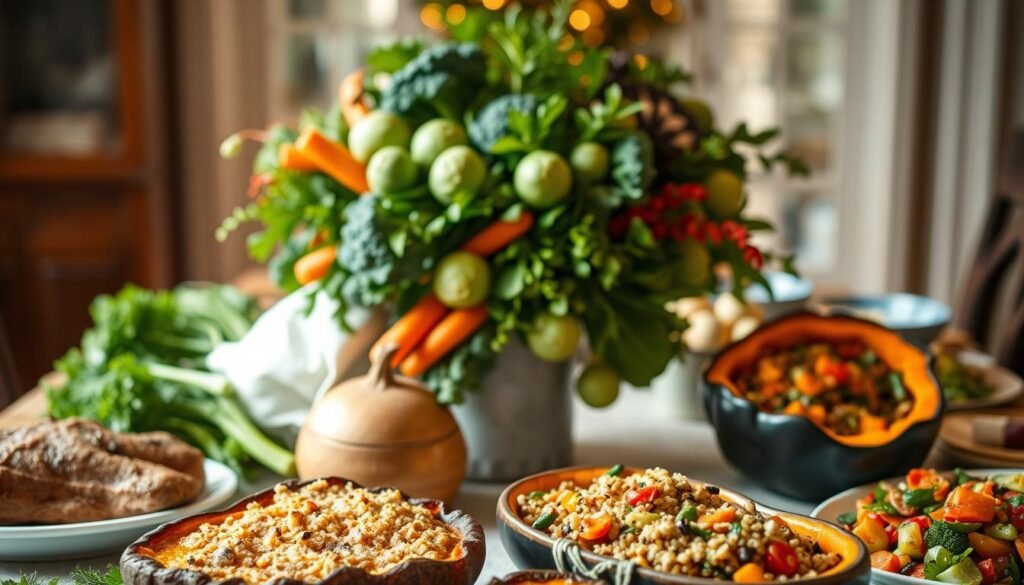
At every gathering, I try a new vegetable dish. This keeps things interesting and helps me find new favorites. Last year, I discovered a roasted cauliflower recipe that’s now a staple.
Vegetables help me feel full and satisfied. I avoid that sluggish feeling that used to ruin my day. I can enjoy dessert without discomfort.
“Eating vegetables first at meals can reduce calorie intake and improve glycemic control, making it an effective strategy for weight management.”
Prioritizing Lean Proteins at Thanksgiving and Christmas
Making protein a priority at holiday meals keeps me satisfied for hours. Including a palm-sized serving of lean protein at every meal helps me eat healthy. Protein keeps my hunger in check and prevents grazing.
Turkey, Fish, and Plant-Based Protein Options
I vary my holiday protein choices to keep meals interesting and inclusive. Roasted turkey breast without the skin is a classic choice. I also serve baked or grilled salmon for omega-3 fatty acids.
For plant-based options, I enjoy lentil loaf, white bean cassoulet, and chickpea casseroles. These dishes provide protein and fiber, making them filling. This variety ensures everyone can enjoy nutritious meals, whether they’re omnivores, pescatarians, or vegetarians.
- Roasted turkey breast (skinless for lower fat content)
- Baked salmon or cod with herbs
- Lentil loaf with seasonal vegetables
- White bean and rosemary cassoulet
- Herb-crusted pork tenderloin
Protein’s Role in Holiday Weight Management
Protein increases satiety more than carbs or fats, helping me feel full longer. This strategy has transformed my holiday weight management.
Protein also burns more calories during digestion. It helps maintain muscle mass during the holiday season. Plus, it stabilizes blood sugar levels, preventing energy crashes and cravings.
I aim for 25-30 grams of protein at each main meal. This keeps my metabolism humming and my appetite in check.
Incorporating Whole Grains Into Traditional Holiday Menus
I’ve shifted to whole grain options without losing the comfort food feel. The transition was easier than expected. Many guests don’t notice the difference when whole grains are prepared well.
I make stuffing with whole grain bread or wild rice. This adds a heartier texture and nuttier flavor. I serve quinoa pilaf, whole wheat dinner rolls, and brown rice in casseroles. These whole grains offer more nutrients, fiber, and sustained energy than refined grains.
The key is to season them well and present them attractively. When I roast whole wheat dinner rolls until they’re golden and brush them with herb butter, they disappear quickly.
| Traditional Option | Whole Grain Swap | Nutritional Benefit |
|---|---|---|
| White bread stuffing | Whole grain bread or wild rice stuffing | 3x more fiber, B vitamins, minerals |
| White dinner rolls | Whole wheat or multigrain rolls | More protein, sustained energy release |
| White rice pilaf | Brown rice or quinoa pilaf | Complete protein, magnesium, antioxidants |
| Regular pasta salad | Whole wheat pasta or farro salad | Better blood sugar control, increased satiety |
How Fiber Keeps You Satisfied During Celebrations
Prioritizing fiber-rich foods has made maintaining a festive balanced diet easier. Fiber slows digestion, keeping me full longer. It also supports digestive health and stabilizes blood sugar levels.
I aim for fiber in every meal and snack. This includes veggies, fruits, whole grains, and legumes. When my meals have 5-8 grams of fiber, I feel much more satisfied.
This approach focuses on what I include, not what I avoid. By choosing nutrient-dense foods, I can enjoy treats without guilt or negative health effects. This strategy has transformed my holiday experience from restrictive to abundant and joyful.
🎁 Navigate Social Pressures While You Eat Healthy During Holidays
Staying healthy during holidays isn’t just about willpower. It’s about knowing how to handle social situations. Family and friends often show love through food, which can be challenging.
Sharing meals with loved ones boosts happiness and mental health. It’s important to find a balance between enjoying food and staying healthy.
Polite Ways to Decline Food Without Offending Hosts
I’ve learned to say no to food without hurting anyone’s feelings. Instead of saying “I’m on a diet,” I say “I’m full” or “I’m saving room for dessert.” This way, I show appreciation without feeling guilty.
Starting with small portions helps me try new foods without overeating. This way, I can always go back for more if I want.
Redirecting the conversation to something else is another strategy. I compliment the food or the table setting. This makes everyone focus on the positive aspects.
If hosts keep pushing, I say I’ll take some food home. This satisfies them without making me eat more than I want.
Strategies for Hosting Your Own Healthier Holiday Gatherings
Being the host lets me control the menu and atmosphere. I plan for both traditional and healthy dishes. This way, everyone has something they enjoy.
Hosting also means I can offer healthy options without making a big deal about them. Guests appreciate having choices.
Creating a Balanced Menu That Everyone Enjoys
I mix traditional dishes with healthier options. I don’t label foods as “healthy” to avoid any negative reactions. Instead, I focus on making all food delicious.
I make sure there are plenty of vegetables, lean proteins, and whole grains. This way, everyone has something satisfying to eat.
Presenting food beautifully is key. When healthy dishes look appealing, guests are more likely to try them.
I place vegetable dishes and salads at the beginning of the buffet. This way, guests are more likely to try them first.
I make vegetables look tempting by using colorful dips and interesting platters. This turns them into conversation starters.
Using attractive dishes for healthy options makes them stand out. This elevates their status and appeal.
Communicating Your Wellness Goals to Family Members
It’s important to share your wellness goals with family. I explain my intentions in a positive way. This helps avoid any negative reactions.
I say something like, “I’m focusing on feeling my best this holiday season.” This statement is positive and doesn’t invite debate.
Asking for support is key. Saying “I’d appreciate it if you didn’t pressure me to eat more” sets a clear boundary. Standing firm but kind is important when boundaries are tested.
Family dynamics around food can be tricky. Consistency and gentle repetition help family members respect your choices without offense.
Finding Your Support System and Accountability Partners
Having people who support your wellness goals is essential. This support can come from friends, family, or online communities. Each source plays a valuable role.
I rely on friends who share my health priorities. We check in, share successes, and problem-solve together. Knowing someone understands makes it easier.
Online communities offer great support too. Finding a group where members encourage each other creates accountability without judgment.
| Support Source | Benefits | How to Engage |
|---|---|---|
| Like-Minded Friends | Shared experiences, mutual encouragement, practical advice | Schedule regular check-ins, share meal ideas, exercise together |
| Family Members | Daily support, understanding of challenges, shared meals | Communicate goals clearly, invite them to join you, express appreciation |
| Online Communities | 24/7 availability, diverse perspectives, anonymity if desired | Join forums, participate in discussions, share your journey |
| Professional Resources | Expert guidance, personalized advice, evidence-based strategies | Follow wellness websites, subscribe to newsletters, consult specialists |
Discovering More Resources at HealthyVibesLife.com
Check out www.healthyvibeslife.com for more wellness tips. The website has a wealth of information for a healthier life.
You’ll find seasonal nutrition tips, healthy recipes, and fitness routines. The content supports your health journey, even during tough times like the holidays.
The resources go beyond basic advice. They offer actionable steps, real-world solutions, and inspiration to stay on track.
Subscribing for Exclusive Wellness Tips and Holiday Deals
Join the HealthyVibesLife.com newsletter community. Subscribers get regular health tips and wellness advice in their inbox.
The newsletter offers wellness travel recommendations, fitness product updates, and exclusive content. You’ll get timely tips for seasonal challenges.
Subscribers also get special holiday deals and content. This community supports your commitment to healthy living.
Signing up is easy, but the ongoing support makes a big difference. You’ll find it easier to maintain your wellness goals with consistent guidance and encouragement.
🌟 Conclusion: Embracing a Healthier, Happier Holiday Season
I’ve shared ways to eat well during holidays and not miss out on fun. These tips focus on balance, not cutting out things you love.
Holidays are about connection and being thankful. Food brings us together. By focusing on healthy eating, you’ll have energy for laughter and making memories with family.
Begin with just one or two tips from this guide. Try the plate method or make smart swaps in your holiday meals. Small steps lead to big changes.
Adopting a balanced diet now can last all year. Ditch extreme diets for lasting habits that celebrate life and your health.
Visit HealthyVibesLife.com for support on your wellness journey. You’ll find recipes, fitness tips, travel ideas, and a community that gets you.
This holiday season, enjoy every moment feeling strong and happy. You don’t have to pick between health and joy. With care and kindness, you can have both.
Here’s to a season of tasty food, fun activities, deep connections, and feeling fully yourself.