

Have you ever felt sluggish and bloated after a vacation? I have, and I learned that eating well while traveling is possible. It doesn’t have to ruin your fun.
Exploring the world, I found that eating healthy while traveling is easy with the right tips. The secret is knowing the five key food groups.
The USDA’s MyPlate guidelines show how to get nutrients from dairy, protein, grains, fruits, and vegetables. Each group has special benefits that keep you full of energy.
I’ll share easy ways to make eating out a fun part of your trip. These tips turn dining out into a highlight of your journey, not a hassle.
Want to know how meal planning can make your next trip better? Let’s explore how to make healthy food on vacation both easy and tasty.
Key Takeaways
- Focus on the five food groups (dairy, protein, grains, fruits, vegetables) when dining out
- Plan ahead to maintain energy and wellness during your travels
- Use MyPlate guidelines as your foundation for balanced meals
- Transform dining challenges into enjoyable culinary discoveries
- Apply proven strategies that work in any destination worldwide
🧳 Planning Your Healthy Eating While Traveling Strategy
Smart travel meal planning turns tough dining into chances for healthy food. I’ve found that planning ahead is key for clean eating on the go. This way, I avoid stress and make good choices when I’m hungry in new places.
My three-step plan has kept me healthy and full on many trips. Each step helps me stay on track with healthy eating when I’m away from home.
Research Destinations and Restaurant Options
I start by looking up where to eat before I go. Google Maps and Yelp are my go-to tools. I search for places with varied menus and options for my diet.
Many restaurants post their menus online. I save places and pick dishes that fit my healthy eating while traveling goals. This way, I avoid making bad choices at the last minute.
I also read reviews for fresh ingredients and how food is made. Local blogs and travel forums share tips on healthy spots.
Pack Essential Healthy Snacks
I carry snacks that don’t need to be cold. Nuts and seeds give me protein and healthy fats. I pack them in small amounts to avoid eating too much.
Dried fruits are sweet without added sugar. Whole grain crackers with nut butter are a great snack. Protein bars are my backup when it’s hard to eat clean.
These snacks keep my energy up. They stop me from getting too hungry and making bad food choices.
Download Helpful Apps and Tools
Technology makes travel meal planning easier. HappyCow helps me find healthy restaurants around the world. It has reviews and photos to help me choose.
MyFitnessPal lets me track what I eat. Grocery store apps like Instacart show where to buy fresh food. Restaurant apps give nutrition info and let me order ahead.
These apps help me stay healthy without feeling rushed. They make it easier to make good choices when I’m out.
🍽️ Smart Restaurant Selection Techniques
Finding restaurants that fit your health goals is key when traveling. I’ve learned to choose places that use quality ingredients and can prepare food in many ways. This makes eating out a chance to try tasty, healthy meals.
Choosing the right restaurants helps you eat well on vacation. You can enjoy local tastes and experiences while staying healthy. I research places to eat before I go, looking for signs they offer healthy options.
Look for Farm-to-Table Establishments
Farm-to-table restaurants are my top pick when I travel. They serve the freshest ingredients and are open about how they cook. This means you get the best of what’s in season.
These places are great because they talk about their food and where it comes from. Their menus change with the seasons, so you get more whole foods and fewer processed ones. Chefs here are proud of their ingredients and happy to make special dishes for you.
Choose Restaurants with Diverse Menu Options
Restaurants with many options make it easy to find healthy meals. I look for places with different proteins, cooking methods, and sides. This shows they can adapt to your needs.
When I look at menus online, I search for grilled, baked, or steamed dishes. I also want to see salads, steamed veggies, and whole grains as sides, not just fries.
Request Modifications and Substitutions
Most restaurants are okay with making changes if you ask nicely. I’ve learned to ask for things like dressings on the side or veggies instead of fries. It’s important to be clear about what you need but also open to what they can do.
Here’s a comparison of different restaurant types and their modification flexibility:
| Restaurant Type | Modification Flexibility | Healthy Options | Best For |
|---|---|---|---|
| Farm-to-Table | Very High | Excellent | Fresh, seasonal meals |
| Chain Restaurants | Moderate | Good | Consistent options |
| Fast Casual | High | Good | Quick, customizable meals |
| Fine Dining | Moderate | Variable | Special occasions |
When asking for changes, I say things like “Can I have the salmon grilled?” or “Can I swap steamed broccoli for mashed potatoes?” This shows respect and clearly states what you want.
For more tips on nutrition and travel, check out www.healthyvibeslife.com. Consider subscribing to our newsletter for wellness travel deals, fitness product tips, and health advice that makes staying fit on the go easier.
📋 Menu Navigation Strategies for Health-Conscious Travelers
Every menu tells a story about how your food will be prepared. I’ll teach you to read between the lines. When you’re committed to clean eating on the go, understanding restaurant terminology becomes your most valuable skill. I’ve found three key strategies for menu navigation that make any dining experience healthy.
Decode Menu Language and Cooking Methods
Restaurant menus use specific words that reveal how your food will be prepared. I look for dishes described as grilled, baked, steamed, roasted, or broiled. These methods preserve nutrients without adding excess fats. They align perfectly with healthy eating while traveling goals.
I avoid menu items with words like “crispy,” “golden,” “battered,” or “pan-fried.” These terms indicate deep-frying or heavy oil usage. Words like “creamy,” “rich,” or “decadent” signal high-calorie sauces and excessive dairy content.
I spot healthy sides by looking for “seasonal vegetables,” “garden salad,” or “steamed broccoli.” This simple word recognition has changed my restaurant experiences.
Ask Questions About Ingredients and Preparation
I never hesitate to ask servers about ingredients and cooking methods. My go-to questions include: “How is this dish prepared?” and “What type of oil do you use for cooking?” These questions provide essential information for maintaining clean eating on the go.
When curious about portion sizes, I ask: “Is this a large portion that could be shared?” This helps me plan whether to order an appetizer as my main course. I also ask about hidden ingredients by inquiring: “Does this dish contain any dairy, gluten, or added sugars?”
Most servers appreciate these questions because they show I’m a thoughtful customer. I phrase my inquiries politely: “Could you tell me more about how the salmon is prepared?” This approach gets me the information I need without seeming demanding.
Request Modifications and Substitutions
I’ve found that most restaurants accommodate reasonable modification requests. My most successful substitutions include asking for grilled protein instead of fried, requesting dressing on the side, and swapping refined grains for vegetables or salad.
When ordering, I might say: “Could I have the chicken grilled instead of breaded, and substitute the fries with steamed vegetables?” This approach maintains the dish’s integrity while supporting my healthy eating while traveling commitment.
I’ve discovered that casual dining establishments and farm-to-table restaurants are typically most flexible with modifications. Fine dining restaurants often accommodate requests too, when I explain I have dietary preferences.
The key to successful modifications is being specific about what you want. Instead of saying “no sauce,” I request “herbs and lemon on the side.” This positive approach usually yields better results and tastier meals.
🥗 Best Food Choices When Dining Out
The secret to maintaining diet abroad is choosing foods that are good for you. I use the MyPlate method to pick the right foods when I travel. This keeps me full and healthy as I explore new places.
Eating out doesn’t have to ruin your diet. Focus on protein, vegetables, and how food is cooked. This way, you can enjoy tasty meals and stay healthy on your travels.
Prioritize Lean Proteins and Vegetables
I start with half my plate full of veggies like spinach or bell peppers. These foods are full of vitamins and keep me full longer. Restaurants often have creative ways to serve veggies.
For protein, I choose one-fourth of my plate for lean options like grilled chicken or fish. Salmon has omega-3s, and chicken breast has all the proteins you need. Beans, lentils, or tofu are great plant-based choices when traveling.
Even at airports, I find healthy options like salads or veggie wraps. Just ask for extra veggies and choose proteins that aren’t processed.
Choose Whole Grains Over Refined Options
The last quarter of my plate is for whole grains like brown rice or quinoa. These give me energy for long days. I always ask about grain options at restaurants.
Whole grains have more fiber and nutrients than refined ones. I look for menu items with farro or wild rice. These keep my blood sugar stable and prevent energy crashes.
If whole grains aren’t available, I eat less refined grains and add more veggies. This trick works even at airports where choices are limited.
Opt for Grilled, Steamed, or Baked Items
Cooking methods matter a lot for nutrition. I choose grilled, steamed, or baked foods because they keep nutrients and taste great. These methods also cut down on added fats.
I look for “herb-crusted” or “wood-fired” on menus for healthier choices. If needed, I ask how dishes are cooked or ask for changes.
Staying away from fried foods is easier with these cooking methods. Most restaurants can make grilled or steamed options, helping me eat healthy anywhere I go.
✈️ Airport and Airline Food Navigation
Smart travelers plan their meals before flying. They know that effective travel meal planning is key. It’s all about being ready for what’s ahead.
Airport food is often frozen and pricey. Eating a big meal before flying saves money and stress. It lets you focus on getting to your gate without worrying about food.
Healthy Airport Terminal Options
Finding good food at airports takes some effort. Look for healthy chain restaurants in terminals. Places like Pret A Manger and Sweetgreen offer fresh, healthy meals.
Many airports have healthy food courts. Look for places that show their ingredients and let you customize. Fresh sushi, Mediterranean grills, and juice bars are usually better than fast food.
If healthy options are scarce, choose wisely from what’s available. Even at regular airport restaurants, you can find healthy choices like grilled chicken salads and fruit cups.
Bringing Your Own Airplane Meals
The TSA lets you bring solid foods through security, but liquids must follow the 3-1-1 rule. Pack nutritious, non-perishable items like nuts, granola bars, and sandwiches.
Hard-boiled eggs, cheese sticks, and cut veggies are great for flights. Always pack more than you think you’ll need. Bringing your own meals ensures you have options when airline food isn’t good.
For international flights, check food import rules. Some countries ban fresh fruits, meats, or dairy. Stick to processed snacks and shelf-stable items to avoid trouble.
Staying Hydrated During Flights
Airplane air is very dry. Drinking water is key to staying comfortable. Bring an empty water bottle through security and fill it up before boarding.
Drink 8 ounces of water per hour of flight time. Adjust based on the flight and your activity. Proper hydration helps combat jet lag and keeps your digestive system working.
Avoid too much caffeine and alcohol on flights. They can dehydrate you. If you do drink, make sure to drink water too. Staying hydrated makes a big difference in how you feel when you arrive.
🏨 Hotel Dining and Room Service Tips
Your hotel can help you eat healthy while traveling. Many people miss out on the chance to make healthy choices at hotels. But, with the right strategy, you can find nutritious options in hotel food.
To stay fit while traveling, it’s important to know how to choose healthy food at hotels. Whether it’s breakfast buffets, room service, or cooking in your room, each offers chances for healthy eating.
Making the Most of Hotel Breakfast Buffets
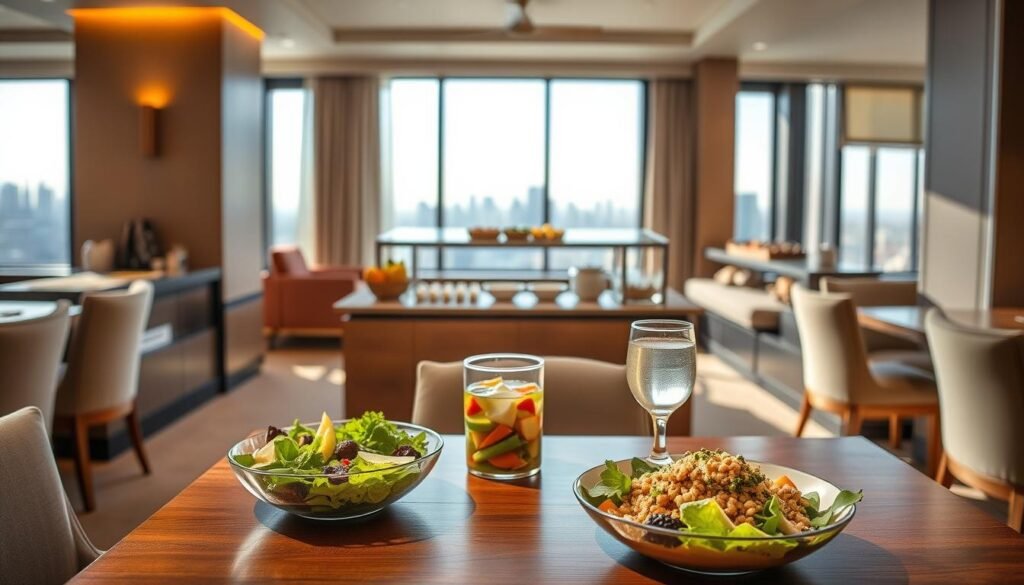
Hotel breakfast buffets can be a great place to find healthy food. Start by looking at the whole buffet before you choose. This helps you avoid bad choices and pick a balanced meal.
Choose protein-rich foods first. Eggs, Greek yogurt, and fresh fruit are all good choices. They give you energy and are healthier than pastries.
Look for whole grain foods like oatmeal and whole wheat toast. They give you energy that lasts. Try to eat healthy foods first, then add pastries if you want.
The secret to buffet success is building your plate like a nutritionist would: half vegetables and fruits, one quarter lean protein, and one quarter whole grains.
| Buffet Category | Best Choices | Portion Strategy | Avoid |
|---|---|---|---|
| Proteins | Scrambled eggs, Greek yogurt, turkey sausage | Palm-sized serving | Bacon, processed meats |
| Carbohydrates | Oatmeal, whole grain toast, fresh fruit | Cupped hand portion | Pastries, white bread, sugary cereals |
| Beverages | Water, herbal tea, black coffee | Multiple glasses of water | Fruit juices, flavored coffee drinks |
| Extras | Fresh berries, nuts, seeds | Small handful | Syrups, whipped cream, processed toppings |
Healthy Room Service Selections
Room service menus often have healthy options hidden behind fancy names. Learning to read menu descriptions helps you find these options. Words like “grilled,” “steamed,” or “roasted” usually mean the food is healthier.
Don’t be afraid to ask for changes. Hotels usually agree to make simple changes like dressing on the side or extra veggies. Always ask about how the food is prepared if you’re not sure.
Salads are great choices for room service, but ask for protein like chicken or salmon. Soup and salad combos are also good for a balanced meal. Grilled fish or chicken with steamed veggies can be a nutritious meal in your room.
Utilizing In-Room Kitchen Facilities
Extended-stay hotels and suites with kitchens are great for healthy eating. Pack a cooler with essentials or find a nearby grocery store right away. This saves money and ensures you have healthy food.
Fill your mini-fridge with healthy snacks. Greek yogurt, fruits, veggies, and hummus are quick and nutritious. Hard-boiled eggs, string cheese, and nuts are good for protein.
Preparing simple meals is easy. Overnight oats in hotel glasses are a great breakfast. Microwave-steamed veggies with pre-cooked proteins make for a healthy dinner. Don’t forget to bring some basic seasonings to add flavor.
Success in hotel dining comes from being prepared and making smart choices. By using these strategies, you can easily stay healthy while traveling. Remember, small, consistent choices lead to big results over time.
For more tips on staying healthy while traveling, check out www.healthyvibeslife.com. There, you’ll find expert advice on staying fit and creating healthy habits on the road.
🚗 Road Trip Nutrition Strategies
Planning well makes any road trip a healthy adventure. It’s all about being prepared, flexible, and knowing where to find good food. Finding the right balance between convenience and nutrition is key.
Road trips are great for trying new foods. You can control your food and when you eat it. This lets you stay energized and focused on your journey.
Packing a Cooler with Healthy Options
A good cooler is like a mobile kitchen. It’s essential for healthy eating on the road. I pack snacks that are easy to prepare and stay fresh.
My top picks for road trip snacks are sugar snap peas, carrots, and cherry tomatoes. They’re fresh for days and don’t need prep. You can eat them easily while driving.
Keeping food safe is important. I use ice packs and frozen water bottles to keep things cool. I pack food in order, so the first things I eat are on top.
Here are some must-haves for your cooler:
- Cut vegetables like bell peppers and cucumber slices
- Hummus and Greek yogurt in individual containers
- String cheese and pre-portioned nuts
- Fresh fruit that travels well, such as apples and grapes
- Whole grain crackers and rice cakes
Finding Nutritious Fast Food Alternatives
Eating healthy on the road is possible. Knowing what to order at chain restaurants helps. Research menus and learn how to make healthier choices.
At Subway, I choose salads with lots of veggies and lean proteins. Chipotle bowls without rice are nutritious with beans, veggies, and salsa. Even McDonald’s has healthy options like apple slices and side salads.
Many restaurants post nutritional info online. I use apps like MyFitnessPal to check before I order. This helps me make quick, healthy choices when I’m hungry.
Smart fast food strategies include:
- Choosing grilled over fried proteins
- Requesting dressings and sauces on the side
- Substituting fries with side salads or fruit
- Ordering water instead of sugary beverages
Planning Meal Stops at Grocery Stores
I shop at markets along the way for fresh food. Stores like Wegmans and Whole Foods have great prepared foods. These stops make meal breaks exciting and healthy.
Regional grocery stores have local foods and fresh prepared meals. Whole Foods has hot bars with organic veggies and lean proteins. Wegmans has a huge prepared food section with nutrition info.
Shopping at the right time is key. I stop every 200-300 miles to refresh my cooler and try new foods. Morning is best for finding fresh, prepared foods.
Farmers markets are a must-visit for fresh produce. I use apps like Local Harvest to find them. These stops offer seasonal foods and connect you with local culture.
Smart grocery shopping tips include:
- Researching store locations along your planned route
- Shopping early in the day for best selection
- Focusing on prepared foods that don’t require cooking
- Buying ice to refresh your cooler supplies
- Exploring local and regional specialty items
🌍 International Cuisine Health Tips
Traveling internationally has taught me to love local healthy dishes. International cuisine health tips guide me to find authentic flavors while staying healthy. Every culture has its own nutritious traditional foods.
Seeking nutritious food on vacation is an exciting journey. Many traditional dishes from around the world are naturally healthy. The trick is knowing where to look and what to order.
Embracing Local Healthy Dishes
My travels have shown me that every region has amazing local healthy dishes that tourists often miss. In the Mediterranean, I look for grilled fish, olive oil, fresh veggies, and whole grains. These dishes offer lean protein, healthy fats, and complex carbs.
Asian cuisines are full of great international cuisine health tips. Japanese miso soup, sashimi, and steamed veggies provide probiotics, omega-3s, and essential nutrients. In Thailand, I enjoy som tam (papaya salad) and grilled fish with herbs, which give fresh enzymes and lean protein.
Indian cuisine is a surprise for many travelers with its healthy options. Dal (lentil curry) offers plant-based protein and fiber, while tandoori dishes have grilled meats without heavy sauces. I ask for less oil and choose dishes with lots of veggies and legumes.
Latin American countries are known for fresh, nutritious food. Mexican ceviche is lean fish “cooked” in citrus, while Peruvian quinoa salads provide complete proteins. I look for grilled meats with fresh salsas and avoid heavy cheese-laden dishes.
Understanding Cultural Eating Patterns
Cultural eating patterns vary worldwide, making it easier to find nutritious food on vacation. In Spain, the late dining schedule supports better digestion with lighter lunches and moderate dinners.
French eating culture focuses on smaller portions and longer meals. This approach supports mindful eating and better satiety signals. I eat slowly and savor each bite to prevent overeating.
In many Asian cultures, meals center around shared dishes with rice or noodles as the base. I load my plate with veggies and lean proteins while taking smaller portions of starches. This creates a balanced meal that aligns with healthy eating principles.
Middle Eastern cultures often serve mezze-style meals with multiple small dishes. This eating pattern allows you to try various foods while controlling portions naturally. I focus on hummus, grilled meats, fresh veggies, and whole grain breads.
| Region | Healthy Traditional Dishes | Key Nutritional Benefits | Ordering Tips |
|---|---|---|---|
| Mediterranean | Grilled fish, Greek salad, gazpacho | Omega-3s, antioxidants, healthy fats | Request olive oil on the side |
| Asian | Miso soup, sashimi, stir-fried vegetables | Probiotics, lean protein, vitamins | Choose steamed over fried options |
| Latin American | Ceviche, grilled meats, quinoa salads | Complete proteins, fiber, minerals | Ask for salsas instead of heavy sauces |
| Middle Eastern | Hummus, grilled kebabs, tabbouleh | Plant proteins, fresh herbs, whole grains | Share mezze plates for variety |
Avoiding Common Tourist Food Traps
The biggest tourist food traps are restaurants in heavily touristed areas that serve Americanized versions of local cuisine. These places use more oil, sugar, and processed ingredients than authentic local restaurants. I always walk a few blocks away from major attractions to find better options.
All-you-can-eat buffets are another major trap for healthy eating while traveling. While tempting, these setups encourage overeating and often feature lower-quality ingredients. When I must eat at buffets, I fill my plate once with mostly veggies and lean proteins.
Chain restaurants in tourist areas rarely offer the best international cuisine health tips or authentic experiences. I use apps like Yelp or ask locals for recommendations to find family-owned establishments that serve traditional, healthier preparations.
Street food requires careful consideration, but it’s not off-limits. I look for vendors with high turnover, fresh ingredients, and grilled options. Nutritious food on vacation can include street food when you choose wisely and observe proper food safety practices.
Hotel restaurant menus often cater to international tastes, resulting in less healthy, more processed options. I venture out to local neighborhoods where residents eat to discover authentic local healthy dishes that support my wellness goals.
Language barriers can actually work in your favor when avoiding tourist traps. Restaurants where menus aren’t translated often serve more authentic, traditional foods. I use translation apps or point to dishes that look fresh and simply prepared.
⚖️ Portion Control and Mindful Eating Practices
One of the biggest challenges in maintaining diet abroad is learning to navigate oversized restaurant portions effectively. Travel disrupts our normal eating routines and hunger signals. This makes it harder to recognize when we’re truly satisfied.
I’ve discovered that successful portion management requires both strategy and awareness. Restaurant portions vary dramatically across different countries and cultures. What seems normal in one place might be excessive in another.
Managing Large Restaurant Portions
Large restaurant portions don’t have to derail your nutrition goals. I always assess portion sizes before diving into my meal. This simple pause helps me make better decisions about how much to eat.
Consider ordering appetizers as your main course. Many appetizer portions are actually perfect meal sizes. They satisfy hunger without overwhelming your system. This approach works well during lunch or lighter dinner occasions.
Sharing meals with travel companions creates a win-win situation. You get to try more variety while controlling portions naturally. I often suggest this approach when dining with friends or family members.
- Ask for a to-go box at the start of your meal
- Divide large portions in half immediately
- Focus on eating slowly to gauge fullness
- Choose restaurants known for reasonable portion sizes
Eating Slowly and Listening to Hunger Cues
Travel stress and excitement can disconnect us from natural hunger signals. I make it a point to eat slowly and check in with my body regularly. This practice helps me recognize true satisfaction versus mindless eating.
Put your utensils down between bites. This simple technique slows down your eating pace naturally. It also gives your brain time to register fullness signals from your stomach.
Engage in conversation during meals when possible. Social interaction naturally slows eating pace and enhances meal enjoyment. This approach supports both digestion and portion awareness.
Time zone changes can confuse hunger cues significantly. I pay extra attention to physical hunger signals instead of clock time. This helps maintain healthy eating patterns despite schedule disruptions.
Sharing Dishes and Trying Variety
Variety satisfies curiosity while preventing overconsumption of single dishes. I love ordering multiple smaller dishes to share with dining companions. This strategy lets me experience local flavors without overindulging.
Adding vegetables to any meal increases fiber content. Fiber helps you feel full for several hours after eating. This prevents overeating later in the day and supports digestive health during travel.
Consider the tapas or mezze approach to dining. Order several small plates instead of one large entree. This method encourages mindful tasting and natural portion control.
- Start with vegetable-based dishes to increase fiber intake
- Order one dish per person, then share everything
- Try local specialties in smaller portions
- Balance indulgent items with lighter, healthier options
Successful healthy eating while traveling requires flexibility and self-awareness. These portion control strategies become second nature with practice. They help you enjoy local cuisine while maintaining your wellness goals.
For more travel wellness tips and exclusive health insights, explore www.healthyvibeslife.com. Subscribe to our newsletter for ongoing support, the latest fitness product recommendations, and special health deals that complement your active lifestyle.
💧 Staying Hydrated and Managing Cravings
Staying hydrated and controlling cravings are key to healthy eating while traveling. Travel changes your routine and exposes you to new environments. Learning to manage hydration and cravings helps you stay fit during trips and enjoy your journey.
Travel poses unique challenges to your body. Air travel dehydrates you faster than usual activities. Walking more than usual increases your water needs. Climate changes affect how much fluid you lose through breathing and sweating.
Water Intake Strategies While Traveling
Always bring a refillable water bottle on every trip. It’s your best friend for staying hydrated. Fill it after you get past security if you’re traveling by air – this ensures you have water throughout your journey without paying airport prices.
Calculate your daily water needs based on your activity level. The basic formula starts with half your body weight in ounces. Add 12-16 ounces for every hour of walking or sightseeing. Hot climates require an additional 16-24 ounces per day.

Set phone reminders every two hours to drink water. Many travelers forget to hydrate because they’re distracted by new experiences. Mark your water bottle with time goals to track your intake visually.
“We tend to walk more on vacation than at home, we get thirstier and if we don’t have water with us, we will likely drink soda, juice or any other sugary beverage.”
Choose water over sugary drinks when thirst strikes. Soda and juice provide empty calories that derail your healthy eating goals. They also don’t hydrate as effectively as plain water.
Dealing with Travel-Induced Cravings
Travel triggers intense food cravings for several reasons. Disrupted sleep patterns affect hormones that control hunger. Stress and excitement alter your brain’s reward system. Exposure to new foods creates psychological desires beyond physical hunger.
Use the 20-minute rule when cravings hit. Wait 20 minutes before acting on any food desire. Drink a full glass of water first. Often, what feels like hunger is actually thirst or boredom.
Distinguish between true hunger and emotional cravings. True hunger builds gradually and accepts various food options. Emotional cravings appear suddenly and demand specific foods, usually sweet or salty options.
| Craving Trigger | Healthy Response | Alternative Activity | Expected Result |
|---|---|---|---|
| Boredom during travel | Drink water first | Read or listen to music | Craving subsides in 15 minutes |
| Stress from delays | Practice deep breathing | Take a short walk | Reduced cortisol and cravings |
| Excitement about local food | Plan one special meal | Research healthy local options | Controlled indulgence |
| Fatigue from jet lag | Choose protein-rich snacks | Take a 20-minute nap | Stable blood sugar levels |
Pack healthy snacks to combat unexpected cravings. Nuts, seeds, and dried fruit provide satisfaction without derailing your travel meal planning. Having good options available prevents poor choices when hunger strikes.
Balancing Indulgences with Healthy Choices
I follow the 80/20 approach during travel. Make healthy choices 80% of the time while allowing special treats and local specialties 20% of the time. This balance lets you enjoy your destination without abandoning your health goals.
Plan your indulgences strategically. Save calories for a special dinner by eating lighter during the day. Choose one signature dish or dessert instead of overindulging at every meal.
Limit alcohol consumption by following simple rules. Never drink on an empty stomach – this leads to poor food choices and overconsumption. Have water after each alcoholic drink to maintain hydration and slow alcohol absorption.
Return to healthy habits immediately after occasional overindulgences. Don’t let one heavy meal turn into a week of poor choices. The next meal is always an opportunity to get back on track.
Practice portion awareness even with indulgent foods. Share desserts with travel companions. Order appetizer portions of rich dishes. Take photos of special meals to remember the experience without needing to finish everything.
Remember that travel is about creating memories, not just eating. Focus on the experience of trying new foods, not the quantity consumed. This mindset shift helps you enjoy treats without guilt while maintaining your commitment to staying fit during trips.
🎯 Maintaining Your Healthy Eating Routine Long-Term
The secret to successful travel nutrition is creating flexible systems. These systems should grow with your experiences. Maintaining diet abroad isn’t about being perfect. It’s about building habits that last.
Many travelers see each trip as a new challenge. But, I believe in viewing travel nutrition as a skill that gets better with time. This mindset helps you succeed in the long run.
Creating Sustainable Travel Habits
Building sustainable habits for clean eating on the go starts with finding what works for you. I focus on three key principles that work anywhere.
First, start with basics you can do anywhere. This includes drinking water before meals, choosing veggies, or packing healthy snacks. These habits become second nature over time.
Second, have backup plans for common challenges. If your favorite restaurant is closed or healthy options are scarce, you won’t give up your goals.
Third, adapt your approach based on where you are. Research shows travelers who customize their habits have 60% better success rates.
| Travel Scenario | Sustainable Habit | Backup Strategy | Success Rate |
|---|---|---|---|
| Business Travel | Pack protein bars and nuts | Research hotel area restaurants | 85% |
| International Leisure | Learn key food phrases | Use translation apps for menus | 78% |
| Road Trips | Pre-plan grocery stops | Identify healthy fast-food options | 82% |
| Adventure Travel | Pack lightweight nutritious foods | Research local markets | 75% |
Learning from Each Travel Experience
Every trip teaches you something new about maintaining diet abroad. I keep a travel food journal to track patterns and improve my strategies.
After each trip, I reflect on what worked and what didn’t for 10 minutes. This helps me see that schedule changes, not lack of options, are often the biggest challenges.
Document both your successes and struggles. Record great restaurants and useful apps. This builds a database of travel nutrition resources for future trips.
Notice how different places affect your eating habits. Some do better with set meal times, while others prefer flexible eating. Knowing your habits is key to long-term success.
Building Flexibility into Your Approach
Rigid rules can lead to failure and stress when eating on the go. Instead, aim for adaptable guidelines that fit unexpected situations and cultural differences.
The 80/20 approach works for many. Aim for healthy choices 80% of the time, allowing 20% for cultural experiences and spontaneity. This balance keeps you from feeling deprived while meeting your nutrition goals.
When setbacks happen, get back on track with your next meal. Don’t wait until you return home. I’ve seen many give up their healthy habits after one indulgent meal.
Flexibility doesn’t mean lowering your standards. It means having multiple ways to reach your goals. If your first choice isn’t available, you have other options ready.
Recovery strategies are as important as prevention. If a trip didn’t go as planned, start over once you get home. Work your way back to your previous level and improve as you can. This prevents the all-or-nothing thinking that derails many people’s long-term success.
View healthy travel eating as a skill that improves with practice, not a perfect system to master right away. Each trip builds your confidence and expands your toolkit for future adventures.
Ready to take your wellness journey to the next level? Explore more resources on www.healthyvibeslife.com. Find detailed guides, meal plans, and expert advice tailored to your lifestyle. Don’t forget to subscribe to our newsletter for ongoing support, exclusive wellness travel deals, cutting-edge fitness product reviews, and personalized health tips delivered directly to your inbox. Your journey to better health doesn’t end when you return home—it evolves with every adventure.
🌟 Conclusion
Healthy eating while traveling becomes easy once you start using these tips. Focus on dairy, protein, fruits, veggies, and whole grains. These are your key foods, no matter where you go.
Healthy food on vacation doesn’t have to be hard or pricey. Begin with one or two tips from this guide on your next trip. Try packing healthy snacks, look up restaurants before you go, or ask about food preparation.
Good eating habits boost your energy and mood while traveling. You’ll have more energy for exploring, better sleep, and a happier trip.
Want more tips on wellness while traveling? Check out www.healthyvibeslife.com. We have lots of advice, from hotel room workouts to healthy eating guides for different places.
Don’t miss out on special travel wellness deals and tips. Subscribe to our newsletter and join thousands of travelers who’ve improved their vacation nutrition. Your healthiest adventures are waiting!