
“You wouldn’t worry so much about what others think of you if you realized how seldom they do.” — Eleanor Roosevelt’s words remind us that much of our worry exists only in our minds, yet the physical symptoms feel undeniably real.
I know that overwhelming feeling because I’ve lived through it myself. The racing heart, the restless nights, the constant sense that something bad is about to happen—these experiences drove me to find effective coping with anxiety methods that actually work.
If you’re reading this right now, you’re likely experiencing similar struggles. You’re not alone in this journey.
According to the National Alliance on Mental Health (NAMI), anxiety disorders affect approximately 19.1% of American adults. That’s nearly one in five people dealing with the same challenges you face.
Throughout this guide, I’ll share strategies that helped me regain control of my life. These aren’t quick fixes, but proven approaches combining my personal experience with evidence-based practices.
Managing symptoms takes time and patience. But with the right tools and techniques, significant improvement is absolutely possible. I’ve seen it in my own life, and I’ve witnessed countless others transform their relationship with worry and stress.
Key Takeaways
- Anxiety disorders affect 19.1% of U.S. adults, making them the most common mental health condition in America
- Physical symptoms include racing heart, sleep disturbances, fatigue, and digestive issues triggered by stress hormones
- Managing symptoms is a gradual process requiring patience, practice, and the right combination of strategies
- Evidence-based approaches combined with personal experience offer the most effective relief methods
- Professional guidance, immediate relief techniques, and long-term strategies all play important roles in recovery
😰 Understanding Anxiety and Why Managing It Matters for Your Daily Life
Learning about anxiety changed how I saw it. Before, I didn’t understand the physical sensations. Now, I know what’s happening in my body.
Anxiety isn’t just feeling nervous. It’s a complex response that affects your body and mind. Knowing this helped me stop blaming myself.
What Anxiety Really Is and How It Affects Your Body
Anxiety is your brain’s way of dealing with uncertainty. It fills in the blanks with worst-case scenarios. This isn’t a weakness, but an overactive survival mechanism.
When anxiety hits, your body prepares for danger. Stress hormones like cortisol and adrenaline flood your system. This prepares your body for “fight or flight.”
Your heart races, breathing gets faster, and your stomach tightens. These are your body’s ways of protecting you, even when you’re safe.
These physical signs can become triggers themselves. Feeling your heart race can make you worry, releasing more stress hormones. It’s a cycle that feels hard to break.
Common Anxiety Symptoms I’ve Experienced Throughout My Journey
Anxiety symptoms can be physical and mental. They’ve ranged from uncomfortable to terrifying for me.
I’ve had a racing heart and tight chest. Before big events, my stomach churned, making it hard to eat. Muscle tension was exhausting, leading to headaches.
Sweating, trembling, and dizziness were common. These symptoms made everyday activities challenging.
Mentally, I struggled with constant worry and negative thoughts. These thoughts made me feel like I couldn’t handle anything. Sleep was hard to come by as anxious thoughts flooded my mind.
Negative thinking patterns were hard to shake. I thought I was incompetent and would fail. These thoughts felt true, but were distorted by anxiety.
| Physical Symptoms | Mental Symptoms | Behavioral Symptoms |
|---|---|---|
| Racing or pounding heart | Constant worry and rumination | Avoiding social situations |
| Chest tightness or pain | Catastrophic thinking patterns | Procrastinating on important tasks |
| Stomach churning or nausea | Difficulty concentrating | Seeking constant reassurance |
| Muscle tension and headaches | Fear of losing control | Restlessness and inability to relax |
| Sweating and trembling | Negative self-talk | Sleep disturbances |
The Difference Between Normal Worry and Anxiety Disorders
Everyone worries sometimes. That’s normal and healthy. But anxiety disorders are different.
Normal worry is related to the situation and goes away when the stress does. Anxiety disorders last longer and are more intense. They affect your daily life.
I knew I had an anxiety disorder when my worry lasted weeks. I worried as much about small things as big ones. This made my daily life hard.
According to statistics, about 19.1% of U.S. adults have anxiety disorders. If anxiety is affecting your life, it’s time to seek help. It’s not weakness, but recognizing a mental health issue.
Why Learning Anxiety Coping Strategies Changed My Life
Learning to manage anxiety changed everything for me. I realized I had two choices: keep suffering or learn to cope.
Seeking out coping strategies was a turning point. I read, went to therapy, and tried different techniques. Not all worked, but I found some that helped.
Managing anxiety didn’t make it go away completely. But I learned to handle it better. I now have tools to stop the anxiety spiral.
My relationships improved once I was calmer. My work got better because I wasn’t worried all the time. I started sleeping well again.
Most importantly, I took back my life. I stopped avoiding things that made me anxious. I learned to control my fear, not let it control me.
The strategies I’ll share helped me a lot. Some work right away, others take time. They helped me manage my anxiety and regain my life. I believe they can help you too.
🫁 Anxiety Breathing Exercises: Immediate Relief Techniques I Swear By
I learned the power of controlled breathing during a bad anxiety episode. My heart was racing, my chest was tight, and I couldn’t think straight. A friend told me to breathe slowly with her. In just three minutes, I started to feel better.
That moment taught me something important. Anxiety breathing exercises are the most accessible anxiety management techniques we have. They’re free, always available, and backed by solid science. When you breathe out longer than you breathe in, your heart rate slows down and your body relaxes.
The beauty of breath control lies in its biological impact. You’re literally telling your body it’s safe. No pills, no equipment, no appointments necessary.
Breathing is the bridge between the mind and body, the connection between consciousness and unconsciousness, the movement of spirit in matter.
The 4-7-8 Breathing Technique for Instant Calm
This technique became my secret weapon against anxiety. I use it before important meetings, when I wake up anxious at 3 AM, and anytime I feel tightness in my chest. The 4-7-8 method works because the extended exhale activates your vagus nerve, which signals safety directly to your brain.
What makes this breathing technique special is the specific count ratio. The pattern creates a rhythm that forces your mind to focus on counting instead of worrying.
Step-by-Step Instructions
I’ve practiced this hundreds of times, and here’s exactly how I do it:
- Find a comfortable seated or lying position where you can relax your shoulders
- Place the tip of your tongue behind your upper front teeth and keep it there throughout
- Exhale completely through your mouth, making a whooshing sound to empty your lungs
- Close your mouth and inhale quietly through your nose while counting to 4
- Hold your breath for a count of 7
- Exhale completely through your mouth for a count of 8, making that whooshing sound again
- Repeat this cycle three to four times
The first few times might feel awkward or uncomfortable. That’s completely normal. Your body needs time to adjust to this new breathing pattern.
I’ve found this technique invaluable for immediate anxiety relief in specific situations. Here’s when it works best for me:
- Before bed when racing thoughts keep me awake
- Right before presentations or difficult conversations
- After receiving stressful news or emails
- When I notice physical anxiety symptoms building—tight chest, rapid heartbeat, shallow breathing
- During transitions between activities when anxiety tends to spike
The beauty of this method is its speed. Within just four cycles, I typically feel significantly calmer.
Box Breathing for Panic Attack Prevention
My therapist introduced me to box breathing during a tough time. She explained that this is one of the most effective anxiety management techniques for panic attack prevention because it creates perfect balance in your breathing cycle.
Box breathing equalizes your inhale, hold, exhale, and hold into four equal parts. This symmetry creates a meditative quality that helps interrupt the anxiety spiral before it becomes overwhelming.
I practice this technique daily, even when I’m not anxious. It’s become part of my morning routine, setting a calm foundation for my entire day.
How Navy SEALs Use This Technique
Here’s what convinced me to stick with box breathing: if elite military personnel use it to stay calm in actual combat situations, it can absolutely work for my daily anxiety. Navy SEALs practice this breathing pattern to maintain focus and composure under extreme pressure.
The technique is simple but powerful:
- Inhale through your nose for a count of 4
- Hold your breath for a count of 4
- Exhale through your mouth for a count of 4
- Hold empty for a count of 4
- Repeat for 5-10 cycles
I visualize tracing a box with my breath—up one side as I inhale, across the top as I hold, down the other side as I exhale, and across the bottom during the empty hold. This visualization gives my anxious mind something concrete to focus on.
Diaphragmatic Breathing Basics for Daily Practice
This is the foundation of all anxiety breathing exercises. I learned that most of us breathe shallowly from our chest, which actually reinforces anxiety. Diaphragmatic breathing—or belly breathing—engages your diaphragm properly and sends calming signals throughout your body.
Here’s the simple test I use: I place one hand on my chest and one on my belly. When I breathe correctly, only my belly hand should move significantly. My chest hand stays relatively static.
At first, this felt completely unnatural. I’d been a chest breather my whole life. But after practicing for just 5-10 minutes daily for two weeks, belly breathing became automatic. My baseline anxiety levels dropped noticeably.
To practice diaphragmatic breathing:
- Lie on your back with knees bent or sit comfortably
- Place one hand on your upper chest and the other on your belly
- Breathe in slowly through your nose, allowing your belly to push your hand up while your chest stays static
- Exhale through pursed lips, feeling your belly hand go down
- Continue for 5-10 minutes
A 2023 study found that cyclic sighing—a variation of diaphragmatic breathing—was specially helpful for reducing anxiety and improving mood. The technique involves inhaling through your nose to almost fill your lungs, taking a second shorter deep inhale to fully expand them, then exhaling slowly through your mouth.
| Technique | Best For | Time Required | Difficulty Level |
|---|---|---|---|
| 4-7-8 Breathing | Bedtime anxiety, pre-event nerves | 2-3 minutes | Beginner-friendly |
| Box Breathing | Daily practice, panic prevention | 5-10 minutes | Easy to moderate |
| Diaphragmatic Breathing | Building long-term resilience | 10-15 minutes | Requires practice |
I encourage you to experiment with all three techniques. What works perfectly for me might not be your favorite, and that’s okay. The key is finding which breathing pattern resonates with your body and your specific anxiety patterns.
These anxiety breathing exercises provide both immediate relief and long-term benefits with consistent practice. I’ve noticed that the more I practice when I’m calm, the easier it is to access these techniques when anxiety strikes. Your breath is always with you—it’s the most portable anxiety management tool you’ll ever have.
🧘 Mindfulness for Anxiety Relief: Practices That Ground You
For years, I thought meditation was only for calm people. But then I found out mindfulness helps anxious minds like mine. I thought my racing thoughts made me unfit for meditation. But the truth surprised me.
Mindfulness isn’t about stopping thoughts or achieving a calm state. It’s about changing how you see your anxious feelings. Instead of fighting anxiety, you learn to watch it without judgment.
This change has been huge for me. These strategies taught me to understand my mind better, not fix it.
Starting a Simple Meditation Practice (Even If You Think You Can’t)
My first meditation tries felt like failures. I sat, closed my eyes, and my brain started making lists and replaying old moments.
But here’s a secret: that’s exactly what’s supposed to happen. Your mind will wander. Mine does too, every time. The goal is to notice when you’ve drifted and gently bring your focus back.
I began with just two minutes. I found a comfy spot, set a timer, and focused on my breath. When my mind wandered (which was often), I noticed and brought my attention back to my breath.
Over time, those two minutes grew to five, then ten. I learned the RAIN method from Dr. Judson Brewer. It’s my go-to when anxiety shows up during meditation:
- Recognize when anxiety starts rising
- Allow the feeling to exist without pushing it away
- Investigate it with curiosity—where do you feel it in your body?
- Note the experience by naming it: “This is anxiety” or “This is worry”
This method uses “affect labeling”—putting your emotional experience into words. Studies show this simple act helps regulate emotions and reduces their intensity.
Think of curiosity as a superpower that allows you to feel open and present, helping you ride out waves of anxiety.
These techniques work because they interrupt the anxiety spiral. Instead of getting caught in “what if” thinking, you anchor yourself in the present moment through observation.
Body Scan Techniques I Use Every Night
My evening body scan practice is essential for my mental health. I lie in bed and focus on each part of my body, starting with my toes and moving up to my head.
I don’t try to relax anything or fix tension. I just notice what’s there. Sometimes my shoulders feel like concrete blocks. Other times my jaw is clenched so tight I wonder how I didn’t notice before.
The practice takes about ten minutes. I move slowly: feet, calves, thighs, hips, stomach, chest, arms, hands, neck, face, and head. This technique has dramatically improved my sleep quality by releasing the physical tension I accumulate throughout the day.
Progressive Muscle Relaxation Method
When my anxiety is high, I add progressive muscle relaxation to my body scan. This technique involves tensing and then releasing each muscle group.
Here’s how I do it: I tense each muscle group for five seconds, then release for thirty seconds. I start with my feet—curling my toes tight, then releasing. Then my calves, thighs, and so on through my entire body.
This method taught me where I physically hold anxiety. My jaw, shoulders, and neck are my problem areas. Now I catch tension building in these spots throughout the day and can address it before it becomes overwhelming.
| Mindfulness Technique | Best Time to Practice | Duration | Primary Benefit |
|---|---|---|---|
| Basic Breath Meditation | Morning or midday | 2-20 minutes | Builds attention and awareness |
| RAIN Method | During anxiety episodes | 3-5 minutes | Changes relationship with anxiety |
| Body Scan | Evening before sleep | 10-15 minutes | Releases physical tension |
| Progressive Muscle Relaxation | When highly anxious | 10-20 minutes | Deep physical relaxation |
| Mindful Walking | Anytime, when restless | 5-30 minutes | Combines movement with awareness |
Mindful Walking to Interrupt Anxious Thoughts
Some days, sitting meditation feels impossible. When anxiety makes me restless and my thoughts won’t slow down, I use mindful walking instead.
I step outside and focus on the physical sensations of walking. I feel my heel strike the ground, then roll through my foot to my toes. I notice the temperature of the air on my skin. I observe my surroundings without judgment—just colors, shapes, sounds.
This moving meditation has become one of my most effective strategies. It works well because it gives my body something to do while I practice mindfulness. The combination of movement and awareness interrupts anxious thought patterns.
I don’t walk fast or try to exercise. I walk at a natural pace and simply pay attention. Even a five-minute mindful walk around my neighborhood can shift my entire emotional state.
Using Mindfulness Apps for Guided Support
I couldn’t have built a consistent meditation practice without guided apps. They taught me proper technique and kept me accountable when motivation wavered.
Apps like Headspace offer beginner courses that explain the basics clearly. Calm provides excellent guided body scans and sleep stories. Insight Timer has thousands of free meditations for every situation imaginable.
I started with guided meditations exclusively for the first few months. Having a voice guide me made it feel less intimidating. These apps also track your progress, which motivated me on days when I didn’t feel like practicing.
The key is finding guidance that resonates with your style. Some teachers use a calm, soothing voice. Others are more direct and practical. Experiment with different approaches until you find what works for you.
Mindfulness for anxiety relief doesn’t eliminate anxiety from your life. Instead, it reduces anxiety’s power over you by teaching you to observe it. These techniques have given me space between the feeling of anxiety and my reaction to it—and that space has changed everything.
💪 Physical Exercise for Chronic Stress Reduction and Natural Anxiety Relief
For years, I thought exercise couldn’t help my anxiety. When I was anxious, the last thing I wanted to do was exercise. My body felt heavy, and my mind was racing.
But then, physical exercise for anxiety became a powerful tool for me. I learned that exercise doesn’t just distract from anxious thoughts. It actually changes what’s happening in your brain and body.
The science backs up what I experienced. Regular exercise releases brain chemicals like serotonin and dopamine. These chemicals boost mood and provide relief. Exercise creates lasting changes in how your brain manages stress.
Best Exercises for Overcoming Anxiety Naturally
I wish someone had told me that the best exercise for anxiety is whatever you’ll actually do consistently. I wasted months feeling guilty about not exercising when I could have been walking.
You don’t need expensive equipment or a perfect workout plan. Research shows that regular exercise helps manage stress and lowers anxiety risk. Even short bursts of movement provide immediate relief.
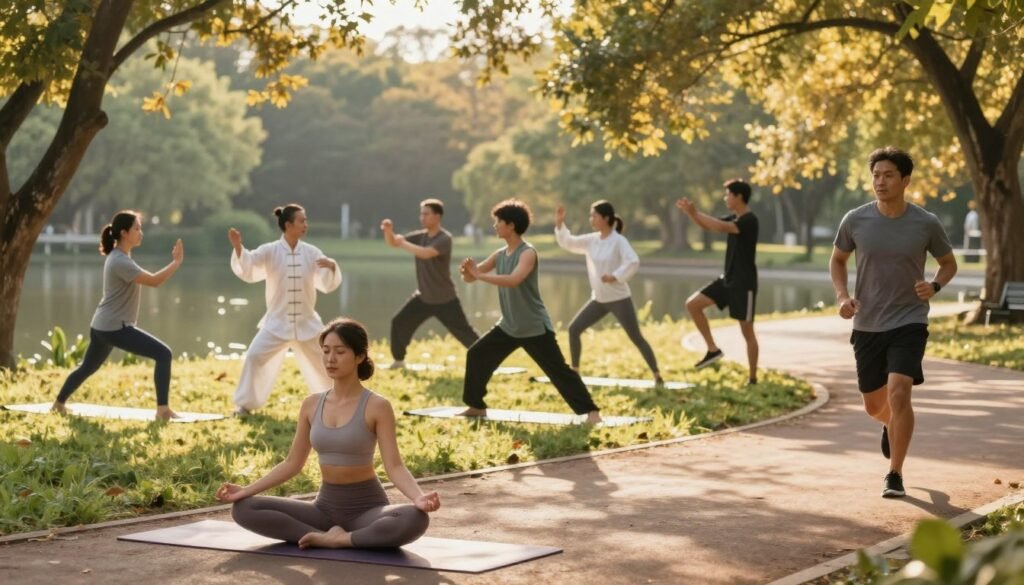
Different exercises offer unique benefits for overcoming anxiety naturally. I mixed various activities to keep myself engaged and address different aspects of my anxiety. Some days I needed intense movement, while other days gentle stretching was what I needed.
Aerobic Exercise Benefits
Aerobic activities like running and cycling increase your heart rate and oxygen flow. This triggers the release of endorphins, which are your body’s natural painkillers. You also boost serotonin and dopamine levels in your brain.
I’ll be honest about my experience with running. The first ten minutes are usually tough. But around the 15-minute mark, something shifts.
My breathing settles into a rhythm. The repetitive motion becomes meditative. My anxious thoughts quiet down, and my mood lifts. This isn’t just in my head—it’s real chemical changes in my brain.
You don’t need intense exercise to experience these benefits. A 20-minute walk can significantly reduce anxiety symptoms. The key is getting your heart rate up enough to feel slightly breathless but able to hold a conversation.
I aim for at least 150 minutes of moderate aerobic exercise per week. This breaks down to 30 minutes five days a week. Some weeks I hit this target easily. Other weeks I manage less, and that’s okay too. Progress matters more than perfection.
Yoga and Tai Chi for Mind-Body Connection
Yoga and tai chi combine movement with breath work and mindfulness. They create a triple-threat against anxiety. These practices helped me understand the connection between physical and emotional tension.
When I started yoga, I was shocked by the tension in my body. As I learned to release that tension, I noticed emotional tension releasing too. It was like my body had been storing anxiety, and movement gave it permission to let go.
Yoga doesn’t have to mean complicated poses or extreme flexibility. Simple stretches and gentle flows can provide natural anxiety relief that lasts for hours after your practice. I use yoga on days when my anxiety makes vigorous exercise feel overwhelming.
Tai chi’s slow, flowing movements are helpful if you find traditional exercise intimidating. The gentle pace allows you to focus on breath and body awareness while getting mood-boosting benefits. Many community centers offer free or low-cost tai chi classes for beginners.
How Movement Changes Your Brain Chemistry
Understanding the neuroscience behind exercise and anxiety fascinated me and motivated me to keep moving even when I didn’t feel like it. This isn’t just about temporary relief—regular movement literally rewires your brain for better stress management.
When you exercise, your brain releases beneficial chemicals. Endorphins act as natural painkillers and create feelings of euphoria. Serotonin stabilizes your mood and promotes well-being. Dopamine drives pleasure and motivation, making it easier to face challenges.
But the changes go even deeper than immediate chemical boosts. Studies show that consistent physical activity changes your brain structure over time. Exercise increases volume in brain regions involved in emotion regulation, like the hippocampus and prefrontal cortex.
Even more exciting, regular movement decreases activity in the amygdala—your brain’s fear center. This means you’re not just managing symptoms; you’re addressing the underlying neural patterns that contribute to chronic stress reduction.
Exercise also reduces inflammation and insulin resistance throughout your body, both of which are linked to increased anxiety. When you move regularly, you’re creating a cascade of positive changes that support mental health from multiple angles.
I found this knowledge incredibly empowering. On days when I didn’t feel immediate relief after exercising, I reminded myself that I was building long-term resilience against anxiety. Every workout was an investment in a calmer, more regulated nervous system.
Creating a Sustainable Workout Routine That Fits Your Life
The biggest obstacle between me and regular exercise wasn’t laziness—it was trying to follow routines that didn’t fit my life. I kept attempting intense workout programs designed for fitness enthusiasts when what I needed was something simple and sustainable.
Start small, and I mean really small. If you’re currently not exercising at all, committing to 10 minutes of movement three times per week is a huge win. You can always build from there. I started with 15-minute walks and gradually worked up to longer sessions as my confidence grew.
Here’s the routine that worked for me:
- Monday and Thursday: 30-minute runs (or walks when I need something gentler)
- Tuesday and Friday: 30-minute yoga sessions using free YouTube videos
- Wednesday: 45-minute walk in nature, focusing on mindfulness
- Weekends: Active play with my dog, dancing in my living room, or hiking—whatever feels fun
This schedule gives me variety to prevent boredom while hitting the recommended 150 minutes of moderate exercise per week. But I don’t beat myself up when life interferes. Missing a workout doesn’t mean failure—it just means I’m human.
Schedule your exercise like any other important appointment. I put my workout times in my calendar and treat them as non-negotiable unless something truly urgent comes up. This removes the daily decision-making that often leads to skipping exercise.
Find an accountability partner if possible. I text my sister before and after my morning runs. Knowing someone expects to hear from me makes it much harder to stay in bed when my alarm goes off. You could also join a class or exercise group for built-in community support.
Experiment with timing to find what best reduces your anxiety. I’m a morning exerciser because movement first thing sets a positive tone for my entire day. My anxious thoughts haven’t fully activated yet, making it easier to get started. My friend swears by evening workouts for burning off the stress accumulated during her workday.
Choose activities you genuinely enjoy, not exercises you think you “should” do. I tried weight lifting because everyone said I should, but I hated it. Swimming, on the other hand, feels meditative and calming. When you enjoy the activity, consistency becomes natural.
“Exercise is the most underutilized antidepressant and the most overutilized tranquilizer.”
Remember that consistency matters more than intensity for overcoming anxiety naturally. A gentle 20-minute walk you actually do beats an intense workout you keep postponing. The goal is to make movement a regular part of your life, not to punish yourself or achieve fitness perfection.
Track how different types and timing of exercise affect your anxiety levels. I keep a simple note in my phone rating my anxiety before and after workouts. Over time, patterns emerged that helped me optimize my routine for maximum mental health benefits.
Physical movement gave me something I desperately needed: tangible proof that I could influence my anxiety. Every time I completed a workout despite not feeling like it, I reinforced the belief that I wasn’t powerless against my symptoms. That sense of agency became just as valuable as the neurochemical benefits.
🥗 Nutrition and Lifestyle Changes: How to Deal with Anxiety Through What You Eat
When my therapist suggested looking at my diet for anxiety management techniques, I was skeptical. I thought anxiety was just in my mind, not in my food. But after tracking my food and mood for two weeks, I found something amazing: what I ate really affected my anxiety levels.
The link between nutrition for anxiety and managing symptoms isn’t about quick fixes or strict diets. It’s about knowing that food gives your brain the nutrients it needs to make mood-regulating neurotransmitters. When I started making better food choices, I felt a solid foundation that made all my other coping strategies work better.
Foods That Help Manage Anxiety Symptoms
Your brain needs nutrients, and some foods give it what it needs to stay emotionally balanced. I learned that adding specific nutrient-rich foods wasn’t about being perfect. It was about making consistent choices that support your mental health.
Think of these foods as building blocks, not quick fixes. Over time, they help your nervous system work its best.
Omega-3 Rich Foods
Omega-3 fatty acids were my first nutritional step, and the results were surprising. These essential fats reduce brain inflammation and support healthy neurotransmitter function. This directly affects how you feel worried or stressed.
I started eating salmon twice a week. In about three weeks, I felt more emotionally stable, even in situations that usually triggered my symptoms.
Here are the best omega-3 sources I rotate through:
- Fatty fish: Salmon, mackerel, sardines, and anchovies (aim for 2-3 servings weekly)
- Plant-based options: Walnuts, flaxseeds, chia seeds, and hemp seeds
- Supplements: Algae-based omega-3s if you don’t eat fish (1,000-2,000mg daily)
- Fortified foods: Some eggs, yogurt, and milk contain added omega-3s
If you’re not a fish fan like my partner, don’t worry. A daily tablespoon of ground flaxseed in your morning smoothie or oatmeal works great. The key is to be consistent, not intense.
Magnesium and B-Vitamin Sources
Magnesium helps regulate your stress response, while B-vitamins support neurotransmitter production. Many people lack these nutrients, which can make anxiety worse without realizing it.
My favorite find was that dark chocolate is a magnesium source. I keep a square or two of 70% dark chocolate as my evening treat. It’s actually helping my mental health.
| Nutrient | Why It Matters | Best Food Sources | Daily Goal |
|---|---|---|---|
| Magnesium | Regulates stress hormones and nervous system | Spinach, almonds, pumpkin seeds, dark chocolate, avocado | 310-420mg |
| Vitamin B6 | Supports serotonin production | Chickpeas, salmon, chicken breast, bananas | 1.3-1.7mg |
| Vitamin B9 (Folate) | Aids neurotransmitter synthesis | Leafy greens, lentils, asparagus, fortified cereals | 400mcg |
| Vitamin B12 | Essential for nerve function | Eggs, dairy, fortified plant milk, nutritional yeast | 2.4mcg |
Many people benefit from supplements, like magnesium. Talk to your doctor about whether supplements are right for you, as deficiencies can worsen symptoms.
What to Avoid When You’re Feeling Anxious
Knowing what to cut out was as important as knowing what to add. Certain substances were working against my efforts to manage my symptoms, even though I initially doubted it.
Caffeine and Anxiety Connection
This was my toughest realization. As someone who drank three cups of coffee every morning, accepting that caffeine fueled my symptoms felt like a betrayal.
Caffeine causes physical sensations similar to worry: increased heart rate, jitteriness, racing thoughts, and restlessness. For those with heightened sensitivity, it can trigger panic attacks.
Caffeine has a half-life of about 5-6 hours, meaning if you drink coffee at noon, a quarter of that caffeine is in your system at midnight. This can disrupt sleep and cause irritability the next day.
My solution was to gradually reduce my caffeine intake. I switched to half-caff for two weeks, then to one cup of green tea in the morning. Green tea has L-theanine, which balances caffeine’s effects.
Everyone’s caffeine tolerance is different. Some can handle moderate amounts without issues, while others need to avoid it completely. Pay attention to how you feel 30-60 minutes after consuming caffeine.
Sugar’s Impact on Mood
The blood sugar rollercoaster was another hidden trigger I hadn’t recognized. Refined sugars cause rapid spikes followed by crashes that create physical sensations similar to nervousness: shakiness, irritability, difficulty concentrating, and fatigue.
I noticed my symptoms would spike about 2-3 hours after eating sugary breakfasts like pastries or sweetened cereal. My body was experiencing a sugar crash that mimicked and intensified my baseline worry.
My breakfast transformation made a huge difference. I switched to protein-rich options like:
- Scrambled eggs with avocado and whole-grain toast
- Greek yogurt with berries, nuts, and a drizzle of honey
- Protein smoothies with spinach, banana, and almond butter
- Overnight oats with chia seeds and sliced almonds
I haven’t eliminated sugar entirely because that would increase my stress. Instead, I’m mindful of timing and quantity, enjoying treats after balanced meals, not on an empty stomach.
Sleep Hygiene for Better Mental Health
Quality sleep is essential when learning how to deal with anxiety. Research shows sleep-deprived people have 30% more anxious thoughts and symptoms. Poor sleep and worry create a vicious cycle that’s hard to escape without intervention.
Sleep allows your brain to process emotions, consolidate memories, and “take out the trash” from your mental workspace. Without enough rest, your emotional regulation system can’t function properly.
These lifestyle changes for anxiety around sleep transformed my nights:
- Consistent schedule: I go to bed at 10:30pm and wake at 6:30am, even on weekends
- Screen curfew: No phones, tablets, or TV one hour before bed
- Optimal environment: Bedroom kept dark, quiet, and cool (around 67°F)
- Caffeine cutoff: Nothing caffeinated after 2pm
- Evening routine: Body scan meditation practice 20 minutes before sleep
If I can’t fall asleep within 20 minutes, I get up and do a calming activity like reading or gentle stretching. Lying in bed anxious about not sleeping only makes it harder to fall asleep.
The connection between what you eat, how you sleep, and how you feel is powerful for managing symptoms. These changes won’t get rid of worry overnight, but they create stability that makes every other strategy more effective.
🧠 Cognitive Techniques: Reframing Your Anxious Thoughts for Long-Term Relief
Your thoughts shape your feelings, and this changed my life. For years, I thought my anxious thoughts were facts. But then I learned cognitive techniques for anxiety that showed me thoughts are just interpretations we can change.
This idea became a key tool for managing my anxiety. Learning to spot and change my thoughts didn’t just lessen my symptoms. It changed how I see the world.
Identifying Negative Thought Patterns and Triggers
The first step in overcoming anxiety naturally is to catch your automatic thoughts. These are thoughts that pop into your mind without effort, feel completely believable, and usually upset you.
I spent a week just watching my thoughts without judgment. What I found was shocking—my mind was always thinking of worst-case scenarios I never noticed before.
Here are the thought patterns I found in my own mind:
- Catastrophizing: “If I’m late to this meeting, I’ll lose my job and end up homeless”
- Black-and-white thinking: “If this presentation isn’t perfect, it’s a complete failure”
- Emotional reasoning: “I feel anxious about flying, so flying must be dangerous”
- Jumping to conclusions: “My boss didn’t respond to my email yet, so she must be angry with me”
- Personalization: “My friend canceled plans, so I must have done something wrong”
Just knowing these patterns made them less powerful. Now, I can catch myself in the middle of a worst-case scenario and think, “There I go again, jumping to the worst possible conclusion.”
I suggest you spend a week noticing your thoughts. Keep a simple note on your phone where you jot down anxious thoughts as they arise. You’ll likely spot recurring patterns that reveal your personal thinking style.
The Challenge and Replace Technique I Use Daily
Once you identify your thought patterns, the next step is challenging anxious thoughts systematically. This technique has become my most-used tool for managing anxiety in real-time.
The process involves examining the evidence for and against your anxious thoughts, then replacing distorted thinking with more balanced perspectives.
Evidence-Based Thinking
When I notice an anxious thought, I immediately ask myself two questions: “What evidence supports this thought?” and “What evidence contradicts it?”
Let me share a real example from my life that demonstrates this process:
Anxious thought: “My friend hasn’t texted back in three days. I must have offended her and she hates me now.”
Evidence for: She usually responds within a day, so three days is unusual.
Evidence against: She mentioned having a major work deadline this week. She’s been a loyal friend for five years and never holds grudges. Last time we met, everything was completely fine. She’s gone silent before during busy periods and it was never about me.
This simple exercise revealed that my thought was based on one piece of evidence while ignoring multiple contradicting facts. The anxiety immediately decreased when I saw the fuller picture.
Reality Testing Your Fears
After gathering evidence, I run my thoughts through additional reality checks. These questions ground my catastrophic thinking in actual reality:
| Reality Testing Question | My Answer (Friend Example) | Purpose |
|---|---|---|
| What would I tell a friend having this thought? | “She’s probably just swamped with work—don’t take it personally” | Provides objective perspective |
| What’s the worst that could realistically happen? | She was busy, or if upset, we could talk it through | Deflates catastrophic thinking |
| What’s most likely to happen? | She’ll respond when her deadline passes | Focuses on probability vs. possibility |
| If the worst happened, could I cope? | Yes, I’ve navigated disagreements before successfully | Builds confidence in resilience |
These questions have become automatic for me now. My brain runs anxious thoughts through this filter before they can spiral into full panic.
The beauty of this approach is that you’re not just suppressing anxiety—you’re training your mind to think differently. Over six months of consistent practice, I noticed my initial thoughts became less catastrophic on their own.
Journaling as a Powerful Anxiety Management Technique
Writing my anxious thoughts on paper transformed them from overwhelming mental chaos into manageable problems I could actually solve. Journaling became one of my most effective anxiety coping strategies.
Each evening, I spend ten minutes doing what I call a “thought download.” I write every worry without censoring or organizing—just getting them out of my head and onto paper.
Then I review what I’ve written and challenge the most distressing thoughts using the evidence-based thinking approach. This two-step process prevents rumination and promotes problem-solving instead.
Journaling also revealed patterns I’d never noticed before. I’m consistently more anxious on Sunday evenings before the work week. Financial news triggers me. Skipping exercise for three days correlates with increased anxiety.
A thought isn’t necessarily a fact—journaling helps you see the difference.
Here are different journaling approaches you can try:
- Free-writing: Stream of consciousness for 10 minutes without stopping
- Structured prompts: “What triggered my anxiety today? How did I respond? What could I do differently next time?”
- Thought records: Organized columns for situation, thought, emotion, evidence, and alternative perspective
I rotate between these methods depending on my needs. Free-writing works best when I’m overwhelmed. Structured prompts help when I’m working on specific situations.
The act of writing engages different brain regions than thinking alone. This shift in processing helps you gain distance from anxious thoughts and see them more objectively.
Gratitude Practice for Shifting Perspective
Gratitude practice counters anxiety’s tendency to focus exclusively on threats and negatives. This simple technique supports overcoming anxiety naturally by retraining your attention.
Each evening after my thought download, I write three specific things I’m grateful for. The key word is specific—not generic statements like “my family” but precise moments like “the way my daughter laughed at dinner tonight” or “the supportive text my friend sent when I was stressed.”
I need to clarify what this practice is not. It’s not toxic positivity that dismisses real concerns. It’s not pretending problems don’t exist.
Instead, it’s about training my brain to notice positive aspects that anxiety blinds me to. Anxiety creates tunnel vision focused on danger. Gratitude widens that tunnel back out.
Research supports this approach—regular gratitude practice has been shown to reduce anxiety and depression while improving sleep quality. The effects are measurable and significant.
After six months of consistent gratitude journaling, I genuinely notice I’m quicker to spot positive aspects of situations. My default response isn’t immediately focusing on possible threats anymore.
Here’s what my gratitude practice looks like in action:
| Date | Gratitude 1 | Gratitude 2 | Gratitude 3 |
|---|---|---|---|
| Monday | The barista remembered my order and smiled | My presentation went better than I feared | Sunshine on my face during lunch walk |
| Tuesday | Found a solution to work problem I’d been stuck on | Friend checked in without me asking | Comfortable bed after long day |
| Wednesday | Body felt strong during morning stretch | Colleague offered to help with tight deadline | Favorite song came on during commute |
Notice these aren’t major life events—they’re small moments I would have completely overlooked before this practice. Anxiety had trained me to scan for problems. Gratitude retrains that scanning toward balanced awareness.
Combining these cognitive techniques for anxiety creates a complete approach to managing your thoughts. You’re not just reacting to anxiety—you’re actively reshaping how your mind interprets the world.
The transformation doesn’t happen overnight. But with consistent practice, these techniques become automatic. Your first thought might be anxious, but your second thought—the one that challenges and reframes—kicks in faster and stronger each time.
🚨 Panic Attack Prevention: Emergency Strategies When Anxiety Peaks
My first panic attack was overwhelming, but now I have grounding techniques to manage anxiety. Panic attacks are scary, with a racing heart and trouble breathing. But, they’re not dangerous, even though they feel like it.
Having panic attack prevention strategies ready has changed my life. These techniques stop panic before it gets worse. I’ve used them many times to prevent panic attacks.
Recognizing Early Warning Signs Before Full-Blown Panic
Panic attacks don’t come out of nowhere. You usually get early signs 10 to 20 minutes before it hits. Learning to recognize these signs has changed how I handle anxiety.
My early signs include chest tightness, dizziness, and a fast heart rate. I also feel shallow breathing and a sense of detachment. These are my body’s warning signs.
Early intervention is key in stopping panic attacks. When I notice these signs, I use my grounding techniques. This often prevents panic from getting worse.
I encourage you to find your early warning signs. Think about past experiences. What were the first sensations you noticed? What thoughts came up before panic? Write these down to recognize them next time.
My 5-4-3-2-1 Grounding Method for Immediate Relief
This is my go-to for emergency anxiety relief. The 5-4-3-2-1 method keeps you in the present moment. It stops you from worrying about the future.
I’ve used this technique in many places. It always helps reduce my panic. This method works because it’s hard to focus on the present and worry about the future at the same time.
Here’s how I use this technique. First, I take a slow breath. Then, I focus on each sense:
Five things I can SEE: I describe five things around me. For example: “blue coffee mug, silver laptop, green plant, wooden desk, white wall.”
Four things I can TOUCH: I notice four physical sensations. “My feet, jeans, air from the vent, phone in my hand.”
Three things I can HEAR: I listen to sounds around me. “Refrigerator hum, voices, car passing outside.”
Two things I can SMELL: I identify scents or think of two smells I like. “Coffee, lotion on my hands.”
One thing I can TASTE: I notice any taste in my mouth. “Mint, coffee I drank earlier.” If nothing, I might use gum or a mint.
By the time I finish, my panic has dropped a lot. This method works because it distracts your brain from anxiety thoughts.
Creating Your Personal Safety Plan and Toolkit
Preparing for anxiety spikes before they happen reduces anxiety. I used to worry about panic attacks. But now, I have a safety plan that makes me feel safe.
My safety plan includes the 5-4-3-2-1 method and a list of people to call when I panic. I also have reassuring statements to read during panic. These remind me that I’ve survived every panic attack.
I also remember my breathing exercise, the 4-7-8 technique. And I remind myself that I can leave any situation if needed. This makes me less likely to panic.
Items to Keep in Your Anxiety Emergency Kit
I carry specific items to help with panic attack prevention. These tools provide immediate grounding:
- Small stress ball or fidget toy for tactile grounding and redirecting nervous energy
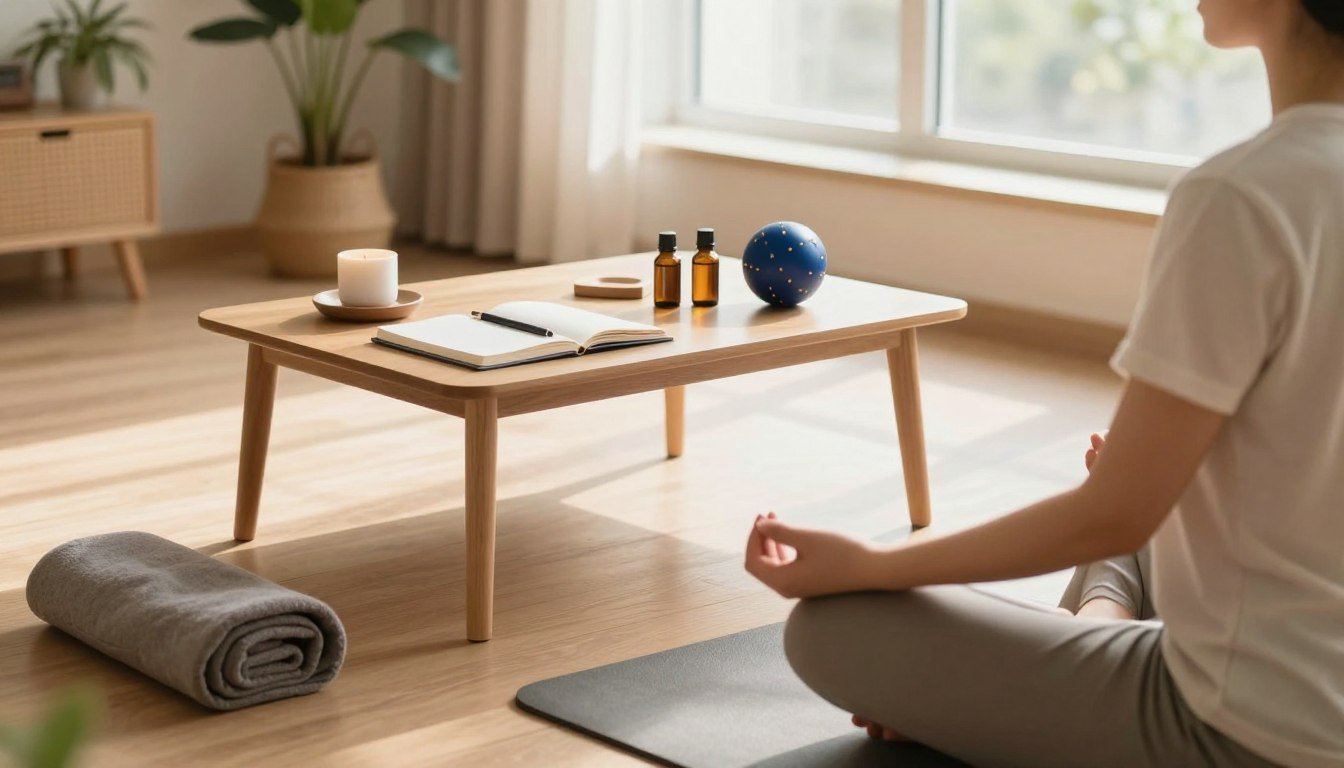
- Peppermint or lavender essential oil for scent grounding (strong smells interrupt panic)
- Gum or mints for taste grounding and distraction from panic symptoms
- List of grounding exercises saved on my phone for quick reference
- My therapist’s contact information readily accessible
- Noise-canceling headphones for managing sensory overwhelm in public
- Small bottle of water for calming and addressing dry mouth
I encourage you to customize your emergency kit. Find what works best for you. Experiment to find what gives you the most relief.
What to Do When You’re Having a Panic Attack
Sometimes, despite our best efforts, panic attacks reach their peak. Here’s how to manage a full-blown panic attack. These anxiety management techniques help me endure panic attacks and recover faster.
First, remind yourself this is a panic attack—not a heart attack or medical emergency. You’re not in danger, even though your body is screaming that you are. I literally say out loud: “This is panic. I’m safe.”
Second, don’t fight the panic. Trying to force panic to stop makes it worse. Instead, acknowledge it: “I’m having a panic attack. This is extremely uncomfortable but temporary.”
Third, change your environment if possible. Move to a quieter, less stimulating space. I’ve excused myself from meetings, stepped outside of stores, and pulled over while driving. Reducing sensory input helps.
Fourth, focus solely on making your exhales longer than your inhales. This is your only breathing goal. Don’t worry about complicated breathing patterns—just breathe out slowly. This activates your parasympathetic nervous system.
Fifth, use simplified grounding. If the full 5-4-3-2-1 technique feels too complex, just name objects you can see. “Chair. Window. Phone. Pen. Door.” Simple observation interrupts the panic spiral.
Sixth, ride the wave and watch the clock. Panic attacks usually peak within 10 minutes and fully resolve within 30 minutes. Understanding this timeline helps me endure the experience. I tell myself: “This will be substantially better in 10 minutes.” That knowledge alone is comforting.
Panic attacks are incredibly unpleasant, but they are not dangerous. Your body is having a false alarm, not an actual emergency.
With consistent practice, these grounding techniques become automatic. I’ve significantly reduced both the frequency and intensity of my panic episodes by having these emergency strategies ready. You’re building a mental muscle that gets stronger every time you use it.
Remember that experiencing panic attacks doesn’t mean you’re broken or weak. They’re a symptom of anxiety that can be managed with the right tools. Every time you successfully navigate a panic attack using these strategies, you’re proving to your brain that you can handle difficult moments.
👥 Social Anxiety Help: Building Confidence in Social Situations
Social anxiety makes us avoid the very thing we need most: human connection. I used to decline invitations, stay silent in meetings, and feel sick before social events. My heart would race, palms sweat, and my mind would fill with worst-case scenarios.
I want to share strategies that helped me regain my social life. These aren’t quick fixes but proven ways to build lasting confidence. Overcoming social anxiety takes courage, but it’s worth it.
Gradual Exposure Techniques for Social Situations
Here’s something that changed everything: avoidance makes anxiety stronger, while controlled exposure makes it weaker. Avoiding social situations might feel like relief at first. But it makes the next situation even more intimidating.
Avoidance creates a vicious cycle. You never get to practice coping, and you lose confidence with each avoided experience. If you can’t prove to yourself that you’ll survive, your brain believes it’s dangerous.
Gradual exposure therapy works differently. It helps you face feared situations in a systematic, manageable way. This isn’t about throwing yourself into your worst nightmare right away. That usually backfires and increases anxiety.

Instead, you build confidence through small, repeated successes. I worked with my therapist to develop an exposure plan that felt challenging but not overwhelming. The key principle is staying in each situation until your anxiety peaks and then naturally decreases.
Creating Your Anxiety Hierarchy
Creating an anxiety hierarchy became my roadmap for overcoming social anxiety. I started by listing every social situation I avoided or endured with significant distress. My list included making phone calls, eating in public, attending parties where I didn’t know many people, and speaking up in meetings.
Then I rated each situation from 0 to 10 based on how much anxiety it triggered. A “0” meant no anxiety at all, while a “10” meant extreme panic. Being honest with these ratings was key—I wasn’t trying to impress anyone.
Here’s what my hierarchy looked like:
- Making phone calls to businesses: 4/10
- Eating in public restaurants: 5/10
- Making small talk with acquaintances: 6/10
- Speaking up in work meetings: 7/10
- Attending parties with few known people: 8/10
- Initiating plans with friends: 8/10
- Attending networking events: 9/10
- Giving presentations to groups: 10/10
I started at the bottom of my hierarchy with phone calls. Instead of only texting, I called the pharmacy for prescription refills. I called restaurants to make reservations. These low-stakes calls let me practice without risking too much.
The most important rule of exposure therapy techniques is this: stay in the situation until your anxiety decreases by at least 50%. If you leave at the peak of your anxiety, you actually reinforce the fear. Your brain learns “I escaped, so it must have been dangerous.”
Sometimes staying in a situation for 20 to 30 minutes is necessary. I remember my first networking event—I wanted to leave after five minutes. But I committed to staying for 45 minutes, and by minute 30, my anxiety had dropped significantly.
| Exposure Principle | Why It Works | Common Mistake |
|---|---|---|
| Practice frequently | Daily exposure builds confidence faster than occasional attempts | Waiting weeks between exposures loses progress |
| Stay until anxiety reduces | Teaches your brain the situation is safe | Leaving at peak anxiety reinforces fear |
| Repeat each level | Mastery at one level builds foundation for next | Moving too quickly causes setbacks |
| Expect initial increase | Temporary anxiety spike means exposure is working | Interpreting anxiety as failure and quitting |
After six months of consistent exposure work, situations that once rated 8 to 10 now feel like a 3 or 4. I won’t claim social anxiety disappeared completely, but it no longer controls my decisions. That freedom changed my life.
Finding Your Support Network and Community
Social anxiety thrives in isolation. When I avoided people due to anxiety, I became lonelier and more anxious. It created a downward spiral that felt impossible to escape.
I had to learn the difference between choosing solitude (which I sometimes enjoy) and isolating due to fear (which made everything worse). Reaching out to others can calm your nerves when anxiety builds. A good listener gives you space to verbalize fears and often offers realistic perspective.
Building my support network required intentional effort. I joined a weekly anxiety support group where I met people who understood my experience without judgment. Hearing others share similar struggles normalized what I’d been experiencing alone.
I also opened up to two trusted friends about my social anxiety. This vulnerability deepened those relationships and gave me people to text before anxiety-provoking events. They became my cheerleaders, celebrating each small victory with genuine enthusiasm.
Online communities provided 24/7 support when I needed it most. During late-night anxiety spirals, connecting with others who understood made a real difference. These communities reminded me I wasn’t broken or alone.
Quality matters more than quantity when building your support system. One or two truly supportive relationships provide more comfort than dozens of superficial connections.
I also learned to identify relationships that increased my anxiety. A critical friend and a pessimistic colleague consistently left me feeling worse. Learning to limit those interactions protected my mental health and created space for supportive relationships.
Communication Strategies That Reduce Social Anxiety
Practical communication strategies transformed my social interactions. Instead of dreading conversations, I developed tools that made them manageable and even enjoyable. These social anxiety help techniques gave me confidence that I could handle various social situations.
Conversation Starters That Work
I used to panic about what to say in social situations. My mind would go blank, or I’d overthink every word until the moment passed. Preparing conversation starters changed that completely.
Before social events, I now prepare two or three current topics. I think about recent news, a popular TV show, or local events. Having these mental bookmarks reduces pressure and gives me easy conversation entry points.
Open-ended questions became my secret weapon. Instead of questions that get yes/no answers, I ask things that encourage people to share:
- “What’s been the best part of your week?”
- “How did you get interested in that?”
- “What are you most excited about right now?”
- “Tell me more about that experience.”
The FORD method guides my conversations when I’m feeling stuck. It stands for Family, Occupation, Recreation, and Dreams. These four topics provide endless conversation possibilities and work in almost any social context.
I also learned that sharing appropriate personal information creates reciprocity. When I mention something about myself, others usually share back. This back-and-forth feels more natural than interrogating someone with questions.
Asking questions took pressure off me to perform and made conversations significantly easier. People generally enjoy talking about themselves, and being a good listener is a valuable social skill.
Setting Healthy Boundaries
Social anxiety sometimes made me overly agreeable. I said yes when I meant no. I stayed at events long past my comfort zone. I tolerated disrespectful behavior to avoid conflict.
Learning to set boundaries actually reduced my anxiety instead of increasing it. Boundaries create predictability and control, which are essential for managing anxiety symptoms. They help you show up authentically instead of exhausting yourself trying to please everyone.
Here are boundaries that transformed my social life:
- Time boundaries: “I can come to your party, but I’ll need to leave by 9pm”
- Content boundaries: “I’m not comfortable discussing that topic”
- Environment boundaries: “I need to take this call outside where it’s quieter”
- Energy boundaries: “I need a day to recharge before our next get-together”
Setting boundaries felt uncomfortable at first. I worried people would think I was rude or antisocial. But healthy boundaries aren’t mean—they’re self-care that enables you to show up more authentically in relationships.
Most people respect clear, kind boundaries. The few who don’t probably aren’t relationships worth maintaining. This realization freed me from the exhausting work of people-pleasing.
Building confidence in social situations is a gradual process. Some days feel easier than others, and setbacks happen. But each small step forward is meaningful progress. The freedom I’ve gained from reducing my social anxiety has been absolutely worth the challenging exposure work.
Remember that you don’t have to face this journey alone. Whether through professional guidance, support groups, or trusted friends, help is available. Your courage in confronting social anxiety deserves celebration, and the connections waiting on the other side make every uncomfortable moment worthwhile.
🩺 Therapy for Anxiety Disorders: Professional Help That Actually Works
When my anxiety started affecting my job and relationships, I knew I needed more than self-care. I tried breathing exercises, meditation, and lifestyle changes for months. But I was having panic attacks that made it hard to function.
I had to accept a hard truth: sometimes self-help strategies alone aren’t enough. Seeking professional help for anxiety was a turning point for my mental health. I had resisted for too long because of stigma and the belief that I should handle everything myself.
If your anxiety is disrupting your work, relationships, or daily activities, getting help from a mental health professional is key. A qualified therapist can diagnose anxiety disorders and create a treatment plan tailored to your needs.
Types of Therapy That Work for Anxiety
Not all therapy approaches work equally for anxiety. I learned this after researching treatment options before my first appointment. Specific therapies have been proven to reduce anxiety symptoms.
The most effective therapies focus on changing thought patterns, facing fears, and developing practical skills. Knowing about these methods helped me find the right therapist for me.
Cognitive Behavioral Therapy (CBT)
CBT changed how I viewed anxiety more than any other approach. It focuses on the connection between thoughts, feelings, and behaviors. My therapist helped me see that anxious thoughts aren’t facts, but interpretations I could challenge.
In CBT, I learned to identify and challenge anxious thoughts. We worked on finding evidence for and against these thoughts, and developed more balanced views. This thought-challenging work was key to my recovery.
My therapist gave me homework to practice these skills. I kept thought records, did behavioral experiments, and faced situations I’d been avoiding. The structured nature of CBT appealed to me because I could see my progress week by week.
CBT is usually short-term, lasting 12-20 sessions with clear goals. Research shows it effectively treats all types of anxiety disorders, with benefits lasting long after therapy ends.
Exposure Therapy
Exposure therapy directly confronts feared situations, unlike avoiding them. It’s often part of CBT. My therapist and I made a list of situations that made me anxious, from least to most.
We worked through these situations together, with her support. Having her help made facing my fears less overwhelming. She guided me through the physical sensations and racing thoughts that came up.
This therapy is very effective for specific phobias, social anxiety, and panic disorder. Modern approaches include interoceptive exposure, which involves creating feared physical sensations in safe contexts. This reduces fear of these sensations.
Imaginal exposure helps with situations that can’t be safely practiced in real life. I used this technique to work through worries about unlikely catastrophic events that fueled my anxiety.
Acceptance and Commitment Therapy (ACT)
ACT introduced me to a new way of managing anxiety. It focuses on accepting anxious feelings while pursuing meaningful life directions. This approach teaches psychological flexibility—being present with difficult emotions without letting them control you.
I found ACT helpful for what therapists call “meta-anxiety”—anxiety about having anxiety. I had spent years worrying about my worry, which only intensified the cycle. ACT taught me that trying to completely eliminate anxiety was unrealistic and counterproductive.
ACT uses mindfulness exercises, values clarification activities, and committed action steps. My therapist used CBT but also incorporated ACT concepts when fitting. Many therapists combine different evidence-based techniques for anxiety.
| Therapy Type | Primary Focus | Best For | Typical Duration |
|---|---|---|---|
| Cognitive Behavioral Therapy (CBT) | Identifying and changing negative thought patterns and behaviors | Generalized anxiety, panic disorder, social anxiety, phobias | 12-20 sessions |
| Exposure Therapy | Gradual confrontation of feared situations to reduce avoidance | Specific phobias, PTSD, panic disorder, social anxiety | 8-15 sessions |
| Acceptance and Commitment Therapy (ACT) | Accepting anxiety while pursuing values-based actions | Chronic worry, meta-anxiety, health anxiety, perfectionism | 12-16 sessions |
How I Found the Right Therapist for My Needs
Finding the right therapist felt overwhelming at first, but breaking it down made it manageable. I started by checking my insurance provider’s directory and filtering for therapists specializing in anxiety disorders. This narrowed my options to relevant professionals.
I looked for specific credentials like licensed clinical psychologists (PhD or PsyD), licensed clinical social workers (LCSW), and licensed professional counselors (LPC). These credentials ensure therapists have the necessary education and practice hours.
I read therapist profiles on directories like Psychology Today to find those whose approach and specialties matched my needs. Many therapists list their therapeutic orientations and specific conditions they treat, which helped me identify good matches.
I called three or four therapists before scheduling my first appointment. During these brief phone conversations, I asked important questions:
- “What therapeutic approaches do you use for anxiety treatment?”
- “How much experience do you have treating anxiety disorders?”
- “What would a typical session look like?”
- “Do you assign homework or exercises between sessions?”
- “What’s your cancellation policy and session fee?”
Finding the right fit took trying more than one therapist—I met with two before finding my current therapist. The difference was clear from our first session. I felt heard and understood without judgment. She explained concepts clearly and answered all my questions.
She balanced empathy with pushing me outside my comfort zone at an appropriate pace. Most importantly, I noticed genuine progress within the first month. This convinced me that professional help for anxiety was worth the investment of time and money.
One important note: effective therapy sometimes feels uncomfortable. If your therapist only validates your feelings without challenging you to change thoughts or behaviors, you may not be receiving evidence-based treatment. Real progress requires working through discomfort with professional guidance.
Combining Professional Help with Self-Care Practices
Therapy provided the framework and accountability I needed, but daily self-care practices reinforced the skills I learned. My therapist actively encouraged my exercise routine, breathing exercises, and journaling. These weren’t alternatives to therapy—they were complementary practices that enhanced therapy’s effectiveness.
I thought of it this way: therapy gave me the tools, and daily practice made those tools automatic. The anxiety management techniques I learned in sessions only became truly effective when I practiced them consistently between appointments.
My therapist assigned specific homework that integrated with the self-care practices I’d already started. For example, she had me practice the 4-7-8 breathing technique before exposure exercises. This connection between professional and self-directed work accelerated my progress significantly.
Therapy isn’t a passive process where you simply show up and expect change. The real transformation happens between sessions when you apply what you’ve learned to real-life situations. I tracked my practices in a journal and discussed what worked and what didn’t with my therapist each week.
This combination approach—professional guidance plus consistent self-care—proved far more effective than either strategy alone. My therapist helped me understand why certain anxiety management techniques worked and how to adapt them to my specific triggers and symptoms.
When Medication Might Be Necessary
After six months of therapy, my anxiety had improved, but I was having severe physical symptoms and occasional panic attacks. My therapist suggested consulting a psychiatrist about medication as an additional tool.
I was initially resistant to this idea. Stigma, fear of side effects, and feeling like I’d “failed” at managing anxiety naturally all held me back. But my therapist explained that anxiety treatment options often work best when combined, for moderate to severe symptoms.
She helped me understand that medication isn’t a weakness or failure. Anxiety often involves neurotransmitter imbalances that medication can help correct, just as diabetes involves insulin regulation that medication treats. There’s no shame in addressing a biological component of mental health.
I consulted a psychiatrist who prescribed an SSRI antidepressant. She explained that SSRIs take four to six weeks to reach full effectiveness, unlike benzodiazepines that work quickly but carry dependence risks. SSRIs address underlying brain chemistry and are designed for longer-term use.
The medication didn’t eliminate my anxiety completely—that wasn’t the goal. Instead, it reduced my baseline anxiety level enough that my coping strategies became more effective. I describe it as turning the volume down from 10 to 6. The anxiety was present but manageable.
Benzodiazepines like Xanax provide rapid relief during acute anxiety episodes but aren’t suitable for daily long-term use due to tolerance and dependence risks. My psychiatrist prescribed a small amount for emergency situations only, while the SSRI handled day-to-day management.
Medication decisions should always be made with a psychiatrist or qualified prescriber who can monitor effects and adjust dosages. Everyone responds differently to psychiatric medications, so finding the right medication and dose sometimes requires patience and adjustment.
The combination of therapy for anxiety disorders, medication, and self-care practices was ultimately most effective for me. Each component supported the others. Medication reduced symptoms enough for therapy to work better, while therapy taught me skills that reduced my reliance on medication over time.
If you’re struggling despite consistent self-help efforts, I encourage you to consult your primary care physician or contact a mental health professional. Asking for help is strength, not weakness, and effective anxiety treatment options are available that can significantly improve your quality of life.
✨ Your Journey to Mastering How to Deal with Anxiety Starts Today
We’ve explored many ways to handle anxiety, from breathing exercises to nutrition and professional help. Don’t try to do everything at once. Pick 2-3 methods that feel right to you and stick to them for a month.
I’m not done with my anxiety journey. I sometimes have anxious days and face setbacks. But I have tools that help me manage my worries. You can learn to control your anxiety too, with the right help and practices.
Getting better at managing anxiety takes time and effort. It’s okay if you don’t see progress every day. On tough days, I think about how far I’ve come, not how far I have left to go.
Try one breathing exercise this week. Find out what makes you anxious. Start a journal. If anxiety is really affecting your life, talk to a mental health expert.
Keep moving forward by checking out more articles on www.healthyvibeslife.com. Sign up for the Healthy Vibes Life newsletter for tips, travel deals, and more.
Learning to handle anxiety is a valuable investment in yourself. The relief I’ve found is within your reach. You’ve taken a big step by looking for answers. That courage is the start of healing. You have more strength than you think, and I’m cheering for you.