
“Let food be thy medicine and medicine be thy food.” Hippocrates said this a long time ago. But it’s more true today than ever, thanks to the fermented foods renaissance in America.
I started exploring fermented foods three years ago because of digestive problems. I learned that our ancestors knew secrets we’re just now uncovering with science.
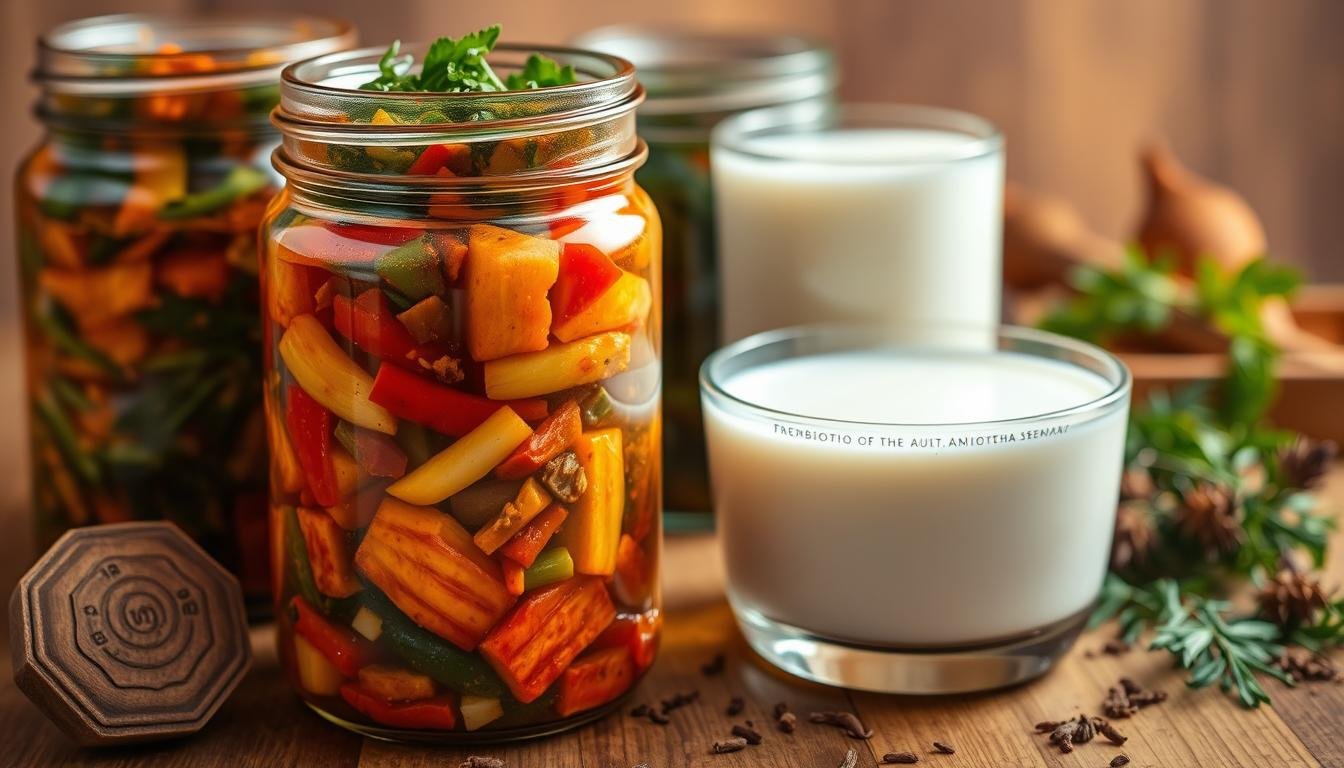
The probiotic microbiome in our gut is full of bacteria. These bacteria affect digestion and mood. Adding kimchi and kefir to my diet changed my life.
The market for these foods is booming. It’s expected to hit $380 billion by 2033, says IMARC Group. It’s not just a trend; it’s a return to traditional ways of preserving food.
In this article, I’ll share my journey with gut health benefits. I’ll debunk myths about probiotics and show you how to add these foods to your diet. I’ve learned from my mistakes so you don’t have to.
Key Takeaways
- The global market for traditionally preserved foods will surpass $380 billion by 2033, reflecting massive consumer interest
- Your gut contains trillions of bacteria that directly impact your physical and mental wellness
- Kimchi and kefir are accessible, science-backed options for supporting your digestive ecosystem
- Ancient preservation techniques are being validated by modern research on the microbiome
- Many common beliefs about probiotics are myths that need addressing for safe consumption
- Incorporating these traditional foods requires understanding proper selection and preparation methods
🌟 Understanding the Fermented Foods Renaissance in Modern America
A quiet revolution is happening in American kitchens. I’ve seen it myself. The fermented foods renaissance is changing how we view nutrition and food preservation. It’s a big shift from what we used to do.
This change isn’t just about trendy foods. It’s about valuing gut health and using old ways to make food. People are choosing real ingredients and traditional methods over quick, industrial options.
The market for fermented foods is growing fast. It’s expected to hit $380 billion by 2033. This shows a big change in how Americans eat. When I first started, finding good kimchi or kombucha was hard. Now, it’s easy to find them at local stores.
The Cultural Shift Toward Traditional Fermentation Techniques
Traditional fermentation techniques are coming back. My grandma used to do this in her basement. Now, I’m doing it too, and I appreciate it more than ever.
This shift shows people don’t want processed foods anymore. They’re looking for real, healthy ingredients and simple ways to preserve food.
Fermentation brings something special to our world:
- Authentic nutrition: Live probiotics and beneficial bacteria that support digestive health
- Transparent processes: Simple, understandable ingredients and methods
- Connection to heritage: Recipes and techniques passed down through generations
- Artisanal quality: Small-batch production with attention to detail
- Community building: Sharing cultures, recipes, and fermentation knowledge
I’ve been to workshops where people of all ages learn these old techniques. Everyone is excited. We’re not just making sauerkraut or kefir; we’re connecting with our past and improving our health.
The comeback of traditional fermentation techniques also challenges old ideas about food safety. Fermentation uses good bacteria to keep food fresh and healthy. At first, I was worried about safety. But I’ve learned that these methods have kept food safe for thousands of years.
Why Millennials and Gen Z Are Driving the Kimchi Kombucha Popularity
Younger people are leading the way in the kimchi kombucha popularity. My friends in their twenties and thirties love fermented foods for good reasons.
They care a lot about gut health. They know how important it is for overall health. I see lots of posts about gut health and fermented foods on social media.
Younger people want to know what’s in their food. They want it to be real and made with care. Fermented foods, made by small producers, offer this.
Here’s why kimchi kombucha popularity is big with young Americans:
- Health consciousness: They know gut health is key to feeling good
- Authenticity seeking: They want real, healthy foods
- Social media influence: Fermented foods look great on Instagram
- Global curiosity: They love trying foods from around the world
- Environmental awareness: They see fermented foods as sustainable
Young people see fermented foods as a way to take care of themselves. They choose whole foods over supplements. And they love how delicious and Instagram-worthy these foods are.
It’s easy to learn about fermentation now. There are lots of online tutorials and forums. This makes it easy for young people to try fermentation at home.
How the Connection Between Fermented Foods Renaissance and Sustainable Food Practices
The fermented foods renaissance is also about being green. When I started fermenting, I didn’t realize how eco-friendly it was.
Traditional fermentation techniques use little energy. Unlike canning or freezing, fermentation uses natural bacteria to preserve food. This is how my ancestors kept food fresh and healthy.
The benefits of fermentation are clear:
- Reduced food waste: Preserving seasonal harvests that would spoil
- Lower energy consumption: No need for refrigeration during fermentation
- Minimal packaging: Using reusable jars instead of plastic
- Local food support: Buying from nearby farmers and producers
- Chemical-free preservation: No need for artificial additives
Fermentation helps me eat with the seasons. In summer, I make pickles. In fall, I ferment sauerkraut and kimchi. This connects me to nature and reduces my carbon footprint.
I also support local producers who use sustainable practices. They source ingredients locally and use eco-friendly packaging. Buying from them helps create a greener food system.
Fermentation is good for the planet in other ways too. Fermented foods often come in glass jars that can be reused. Some producers even offer refill programs to reduce waste.
Fermentation is the original way to preserve food. It needs only time, salt, and natural bacteria. It’s sustainable by design.
Choosing fermented foods doesn’t mean giving up taste or nutrition. It’s actually the best choice for the environment. Fermented foods are delicious, nutritious, and good for the planet.
🥬 Kimchi: My Journey with Korea’s Probiotic Powerhouse
When I first tried authentic kimchi, I didn’t know it would change my life. The smell was strong, but I was hooked. It started my journey into fermented foods and kimchi became a key part of my health routine.
I started small, adding a little kimchi to my meals. Soon, I noticed big changes. Now, I always have at least two jars in my fridge.
The Art Behind Ancient Preservation Methods
Kimchi’s magic isn’t just in its taste. It’s the ancient way it’s made. This traditional method can’t be matched by modern shortcuts.
The process begins with napa cabbage, salt, and a spice paste called yangnyeom. This paste includes Korean red pepper flakes, garlic, ginger, fish sauce, and sometimes radish or scallions. Each ingredient plays a key role in creating the perfect environment for beneficial bacteria to grow.
During fermentation, bacteria like Lactobacillus and Bifidobacterium break down sugars and starches. This makes the vegetables more nutritious and easier to digest. The bacteria “pre-digest” the food, making it gentler on sensitive stomachs.
“Fermentation is the oldest form of food preservation, and it transforms simple vegetables into nutritional powerhouses loaded with enzymes, vitamins, and probiotics that our ancestors relied upon for health.”
Temperature control is key. Traditional methods keep kimchi at 65-70°F for a few days, then cool it down. This allows different bacteria to grow, creating the complex flavors and diverse microbiome of kimchi.
Real Changes I’ve Noticed With Daily Kimchi
Eating kimchi daily has changed my life. My digestion improved, and I no longer get bloated after meals. My bowel movements are now regular, which is essential for wellness.
Kimchi also improved my mood and mental clarity. About 90% of the body’s serotonin and 50% of dopamine is produced in the gut, not the brain. This shows how important gut health is for our mental well-being.
Here are the changes I noticed over three months:
- Reduced bloating by approximately 70% (based on my subjective daily tracking)
- More consistent energy levels throughout the afternoon
- Fewer sugar cravings, specially in the evening
- Improved skin clarity, with fewer breakouts
- Better stress resilience and mood stability
Results may vary. My experience is unique, but research supports the benefits of kimchi’s Lactobacillus strains for digestive and immune health.
Finding Real Kimchi with Active Probiotics
Not all kimchi is created equal. I learned this after trying store-bought kimchi and not feeling the benefits.
The key is live and active cultures. Many commercial kimchi products are pasteurized, killing the beneficial bacteria. For real benefits, choose carefully.
Here’s how to pick authentic kimchi:
| What to Look For | Why It Matters | Where to Check |
|---|---|---|
| Refrigerated section | Live cultures require cold storage; shelf-stable versions are likely pasteurized | Store layout and product location |
| “Live and active cultures” label | Confirms the product contains beneficial bacteria | Front or side panel of jar |
| Bubbles or slight expansion | Indicates active fermentation is occurring | Visual inspection of jar contents |
| Short ingredient list | Traditional recipes use simple, whole ingredients without preservatives | Nutrition facts panel |
| Korean or artisanal brands | More likely to use traditional fermentation techniques | Brand research and reviews |
Check the expiration date and look for products with at least two months remaining. Fresh kimchi has more active cultures. If the jar hisses when you open it, that’s a good sign.
My favorite brands include Mother In Law’s Kimchi, Sinto Gourmet, and Lucky Foods Seoul Kimchi. I also visit Korean grocery stores like H Mart for authentic, small-batch kimchi.
Making Kimchi Work in Everyday American Cooking
At first, I only ate kimchi with rice. But then I discovered many ways to use it in American dishes. My whole family loves it now.
My favorite is kimchi grilled cheese. I butter sourdough, add sharp cheddar and kimchi, then grill it. The tangy kimchi balances the cheese perfectly. It’s my go-to lunch.
Kimchi also makes breakfast better. I chop kimchi finely and mix it into scrambled eggs. It adds moisture, flavor, and probiotics to start my day.
Here are my top kimchi creations:
- Kimchi tacos: Ground beef or black beans with kimchi instead of salsa, topped with sour cream and cilantro
- Kimchi fried rice: Perfect for leftover rice, with scrambled egg and vegetables
- Kimchi quesadillas: Monterey Jack cheese, kimchi, and black beans in a crispy tortilla
- Kimchi burger topping: Replaces pickles with probiotic punch and extra flavor complexity
- Kimchi avocado toast: Mashed avocado with chopped kimchi on whole grain bread
- Kimchi pasta: Mixed with olive oil, garlic, and pasta water for a quick weeknight dinner
Kimchi is incredibly versatile. Its complex flavors enhance almost any dish. It adds depth that fresh vegetables can’t match.
Remember, add kimchi towards the end of cooking or serve it as a condiment. High heat kills the beneficial bacteria. For dishes like fried rice, add half the kimchi during cooking for flavor, then top with fresh kimchi for probiotics.
Portion size is important. I eat about a quarter cup of kimchi daily, spread across two meals. This amount gives me consistent probiotic exposure without overwhelming my palate or digestive system.
The fermented foods renaissance has made kimchi accessible across America. By making it your own, you can transform your approach to gut health and flavor.
🥛 Kefir’s Role in the Probiotic Microbiome Revolution
Kefir is a key player in the probiotic microbiome revolution. It’s a tangy, bubbly drink that’s part of the fermented foods trend in America. I’ve seen kefir go from a niche health food to a popular wellness item, and it’s for good reasons.
Kefir is special because it has a mix of beneficial bacteria and yeasts. This mix creates a probiotic microbiome in kefir that’s different from other fermented foods. This diversity is why kefir is great for your digestive health.
Why Kefir Contains More Probiotic Strains Than Yogurt
When I compared kefir to yogurt, I was amazed by the difference. Kefir has 30 to 40 different probiotic strains, while most yogurts have only 2 to 7. This difference means kefir offers more gut health benefits.
The secret to kefir’s power is its grains. These aren’t grains at all but a mix of bacteria and yeasts. They include Lactobacillus, Lactococcus, Streptococcus, and Leuconostoc bacteria, plus yeasts like Saccharomyces and Kluyveromyces.
Yogurt cultures are different. They use only a few bacteria, like Lactobacillus bulgaricus and Streptococcus thermophilus. While these bacteria are beneficial, they can’t match the comprehensive support for the probiotic microbiome that kefir offers. Different strains in kefir do different jobs in your gut.
I noticed a big difference in my body after switching to kefir. My digestion got better, and I felt more energetic. The variety of beneficial bacteria in kefir helped with issues yogurt couldn’t solve.
My Experience Making Homemade Kefir
Making kefir at home started as an experiment and became a daily joy. I bought my first kefir grains for about $15, and they’re making kefir in my kitchen for two years now. It’s surprisingly easy once you get the hang of it.
Every evening, I add one tablespoon of kefir grains to two cups of whole milk in a glass jar. I cover it with a coffee filter to keep out contaminants. Then, I let it ferment for 24 hours. The next evening, I strain out the grains and start again.
My first batch was a learning experience. It separated into thick curds and thin whey, but I learned that meant it had over-fermented. I reduced the fermentation time to 20 hours and got creamy kefir.
Making my own probiotic-rich beverage is more than just health benefits. It connects me to traditional fermentation techniques that have helped humans for centuries.
The beauty of homemade kefir is that you control the fermentation time and ingredient quality. I use organic, grass-fed milk, which gives me peace of mind. Making kefir at home costs about 50 cents per batch, compared to $4 or more for store-bought.
Understanding Kefir’s Gut Health Benefits Through Science
The science behind kefir’s gut health benefits is fascinating. Kefir introduces healthy bacteria and yeasts to your gut, supporting your probiotic microbiome. This community of trillions of microorganisms is key to both physical and mental health.
Research shows that the beneficial bacteria in kefir keep harmful bacteria in check. They also support the cells in your gut lining, making it stronger against toxins and pathogens. This is why many people with digestive issues find relief with kefir.
The immune system connection surprised me most. About 70% of your immune system lives in your gut, and kefir’s probiotic strains help train immune cells. I used to catch every cold, but now I have fewer sick days.
Kefir also boosts vitamin and mineral production. The bacteria create vitamin K, B12, B5, and biotin as they ferment the milk. These nutrients support blood clotting and energy metabolism. I’ve seen improvements in my skin and hair, thanks to these enhanced vitamins.
The gut-brain connection is another area where kefir shines. Many neurotransmitters, including about 90% of your serotonin, are made in your gut. The diverse bacteria in kefir support this production, which may explain why I feel more stable and mentally clear.
Water Kefir vs. Milk Kefir: What I Recommend
I’ve made both water kefir and milk kefir, and each has its own benefits. Understanding the differences helps you choose the right one for your needs. Both contribute to the fermented foods trend, but they serve different purposes.
Water kefir uses water kefir grains and sugar water for flavor. It’s a light, fizzy drink similar to kombucha. It’s naturally dairy-free, making it great for vegans or those with lactose intolerance.
Milk kefir is creamier and more nutritious. It has more protein, calcium, and healthy fats. The fermentation process breaks down most of the lactose, making it easier to digest. I find it more filling and satisfying, perfect for blending with berries.
Here’s a detailed comparison based on my experience with both:
| Feature | Milk Kefir | Water Kefir |
|---|---|---|
| Probiotic Strains | 30-40 different strains of bacteria and yeasts | 10-15 different strains, mostly bacteria |
| Taste Profile | Tangy, creamy, slightly sour like drinkable yogurt | Light, fizzy, mildly sweet with fruit flavors |
| Nutritional Content | High in protein, calcium, B vitamins, healthy fats | Low calories, trace minerals from sugar fermentation |
| Best For | Maximum gut health benefits, sustained energy, meal replacement | Dairy-free diets, weight management, refreshing probiotic drink |
| Fermentation Time | 24 hours at room temperature | 48-72 hours at room temperature |
I recommend starting with milk kefir if you can tolerate dairy. It offers more gut health benefits and a wider range of probiotic strains. The nutritional profile is better, and it’s easier to add to meals throughout the day.
Water kefir is great for specific situations. I make it in summer for a refreshing probiotic drink without the heaviness of milk. It’s also my go-to for vegan friends or family with dairy sensitivities. The lighter taste makes it more appealing to those who find milk kefir too tangy.
Both types support your probiotic microbiome and offer valuable health benefits. The choice depends on your dietary preferences, health goals, and taste. I keep both cultures active in my kitchen and switch between them based on the season and my mood.
🫙 The Artisanal Sauerkraut Movement and Natural Pickling Methods
I found out about the artisanal sauerkraut movement at a local farmers market. A passionate producer showed me why natural pickling matters. She told me most store sauerkraut isn’t fermented. This changed how I see fermented foods.
The movement goes back to old ways that big industry almost forgot. Small producers across America are bringing back these methods. They make products that really help your gut health. I support this movement for the better taste and what it stands for in sustainable food practices and nutrition.
Artisanal sauerkraut has live good bacteria from proper fermentation. These aren’t the vinegar-soaked kinds you find in stores. They’re full of Lactobacillus bacteria that help your digestion.
The Real Difference Between Artisanal and Mass-Produced Options
Learning about quality fermented foods changed my view. I used to buy products with no probiotics. Most store sauerkraut is pasteurized, killing all good microbes. I was eating flavored cabbage without health benefits.
Artisanal sauerkraut has live cultures that mass-produced versions don’t. Switching to real products made a big difference. The taste was richer, with a tanginess and depth vinegar versions can’t match. I felt the digestive benefits quickly.
Here’s what makes artisanal versions better:
- Live Lactobacillus bacteria that survive to your gut
- No pasteurization or heat processing that destroys probiotics
- Absence of preservatives and artificial ingredients
- Complex flavor profiles developed through slow fermentation
- Support for local artisan producers practicing sustainable food practices
The price difference surprised me at first. Artisanal sauerkraut costs more than store versions. But, cheap sauerkraut has no probiotics. So, the extra cost is worth it for real food.
| Characteristic | Artisanal Sauerkraut | Store-Bought Versions |
|---|---|---|
| Fermentation Method | Natural salt-based lacto-fermentation with live cultures | Vinegar-based or pasteurized after fermentation |
| Probiotic Content | Billions of live beneficial bacteria per serving | Zero live microbes due to heat processing |
| Storage Requirements | Must be refrigerated to maintain live cultures | Shelf-stable at room temperature |
| Ingredient List | Cabbage, salt, sometimes spices (3-5 ingredients) | Often includes vinegar, preservatives, colorings (8+ ingredients) |
How Salt-Based Fermentation Protects Beneficial Bacteria
Learning about natural pickling changed my view on fermented foods. Traditional fermentation uses salt, not vinegar. Salt creates a perfect environment for good bacteria to grow, keeping bad ones away.
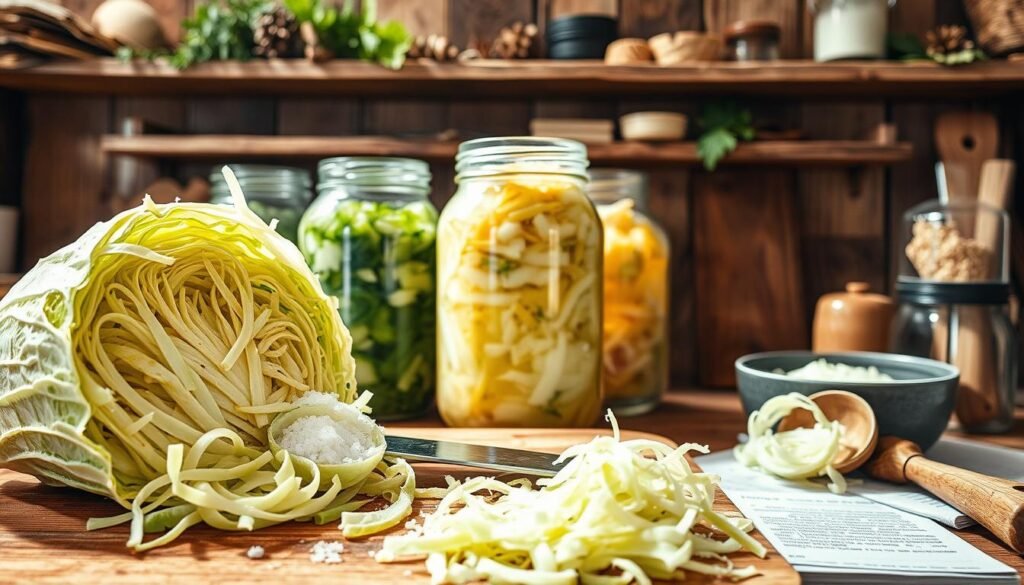
The process is simple. Salt pulls moisture from cabbage, making a brine. Lactobacillus bacteria on cabbage leaves start converting sugars into lactic acid. This acid lowers pH, keeping only good bacteria alive.
Natural pickling methods preserve billions of live cultures that vinegar-based approaches destroy. These live bacteria stay active during fermentation and storage. Eating fermented sauerkraut brings these microbes to your gut, improving your microbiome.
I’ve learned to spot truly fermented products. Look for refrigeration and simple ingredients. If vinegar is listed, it’s not fermented.
Fermentation is the transformation of food by various bacteria, fungi, and the enzymes they produce. People around the world have been fermenting foods for centuries as a way of preserving them.
The acidic environment from fermentation does two things. It preserves food without refrigeration for a long time. It also adds probiotics and enzymes that make food easier to digest. Our ancestors knew this, using fermentation before refrigeration existed.
My Adventures in Home Fermentation
Starting my own fermentation at home was exciting and a bit scary. I’d read about natural pickling but worried about safety. But, understanding the science made me feel confident.
My first batch of homemade sauerkraut was easy. I shredded cabbage, mixed it with salt, and waited. In three days, bubbles showed up. In a week, I had tangy, probiotic-rich sauerkraut that tasted amazing.
Home fermentation lets you control everything. I’ve tried adding caraway seeds, juniper berries, apple, and hot peppers. Each try teaches me something new about fermentation.
You need just a few things:
- Glass jars or fermentation crocks (avoid metal, which reacts with acidic brine)
- Non-iodized salt (iodine can inhibit beneficial bacteria)
- Weights to keep vegetables submerged below the brine
- Airlock lids or simply a cloth cover secured with a rubber band
Temperature is key. My kitchen is around 68-72°F, perfect for Lactobacillus growth. Warmer temperatures speed up fermentation, cooler slows it down. I adjust times based on the season.
Mastering these ancient techniques connects me to my ancestors. It’s rewarding to make probiotic-rich food with just salt, veggies, and time. Plus, homemade is cheaper than buying artisanal sauerkraut.
Hidden Gems: Regional American Fermentation Traditions
Exploring artisanal producers across America showed me a world of fermented foods. I thought sauerkraut was the same everywhere. But, different regions have their own ways, using local ingredients and cultural influences.
In Appalachia, I found fermentation traditions blending European methods with local flavors. Appalachian pickles often use wild ramps and fermented hot sauces with native peppers. These have complex heat and flavors I’d never tried.
The Midwest has its own sauerkraut, influenced by German and Polish immigrants. Wisconsin adds horseradish or mustard seeds. Michigan uses local apples, creating a sweet-tart flavor that goes well with pork.
Southern fermentation surprised me. I found producers making fermented collard greens and hot sauces with Carolina Reapers. Some Louisiana producers even ferment okra, creating a unique pickle.
I’ve also looked into Native American fermentation traditions. Though less common, some producers are reviving these methods. They connect modern sustainable food with ancestral knowledge.
Here are some regional American fermented foods worth trying:
- Pennsylvania Dutch pickled eggs and beets
- Kentucky bourbon barrel-aged sauerkraut (fermented in old whiskey barrels)
- Texas fermented jalapeños and carrots
- Pacific Northwest seaweed krauts incorporating kelp and dulse
- New England fermented cranberry relishes
Supporting these producers does more than offer unique flavors. It preserves cultural knowledge and supports sustainable food practices. These small businesses keep traditional methods alive for future generations.
The artisanal sauerkraut movement is not just about fancy food. It’s about reclaiming knowledge our ancestors had. It’s about getting real, probiotic-rich foods instead of pasteurized imitations. And it’s about realizing the cheapest option isn’t always the best for your health.
💭 Myth #1: All Probiotics Provide the Same Gut Health Benefits
For years, I thought all probiotic foods were the same. I believed that eating yogurt, kimchi, and kefir would give me the same benefits. But this belief was a big obstacle in my wellness journey.
When I started researching, I found out why my symptoms weren’t getting better. I was eating the same Greek yogurt every day, expecting it to help my digestion. The fermented foods renaissance changed how I saw gut health.
Different probiotic strains do different things in your body. This isn’t just marketing—it’s science. Knowing this changed how I picked fermented foods for my diet.
Different Strains, Different Superpowers
Not all beneficial bacteria work the same way in your gut. Each strain has its own job, like different tools in a toolbox. I learned this after trying many fermented foods.
Lactobacillus rhamnosus GG is my go-to when I travel. It’s great for preventing and treating diarrhea. You can find it in some kefir and probiotic yogurts.
When I got stressed last year, I found Bifidobacterium longum. It helps with mental health and reduces anxiety. I started eating more miso and fermented veggies with this strain.
For immune support in winter, I use Lactobacillus casei. It strengthens your immune system and fights off illnesses. You can find it in kimchi and some sauerkraut.
The benefits you get from probiotics depend on the strains you eat. This made me choose different fermented foods each week.
Your Gut Is an Entire Ecosystem
The probiotic microbiome is more than just bacteria in your gut. It’s a complex system where trillions of microorganisms work together. This makes gut health fascinating yet hard to understand.
I used to think probiotics were simple. But they’re actually very complex. They compete, cooperate, and send signals to your body.
Different bacteria live in different parts of your gut. Some like your stomach’s acidity, while others prefer your small intestine’s alkalinity. This means you need variety to support your whole digestive system.
The bacteria in your gut make important chemicals. These chemicals affect your mood, metabolism, and more. Different strains make different chemicals, which is why variety is key.
Your microbiome changes with external factors. Stress, medications, diet, and sleep can all affect your gut’s balance. The fermented foods renaissance taught me to keep my gut diverse with different probiotics.
| Probiotic Strain | Primary Function | Best Food Sources | Health Goal |
|---|---|---|---|
| Lactobacillus rhamnosus GG | Prevents diarrhea and supports intestinal barrier | Kefir, specific yogurt brands | Digestive health, travel protection |
| Bifidobacterium longum | Reduces anxiety and supports mood | Miso, fermented vegetables | Mental health, stress management |
| Lactobacillus casei | Strengthens immune response | Kimchi, artisanal sauerkraut | Immune support, seasonal health |
| Saccharomyces boulardii | Fights harmful bacteria and restores balance | Kombucha, some kefir varieties | Antibiotic recovery, gut restoration |
Matching My Probiotic Choices to Specific Goals
Learning to match probiotics to my health goals was like unlocking a secret level in a video game. Suddenly, I had strategy instead of just hoping for general wellness improvements. This targeted approach delivered results I never achieved with random probiotic consumption.
When I struggled with bloating after meals, I focused on Lactobacillus plantarum strains found in traditional sauerkraut. Within two weeks, my digestive discomfort decreased noticeably. This wasn’t coincidence—this specific strain produces enzymes that break down complex carbohydrates my body struggled to digest.
For immune system support during flu season, I increased my intake of foods containing Lactobacillus casei and Bifidobacterium bifidum. I made kimchi a daily side dish and added kefir smoothies to my breakfast routine. My usual winter colds became less frequent and less severe.
The mental clarity benefits surprised me most. I started consuming more fermented foods rich in Bifidobacterium longum and Lactobacillus helveticus during a stressful work period. My anxiety levels decreased, and I noticed improved focus during long work sessions.
Rotation became my key strategy for maximizing gut health benefits. Instead of eating the same yogurt daily, I now cycle through kimchi on Monday, kefir on Tuesday, miso soup on Wednesday, sauerkraut on Thursday, and kombucha on Friday. This rotation ensures I’m feeding my probiotic microbiome with diverse bacterial strains.
I also learned that timing matters. Consuming probiotics on an empty stomach allows more bacteria to survive stomach acid and reach your intestines. I take my kefir first thing in the morning and eat kimchi before dinner for optimal colonization.
The fermented foods renaissance has brought scientific awareness to these traditional foods that our ancestors consumed instinctively. We now understand that strategic diversity—not just any probiotic product—delivers the wellness support we’re seeking. This myth-busting revelation completely transformed my approach to gut health and helped me achieve results that years of random probiotic consumption never delivered.
🔬 Myth #2: More CFUs Always Mean Better Probiotics
I once thought that more CFUs meant better probiotics. Standing in the supplement aisle, I picked the bottle with 50 billion CFUs over another with 10 billion. It seemed like more bacteria meant better gut health.
But I was wrong. After researching and trying fermented foods, I learned that quality matters more than quantity for gut health.
The truth is more complex and interesting than any label suggests.
Understanding Colony Forming Units in Fermented Foods
Let’s talk about CFU numbers. Colony Forming Units measure the number of viable bacterial cells that can reproduce at the time of manufacturing. This is a key detail many miss.
CFU counts don’t show how well bacteria survive stomach acid. They don’t show if bacteria can colonize your gut. And they don’t show the benefits once bacteria reach your gut.
I learned this the hard way with high-CFU supplements that didn’t help my gut. But a small serving of homemade kimchi made a big difference in days.
The supplement industry loves to highlight CFU numbers. But they don’t tell you that most probiotic bacteria don’t survive stomach acid. Stomach acid kills a lot of bacteria before they reach your intestines.
Natural fermented foods have a survival advantage. The food matrix protects bacteria from stomach acid. This is hard for isolated probiotic capsules to do.
“Bacterial diversity and strain compatibility matter far more than total cell counts when it comes to establishing a healthy gut microbiome.”
Quality vs. Quantity: My Research Findings
My research showed that quality is more important than quantity in probiotics. I compared studies and found that diverse bacterial populations outperform single-strain high-CFU products.
The fermented foods renaissance highlights this diversity. Commercial fermented foods have 5-10 beneficial strains working together. This is different from supplements with just one or two strains.
Which do you think is better for your gut? I found the answer through research and personal experience.
Here’s what really matters in probiotics:
- Strain diversity: Multiple bacterial species that complement each other’s functions
- Research backing: Specific strains studied for particular health outcomes
- Delivery method: How the bacteria are protected during digestion
- Storage conditions: Whether the product maintains viability until consumption
- Synergistic compounds: Presence of prebiotics, enzymes, and metabolic byproducts
I found that quality fermented foods naturally meet these criteria. They don’t need high CFU counts because their effectiveness comes from complexity, not numbers.
| Factor | High-CFU Supplements | Traditionally Fermented Foods | Health Impact |
|---|---|---|---|
| Bacterial Diversity | 1-3 isolated strains | 10-30+ diverse strains | Higher diversity supports broader gut health benefits |
| Survival Rate | 20-40% through stomach acid | 60-80% with food matrix protection | More bacteria reach intestines where they’re needed |
| Additional Benefits | Bacteria only | Enzymes, vitamins, organic acids, prebiotics | Synergistic compounds enhance probiotic effectiveness |
| Cost Per Serving | $1.50-$3.00 | $0.50-$1.50 | Better value with superior functional outcomes |
This comparison changed my approach to gut health. I stopped chasing high CFU numbers and started looking for quality fermented products instead.
How Traditional Fermentation Techniques Create Diverse Bacteria
Traditional fermentation techniques are complex and magical. When I started making my own sauerkraut and kefir, I saw how they create ecosystems, not just bacterial monocultures.
Natural fermentation allows multiple species of bacteria and yeasts to develop simultaneously. They compete, cooperate, and create metabolic byproducts that benefit each other. This mirrors a healthy human gut.
Commercial probiotic supplements try to isolate and concentrate specific strains. While this sounds scientific, it removes the natural relationships that make these bacteria effective.
During fermentation, bacteria produce organic acids, enzymes, vitamins, and antimicrobial compounds. These substances work together to create an environment where beneficial microbes thrive. You can’t capture this complexity in a capsule, no matter how high the CFU count.
I’ve noticed that kimchi from my local Korean market—made using methods passed down through generations—provides benefits that expensive probiotic supplements never delivered. The traditional fermentation techniques preserve bacterial diversity that modern manufacturing often destroys.
The fermented foods renaissance celebrates this ancestral wisdom. We’re rediscovering that our great-grandparents’ fermentation crocks were more sophisticated than we gave them credit for. They created probiotic powerhouses without ever counting a single CFU.
Temperature variations during natural fermentation encourage different bacterial strains to flourish at different stages. This creates a succession of microbial communities, each contributing unique benefits to the final product.
Modern controlled fermentation often maintains constant temperatures for consistency. But this consistency comes at the cost of diversity. I prefer the wild, unpredictable nature of home fermentation that produces more varied bacterial populations.
My takeaway from all this research? Stop obsessing over CFU numbers on labels. Instead, look for products made with traditional fermentation techniques that prioritize bacterial diversity over marketing hype. Your gut will thank you for choosing quality over quantity every single time.
🧪 Myth #3: Fermented Foods Can Completely Replace Probiotic Supplements
Many readers ask if they should stop taking probiotic supplements after eating kimchi and kefir. This myth shows a common thinking that doesn’t help our probiotic microbiome.
It’s not just one or the other. Both fermented foods and supplements play important roles in our gut health benefits.
Let’s explore when each is best.
When I Use Supplements vs. Fermented Foods
I start with fermented foods but sometimes need supplements. Traveling is a big reason I use capsules because fresh foods aren’t always easy to find.
After antibiotics, I take high-dose supplements to quickly rebuild my probiotic microbiome. My doctor picked strains that research shows help avoid digestive problems.
- Fermented foods daily: For ongoing maintenance, nutrient diversity, and enjoyment of meals
- Supplements during travel: When fresh fermented foods aren’t available or practical
- Supplements post-antibiotics: For targeted, high-dose probiotic restoration
- Supplements for specific conditions: When research supports particular strains for health goals
Always talk to your doctor before starting supplements, which is even more important if you’re on medication. Some probiotics can interact with drugs.
Fermented foods offer something supplements can’t—complete nutrition. Eating kimchi or kefir gives me probiotics, fiber, vitamins, minerals, and enzymes that work together.
The Role of Both in Supporting Probiotic Microbiome Health
I no longer see fermented foods and supplements as rivals. Instead, they’re complementary tools for a healthy probiotic microbiome.
Fermented foods do more than just provide bacteria. They also offer dietary fiber that feeds the good bacteria in my gut.
Traditionally fermented foods have a wide variety of strains. For example, sauerkraut can have dozens of different bacteria species working together.
Fermented foods should not replace whole foods but complement them, providing probiotics alongside the fiber, vitamins, and minerals that support overall wellness.
Supplements have their own strengths. They’re convenient, have guaranteed CFU counts, and can target specific strains for health concerns.
Here’s how I see their roles:
| Aspect | Fermented Foods | Probiotic Supplements |
|---|---|---|
| Bacterial Diversity | Multiple wild strains working together naturally | Specific researched strains in controlled amounts |
| Additional Nutrients | Vitamins, minerals, fiber, enzymes included | Typically bacteria only, some with prebiotics |
| Convenience | Requires refrigeration and meal planning | Shelf-stable and travel-friendly |
| Cost Effectiveness | Economical when homemade | Higher cost for quality products |
I focus on fermented foods as my base but use supplements strategically. This way, I get full support for gut health benefits without relying too much on either.
What Science Says About Food-Based Probiotics
Research has greatly influenced my view on food-based probiotics. Studies show fermented foods improve microbiome diversity more than supplements in some cases.
A Stanford study found that eating more fermented foods increases microbial diversity more than just fiber. This matches my own experience with kimchi, kefir, and sauerkraut improving my digestion.
But supplements have clear gut health benefits for specific health issues. They’re backed by research for conditions like antibiotic-associated diarrhea and irritable bowel syndrome.
Science tells us that food-based probiotics are great for maintaining diversity in a healthy gut. The whole food matrix—bacteria plus fiber, nutrients, and other compounds—works together in ways we’re discovering.
Supplements are best for specific health challenges or when diet alone can’t provide enough support. Always talk to a healthcare provider before starting supplements, which is even more important if you’re on medication. Some probiotics can interact with drugs.
The wisdom of the Fermented Foods Renaissance teaches us to value traditional food-based approaches as our primary strategy. Modern supplements have earned their place as useful tools, but they work best when supporting—not replacing—a foundation of diverse, nutrient-rich fermented foods.
This balanced perspective has changed my wellness routine. I spend time making and enjoying fermented foods and keep quality supplements on hand for when they’re truly needed.
🌍 Exploring Global Fermented Cuisine Beyond Kimchi and Kefir
When I started studying fermented foods renaissance, I found out kimchi and kefir were just the start. Every culture has its own way of fermenting foods, based on their climate and what’s available. This made me see fermentation as ancient wisdom, not just a trend.
Exploring global fermented cuisine showed me fermentation is more than probiotics. It’s about turning simple foods into complex flavors and keeping them fresh for later. From Scandinavian surströmming to Ethiopian injera, each culture has its own fermentation methods.
Learning from Ancient Food Preservation Methods Worldwide
I’ve spent a lot of time learning about traditional fermentation techniques from different cultures. What amazed me was how these diverse practices share common principles. Despite being separated by distance, cultures found that fermentation can preserve food, boost nutrition, and create amazing flavors.
In warm climates, fermentation happens fast because of the heat. Southeast Asian cultures are experts at quick fermentation for fish sauces and pickles. In colder places like Scandinavia and Russia, fermentation takes longer to last through winter.
The science behind these traditional fermentation techniques is fascinating. Our ancestors didn’t know about microbiology, but they figured out how to ferment food through trial and error. They knew when it was ready by smell, taste, and texture.
Miso, Tempeh, and Natto: My Adventures in Asian Fermented Foods
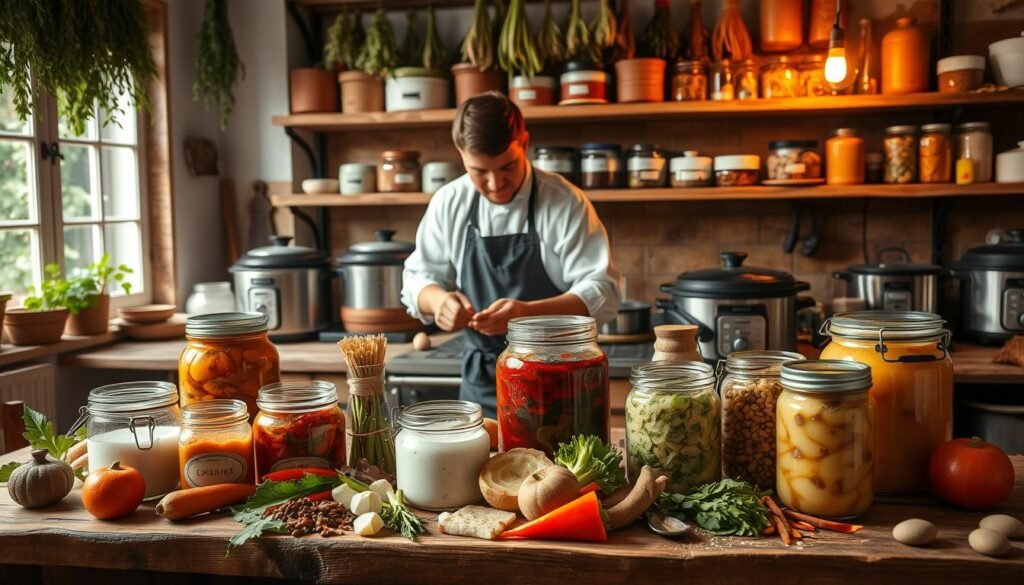
Asian fermented foods opened a new world of flavors for me. My first taste of miso was in a Japanese soup, and I was hooked by its deep umami. Miso is made by fermenting soybeans with koji, taking months to years.
I now have three types of miso in my fridge. White miso is mild and sweet, great in salad dressings. Red miso is stronger and salty, perfect for marinades. Adding miso at the end of cooking keeps its probiotics and flavor.
Tempeh became my go-to plant-based protein. This Indonesian soybean cake is firm, nutty, and absorbs marinades well. Unlike tofu, tempeh stays firm when cooked, making it a staple in my meals.
My journey with natto was challenging at first. Natto is fermented soybeans with a slimy texture and strong smell. Many find it off-putting, but I persisted for its health benefits.
After trying it several times, I grew to love natto. I mix it with soy sauce, mustard, and onions over rice. It’s now part of my breakfast routine, showing that the fermented foods renaissance requires patience and an open mind.
European Contributions to the Fermented Foods Renaissance
European fermentation traditions have greatly influenced American food. Many beloved European dishes rely on traditional fermentation techniques passed down through generations.
French cheese-making is a prime example of European fermentation mastery. Each region in France has its own cheese varieties, aged in unique ways. The white rind on Brie and Camembert comes from mold, while Swiss cheese’s holes are from fermentation.
German sauerkraut traditions are also key in the fermented foods renaissance. German methods have shaped American fermentation through immigration. At a German-American festival, I tasted sauerkraut aged for six weeks, which was incredibly flavorful.
- Icelandic skyr is thick, creamy, and high in protein, with a tangy taste
- Italian aged cheeses like Parmigiano-Reggiano are fermented and aged for 12-36 months, developing complex textures
- Eastern European kvass is a fermented beverage made from rye bread, providing probiotics with a refreshing, slightly sour flavor
- Fermented beets from Poland and Ukraine offer earthy sweetness with probiotic benefits
These European traditions show fermentation is part of Western food culture. The current fermented foods renaissance in America draws from these roots, blending with Asian and other global influences.
How Global Fermented Cuisine Supports Sustainable Food Practices
Fermentation’s sustainability is something that deeply resonates with me. As I explored fermentation worldwide, I saw it aligns with modern sustainable food practices.
Fermentation originally helped preserve food, reducing waste. Before refrigeration, it was a way to store seasonal food for lean months. Cabbage became sauerkraut, and milk turned into cheese. This principle is just as relevant today, helping us tackle food waste.
I’ve started fermenting vegetables that were about to go bad. Last week, I fermented carrots, radishes, and cauliflower. This connects me to centuries of resourcefulness, supporting sustainable food practices.
| Sustainability Benefit | How Fermentation Achieves This | Modern Application |
|---|---|---|
| Reduces food waste | Preserves perishable ingredients for months without refrigeration | Ferment excess produce from gardens or farmers markets |
| Minimal energy requirements | Fermentation occurs at room temperature using natural bacteria | No cooking, freezing, or canning equipment needed |
| Enhances nutrition | Bacteria break down anti-nutrients and increase vitamin content | Makes plant proteins more digestible and bioavailable |
| Supports local food systems | Works with whatever ingredients are locally available | Reduces dependence on industrial food transportation |
Fermentation’s energy efficiency impresses me. Unlike canning or freezing, it happens naturally at room temperature. The bacteria do all the work, using the food’s sugars. This is truly sustainable food practices perfected by our ancestors.
I’ve noticed how traditional fermentation techniques make foods more nutritious. Soybeans, for example, are hard to digest but become easier to digest when fermented. This transformation happens with grains, dairy, and vegetables, making nutrients more accessible.
Fermentation is our oldest and most valuable food technology. It transforms the inedible into the delicious, the perishable into the permanent.
Supporting local food systems through fermentation is important to me. I buy seasonal vegetables from nearby farms, then ferment them to enjoy all year. This reduces my reliance on long-distance produce and supports local farmers. The fermented foods renaissance promotes local, seasonal eating, benefiting health and the environment.
Understanding global fermented cuisine through sustainability changed my view. What started as a health trend turned into a food philosophy. Fermentation addresses food waste, nutrition, energy use, and local economies, using methods developed over thousands of years worldwide.
🛒 My Practical Guide to Shopping for Fermented Foods in America
Shopping for fermented foods has changed a lot for me. I used to buy anything labeled “probiotic” or “fermented.” But I found out many products had no live bacteria. Now, I know what to look for, and I’m excited to share these tips with you.
The fermented foods market in America has grown a lot. With so many choices, it’s key to know the difference between real fermented foods and fake ones. I’ve learned to spot signs of quality to save money and avoid disappointment.
Decoding Labels: What “Live Cultures” Really Means
Reading labels has changed how I shop for fermented foods. The phrase “contains live and active cultures” is a good start. But I look deeper than just probiotic claims.
The best labels list specific bacterial strains by their scientific names. I look for names like Lactobacillus plantarum, Lactobacillus brevis, or Bifidobacterium longum. These names show the maker cares about what’s in their product.
Terms like “supports gut health” or “probiotic-friendly” mean little without live cultures. I’ve seen many products with these claims that are actually pasteurized or vinegar-pickled with no good bacteria.
If it sits on a shelf at room temperature, it’s probably not truly fermented with live cultures.
One key clue I check is where the product is kept. Real fermented foods need to be refrigerated. If I find “kimchi” or “sauerkraut” in the shelf-stable section, it’s been heat-treated and won’t have probiotic benefits.
Understanding Different Fermented Food Preservation Methods
Learning about fermented food preservation methods helped me understand why some products cost more and work better. True fermentation uses salt, time, and beneficial bacteria to preserve food. This traditional approach creates the probiotics we’re seeking.
Many commercial “pickles” use vinegar instead of fermentation. These vinegar-pickled products taste tangy but lack living cultures. The ingredient list reveals the truth—if vinegar appears before salt, it’s likely pickled.
Natural pickling methods rely on lacto-fermentation, where vegetables ferment in their own juices with salt. I look for simple ingredient lists containing just vegetables, salt, water, and maybe spices. The shorter the ingredient list, the more likely I’m getting authentic fermented food preservation.
Pasteurization is another preservation method that kills all bacteria, good and bad. Some manufacturers ferment their products but then pasteurize them for longer shelf life. This defeats the entire purpose of eating fermented foods for gut health benefits.
Visual clues help me identify active fermentation when shopping:
- Bubbles in the liquid indicating ongoing fermentation
- Cloudy brine from beneficial bacteria (not crystal clear)
- Slightly bulging lids from carbon dioxide pressure
- Ingredient lists mentioning “raw” or “unpasteurized”
- Labels warning to “burp” the jar occasionally
The Price Difference Between Artisanal Sauerkraut and Mass-Produced Options
Quality fermented foods cost more, and understanding why helped me accept the premium. Artisanal sauerkraut from small producers typically runs $8-12 per pint, while mass-produced versions might cost $3-5. That’s a significant difference that requires explanation.
Small-batch producers use traditional fermentation that takes weeks, requires refrigerated storage throughout, and involves labor-intensive processes. They source quality organic vegetables and monitor fermentation carefully. These factors drive up costs but create superior products.
| Factor | Artisanal Sauerkraut | Mass-Produced Options |
|---|---|---|
| Fermentation Time | 3-6 weeks using natural pickling methods | Quick vinegar pickling or short fermentation |
| Ingredients | Organic vegetables, sea salt, filtered water | Conventional produce, table salt, preservatives |
| Live Cultures | Multiple strains, billions of CFUs | Often pasteurized with zero live bacteria |
| Average Price | $8-12 per pint | $3-5 per pint |
My strategy involves prioritizing artisanal purchases for foods I consume daily, like kimchi and sauerkraut. For fermented foods I use occasionally as recipe ingredients, I sometimes choose quality mid-range brands. This approach balances my budget while ensuring I get sufficient probiotics.
I’ve also discovered that buying larger jars reduces the per-ounce cost. When I find a producer I trust, I purchase quart-sized jars instead of pints. Some local makers offer discounts for buying multiple jars, which helps manage the expense of artisanal sauerkraut and other premium fermented foods.
Where I Find the Best Fermented Foods Locally and Online
Discovering reliable sources for quality fermented foods took time and experimentation. I’ve built a network of trusted suppliers that consistently deliver products with genuine probiotic benefits.
Farmers markets became my favorite destination for fermented foods. I’ve met artisan producers who explain their fermentation processes and let me sample products. These face-to-face connections give me confidence in what I’m buying, and I’ve discovered unique regional variations I’d never find in stores.
My go-to shopping locations include:
- Local farmers markets for small-batch fermented vegetables and kimchi
- Whole Foods and natural grocery stores with dedicated fermented food sections
- Co-ops and health food stores that prioritize local artisan producers
- Trader Joe’s for affordable options like their refrigerated sauerkraut
- Asian markets for authentic kimchi and miso varieties
Online shopping has expanded my access to fermented foods unavailable locally. I’ve found excellent specialty retailers who ship refrigerated products with ice packs. The selection online includes small producers from across America who use authentic fermented food preservation techniques.
Some mainstream supermarkets have improved their offerings recently. I’ve noticed chains like Kroger and Safeway adding refrigerated fermented vegetables to meet growing demand. The selection varies by location, but it’s worth checking your local store’s refrigerated produce section.
I recommend exploring resources on healthyvibeslife.com for updated brand recommendations and reviews of fermented food producers. The site features guides to finding quality fermented foods across different regions of America, helping you locate the best options near you.
Building relationships with store managers has also helped me. I’ve requested specific brands and products, and several stores have started carrying items based on customer feedback. Don’t hesitate to ask for what you want—retailers respond to consumer interest in quality fermented foods.
🍽️ How I Incorporated Fermented Foods into My Daily Wellness Routine
I started adding fermented foods to my daily meals. At first, it was a bit of a challenge. Some days, I’d add kimchi to everything. Other days, I’d forget about my kefir in the fridge.
Then, I found a simple way to make it work. I learned that being consistent is more important than being perfect. Now, eating fermented foods is as easy as brushing my teeth. And I’ve seen big improvements in my gut health.
Starting Your Fermented Foods Journey: My Beginner Tips
My first mistake was trying too much too soon. I ate too much fermented food at once. My stomach didn’t like it, and I learned to be patient.
Start with just a few spoonfuls per day. It’s important to let your gut adjust slowly. I started with two tablespoons of sauerkraut and gradually increased it over three weeks.
Choose one fermented food to start with. I chose kimchi because I loved its taste. After two weeks, I added kefir to my morning routine. This slow approach helped me avoid any discomfort.
Listen to your body. Some gas is normal as your gut adjusts. But if you have severe cramps or issues, slow down even more. There’s no rush.
I also learned that timing is key. Eating fermented foods with meals helps. It protects the probiotics as they go through your body.
Creating Balanced Meals with Kimchi Kombucha Popularity in Mind
The rise in kimchi kombucha popularity inspired me to get creative with meals. I no longer just add fermented foods as an afterthought. They’re now a key part of my balanced meals.
Pair fermented foods with fiber-rich foods like whole grains and veggies. These foods feed the probiotics in fermented foods. This combo boosts gut health benefits even more.
Here’s how I structure my meals:
| Meal Time | Fermented Food | Complementary Foods | Benefits |
|---|---|---|---|
| Breakfast | Kefir (1 cup) | Oatmeal, berries, flax seeds, almonds | Probiotics meet prebiotics; sustained energy |
| Lunch | Kimchi (3-4 tablespoons) | Quinoa bowl, roasted vegetables, grilled chicken, avocado | Complete protein; diverse nutrients; healthy fats |
| Snack | Kombucha (8 oz) | Apple slices, almond butter | Hydration; natural sugars; fiber |
| Dinner | Sauerkraut (1/4 cup) | Wild salmon, sweet potato, steamed broccoli | Omega-3s; complex carbs; cruciferous vegetables |
I also discovered that miso paste makes a great salad dressing. Mix it with olive oil, rice vinegar, and a bit of maple syrup. It turns any salad into a probiotic-rich meal.
My favorite Buddha bowl has brown rice, roasted chickpeas, raw veggies, kimchi, and tahini dressing. Each part serves a purpose. The grains and legumes provide prebiotics, while kimchi gives probiotics. The veggies add vitamins, and tahini adds healthy fats.
Don’t heat your fermented foods to keep the live cultures alive. I learned this the hard way when I added sauerkraut to a hot sandwich. Now, I add fermented foods after cooking, when the food is cool.
Storage Tips for Maximum Gut Health Benefits
Storing fermented foods right is key for their gut health benefits. I’ve learned to store them well, which keeps them fresh and potent.
Always keep fermented foods refrigerated. Cold temperatures slow down fermentation and keep the bacteria stable. Room temperature can cause over-fermentation, making the food too sour and possibly spoiled.
Use clean utensils every time you take food from a jar. I have a set of clean spoons near my fridge for this. Dirty utensils can ruin the whole batch.
For jarred fermented veggies like sauerkraut and kimchi, press them back under the brine after each use. Air can cause mold on the surface. I use a clean fork to gently push everything back under the liquid.
Be mindful of how long you keep opened jars. Fermented foods last longer than regular foods but not forever. I try to finish opened jars within four to six weeks for the best freshness and probiotic strength.
Here are my specific storage guidelines that have worked well:
- Unopened fermented foods: Store in refrigerator until expiration date on package
- Opened sauerkraut/kimchi: Consume within 4-6 weeks; keep submerged in brine
- Kefir: Use within 1-2 weeks after opening; shake before each use
- Kombucha: Refrigerate after opening; consume within 7-10 days
- Miso paste: Can last 6+ months refrigerated in airtight container
I also label everything with the date I opened it. My memory isn’t reliable enough to track multiple jars at once. A simple piece of masking tape with the date written in marker solves this problem completely.
Never leave fermented foods out at room temperature for extended periods during meals. I portion what I need and immediately return the container to the refrigerator. This practice aligns with sustainable food practices by reducing waste from spoilage.
Join the Healthy Vibes Life Community for More Wellness Insights
My journey with fermented foods has been enriched by connecting with others who share similar wellness goals. The Healthy Vibes Life community is my go-to for learning, inspiration, and practical advice.
I don’t have all the answers, and I’m always learning new things. Being part of a community means I can learn from others’ experiences while sharing what has worked for me. This collective wisdom helps everyone progress faster.
Explore Related Articles on Natural Pickling Methods and Gut Health
The healthyvibeslife.com website has dozens of articles that have deepened my understanding of fermentation and wellness. I regularly revisit the guides on natural pickling methods when I’m ready to experiment with new vegetables or flavor combinations.
The detailed gut health series connects the science of probiotics with practical lifestyle applications. These articles helped me understand why certain approaches work and gave me confidence to personalize my fermentation practice.
I also appreciate the recipe collections that show creative ways to use fermented foods. The international cuisine articles introduced me to fermented foods I’d never heard of before, expanding my palate and nutritional diversity.
Subscribe to Our Newsletter for Wellness Travel Deals and Fitness Product Reviews
The Healthy Vibes Life newsletter is my favorite weekly email. I subscribed initially for the fermentation content, but I’ve discovered so much more value than I expected.
The wellness travel deals have helped me plan trips that align with my health priorities. I’ve visited fermentation festivals, attended wellness retreats, and explored food cultures in ways I wouldn’t have discovered on my own.
The fitness product reviews are thoroughly researched and honest. I’ve made several purchase decisions based on these recommendations, and I haven’t been disappointed yet. The reviews save me time and help me avoid products that don’t deliver on their promises.
Get Exclusive Health Tips and Sustainable Food Practices Delivered to Your Inbox
Subscribers receive exclusive content that doesn’t appear on the main website. These insider tips have genuinely improved my wellness routine in small but meaningful ways.
The focus on sustainable food practices resonates deeply with my values. I want my health journey to benefit not just my body, but also the planet. The newsletter regularly features articles on reducing food waste, choosing environmentally responsible products, and supporting local food systems.
Early access to new articles and guides means I’m always ahead of wellness trends. I love being part of a community that prioritizes evidence-based information over fads and marketing hype.
Signing up takes just a few seconds, and you can unsubscribe anytime. But I think you’ll find, as I did, that the content is valuable enough to make the newsletter a permanent part of your weekly reading.
The journey to better health isn’t about perfection—it’s about consistent, sustainable choices that support your body’s natural wisdom. Fermented foods are just one piece of a larger wellness puzzle, but they’re a piece that has genuinely transformed how I feel every day.
I encourage you to start small, stay curious, and connect with others who are on similar paths. The Healthy Vibes Life community is here to support you every step of the way.
✨ Conclusion
My journey into fermented foods has changed my view on nutrition and wellness. It started with curiosity about kimchi and kefir. Now, I see the value in traditional wisdom backed by science.
The benefits I’ve seen go beyond just digestion. My immune system is stronger, my mood is more balanced, and I have more energy. Eating real fermented foods has made a big difference in my life.
This movement is more than just about health. It connects us to sustainable food and cultural heritage. The market’s growth shows we’re moving towards wellness that values quality and authenticity.
Starting your fermented foods journey is easy. Just pick one food that interests you. See how your body reacts. Let your digestive system get used to the new bacteria.
I encourage you to check out Healthy Vibes Life. Our community shares experiences with fermented foods, wellness, and sustainable living. Your journey to better gut health starts with choosing these nourishing foods.