
“Yoga is the journey of the self, through the self, to the self.” – The Bhagavad Gita
When I first walked into a studio, I felt overwhelmed. There were many types of yoga to choose from. I had no idea where to start. If you’re feeling the same, you’re not alone.
Here’s what I’ve learned: there’s no single “correct” approach to yoga. Each person needs something unique. This depends on their fitness level, goals, and personality. Some people crave intense physical challenges, while others seek gentle relaxation and mental clarity.
I’ve explored many different yoga styles over the years. From vigorous flows to restorative sessions, I’ve tried them all. Through this journey, I discovered that finding the right match transforms everything. That’s why I created this guide—to help you navigate the options and discover your perfect yoga practice.
Whether you want to build strength, increase flexibility, reduce tension, or quiet your mind, there’s an ideal style waiting for you. Let me walk you through each option so you can make an informed choice.
Key Takeaways
- Multiple practice options exist, each with unique benefits for strength, flexibility, and mental clarity
- All approaches help release tension and promote relaxation, but they differ in intensity and focus
- Beginners should consider their fitness level, personal goals, and preferences when choosing a practice
- No single style works for everyone—finding the right match is a personal journey
- Understanding the characteristics of each type helps you make an informed decision
- You can explore multiple approaches over time as your needs and abilities evolve
🧘♀️ Why Understanding Different Yoga Styles Matters for Your Practice
Choosing the right yoga style can change everything. I’ve seen friends try yoga once and never go back. It’s not because they didn’t like it—it was just the wrong fit for them.
Knowing about different yoga styles before you start is key. It helps you find a practice that really speaks to you. When you find the right one, yoga becomes something you look forward to, not just another thing to do.
The Rich Diversity of Modern Yoga
Modern yoga offers a wide range of practices. From ancient traditions to modern adaptations, there’s something for everyone. This variety shows how yoga has grown and changed over time.
This variety is yoga’s strength, not weakness. Some styles focus on physical fitness and strength building. Others focus on mental clarity and stress reduction. There are even styles for spiritual growth and injury recovery.
Yoga styles range from fast-paced flows to quiet, meditative practices. You can find heated rooms for a workout or peaceful spaces for reflection. Some classes move quickly, while others hold poses for minutes.
What’s important is recognizing that no single approach works for everyone. Your body, schedule, fitness level, and goals are all unique. That’s why there are so many different yoga styles.
For example, someone recovering from an injury can find gentle classes. Athletes can find power-focused practices. Stressed executives might prefer meditation-heavy classes, while those battling depression might enjoy energizing classes.
How I Discovered My Perfect Yoga Match
My yoga journey started with a bad match. I expected relaxation but found a challenging vinyasa flow class instead.
I left feeling defeated and thought yoga wasn’t for me. But I couldn’t shake the feeling that it was worth trying again.
So I tried a beginner-friendly hatha class next. The slower pace helped me understand the poses and connect with my breath. Suddenly, yoga made sense to me.
Over time, I’ve tried many yoga styles. My needs change with my life. When stressed, I do yin yoga. When I need energy, I choose power yoga.
This flexibility has made my practice last over a decade. I’m not stuck with one style that doesn’t fit during different times in my life.
My advice? Give yourself permission to explore. Trying different styles is not wasting time—it’s finding what truly works for you. The perfect yoga match is out there, and understanding the options is the first step to finding it.
🔥 Hatha Yoga: The Foundation of All Yoga Styles
Hatha yoga is like the trunk of a family tree. It’s the base from which all other yoga styles branch out. When I started exploring yoga, learning about Hatha helped me understand other styles better. The word “Hatha” means “force” in Sanskrit, but this practice is gentle.
Hatha yoga originally meant all physical yoga practices that focus on poses. Today, a Hatha class is a slow-paced session that combines different approaches. It’s perfect for beginners.
Most Western studios use Hatha as a term for classes that mix different yoga styles at a slow pace. The focus is on learning proper alignment and connecting breath with movement. Hatha classes are great for asking questions and getting adjustments without feeling rushed.
The Welcoming Gateway to Your Practice
Hatha yoga is the perfect starting point because it’s slow and methodical. Unlike fast styles, Hatha lets you hold poses for several breaths. This gives your body time to understand each position.
My first Hatha class was memorable. The teacher explained not just what to do but why. This educational part is key for beginners. You learn that yoga is about awareness and respecting your body, not just doing impressive poses.
The slow pace of Hatha reduces the risk of injury. You can notice if something feels wrong and adjust. This mindful approach builds confidence on the mat, which is as important as flexibility or strength.
Hatha classes cover all basic yoga elements. You’ll do physical postures, breathing techniques, and sometimes meditation. This introduction shows you the full range of yoga, beyond just physical exercise.
Essential Poses and Breathing Foundations
In Hatha classes, you’ll see the same basic poses over and over. These poses are the foundation you’ll recognize in all yoga styles. Mountain Pose teaches you how to stand right, and Downward-Facing Dog strengthens your upper body while stretching your back.
Child’s Pose is a restful position you can always come back to. Warrior poses build leg strength, and Cat-Cow stretches your spine gently. These poses might seem simple, but doing them correctly is the foundation for more advanced practices.
Pranayama, or breath control, is also key in Hatha. Most classes introduce basic breathing techniques that calm your nervous system. Ujjayi breathing, or “ocean breath,” helps you focus by creating a soft sound in your throat.
Three-part breathing teaches you to breathe fully by expanding your lungs in stages. This technique has helped me manage stress outside of yoga. Connecting breath with movement becomes natural when you practice it slowly and intentionally.
| Hatha Yoga Element | Primary Benefit | What to Expect | Ideal For |
|---|---|---|---|
| Slow-paced postures | Proper alignment learning | Holding poses 5-10 breaths | Understanding form and technique |
| Pranayama practice | Breath control and focus | Guided breathing exercises | Stress reduction and mindfulness |
| Basic pose sequences | Building strength gradually | Foundational postures with modifications | Developing confidence safely |
| Relaxation periods | Nervous system regulation | Savasana and gentle meditation | Integration and recovery |
Finding Your Place in Hatha Practice
Who should practice Hatha yoga? Almost everyone can benefit, but it’s great for beginners and those recovering from injuries. Hatha classes are less intimidating because they allow for questions and adjustments.
People with chronic conditions or injuries often choose Hatha for its gentle pace. The slow movements let you honor your body’s limits while challenging yourself. I’ve seen many students regain their physical confidence through Hatha.
Older adults enjoy Hatha because it focuses on stability and flexibility without requiring athleticism. It meets you where you are, regardless of age or fitness level. There’s no competition or judgment, just steady progress.
Even experienced practitioners can benefit from Hatha classes. When I’m feeling burnt out, Hatha reminds me of the basics. It’s like a reset button that brings me back to why I started practicing.
If you prefer a contemplative, meditative approach, Hatha is perfect. It encourages inward focus and self-reflection. You leave class feeling centered, not exhausted, which supports a sustainable practice.
Don’t think Hatha is only for beginners or less legitimate than other styles. Some of my most profound yoga experiences were in Hatha classes. The foundation is more important than the complexity of poses.
🌊 Vinyasa Flow: Linking Breath with Movement
Vinyasa Flow makes yoga feel both energizing and meditative. It’s a popular style that combines physical challenge with mental clarity. Vinyasa flow stands out for its creative sequences and focus on breathing.
I started with flow yoga when I wanted something more active than Hatha. The smooth transitions between poses felt like a moving meditation. It kept my mind fully engaged.
The Dance of Breath and Movement
The core of Vinyasa practice is linking each movement with breath. This creates a rhythmic quality, making your practice feel like dance. You inhale as you extend or open, and exhale as you fold or twist.
This connection between breath and movement does more than just time poses. It creates a “flow state” where your mind is fully present. The constant motion keeps your thoughts from wandering, making Vinyasa flow meditative despite its intensity.
Vinyasa keeps you moving, with little pause between poses. Each transition is as important as the poses. The practice builds internal heat through movement, making muscles more flexible and receptive to deeper stretches.
Flow yoga offers creative freedom. No two Vinyasa classes are the same, thanks to instructors’ unique sequences. This variety keeps your practice fresh and engaging, preventing boredom.
How Vinyasa Flow Transforms Body and Mind
Vinyasa yoga offers more than a typical workout. Regular practice changes your physical fitness and mental wellbeing. Its dynamic nature makes it effective for overall health.
Cardiovascular fitness improves significantly because Vinyasa keeps your heart rate up. The continuous movement is like moderate cardio exercise. You build endurance, strength, and flexibility.
The physical demands of Vinyasa help build functional strength. Core muscles engage constantly, supporting transitions. Your arms, shoulders, and legs develop lean muscle tone through repeated movements.
Mentally, coordinating breath with movement creates focus and meditation. This quiets daily mental chatter. After a Vinyasa class, my mind feels clearer and more organized.
| Benefit Category | Primary Effects | Long-term Impact |
|---|---|---|
| Physical Strength | Builds lean muscle, improves core stability, enhances balance | Increased functional fitness for daily activities |
| Cardiovascular Health | Elevates heart rate, improves circulation, burns calories | Better endurance and heart health over time |
| Mental Clarity | Reduces stress, improves focus, creates flow state | Enhanced emotional regulation and mental resilience |
| Flexibility | Increases range of motion, reduces muscle tension | Lower injury risk and improved movement quality |
The rhythmic nature of flow yoga also calms your nervous system. Even with vigorous movement, consistent breathing signals safety. This creates a unique mix of energized relaxation.
Your First Vinyasa Experience
Starting your first Vinyasa class might feel daunting, but everyone begins somewhere. The beauty of this practice is that you can always modify poses or take breaks. Child’s Pose becomes your best friend during class.
Most Vinyasa classes start with breathing exercises and gentle warm-ups. Then, they move into flowing sequences. Sun Salutations are common, taking you through forward folds, planks, and upward-facing movements.
Expect to move faster than in Hatha classes. Transitions are smooth, with the instructor guiding you in rhythm with breath cues. Don’t worry if you can’t keep up at first—it takes time to memorize sequences and coordinate everything.
I recommend sitting where you can see the instructor clearly during your first few classes. This helps you understand the flow patterns and proper alignment. Remember, your practice is personal—comparing yourself to others distracts from your own growth.
The intensity of Vinyasa classes and instructors varies. Some classes are slower, while others are faster. Listen to your body and honor its limits, as you build familiarity with the practice. You’ll gradually gain the strength and stamina for more challenging sequences.
💪 Ashtanga Yoga: The Eight-Limbed Path
Ashtanga yoga is the most challenging and mentally demanding yoga style I’ve tried. It follows a strict framework that tests both body and mind. When I first joined an Ashtanga class, I knew it was more than just yoga—it was a deep commitment to discipline and growth.
Ashtanga yoga is a continuous flow of poses in a set order. The intensity grows from the start to the end. What’s unique is that you practice the same sequence every time.
The Structured Sequence of Ashtanga Yoga
The beauty of Ashtanga lies in its structured approach. This structured yoga system has three main series: Primary, Secondary, and Advanced A through D. Each series has a fixed sequence of poses that you must master before moving on.
There are two main ways to practice Ashtanga. In Mysore style, you move at your own pace with a teacher’s guidance. Led classes have everyone following the teacher’s count and instruction.
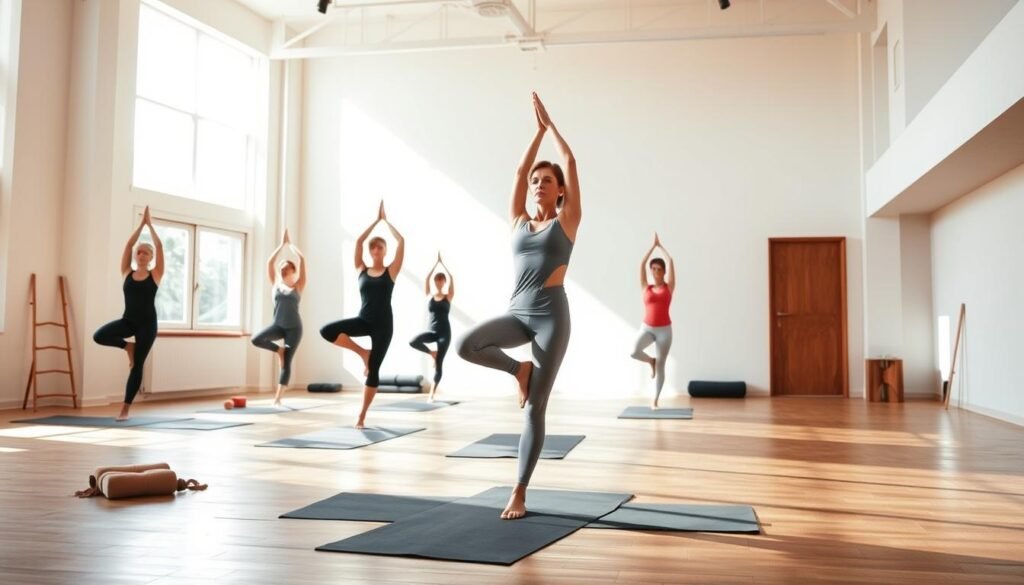
The practice uses a special breathing technique called Ujjayi breath. This creates a sound in your throat and generates heat in your body. The breath helps you stay focused during tough poses.
“Ashtanga yoga is 99% practice and 1% theory.”
Each session follows a consistent pattern:
- Opening chant and Sun Salutations
- Standing sequence poses
- Seated sequence poses specific to your series
- Closing sequence with backbends and inversions
- Final relaxation and closing chant
Building Discipline Through Ashtanga Practice
Ashtanga’s repetitive nature might seem limiting at first. But it’s actually very freeing. You don’t have to think about what comes next. Your mind can focus on breath, alignment, and the present moment.
This traditional yoga practice builds discipline like no other. By practicing the same sequence over and over, you can see your progress clearly. You’ll notice when you master a pose you couldn’t do before.
The mental strength you gain from Ashtanga goes beyond the mat. Students transform physically and mentally. They learn to show up consistently, even when they don’t feel like it.
The physical benefits are impressive too. Ashtanga yoga builds strength, flexibility, and stamina. The continuous movement boosts your heart health, while the held poses build muscle endurance. You’ll get stronger with each practice.
Is Ashtanga Right for Beginners
Many ask if Ashtanga is right for beginners. My honest answer is yes, but with realistic expectations. Ashtanga is challenging, but beginners can start with it.
If you’re new to yoga, start with Hatha classes first. They teach basic poses and alignment. But if you like structure and intensity, Ashtanga is a great choice.
Many studios offer beginner-friendly Ashtanga classes. These classes introduce the Primary Series gradually. Teachers provide modifications for tough poses, making it accessible.
Consider Ashtanga if you:
- Thrive on routine and consistency
- Want to build significant physical strength
- Appreciate measuring progress through repetition
- Have good body awareness and can listen to your limits
- Enjoy a practice that’s both physically and mentally demanding
I always tell newcomers that Ashtanga yoga rewards dedication. It’s not about being perfect from the start. It’s about showing up, practicing with intention, and letting the sequence teach you over time. The journey itself is the destination, and that’s where the real transformation happens.
🌙 Yin Yoga: The Art of Stilling and Deep Stretching
Yin yoga shows us that being calm doesn’t mean being weak. It’s actually a deep way to change your body and mind. Unlike other yoga, this practice asks you to slow down a lot. You’ll stay in each pose for three to five minutes, sometimes longer.
This is very different from other yoga styles. The room is quiet and calm. Your muscles relax as you go deeper into each pose. It challenges your body and mind in new ways.
Targeting Your Connective Tissues
Yin yoga works in a special way. It focuses on your connective tissues—the fascia, ligaments, and joints that keep your body together. These deep tissues need a different kind of stretching than muscles do.
When you hold a yin pose for a few minutes, something special happens. Your muscles relax and let go. This lets the stretch reach deeper tissues that shorter holds can’t touch. It’s like slowly pulling taffy, creating lasting change.
The benefits for your fascia are big:
- Increased flexibility that goes beyond surface-level muscle stretching
- Improved joint mobility through gentle stress on ligaments and tendons
- Better circulation to areas that don’t get much blood flow during active exercise
- Release of chronic tension stored in deep tissue layers
I love how yin yoga balances out more active practices. If you do vigorous yoga or intense workouts, yin is the perfect opposite. Your body needs both the “yang” energy of movement and the “yin” quality of calm to stay healthy.
Finding Meditation Within the Poses
The long holds in yin yoga become moving meditations. When you stay in one position for five minutes, you can’t distract yourself. You’re forced to be present with whatever arises.
At first, this feels uncomfortable. Your mind wanders. Physical sensations get stronger. You might feel restless or even frustrated. But this is where the practice starts. Yin yoga teaches you to observe discomfort without immediately reacting to it.
I’ve found the mental benefits often beat the physical ones:
- You develop greater body awareness by noticing subtle sensations you usually ignore
- You practice mental resilience by staying with challenging feelings instead of escaping them
- You cultivate present-moment awareness as your mind naturally settles in calmness
- You learn to distinguish between productive discomfort and pain that signals danger
This meditative aspect turns yin into a deep mindfulness practice. You’re not just stretching your hips or hamstrings. You’re training your mind to stay calm and centered, no matter what’s happening around you.
My Personal Recommendation for Stress Relief
I recommend yin yoga to almost everyone, but it’s a must for those with chronic stress. Here’s why: it directly activates your parasympathetic nervous system—the part that helps you relax, digest, and recover. Modern life keeps us in a state of constant stress.
Yin yoga offers a natural way to counteract this. The long-held poses, deep breathing, and calmness tell your body it’s safe to relax. I’ve seen how a single yin class can calm my entire nervous system, shifting me from anxious to calm.
I highly recommend yin yoga for these groups:
- Office workers and people with sedentary jobs who develop tight hips, shoulders, and lower backs from sitting all day
- Athletes and active individuals who need deep recovery work to balance intense training schedules
- Anyone feeling mentally overwhelmed who struggles to quiet racing thoughts through traditional meditation
- People recovering from injuries who need gentle movement that doesn’t stress healing tissues
The beauty of yin yoga is its accessibility. You don’t need to be flexible or strong to practice. You just need to be willing to be calm and patient with yourself. The practice meets you where you are and slowly opens both body and mind.
⚡ Power Yoga: Building Strength and Endurance
Power yoga combines the intensity of a fitness class with yoga’s focus on the mind and body. It’s a dynamic practice that challenges both. This vigorous form of yoga is popular among those seeking a serious workout.
Unlike gentler yoga, power yoga keeps you moving fast. You’ll flow through challenging sequences that build heat and test your stamina. It stays true to traditional yoga while increasing intensity for modern fitness goals.
A Fitness-Forward Practice
Power yoga emerged in the West as a more athletic version of traditional Ashtanga sequences. It keeps the breath-to-movement connection but increases the pace and physical demands. This makes it feel more like strength training yoga than a typical meditation practice.
The sequences in power yoga are designed to build muscle and cardiovascular endurance. You’ll hold challenging poses longer and transition between them more quickly than in other yoga styles. Upper body strength develops rapidly because many poses require you to support your body weight with your arms and core.
I appreciate how power yoga appeals to people coming from fitness backgrounds. If you’ve spent time in gyms doing traditional workouts, this athletic yoga approach feels familiar yet refreshingly different. You get the physical challenge you crave while learning proper breathing techniques and body awareness.
“Power yoga is not just about the physical practice—it’s about building mental resilience through physical challenge. When you hold a difficult pose, you’re training your mind as much as your muscles.”
The practice moves through poses with minimal rest between sequences. This continuous movement generates internal heat and keeps your heart rate elevated throughout the session. While it’s based on yoga traditions, the execution feels much more like an intense workout.
Physical Transformation Through Movement
The calorie-burning power of power yoga rivals many traditional cardio workouts. A typical 60-minute session can burn between 300-500 calories depending on the intensity and your body composition. This makes it an excellent choice for weight management goals.
Muscle development happens quickly with consistent practice. Your core, arms, and shoulders will show visible definition within weeks. The dynamic sequences target multiple muscle groups simultaneously, creating functional strength that transfers to daily activities.
Here are the key physical benefits I’ve observed in my power yoga journey:
- Significant improvements in cardiovascular fitness and stamina
- Increased muscle tone, specially in the core and upper body
- Enhanced metabolism that continues burning calories after class
- Better flexibility combined with strength, not just passive stretching
- Improved balance and coordination from challenging transitions
The metabolic boost from power yoga extends beyond your time on the mat. Building lean muscle mass increases your resting metabolic rate. This means you’ll burn more calories throughout the day, even when you’re not exercising.
Many practitioners notice physical changes faster than with other yoga styles. The combination of strength building and calorie burning creates visible results. But, consistency matters more than intensity for long-term transformation.
Finding Your Power Yoga Community
Certain types of people absolutely thrive in power yoga classes. Athletes looking for cross-training options find it complements their sports perfectly. The strength training yoga elements help prevent injuries while improving overall performance.
Fitness enthusiasts who thought yoga was “too slow” often discover power yoga changes their perspective completely. It provides the challenging workout they want while introducing them to mindful movement. I’ve seen gym regulars become devoted yoga practitioners after their first power yoga session.
Here’s who typically succeeds in power yoga environments:
- Active individuals with a moderate to high fitness level
- People pursuing weight loss alongside muscle building
- Those who enjoy high-energy group fitness classes
- Experienced yoga practitioners seeking more physical intensity
- Anyone who finds motivation in challenging themselves physically
A word of caution: if you’re completely new to yoga, I recommend starting with slower-paced yoga styles first. Learning proper alignment and breathing in a gentler setting helps you get more from power yoga later. Jumping straight into this intense practice can feel overwhelming and might increase injury risk.
Existing yoga practitioners often rotate power yoga into their weekly routine for variety. It provides the intensity they crave while balancing out gentler practices like Yin or Restorative yoga. This combination creates a well-rounded approach to physical and mental wellness.
The group energy in power yoga classes is contagious. Working hard alongside others who are equally challenged creates a supportive community atmosphere. You’ll push yourself harder than you would practicing alone at home.
🔆 Kundalini Yoga: Awakening Your Inner Energy
Kundalini yoga is different from other yoga styles. It focuses on chanting, breathing, and meditation. Unlike other styles, it emphasizes spiritual growth and inner change.
My first class was a surprise. The white clothes, music, and mantras were new to me. But I was curious, and I found a powerful practice that changed my energy.
The Spiritual Foundation of Kundalini Practice
Kundalini yoga works with kundalini energy, a coiled serpent at your spine’s base. It aims to awaken this energy and move it through your chakras. This journey is about spiritual growth and expanded awareness.
This might sound mysterious if you’re new to spiritual yoga. But you don’t need to believe in anything to benefit. Many people enjoy it for how it makes them feel, not for the beliefs behind it.
The practice combines physical movements with energy work. Each session has a specific sequence called a kriya. It targets your consciousness or body, focusing on inner shifts, not just physical poses.
Kundalini yoga is unique because it focuses on your subtle energy system. It places chakras and energy at the heart of the practice.
Breathwork, Chanting, and Meditation in Kundalini
Kundalini yoga uses special techniques. Breath of Fire is a fast, rhythmic breathing that energizes and clears your mind. It’s challenging but rewarding.
Chanting and mantras are key in kundalini yoga. You might chant “Sat Nam” or other Sanskrit phrases. These sounds are believed to affect your energy and consciousness. It might feel awkward at first, but it’s powerful.
Here are the main elements in a kundalini yoga class:
- Kriyas: Specific sequences of postures, breathwork, and sounds for certain outcomes
- Pranayama: Breathing techniques like Breath of Fire and alternate nostril breathing
- Mantras: Chanted phrases in Sanskrit or Gurmukhi that create energetic vibrations
- Mudras: Hand positions that direct energy flow throughout your body
- Meditation: Extended periods of quiet, often with specific visualizations or focal points
The meditation in kundalini yoga is a big part of the practice. Classes include 10-20 minutes of meditation. This focus on quiet and inner awareness is what draws many to it.
What Makes Kundalini Yoga Unique Among Yoga Styles
Kundalini yoga is unique. It focuses on consciousness, spiritual growth, and energy transformation, not just physical fitness. This sets it apart from almost every other style.
While Vinyasa and Power Yoga focus on movement and strength, kundalini yoga emphasizes your inner experience. You might hold poses for a long time while practicing breathing and mantras. The physical challenge is there, but it’s for spiritual growth, not just fitness.
Kundalini yoga has a special tradition. Teachers and students often wear white, believed to expand your aura. Classes include live music or specific chants. The atmosphere is designed for spiritual exploration and energy work.
Kundalini yoga attracts a certain type of practitioner. You might be drawn if you:
- Seek spiritual growth and expanded consciousness beyond physical fitness
- Feel interested in meditation but want a more structured, active approach
- Experience chronic stress and need tools for deep energetic release
- Want to explore the more esoteric aspects of yoga philosophy
- Feel curious about working directly with your body’s energy system
But kundalini yoga isn’t for everyone. Some find the chanting uncomfortable, the spiritual language too abstract, or the practices too unconventional. I suggest trying at least two or three classes before deciding, as the first experience can feel overwhelming.
I love kundalini yoga for its honest embrace of the spiritual dimension. It remains true to yoga’s original purpose: union of body, mind, and spirit. Whether you see it as a spiritual practice or a stress-relief tool, kundalini offers something transformative that fitness-focused styles don’t.
♨️ Hot Yoga and Bikram Yoga: Turning Up the Heat
Hot yoga and Bikram yoga are special because of the heat and humidity. Practicing in a warm room makes poses harder. Some people love it, while others find it too much.
Hot yoga and bikram yoga are done in rooms over 100°F. The heat is key to the practice. These styles have become popular for their intense workouts.
Understanding Hot Yoga Variations and Benefits
Hot yoga is any yoga done in a warm room. Bikram is a specific style with a set sequence. Many studios use “hot yoga” instead of Bikram due to controversies.
Hot yoga classes are between 90°F and 105°F. Studios mix different yoga styles in their warm sessions. You might see Vinyasa flow or gentle stretching.
Bikram yoga has the same 26 poses and breathing exercises every class. The room is always 105°F with 40% humidity. This routine appeals to those who like knowing what to expect.
- Increased flexibility because warm muscles stretch more easily and safely
- Enhanced circulation as blood vessels dilate in response to heat
- Detoxification through sweating, though scientific evidence on this remains debated
- Cardiovascular workout as your heart works harder in hot conditions
- Mental discipline from pushing through uncomfortable temperatures
- Calorie burning from the combination of heat and physical exertion
While these benefits sound great, some are more proven than others. Flexibility and cardiovascular benefits are well-studied. Detox claims are debated by doctors.
The Bikram Yoga 26-Pose Sequence
The Bikram yoga sequence is the same every time. Classes start with breathing exercises, then 26 poses that work every body system. The session ends with Kapalbhati breathing.
Each 90-minute class follows this exact pattern. You do two sets of each pose with specific instructions. This consistency helps track progress and notice improvements.
The 26 poses include standing and floor postures. The heat makes every movement intense. Sweat is always present.
The predictability helps focus inward. But some find the repetition boring compared to other yoga styles.
Safety Tips and Hydration for Heat-Based Practices
Practicing heated yoga practice requires extra care. Your safety depends on preparation and listening to your body. The heat stresses your heart, so be careful.
Hydration is absolutely critical before, during, and after class. Drink water all day before your session, not just right before. Bring a large water bottle and sip often during practice, even if you’re not thirsty yet.
Here are essential safety guidelines for beginners:
- Start slowly and don’t push yourself to match experienced practitioners
- Take breaks in Child’s Pose whenever you feel dizzy or nauseous
- Watch for signs of heat exhaustion: excessive dizziness, nausea, confusion, or rapid heartbeat
- Leave the room immediately if you feel faint or severely uncomfortable
- Replenish electrolytes after class with coconut water or sports drinks
- Avoid eating heavy meals within two hours before class
Many beginners try too hard to keep up with the class. It’s okay to sit out poses or leave early if needed. Your wellbeing is more important than completing every pose.
Who Should Avoid Hot Yoga
Some medical conditions require a doctor’s approval before trying hot yoga. The extreme temperatures can be dangerous for certain people.
Check with your doctor if you have any of these conditions:
- Cardiovascular disease or heart conditions
- High blood pressure (hypertension)
- Diabetes or blood sugar regulation issues
- Pregnancy, specially during the first and third trimesters
- Heat sensitivity or history of heat stroke
- Respiratory conditions like asthma that may worsen in humid heat
- Recent injuries or surgeries that haven’t fully healed
I’m not trying to scare you away from heated classes. But, I’ve seen emergencies that could have been avoided with proper screening. Your safety is always first.
Preparing for Your First Heated Class
Getting ready for your first heated yoga practice makes a big difference. I remember feeling overwhelmed in my first hot class. Let me help you avoid that.
What to wear: Choose lightweight, moisture-wicking fabrics. Fitted clothing is best for inversions. Avoid cotton, which absorbs moisture.
What to bring: Bring a large water bottle, a yoga mat (some studios provide them), and at least two towels. Use one towel for grip and another for wiping sweat.
Pre-class hydration: Drink extra water the day before your first heated session. Arrive well-hydrated but avoid drinking too much right before class.
Studio positioning: Sit near the door for your first few classes. This makes it easier to leave if needed. You can move deeper into the room as you get used to the heat.
Set realistic expectations: You might not do every pose in your first class, and that’s okay. Focus on staying in the room and breathing steadily. Your tolerance will grow over time.
Hot and Bikram yoga aren’t for everyone. But many people find them transformative. Try at least three classes before deciding if it’s right for you among all the yoga styles.
🌸 Restorative Yoga: Deep Relaxation and Healing
When I first tried restorative yoga, I learned that doing nothing can be incredibly powerful. Our culture values being busy and active, but restorative yoga offers a different approach. It gives you permission to completely rest.
This yoga style is unique because it focuses on deep relaxation and healing. It’s a practice that stands out from all others.
The Gentle, Prop-Supported Approach of Restorative Yoga
Restorative yoga is different from other yoga styles. It involves complete surrender and support. You’ll lie on the floor, supported by props.
Props are key in this practice. You’ll use bolsters, blankets, blocks, eye pillows, and chairs to create a comfortable nest. The teacher will arrange these props to support your body fully.
This means you can relax completely. There’s no need to stretch or work hard. You just rest.
Each pose is held for 10 to 20 minutes. You might spend 15 minutes in a supported child’s pose. You’ll feel completely comfortable.
Many people ask about the difference between restorative yoga and Yin yoga. Both involve long holds, but they’re different. Yin yoga involves working with sensation as you stretch connective tissues.
Restorative practice, on the other hand, focuses on comfort. The props remove all stretch and effort. Your only job is to rest and receive.
Nervous System Benefits and Stress Recovery
The magic of restorative yoga happens at the nervous system level. When you settle into these poses, your body shifts from fight-or-flight to rest-and-digest. This shift creates profound changes.
I’ve seen these benefits in my own practice and in others. Your heart rate slows, your blood pressure drops, and your breathing deepens. Stress hormones decrease while healing hormones increase.
The benefits of this gentle yoga practice extend far beyond the mat:
- Improved sleep quality and relief from insomnia
- Reduced anxiety and depression symptoms
- Lower blood pressure and improved heart health
- Enhanced recovery from illness or injury
- Decreased chronic pain and muscle tension
- Better digestion and immune function
This “doing nothing” practice creates powerful results. In our culture that values productivity, we’ve forgotten the importance of rest. Restorative yoga reminds us of this essential truth.
When Restorative Practice is Most Beneficial
While everyone can benefit from restorative yoga, certain situations make it even more valuable. I recommend this healing yoga approach during specific times in your life.
If you’re recovering from injury or illness, restorative practice supports your body’s healing process. The deep rest accelerates recovery in ways that active movement cannot.
During periods of high stress or burnout, this practice serves as an antidote. When your nervous system is stuck in overdrive, restorative yoga gently guides it back to balance. I’ve seen stressed-out professionals transform their health with just one weekly restorative class.
| Life Situation | Why Restorative Yoga Helps | Recommended Frequency |
|---|---|---|
| Chronic stress or burnout | Activates parasympathetic nervous system, reduces cortisol levels | 2-3 times per week |
| Injury or illness recovery | Promotes healing without physical strain, boosts immune function | 3-4 times per week |
| Insomnia or sleep issues | Calms mind, relaxes body, improves sleep quality naturally | Evening practice 4-5 times per week |
| Chronic pain management | Releases muscle tension, reduces pain perception, soothes nervous system | Daily practice recommended |
| Balancing intense training | Supports recovery, prevents overtraining, maintains nervous system health | 1-2 times per week |
If you struggle with insomnia, an evening restorative practice can prepare your body for deep sleep. The extended relaxation trains your nervous system to shift into rest mode more easily.
Athletes and people who practice intense yoga styles benefit enormously from adding restorative sessions. If you love Power yoga or Ashtanga, balancing that intensity with restorative practice prevents burnout and supports long-term practice sustainability.
People managing chronic pain find relief through this gentle approach. Unlike active movement that might aggravate pain, restorative poses soothe the nervous system and reduce pain perception.
Here’s my personal recommendation: everyone needs restorative practice, regardless of fitness level or yoga experience. We all live in a world that demands constant output. Restorative yoga offers something increasingly rare—a space where doing nothing is not just acceptable but honored as essential for wellbeing.
Even if you thrive on active yoga styles, I encourage you to try restorative practice at least once a month. You might discover, as I did, that the deepest transformation sometimes happens when you simply allow yourself to rest.
🎯 Matching Yoga Styles to Your Personal Goals and Lifestyle
Exploring different yoga styles lets you create a practice that fits your needs and lifestyle. The best yoga journey starts with knowing what you want to achieve. Your perfect yoga style is out there, waiting for you to find it.
Choosing yoga is like a wellness adventure, not a fixed choice. Your needs and practice will change over time. What works today might change as your body and life evolve.
Assessing Your Current Fitness Level
Before starting yoga, take a good look at your fitness level. This isn’t about judging yourself—it’s about finding yoga that feels good and accessible from the start.
If you’re new to exercise or haven’t been active for a while, start with Hatha or Restorative yoga. These styles are gentle and help you build confidence.
If you’re moderately active, Vinyasa Flow or gentle Power yoga might be a good fit. These styles are challenging but not too intense.
If you’re already athletic, Ashtanga, Power yoga, or Hot yoga could be right for you. These styles will challenge your strength and endurance while introducing a mind-body connection.
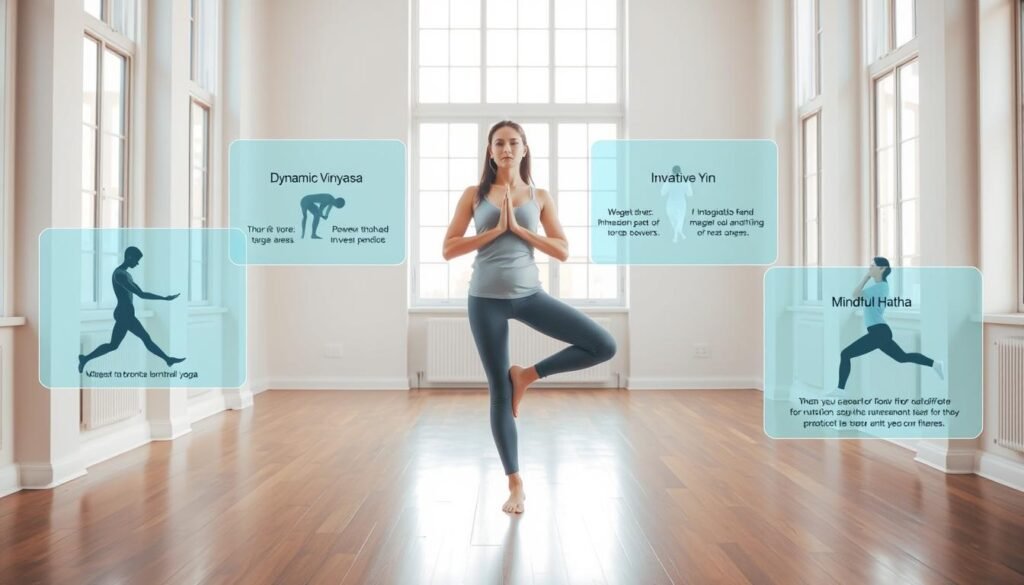
Identifying Your Primary Wellness Goals
Your reasons for starting yoga will help you choose the right style. When you align your practice with your goals, you’re more likely to stick with it.
Let’s look at the best yoga for common wellness goals.
Yoga Styles for Weight Loss and Toning
If you want to burn calories and build lean muscle, choose athletic yoga styles. Power yoga is great for weight management because it builds strength and raises your heart rate.
Vinyasa Flow also raises your heart rate through continuous movement. It helps you burn calories and improve your fitness. Students can burn 400-600 calories in an hour-long Vinyasa class.
- Ashtanga yoga – Consistent sequences that build strength progressively
- Power yoga – Athletic approach with emphasis on muscle engagement
- Hot yoga – Increased calorie burn in heated environment
- Vinyasa Flow – Continuous movement that elevates heart rate
Yoga Styles for Flexibility and Mobility
For improving flexibility and mobility, certain yoga styles are better than others. Yin yoga is my top pick because it targets the deep connective tissues that hold tension.
Hatha yoga balances flexibility work with poses held long enough to stretch muscles safely. Its slow pace helps you focus on proper alignment, preventing injury while increasing mobility.
Restorative yoga uses props for gentle stretches. It’s perfect for stiffness from desk work or repetitive activities. The long holds help your nervous system relax, releasing muscles more effectively than aggressive stretching.
Yoga Styles for Stress Management and Mental Health
For mental clarity and emotional balance, focus on meditative and restorative yoga. Restorative yoga activates the parasympathetic nervous system, reducing stress hormones.
Yin yoga’s long holds allow for mindfulness and observing thoughts without judgment. It’s grounding when my mind feels scattered or anxious.
Kundalini yoga combines breathwork, chanting, and meditation to target mental health. It helps release emotional blockages and brings inner peace that lasts beyond your practice.
Gentle Hatha classes provide enough physical activity to release tension without draining your energy. They’re perfect for those dealing with stress-related exhaustion.
Considering Physical Limitations and Injuries
If you have an injury or physical limitation, choose yoga styles that focus on alignment and modification. It’s vital to talk to your teacher before class starts.
Slower-paced yoga styles like Hatha give you time to adjust poses for your body’s needs. You’re not racing through sequences, so you can focus on what feels safe and supportive.
Restorative yoga and gentle practices actively support healing. The prop-supported positions reduce strain on injured areas while promoting circulation and reducing inflammation. I’ve used Restorative yoga during recovery from a knee injury, keeping me connected to my practice without aggravating the problem.
| Physical Condition | Recommended Yoga Styles | Styles to Approach Cautiously |
|---|---|---|
| Back pain or spinal issues | Hatha, Restorative, Yin | Power yoga, intense backbends |
| Joint problems or arthritis | Gentle Hatha, Restorative | Ashtanga, Hot yoga |
| Recent surgery or injury | Restorative, therapeutic yoga | Vinyasa, Power, Ashtanga |
| Cardiovascular conditions | Yin, Restorative, gentle Hatha | Hot yoga, vigorous Vinyasa |
Always check with your doctor before starting any new yoga practice, even if you have medical conditions or are an older adult. This isn’t just about legal protection—it’s genuinely important for your safety and long-term wellness.
My Tips for Trying Multiple Yoga Styles Before Committing
Remember, you don’t need to pick one yoga style and stick with it forever. In fact, I strongly encourage experimenting with several approaches before investing in memberships or expensive class packages.
Most studios offer introductory specials or drop-in class options that let you sample different teachers and yoga styles. Take advantage of these opportunities! I spent my first three months trying everything from Kundalini to Power yoga before discovering which practices resonated most.
Online platforms have made yoga practice selection even easier. You can explore various yoga styles from home, without the pressure of keeping up in a room full of experienced practitioners. I use online classes to try new approaches or when I’m traveling.
- Attend at least three classes of each style before forming an opinion
- Try different teachers within the same style (teaching approaches vary significantly)
- Pay attention to how you feel during class and for hours afterward
- Notice which practices you actually look forward to, not dread
- Give yourself permission to change your mind as your needs evolve
My own journey took me through Vinyasa for fitness, then Yin for stress relief, and now I practice a combination depending on what my body and mind need each week. This flexibility has kept my practice fresh and sustainable for years.
Remember, viewing experimentation as part of the adventure, not indecision, makes the whole process more enjoyable. You’re not being flaky—you’re being thoughtful about finding the best yoga for goals that matter to you personally.
📚 Taking Your Yoga Journey Further with Healthy Vibes Life
Finding the right yoga style is just the start of your wellness journey. I’m excited to share how you can deepen this journey. At Healthy Vibes Life, you’ll find ongoing support, inspiration, and practical guidance for every aspect of your wellness path. Whether you’re just starting your first yoga practice or you’ve been on your mat for years, I want to connect with you beyond this article.
The wellness journey works best when you have consistent support and fresh insights. That’s exactly why I’ve built a thriving community of health-conscious individuals who share your passion for living vibrantly.
Subscribe to Our Newsletter for Exclusive Wellness Content
I invite you to join thousands of wellness enthusiasts who start their week inspired by my newsletter. This isn’t just another email cluttering your inbox—it’s a carefully curated resource designed to support your health goals with actionable wellness content you can implement immediately.
My newsletter subscribers become part of an inner circle that receives the best yoga resources, health tips, and wellness strategies before anyone else. I personally review every piece of content to ensure it meets the high standards you deserve.
What You’ll Receive in Your Inbox
When you subscribe to the Healthy Vibes Life newsletter, you’re gaining access to a wealth of exclusive benefits:
- Weekly health and wellness tips that complement your yoga practice and help you build a holistic lifestyle
- Wellness-related travel recommendations including curated yoga retreat destinations and exclusive deals on transformative wellness getaways
- Latest fitness products in the market with honest reviews of yoga equipment, accessories, and innovative wellness tools
- Exclusive articles and guides not available anywhere else on the website
- Early access to new content so you’re always ahead of wellness trends
- Special promotions and discounts from trusted wellness brands I’ve personally vetted
I keep every newsletter concise and valuable. You won’t find fluff or filler content—just practical information you can use to enhance your wellness journey today.
Explore Related Articles on Our Website
Beyond the newsletter, I’ve published hundreds of in-depth articles at www.healthyvibeslife.com covering every dimension of health and wellness. My website serves as your complete yoga resources library, with content designed to answer your questions and solve real challenges.
I update the site regularly with fresh perspectives on different yoga styles, nutrition science, mental wellness strategies, and practical fitness guidance. Each article reflects my commitment to evidence-based information presented in an accessible, friendly format.
Recommended Reads for Yoga Practitioners
To complement what you’ve learned about yoga styles, I recommend exploring these related topics on Healthy Vibes Life:
- Meditation guides for beginners that help you develop the mental clarity yoga cultivates
- Nutrition for yoga practitioners with meal planning strategies that fuel your practice
- Home yoga space setup for creating an inspiring practice environment
- Yoga equipment reviews to help you invest in quality gear without overspending
- Stretching routines for non-yoga days to maintain flexibility and prevent injury
- Mindfulness practices that enhance your yoga experience both on and off the mat
- Yoga philosophy for modern life exploring ancient wisdom in contemporary context
- Breathing exercises for daily stress relief you can practice anywhere, anytime
Each of these topics connects naturally to your yoga journey and helps you build a complete wellness lifestyle. I’ve designed these articles to work together, creating a complete ecosystem of health tips that support your transformation.
Visit www.healthyvibeslife.com today to explore these yoga resources and discover which topics resonate most with your current wellness goals. I’m confident you’ll find the guidance and inspiration you need to take your practice to the next level.
🌟 Conclusion: Embracing Your Unique Yoga Path
I’ve seen my yoga practice change over the years. I’ve tried different styles as my needs have shifted. This journey is all about exploring and finding what works for you.
Your yoga journey is unique to you. What works for others might not work for you. Sometimes I want the challenge of power yoga, and other times I need the calm of yin. This flexibility makes yoga a lifelong practice.
Finding your yoga takes time. Be open and curious when trying new styles. Try that vinyasa class you’ve been thinking about. Or, explore gentle stretches at home. Visit different studios and meet various teachers.
The key is to show up, not to be perfect. Your body will tell you what it needs. Listen to it as you try different yoga styles. Some will feel like home, while others might not click right away. That’s okay too.
Start today. Pick a style that caught your interest. Book that class, watch a tutorial, or just take a few minutes to breathe and stretch. Your yoga journey begins with one breath, one movement, one moment of self-care.