

Did you know that 73% of Americans now prefer exercising at home over traditional gym memberships? This shift has made fitness more accessible than ever before.
I’m here to help you start your journey into fitness for beginners from home. Regular exercise is key for your health. It improves your mood, sleep, and hormone balance right away.
When you get started with home workouts, you’re investing in long-term wellness. Exercise helps you achieve a healthy body weight, build muscle, and lower your risk for chronic diseases.
This guide covers everything from mindset shifts to equipment choices and workout routines. I’ll share practical tips that make fitness achievable, even if you’ve never exercised before.
For ongoing support and exclusive wellness content, I recommend exploring www.healthyvibeslife.com and subscribing to our newsletter. You’ll get health tips, travel deals, and the latest fitness product recommendations.
Key Takeaways
- Home workouts offer convenience and privacy for fitness beginners
- Regular exercise improves mood, sleep quality, and hormone balance immediately
- Long-term benefits include healthy weight management and disease prevention
- No gym membership required to achieve significant health improvements
- Comprehensive planning makes home fitness accessible for everyone
🏠 Why Get Started with Home Workouts: Benefits for Beginners
Home workouts are perfect for beginners to start their fitness journey. They are convenient because you don’t have to go to the gym. You save money and can exercise privately, learning the right form.
Privacy is key for beginners. Many feel shy working out in public. At home, you can focus on your movements without fear of being judged.
Home workouts can be as good as gym workouts. You can do yoga and strength training without any equipment. These exercises help build strength, improve fitness, and manage weight.
Home workouts are flexible. You can exercise at any time that suits you. There’s no need to wait for gym hours or equipment.
Home fitness is affordable for all. Gym memberships are expensive, but home workouts cost nothing. Your living room becomes a free gym without monthly fees.
Home workouts save time. You don’t have to travel to the gym. This extra time can be used for longer workouts or other activities.
Starting slow is easier at home. You can begin with short exercises without feeling pressured. There’s no rush to keep up with others.
| Benefit Category | Home Workouts | Gym Workouts | Beginner Advantage |
|---|---|---|---|
| Cost | Free with bodyweight exercises | $30-100+ monthly fees | No financial barrier to start |
| Time Investment | Exercise immediately | Travel time + workout time | More time for actual exercise |
| Privacy Level | Complete privacy | Public environment | Learn without self-consciousness |
| Schedule Flexibility | 24/7 availability | Limited operating hours | Fits any lifestyle or work schedule |
Wearing what you want adds comfort. You don’t need expensive workout clothes. Old t-shirts and shorts are perfect for home workouts.
Home workouts let you control your environment. You can choose the music, temperature, and lighting that motivate you. This personalized setting helps beginners stay consistent.
🧠 Building the Right Mindset for Home Fitness Success
Having the right mindset can change your home workout experience. When you start home workouts, your thoughts about exercise matter a lot. Many people struggle not because they can’t do it, but because they have the wrong expectations.
Your mind is your strongest tool for lasting change. Research shows that people who keep exercising long-term enjoy it, see benefits quickly, and build habits. It’s not about willpower, but setting yourself up for success from the start.
The mental game is more important than most people think. Focusing on how good you feel after exercising creates positive associations. This mindset shift can make a huge difference in sticking with your routine for years.
Setting Realistic Expectations for Your Fitness Journey
Fitness for beginners is a long journey, not a quick race. Understanding that change happens slowly is good. Setting realistic goals helps avoid disappointment that stops many people.
Start with small, achievable goals to build momentum. Instead of aiming for an hour a day, try 15 minutes three times a week. This approach boosts your chances of success and keeps you motivated.
Progress isn’t always straight. Some days you’ll feel great, others you might struggle. Both are part of your journey, and neither defines your success.
Celebrate small wins. Completing your first week of workouts is worth celebrating. Choosing to exercise over scrolling is another victory. These moments build confidence for long-term success.
Overcoming Mental Barriers and Excuses
Every beginner faces mental barriers when starting home workouts. Common excuses include “I don’t have time,” “I don’t know what to do,” and “I’m too out of shape.” Let’s look at these excuses differently.
Time is rarely the real issue—it’s about priorities. You can get a great workout in 15-20 minutes. That’s less time than many spend watching TV commercials. The key is making health a non-negotiable part of your day.
Not knowing what to do is actually an advantage. It means you’re starting fresh and can build good habits. You don’t need complex routines or expensive equipment to see results.
Feeling “too out of shape” is like saying you’re too dirty to take a shower. Everyone starts somewhere. Your current fitness level is just your starting point, not a limit. The best time to begin is exactly where you are right now.
Replace negative self-talk with encouraging thoughts. Instead of “I can’t do this,” say “I’m learning to do this.” Instead of “I’m so out of shape,” think “I’m taking steps to improve my health.” These small language changes can make a big difference in your mindset.
📋 Planning Your Beginner Home Exercise Routine
Before starting your fitness journey, create a beginner home exercise routine that fits your current level. It’s important to know where you are and where you want to go. This helps you avoid mistakes and ensures your simple home exercise plan grows with you.
Assessing Your Current Fitness Level
It’s key to talk to a healthcare professional before starting any exercise routine. This is even more important if you’re new to working out. A doctor can spot any health issues that might impact your workouts.
After getting the green light from your doctor, you can check your fitness level at home. Try these simple tests:
- Push-up test: Count how many push-ups you can do with proper form
- Plank hold: Time how long you can maintain a plank position
- Stair climbing: Notice how you feel after walking up two flights of stairs
- Basic flexibility: Try touching your toes while standing
These tests give you a starting point for your routine. Don’t worry if you don’t do well at first. Everyone starts somewhere, and you’ll see improvement with regular effort.
Keep track of your results and the date. Repeat these tests every few weeks to see how you’re doing.
Setting SMART Fitness Goals
SMART goals make your wishes into real plans. This helps your simple home exercise plan stay focused and reachable. Let’s look at each part:
- Specific: “Exercise more” becomes “Do 20 minutes of bodyweight exercises”
- Measurable: Track workout frequency, duration, or repetitions
- Achievable: Start with 2-3 workouts per week, not daily sessions
- Relevant: Choose goals that matter to your lifestyle and health
- Time-bound: Set deadlines like “within 4 weeks”
Here are some good short-term goals:
- Complete three 15-minute workouts this week
- Hold a plank for 30 seconds by next Friday
- Do 10 proper push-ups within two weeks
Long-term goals might include:
- Exercise for 30 minutes without stopping in 8 weeks
- Complete a full-body workout routine three times weekly for 3 months
- Improve flexibility enough to touch toes comfortably in 6 weeks
Write your goals down and keep them where you’ll see them every day. This simple act can greatly increase your chances of success.
🏡 Creating Your Perfect Home Workout Space
Building a successful home workout space starts with motivation and support for your fitness goals. You don’t need a big room or expensive changes to make a good exercise area. With smart planning and creative ideas, you can turn any home corner into a great fitness spot.
Your home gym setup should be welcoming and energizing, not cramped or overwhelming. The goal is to make the most of what you have and create a space that invites you to work out regularly.
Space Requirements and Setup Tips
Effective no equipment workouts need surprisingly little space. A 6×6 feet area is enough for most bodyweight exercises, about the size of a standard yoga mat.
If you live in a small apartment, think creatively. Move your coffee table in the living room. Clear a corner of your bedroom. Even a hallway can be used for certain exercises.
Flooring is key for a good workout experience. Hardwood floors are great for most exercises. Carpet is softer but can be slippery for side movements. Consider getting an exercise mat for comfort and stability.
Lighting and ventilation are important but often overlooked. Natural light boosts energy and mood during workouts. If natural light is not available, bright overhead lighting is essential. Good airflow prevents the space from feeling stuffy during intense workouts.
Storage solutions are important as you add more to your routine. Use a basket or bin for small equipment like resistance bands. Wall hooks can hold yoga mats or jump ropes when not in use.
| Space Type | Minimum Size | Best Exercises | Setup Tips |
|---|---|---|---|
| Living Room | 8×8 feet | Full body circuits, yoga | Move furniture to walls |
| Bedroom | 6×6 feet | Bodyweight strength, stretching | Use space beside bed |
| Garage | 10×10 feet | High-intensity workouts | Clear vehicles, ensure ventilation |
| Basement | 8×8 feet | Strength training, cardio | Add lighting, dehumidifier |
Optimizing Your Environment for Success
Creating a motivating atmosphere is more than just clearing space. Your environment should inspire you to move and stay consistent with your routine.
Music can change your workout experience. Set up a speaker system or use wireless headphones. Create playlists that match different workout intensities.
Visual motivation is powerful for staying consistent. Hang inspirational quotes on the wall. Place a mirror to check your form and see your progress. Some people find workout posters helpful for exercise reminders.
Minimize distractions to stay focused during workouts. Choose spaces away from your TV or work area. If you share your home, tell family members or roommates about your workout schedule.
Keep practical items within reach to enhance your workout. Place a water bottle nearby to stay hydrated. Have a towel ready for sweat. Ensure your phone is charged if you’re following workout videos.
Temperature control affects workout quality and safety. Ensure good ventilation to prevent overheating. In colder months, let the space warm up before starting intense exercises.
The psychological aspect of your workout space is very important. When your exercise area feels welcoming and organized, you’re more likely to use it regularly. This consistency is what turns no equipment workouts into lasting fitness habits.
🛠️ Essential Equipment for Your Home Gym Setup
Setting up a home gym can be simple or complex. You don’t need expensive machines or a big room to start. I’ll show you the key equipment to turn any space into a great workout area.
Choosing the right equipment is key for a lasting fitness routine. Whether you’re on a tight budget or ready to invest, there’s something for everyone. Here are the top equipment categories that offer the best value.
No Equipment Workouts: Bodyweight Training Basics
Bodyweight training is a great starting point. It helps build strength, improve heart health, and grow muscles using just your body. This method is affordable and doesn’t need much space, making it perfect for beginners.
Push-ups, squats, lunges, and planks are the base of bodyweight workouts. They work many muscles at once, making them efficient. Adding mountain climbers and burpees boosts your heart rate and strength.
The beauty of bodyweight training is its ability to grow with you. Start with easier versions like wall push-ups or assisted squats. As you get stronger, try single-arm push-ups and pistol squats for a challenge.
Resistance Bands and Adjustable Dumbbells
Resistance bands are a smart choice for your home gym setup. They’re cheap, under $30, and adjust to your strength level. They’re great for working smaller muscles that bodyweight exercises might miss.
Loop bands are excellent for glutes and hip stability. Long bands with handles let you do upper body exercises like rows and chest flies. These exercises complement your bodyweight routine well.
Adjustable dumbbells solve the problem of space with traditional weights. They cost between $200-400 but replace many weights. They allow for precise weight changes and classic exercises like bicep curls and shoulder presses.
Yoga Mats and Stability Balls
A good yoga mat is essential for your workout space. It cushions the floor, prevents slipping, and marks your workout area. Choose a mat that’s at least 6mm thick for joint protection during intense exercises.
Stability balls add a challenge to your core during exercises. They improve balance, posture, and strength. Use them for wall squats, chest presses, and core exercises that floor work can’t match.
These tools make your workouts more comfortable and safe. The mat makes floor exercises easier, while the stability ball introduces new exercises to keep your routine interesting.
| Equipment Category | Price Range | Space Required | Versatility Rating | Best For |
|---|---|---|---|---|
| Bodyweight Training | $0 | 6×6 feet | High | Complete beginners, minimal space |
| Resistance Bands | $15-50 | Minimal storage | Very High | Portable workouts, muscle activation |
| Adjustable Dumbbells | $200-400 | 2×2 feet | High | Progressive strength training |
| Yoga Mat | $20-80 | Rolls up compact | Medium | Floor exercises, comfort |
| Stability Ball | $15-40 | Corner storage | Medium | Core training, balance work |
Your home gym setup should grow with your fitness goals. Start with bodyweight exercises and add equipment as needed. This way, you’ll only invest in tools you’ll use regularly.
The most expensive equipment doesn’t always lead to success. Consistency with basic tools is more effective than using fancy machines sporadically. Focus on mastering the basics before adding more equipment.
💪 Simple Home Exercise Plan: Fundamental Movements
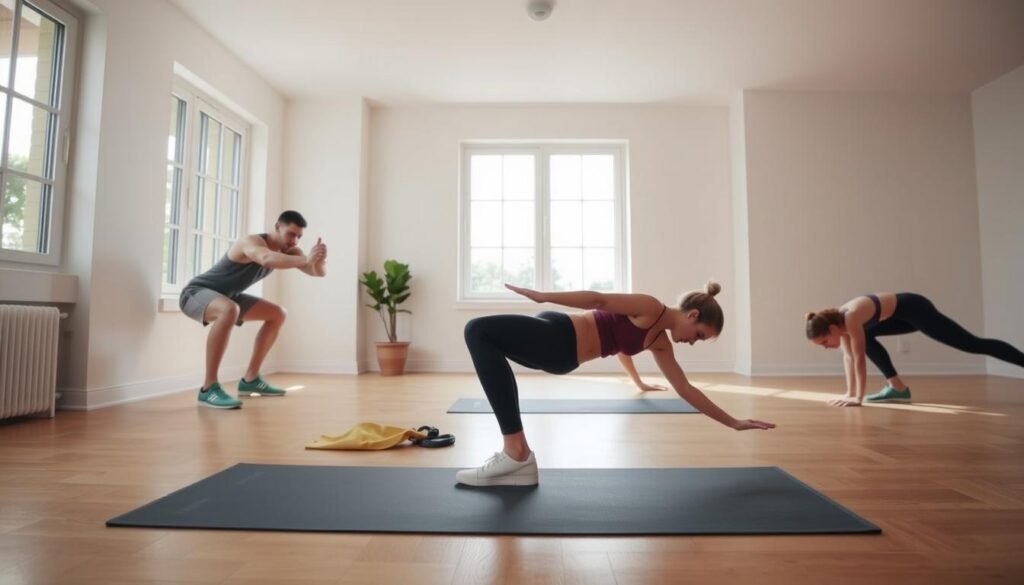
Starting a simple home exercise plan means learning basic bodyweight moves. These exercises are key for a good home workout and work out every big muscle in your body.
Do 2 sets of 10 to 15 reps for each exercise. Rest for 30 seconds to 1 minute between each one. This routine should take 15 to 20 minutes, great for those with busy lives.
Upper Body Bodyweight Exercises
These essential bodyweight training moves are the start of building upper body strength at home. They work your chest, shoulders, arms, and back without needing any equipment.
Push-ups and Variations
Push-ups are key for upper body strength at home. Start with knee push-ups if you’re new to this. This version helps you get stronger for regular push-ups.
For knee push-ups, place your knees on the ground and keep your body straight. Lower your chest toward the floor, then push back up. This is a great way to start building strength.
When you get better at knee push-ups, try regular push-ups. Keep your body straight, lower until your chest almost touches the floor, then push back up.
Pike Push-ups for Shoulders
Pike push-ups target your shoulders and prepare you for harder moves. Start in a downward dog position with your hands shoulder-width apart and your hips raised high.
Lower your head toward the ground by bending your elbows, then press back up. This activates your shoulders and gets you ready for overhead presses.
Lower Body Strength Training
Strong legs and glutes are the base of your fitness. These lower body exercises boost your muscle, tendon, and bone strength without needing any equipment.
Squats and Lunges
Chair squats are great for beginners learning squat form. Stand in front of a chair, lower yourself until you lightly touch the seat, then stand back up. This bodyweight squat variation builds confidence and strength.
Move to regular squats by standing with feet shoulder-width apart. Lower your hips back and down as if sitting in a chair, then stand up. Keep your chest up and knees over your toes.
Stationary lunges work your quads, hamstrings, and glutes well. Step one foot forward, lower your back knee toward the ground, then push back up. Do all reps on one side before switching legs.
Glute Bridges and Calf Raises
Glute bridges work your core and back muscles. Lie on your back with knees bent, squeeze your glutes, and lift your hips toward the ceiling. Hold for a moment before lowering back down.
Calf raises strengthen your lower legs and improve ankle stability. Stand tall, rise up onto your toes, hold briefly, then lower back down with control. You can hold onto a wall for balance if needed.
Core Strengthening Exercises
A strong core supports every movement and protects your lower back. These exercises target your abdominal muscles, obliques, and deep stabilizing muscles.
Planks are the ultimate core exercise for beginners. Start in a push-up position but rest on your forearms instead of your hands. Keep your body straight from head to heels and hold this position.
Begin with 15-30 second holds and gradually increase the time as you get stronger. Focus on breathing normally while maintaining proper form throughout the hold.
Bicycle crunches add movement to your core training. Lie on your back, bring your knees toward your chest, and alternate touching your elbows to opposite knees in a cycling motion.
Dead bugs improve core stability and coordination. Lie on your back with arms extended toward the ceiling and knees bent at 90 degrees. Slowly lower opposite arm and leg, then return to starting position.
This simple home exercise plan gives you everything you need to start building strength and fitness from your living room. Focus on proper form over speed, and remember that consistency beats intensity when you’re just starting out.
⏰ Structuring Your Indoor Fitness Program Schedule
Having a good exercise schedule makes workouts more effective. When I started, I learned that being consistent is more important than being intense. Your indoor fitness program needs a plan to see results.
The Physical Activity Guidelines for Americans suggest certain weekly activities for health. Adults should do at least 150 minutes of moderate-intensity cardio or 75 minutes of high-intensity each week. Also, do two weekly strength training sessions that cover all major muscles.
Start small and grow your schedule gradually. Begin with three workout days a week and move to five as you get stronger. This helps avoid burnout and builds lasting habits.
Weekly Workout Planning for Beginners
Your first month should focus on building a routine, not pushing too hard. Start with a simple three-day schedule that changes each day. Monday, Wednesday, and Friday are good days for most people.
A basic beginner home exercise routine could be strength training on Monday and Friday, and cardio on Wednesday. This lets your muscles recover between workouts. Use Tuesday, Thursday, and weekends for light walking or stretching.
By weeks 5-8, add a fourth workout day. Many people add a second cardio session on Saturday. This slow increase helps your body adjust without overloading your schedule.
By weeks 9-12, you might be ready for a five-day routine. This advanced schedule includes three strength training days and two cardio days. Remember, more isn’t always better – listen to your body’s signals.
| Week Range | Workout Days | Strength Sessions | Cardio Sessions | Rest Days |
|---|---|---|---|---|
| 1-4 | 3 days | 2 sessions | 1 session | 4 days |
| 5-8 | 4 days | 2 sessions | 2 sessions | 3 days |
| 9-12 | 5 days | 3 sessions | 2 sessions | 2 days |
| 13+ | 5-6 days | 3-4 sessions | 2-3 sessions | 1-2 days |
Balancing Cardio and Strength Training
Combining cardio and strength training is key to effective fitness. Alternating these workouts keeps things interesting and effective. Your heart needs cardio, while your muscles need strength training.
One way is to dedicate specific days to each type of exercise. For example, Monday and Friday for strength, and Wednesday for cardio. This focus helps you excel in each area.
Another method is to mix both in one session. Start with 10 minutes of cardio, then 20 minutes of strength, and end with 10 minutes of cool-down cardio. This is great when time is short.
Recovery is important when mixing workouts. Always have at least one full rest day after intense strength sessions. Light cardio, like walking, helps recovery by improving blood flow to muscles.
Your beginner home exercise routine should grow as you get stronger. Start with short sessions and gradually increase the time and intensity. Most beginners see big improvements in 6-8 weeks of regular training.
📈 Progressive Training: Advancing Your Fitness for Beginners Journey
After weeks of regular exercise, your body starts to adapt and look for new challenges. This is a natural process. To keep seeing results, you need to increase the difficulty of your workouts gradually.
Challenging yourself in a systematic way is key to long-term success. Your muscles grow stronger when they face a bit more demand than before. But rushing this process can lead to injury or burnout.
Increasing Intensity Safely
Try to beat your previous record by 1 or 2 more reps each time. This small increase can lead to big results over time. Never sacrifice good form for extra reps – it’s better to do fewer reps with perfect technique.
Your body needs time to adjust to new demands. Pushing too hard too fast increases injury risk and can stop your progress. Listen to your body and respect the recovery process.
There are safe ways to progress. You can increase the number of reps, add more sets, or reduce rest time between exercises. Each method challenges your body differently while keeping proper form.
Adding New Exercises and Variations
Mixing up your workouts keeps them interesting and prevents plateaus. As you get better at basic movements, introduce new exercises to challenge different muscle groups. This keeps your fitness journey engaging and effective.
Start with simple variations of familiar exercises. If you’ve mastered regular push-ups, try incline or decline versions. Squats can progress to jump squats or single-leg variations. These modifications target the same muscles with increased difficulty.
The following table shows how to progress common exercises over time:
| Exercise Type | Beginner Level | Intermediate Level | Advanced Level | Timeline |
|---|---|---|---|---|
| Push-ups | Wall push-ups | Knee push-ups | Standard push-ups | 4-6 weeks each |
| Squats | Chair-assisted squats | Bodyweight squats | Jump squats | 3-4 weeks each |
| Planks | Wall planks | Knee planks | Full planks | 2-3 weeks each |
| Lunges | Stationary lunges | Walking lunges | Jumping lunges | 4-5 weeks each |
Patience and consistency lead to the best results. Those who start with home workouts often achieve lasting success by progressing gradually. Small, consistent improvements compound over time to create remarkable transformations.
Remember, progress isn’t always linear. Some weeks you’ll feel stronger, while others might feel more challenging. This variation is completely normal and part of your fitness journey.
🚫 Common Beginner Home Workout Mistakes and Solutions
Making mistakes is part of learning fitness. But, avoiding common errors can speed up your success with home workouts. Many start with excitement, but get discouraged by preventable setbacks. Most mistakes beginners make are easy to fix once you know what to look for.
Knowing these common pitfalls helps you build a better simple home exercise plan. I’ll guide you through the most frequent errors and offer practical solutions to keep you on track.
Form and Technique Errors
Poor form is a big mistake in no equipment workouts. Without a trainer watching, bad habits can develop. These habits reduce effectiveness and increase injury risk.
Push-ups are often done wrong. Many let their hips sag or pike up too high. Your body should form a straight line from head to heels. Start with wall push-ups or knee push-ups to master the movement first.
Squats are another challenge. The most frequent error is letting knees cave inward. This puts stress on your knee joints and reduces the exercise’s effectiveness. Focus on pushing your knees out in line with your toes throughout the entire movement.
Here are the most critical form fixes for popular bodyweight exercises:
- Planks: Keep your core tight and avoid letting your lower back arch or hips rise too high
- Lunges: Step far enough forward so your front knee stays over your ankle, not past your toes
- Crunches: Don’t pull on your neck with your hands – let your core do the work
- Burpees: Land softly and maintain good push-up form during the bottom position
Recording yourself or working out in front of a mirror helps spot form issues. You can also slow down your movements to focus on proper technique.
Quality over quantity should always be your motto. Ten perfect push-ups are infinitely better than twenty sloppy ones.
Another technique error is breathing patterns. Many beginners hold their breath during challenging exercises. Remember to exhale during the exertion phase and inhale during the easier portion of each movement.
Overtraining and Recovery Issues
Enthuasiasm can be your enemy when starting a simple home exercise plan. It’s easy to get excited and overdo it. Overtraining is one of the fastest ways to derail your progress.
Your muscles grow and strengthen during recovery, not during the workout itself. When you exercise, you create tiny tears in muscle fibers. Rest allows these fibers to repair and become stronger. Without adequate recovery, you’re just breaking down muscle without giving it time to rebuild.
Signs of overtraining include:
- Persistent fatigue that doesn’t improve with rest
- Decreased performance in workouts you previously completed easily
- Increased irritability or mood changes
- Trouble sleeping or staying asleep
- Getting sick more frequently than usual
I recommend starting with three workout days per week with rest days in between. This gives your body time to adapt and recover. As you build fitness, you can gradually increase frequency, but always listen to your body’s signals.
Pain is not normal and should never be ignored. If you feel pain or discomfort while exercising, stop and rest before continuing. Pushing through pain is not a good idea, as it can cause injuries. There’s a difference between the burn of working muscles and actual pain that signals possible injury.
Learn to distinguish between different types of discomfort:
- Normal: Muscle fatigue, slight burning sensation during exercise, mild soreness 24-48 hours after workouts
- Concerning: Sharp pain, joint pain, pain that worsens during exercise, persistent pain that doesn’t improve with rest
Recovery isn’t just about rest days. Active recovery can include gentle activities like walking, stretching, or light yoga. These activities promote blood flow and can actually help reduce muscle soreness.
Sleep plays a critical role in recovery. Aim for 7-9 hours of quality sleep each night. Your body releases growth hormone during deep sleep, which is essential for muscle repair and adaptation.
Hydration and nutrition also impact recovery. Drink plenty of water throughout the day, and eat a balanced diet with adequate protein to support muscle repair. I suggest having a small snack with protein and carbohydrates within 30 minutes after your workout.
Remember that working out harder and faster is not always better. Consistency beats intensity every time. It’s better to do moderate workouts regularly than to burn out with overly intense sessions that leave you unable to exercise for days.
By avoiding these common mistakes, you’ll build a sustainable fitness routine that delivers real results. Focus on proper form, respect your body’s need for recovery, and be patient with your progress. Your future self will thank you for taking the time to do things right from the beginning.
🛡️ Safety Guidelines for Home Workouts
I think knowing safety rules is key for a good home workout. When you’re working out alone, you must look out for your own safety. Your indoor fitness program should always focus on avoiding injuries more than getting intense.
To make a safe workout area, it’s not just about clearing space. You need to know how your body reacts to exercise and watch for warning signs. Here are the main safety tips to keep you safe and active.
Proper Warm-up and Cool-down Routines
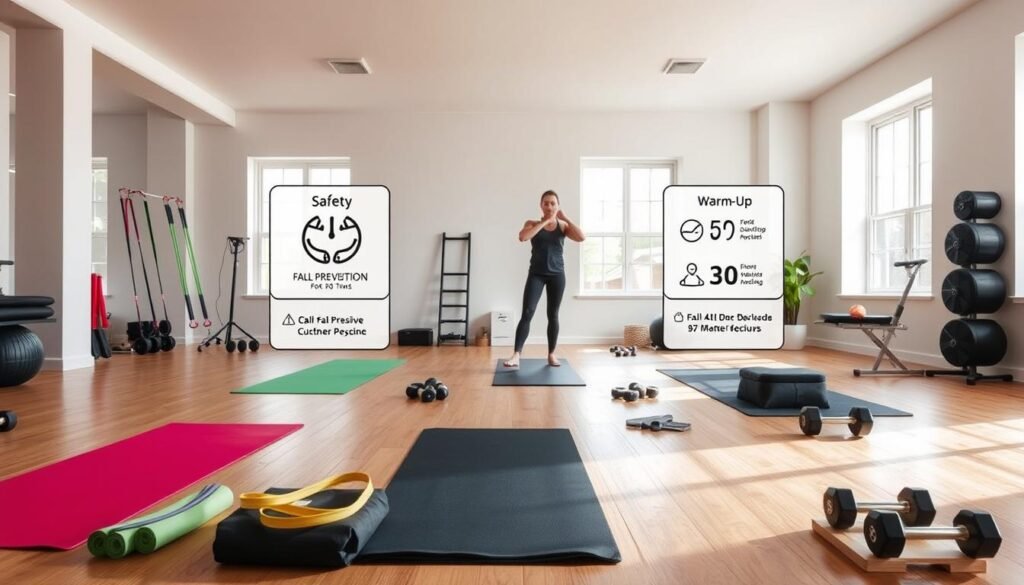
Your warm-up should get your body ready for the workout. Spend 5-10 minutes on dynamic movements to raise your heart rate and body temperature. This helps prevent injuries and boosts your performance in bodyweight training.
Begin with simple movements like arm circles and leg swings. Then, move to more active exercises like marching or jumping jacks. Your muscles need time to adjust to the activity.
Make your warm-up target the muscles you’ll be working. For upper body, do shoulder rolls and arm stretches. For lower body, include hip circles and gentle lunges.
Cool-down routines are just as important for recovery. Spend 5-10 minutes to bring your heart rate back down. This helps prevent blood pooling and muscle stiffness the next day.
Include static stretches in your cool-down. Hold each stretch for 15-30 seconds without bouncing. Deep breathing during this time helps your body transition from exercise to recovery.
| Warm-up Phase | Duration | Example Exercises | Purpose |
|---|---|---|---|
| Light Cardio | 2-3 minutes | Marching, gentle jumping jacks | Increase heart rate and circulation |
| Dynamic Stretching | 3-4 minutes | Arm circles, leg swings, hip circles | Improve range of motion |
| Movement Prep | 2-3 minutes | Bodyweight squats, push-up prep | Activate specific muscle groups |
| Cool-down Phase | 5-10 minutes | Static stretches, deep breathing | Return to resting state |
Injury Prevention Strategies
Listen to your body’s signals during every workout. Pain is not the same as normal exercise discomfort. Sharp, sudden, or persistent pain means stop right away and check it out.
Proper progression is key to avoiding injuries. Increase workout intensity by no more than 10% each week. This slow increase lets your body adapt safely.
Always keep proper form, even when exercises get tough. Poor technique under fatigue is a common cause of injury. If you can’t do an exercise right, modify it or take a break.
Make sure your workout area is safe. Check for obstacles, ensure good lighting, and have proper ventilation. Wear the right shoes for support and traction.
Stay hydrated and eat right to support your workouts. Dehydration and low blood sugar can cause dizziness, poor coordination, and increase injury risk.
Get enough sleep to help your body recover and stay focused during workouts. Fatigue can impair your judgment and increase the chance of accidents. Aim for 7-9 hours of quality sleep each night.
Red flag symptoms that need immediate attention include chest pain, severe shortness of breath, dizziness, or any joint pain that lasts after working out. If unsure, talk to a healthcare professional before continuing your routine.
Keep a basic first aid kit nearby during workouts. Include ice packs, elastic bandages, and pain relievers for minor injuries. Know when to use ice versus heat for different discomforts.
🎯 Staying Motivated and Consistent with Your Routine
Starting a home gym setup is exciting, but staying committed week after week presents unique challenges. Research shows that you’re more likely to maintain an exercise routine long-term if it’s enjoyable, you recognize the benefits, and you make it a habit through regular practice. The key lies in creating systems that support your motivation.
Fun plays a big role in sticking to your workout routine. When you enjoy your workouts, it becomes natural to keep going. This is why finding activities you genuinely like in your beginner home exercise routine is more important than following the “perfect” program.
Creating Accountability Systems
Accountability makes your fitness journey more enjoyable. Start with simple systems that fit your personality and lifestyle.
Virtual workout partners offer the same motivation as gym buddies. Schedule video calls with friends during workouts or join online fitness communities. Social media check-ins create positive peer pressure that keeps you showing up.
Fitness apps provide accountability through streak tracking and progress notifications. Many apps send reminders when you miss workouts. Some even connect you with other users for encouragement.
Share your home gym setup photos and progress updates with supportive friends or family. This creates external motivation and celebrates your commitment to health. Online fitness groups for beginners offer understanding communities where you can ask questions without judgment.
Celebrating Small Wins and Milestones
Recognition fuels motivation, even when progress feels slow. I suggest celebrating achievements beyond weight loss or muscle gain, which can take weeks to notice.
Weekly milestones deserve recognition. Completing your first full week of workouts, mastering a new exercise form, or showing up on a difficult day all count as victories. These small wins build confidence and momentum.
Create non-food rewards for reaching goals. Buy new workout clothes after two weeks of consistency. Treat yourself to a relaxing bath after a challenging session. Download a new playlist or podcast as a reward for weekly goal achievement.
Track improvements in how you feel, not just physical changes. Better sleep, increased energy, or improved mood are immediate benefits worth celebrating. Keep a simple journal noting these positive changes.
| Motivation Strategy | Time Investment | Effectiveness | Best For |
|---|---|---|---|
| Virtual Workout Buddy | Same as workout time | High | Social exercisers |
| Fitness App Tracking | 2-3 minutes daily | Medium-High | Tech-savvy individuals |
| Progress Photos | 1 minute weekly | Medium | Visual learners |
| Reward System | 5 minutes planning | High | Goal-oriented people |
For more motivation strategies and ongoing support, check out www.healthyvibeslife.com. They offer expert articles on workout techniques and nutrition tips that complement your fitness routine.
Consider subscribing to their newsletter for regular health and wellness tips, travel deals for active lifestyles, and updates on the latest fitness products. Having fresh ideas and expert guidance delivered regularly helps maintain long-term motivation.
An important factor in staying motivated and continuing to exercise long term is having fun while doing it.
Remember, motivation can change naturally. Building systems and celebrating progress creates a foundation that supports you through both high-energy and low-motivation days. Your beginner home exercise routine becomes sustainable when supported by these practical strategies.
📊 Tracking Progress in Your Home Fitness Journey
Tracking your achievements makes your indoor fitness program more than just a guess. It turns it into real success. I’ve found that tracking progress is more than just stepping on a scale every morning. It’s about documenting many parts of your fitness journey.
Your simple home exercise plan needs tracking methods that show all your improvements. I suggest tracking both numbers and how you feel every day. This way, you see clear progress and celebrate the small changes that matter.
Start with workout performance metrics. Record push-ups, plank holds, and squats. Also, note how long you work out and which exercises feel easier each week.
Body measurements are another great way to track your progress. Measure your waist, hips, arms, and chest monthly. I find that monthly measurements show clearer trends and avoid daily frustrations.
Progress photos are powerful visual proof of your changes. Take photos from the front, side, and back in the same lighting and clothes each month. I take these photos in the morning for consistency.
Don’t forget to track how you feel. Note your energy, sleep, and mood in a journal or app. These feelings often show progress before you see physical changes.
Many tools can help track your simple home exercise plan. Apps like MyFitnessPal, Fitbit, or a simple notes app work well. I use a workout log and a spreadsheet for weekly reviews.
Set up regular progress reviews. I check my workout performance weekly and body measurements and photos monthly. This helps spot trends without getting lost in daily details.
Remember, progress isn’t always straight in your indoor fitness program. Some weeks you’ll see big improvements, others might be slower. These ups and downs are normal and don’t mean you’ve failed.
Use your tracking data to adjust your routine. If push-ups haven’t improved in three weeks, try new exercises or train more often. Your logs guide you to keep getting better.
The key to tracking is staying motivated during tough times. When you feel down, look at your progress logs. They show how far you’ve come and prove your dedication and ability.
🎉 Conclusion
Starting your fitness journey is the most important step. When you begin with home workouts, you choose a path that suits your life. It also removes barriers to exercise.
Starting a new exercise routine can be tough at first. The key is to make it fit your needs. This makes fitness fun and rewarding for beginners. Start slow, build up gradually, and rest well to avoid injuries.
You don’t need expensive gear or a gym to work out. Just start with one bodyweight exercise in your living room today. Consistency is more important than intensity.
Check out www.healthyvibeslife.com for more fitness tips, nutrition advice, and wellness ideas. You’ll find meal plans and travel tips to support your workouts.
Subscribe to our newsletter for ongoing support. You’ll get health tips, workout ideas, and updates on fitness products. They can make your home workouts better.
The best time to start isn’t when everything is perfect. It’s now. Take that first step today.