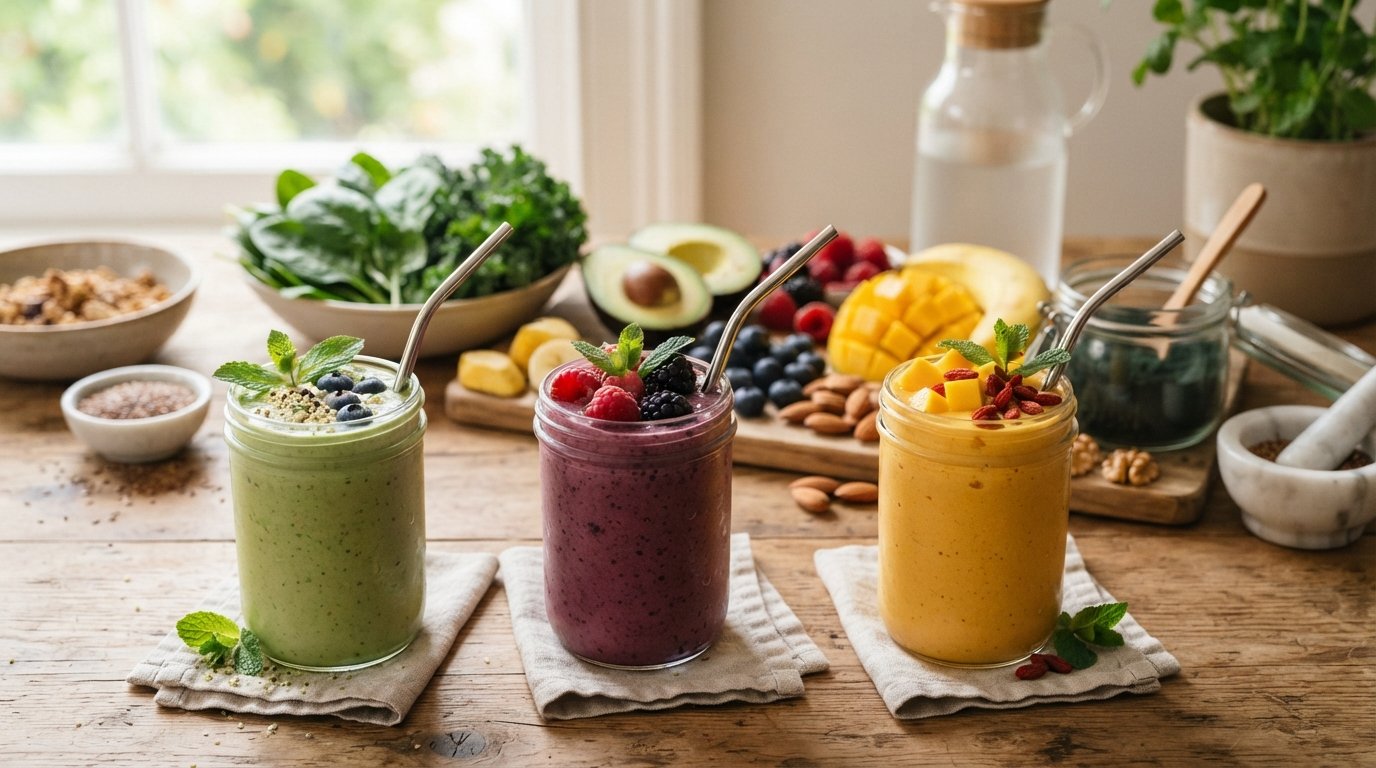
What if your morning smoothie quietly works against you?
I used to ask myself that question. My blender sat on the counter and promised a healthy start, but I crashed midmorning and snacked an hour later.
That changed when I learned how blood sugar spikes can harm energy and appetite control. Now I use fiber, protein, and smart portions in my low-glycemic smoothie recipes for weight loss. These simple tools reduce cravings and keep my energy steady all morning.
Glycemic impact matters more than many people realize when they want to lose pounds or feel better each day. A sugary fruit blend can quickly raise blood sugar, then drop it, leaving you tired and hungry again.
This guide shares the personal journey that brought me here. You’ll learn why ordinary fruit blends can backfire and what makes a glass truly balanced. It also covers five favorite go-to combinations, superfood add-ins, a build-your-own formula, and mistakes I made before getting it right.
Key Takeaways
- Balanced blends with fiber and protein help keep blood sugar steady and cravings under control.
- Typical fruit-heavy smoothies can spike blood sugar and leave you hungry again within an hour.
- Portion control and ingredient balance matter more than counting calories alone.
- Five tested combinations offer practical starting points for your own daily routine.
- Superfood boosters add extra nutrition without disrupting steady energy levels.
- A simple build-your-own formula makes it easy to customize future blends.
Why Traditional Fruit Smoothies Spike Blood Sugar
Here’s my direct answer: Traditional fruit smoothies spike blood sugar because they use high-glycemic fruits, fruit juice, and sweetened yogurt. They lack the fiber, protein, and fat that slow sugar absorption, so glucose rises fast and crashes soon after.
Sugar from banana, mango, and pineapple reaches your bloodstream quickly when blended smooth and sipped without a buffer. According to Virta Health, smoothies with juice and sweetened dairy skip fiber and protein that normally slow digestion. Without that buffer, glucose spikes, then drops hard, leaving you hungry again within the hour.
- Ripe bananas and overripe fruit
- Mango, pineapple, and other tropical blends
- Fruit juice used as the liquid base
- Sweetened or flavored yogurt
- Added honey, agave, or syrup
I used to start my mornings with a big fruit smoothie, proud of my “healthy” choice. An hour later, I felt sluggish and reached for a snack every time. After learning how these ingredients worked against me, I built blood sugar friendly smoothies, and the crashes disappeared.
The fix isn’t complicated. It means rethinking what goes into your blender, and I’ll explain that next.
Anatomy of a Low-Glycemic Smoothie: Greens, Healthy Fats, and Protein
After months of trial and error, I reduced my smoothie formula to three essential parts. Every blend includes greens, healthy fats, and protein, without exception. This simple structure defines green smoothies for weight loss, while sugary blends spike my blood sugar and leave me hungry an hour later.
Leafy Greens: My Low-Carb Volume Booster
Spinach and kale are the first ingredients I add to my blender. They provide plenty of volume and fiber without meaningful carbs or sugar.
I get a large smoothie filled with micronutrients instead of empty calories. This explains why green smoothies for weight loss work so well: they fill me up while keeping sugar low.
Healthy Fats That Slow Digestion
Fat once scared me, but I understand it better now. Avocado, almond butter, and coconut or flaxseed oil slow smoothie digestion.
According to Virta Health, low-glycemic ingredients include leafy greens and unsweetened nut milks. Healthy fats, such as avocado, nuts, or seeds, slow digestion and reduce glucose spikes. This helps keep my energy steady instead of causing a mid-morning crash.
“Low-glycemic ingredients like leafy greens, unsweetened nut milks, and healthy fats such as avocado, nuts, or seeds slow digestion and reduce glucose spikes.”
Protein: The Key to Staying Full Longer
Protein was the part I once skipped, and that was my biggest mistake. Without it, I felt hungry again within an hour.
Simple Green Smoothies lists fiber and protein sources. These include chia seeds, flax seeds, protein powder, Greek yogurt, hemp hearts, and collagen peptides. They help balance blood sugar and keep me full, so I add one to every blend.
| Component | Best Options | Main Benefit |
|---|---|---|
| Leafy Greens | Spinach, kale | Adds fiber and volume without raising sugar |
| Healthy Fats | Avocado, almond butter, coconut oil | Slows digestion, blunts blood sugar spikes |
| Protein | Greek yogurt, protein powder, collagen | Curbs hunger, protects lean muscle |
My Top 5 Low-Glycemic Smoothie Recipes for Weight Loss
Here are the five smoothie recipes that appear in my blender most often for breakfast. I have adjusted each one to be filling, flavorful, and gentle on my blood sugar.
These are not fancy Pinterest creations that look great but taste like cardboard. They are real weight loss smoothie recipes I drink week after week, with exact measurements for tonight.
1. Spinach Avocado Protein Smoothie
This one tastes much creamier than you might expect from a drink loaded with greens.
- 1 cup fresh spinach
- ½ ripe avocado
- 1 scoop vanilla protein powder (about 20g protein)
- 1 cup unsweetened almond milk
- ½ cup ice
Why it works: Avocado’s healthy fat slows digestion, while protein powder keeps me full for hours. Spinach adds volume and nutrients without spiking my blood sugar.
2. Berry Chia Fiber Blast
When I want something sweeter, this is my go-to smoothie.
- ½ cup frozen blueberries
- 1 tablespoon chia seeds
- 1 cup unsweetened coconut milk
- ½ cup plain Greek yogurt
Why it works: Blueberries have a lower glycemic index than most fruits, and chia seeds make this smoothie rich in fiber. Greek yogurt adds roughly 12 grams of protein, helping balance the fruit’s natural sugars.
3. Matcha Almond Butter Smoothie
I choose this on slow mornings when I need steady energy, not a jittery caffeine crash.
- 1 teaspoon matcha powder
- 1 tablespoon almond butter
- 1 cup unsweetened almond milk
- ½ small frozen banana
Why it works: Matcha provides gentle, lasting caffeine instead of a sharp spike. Almond butter slows the body’s absorption of the banana’s natural sugars, keeping energy levels even.
4. Cinnamon Flaxseed Pumpkin Smoothie
This tastes like fall in a glass and has become my favorite cold-weather breakfast.
- ½ cup pumpkin puree
- 1 tablespoon ground flaxseed
- ½ teaspoon ground cinnamon
- 1 cup unsweetened almond milk
- 1 scoop protein powder
Why it works: Pumpkin has a low glycemic index and plenty of fiber. Cinnamon may help regulate blood sugar response, while flaxseed adds omega-3 fats and more fiber to slow digestion.
5. Coconut Cacao Protein Smoothie
This is my dessert-for-breakfast trick. It tastes indulgent but uses only blood-sugar-friendly ingredients.
- 1 cup light canned coconut milk
- 1 tablespoon unsweetened cacao powder
- 1 scoop chocolate protein powder
- ½ cup ice
- a pinch of stevia or monk fruit, to taste
Why it works: Coconut milk’s saturated fat slows digestion, while cacao adds antioxidants without added sugar. Protein keeps me satisfied well past lunchtime.
Each of these weight loss smoothie recipes uses the same basic formula: low-glycemic fruit or vegetables, healthy fat, and solid protein. Once you understand this formula, you can mix ingredients and create your own versions.
Superfood Boosters to Add to Your Blender
Four simple additions are now essential to my smoothie routine because they support steady blood sugar. These boosters make healthy low glycemic smoothies without extra sugar or empty calories. I keep all four in my pantry and rotate them based on my needs each day.
Chia and Flax Seeds
I add a tablespoon of chia or ground flax seeds to almost every smoothie. Both provide fiber and omega-3 fatty acids, which slow digestion and help prevent sharp blood sugar spikes.
They also thicken my smoothie into a satisfying, pudding-like texture. This small addition keeps me full for hours, so I can skip the mid-morning snack I once craved.
Ceylon Cinnamon
I choose Ceylon cinnamon instead of the cheaper cassia variety found in most grocery stores. Ceylon tastes milder and sweeter and has far less coumarin. Large amounts of coumarin are linked to liver issues.
Research also links cinnamon with a healthy blood sugar response. Half a teaspoon adds natural sweetness to healthy low glycemic smoothies without a single gram of added sugar.
Collagen Peptides
Collagen peptides are my go-to protein boost. They dissolve completely in any liquid, leaving no gritty texture or odd flavor behind.
One scoop adds roughly ten grams of protein, supporting fullness and muscle repair. Because collagen is flavorless, I can add it to sweet or savory smoothies without changing the taste I love.
Maca Powder
Maca powder adds a mild, malty flavor that pairs well with cacao and almond butter. I add about a teaspoon when I want natural energy without caffeine.
Many people, including me, report that maca supports hormone balance and steady energy throughout the day. It is my favorite finishing touch for healthy low glycemic smoothies that feel indulgent and functional.
How I Build My Own Low-Glycemic Smoothie Formula
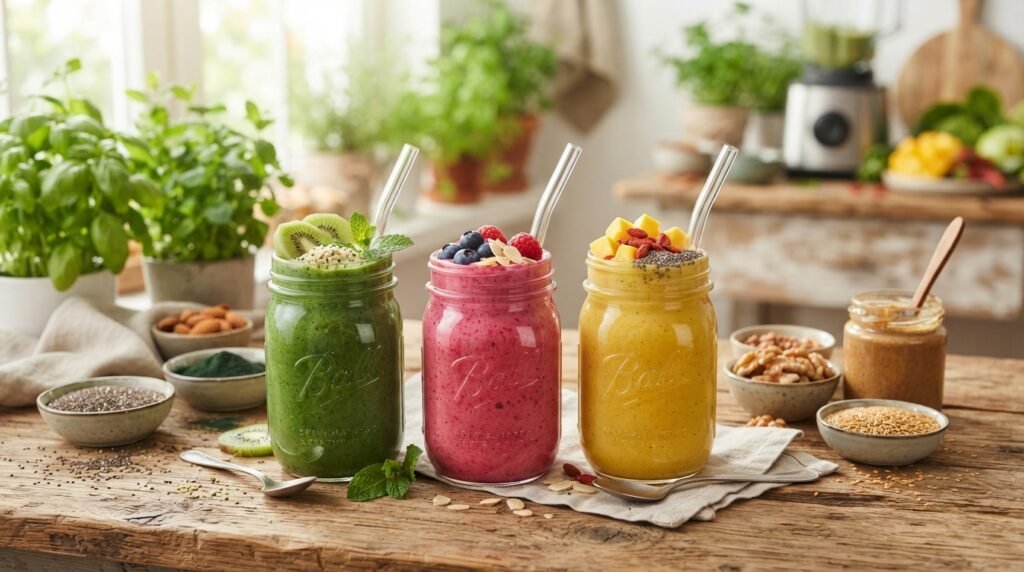
When I skip a recipe, I use a simple four-step formula for low-glycemic blends without guesswork. This approach helps anyone making low carb smoothies for weight loss from whatever ingredients are available. I use this cheat sheet at the grocery store, even when sale items change.
Step 1: Pick a Liquid Base
I start with the base because it sets the drink’s sugar limit. Unsweetened almond milk, coconut water, or plain water are my usual choices. Virta Health recommends unsweetened nut milk because it keeps carbs low while adding creaminess.
I avoid fruit juice, even the “100% natural” kind, because it may spike blood sugar faster than soda.
Step 2: Add a Protein Source
Protein turns my smoothie from a snack into a real meal. I usually add unflavored protein powder, half a cup of plain Greek yogurt, or collagen peptides. I aim for 20 to 25 grams per serving, which keeps me full for hours.
Simple Green Smoothies suggests similar additions, and Greek yogurt gives me the smoothest texture.
Step 3: Choose a Low-GI Fruit
Fruit adds natural sweetness, but I choose low-glycemic options. Berries top my list because they provide fiber and antioxidants with less sugar than tropical fruit.
A small handful of green apple also works when I want a crisp flavor. I skip mango, banana, and pineapple because they can raise my blood sugar too much.
Step 4: Add Fiber and Fat
This final step improves texture and slows digestion further. I pair chia seeds with half an avocado, or flaxseed with a spoonful of almond butter. Together, they keep the smoothie thick and satisfying instead of watery.
Hemp hearts add nutty crunch and extra protein without extra carbs.
| Step | Ingredient Choices | Why It Works |
|---|---|---|
| Liquid Base | Unsweetened almond milk, coconut water, plain water | Keeps sugar and carbs low |
| Protein Source | Protein powder, Greek yogurt, collagen peptides | Boosts satiety and slows sugar absorption |
| Low-GI Fruit | Berries, small green apple | Adds natural sweetness without spikes |
| Fiber and Fat | Chia seeds, flaxseed, avocado, almond butter | Slows digestion and improves fullness |
After memorizing this formula, making low carb smoothies for weight loss no longer feels like a chore. Now, four quick decisions lead me to a blender filled with a drink that keeps me full.
Smoothies, Satiety, and Weight Management: What I’ve Learned
Three questions come up whenever I discuss my smoothie routine. Can a smoothie keep me full, when should I drink one, and can daily use hurt weight loss goals? Years of blending and trial and error have taught me what works.
How Protein and Fiber Keep Me Full
Fiber and protein are the real MVPs here. Fiber slows digestion, so sugar enters my bloodstream gradually instead of all at once. Protein curbs cravings and protects lean muscle while I lose fat, not strength.
Fiber and protein are the two factors that most determine whether a smoothie keeps you satisfied.
Without both, a low-glycemic smoothie is basically dessert in disguise. Protein smoothies with a low glycemic index still need both nutrients to keep me full. I learned this after too many “healthy” smoothies left me hungry an hour later.
The Best Time of Day for a Smoothie
I prefer breakfast or the time right after a workout. A balanced morning smoothie stabilizes my blood sugar before the day begins.
After exercise, protein helps my muscles recover, while fiber controls hunger until my next meal. For me, timing a smoothie around activity makes the biggest difference.
Can I Drink One Every Day and Still Lose Weight?
Yes, honestly. Daily smoothies can support weight loss when they are nutrient-dense and portion-controlled.
Balance is the key. I pair my smoothie with regular activity and mindful eating instead of sugary snacks. Rich in protein and fiber, a well-built smoothie supports sustainable progress, not a shortcut that backfires.
Low-Sugar Smoothie Ingredients I Always Keep Stocked
Every grocery trip, I restock the low sugar smoothie ingredients that keep my drinks sugar-friendly. They stay in my freezer and pantry year-round. I never run out because they support every blend I make.
Frozen Low-Glycemic Fruits
Berries are my top choice. I always keep blueberries, strawberries, and raspberries in the freezer.
They have less sugar than mango or pineapple and add a creamy texture without a later sugar crash. Cherries also add sweetness without a glycemic spike, while a whole banana can quickly make a smoothie high-glycemic.
Unsweetened Dairy-Free Milks
I choose unsweetened almond or coconut milk, never vanilla or “original” versions. Those choices can hide several grams of added sugar per cup.
Reading the label takes five seconds, but it protects my blood sugar every time I blend. Virta Health lists unsweetened nut milks as approved swaps for sugary liquid bases.
Natural, Low-Glycemic Sweeteners
For extra sweetness, I use stevia or monk fruit instead of honey or maple syrup. These low sugar smoothie ingredients add flavor without spiking glucose, matching Virta Health’s advice to cut added sugar from recipes.
A few drops go far, so I keep both small bottles near my blender. They are essential staples whenever I want a sweeter drink.
Mistakes That Turn a Healthy Smoothie into a Sugar Bomb
A sneaky mistake can ruin a good smoothie, and I have made it more times than I want to admit. Before I understood glycemic impact, my “healthy” blends secretly contained lots of sugar. These three mistakes matter when building diabetic-friendly smoothie recipes that keep blood sugar steady.
Overloading on High-GI Fruit
One ripe banana seems harmless. Two bananas and a cup of mango become basically liquid candy.
High-GI fruits digest quickly and can send blood sugar soaring within minutes. I learned to use them as flavor accents, not main ingredients.
Skipping Protein and Fat
A smoothie with only fruit and juice digests almost instantly. I felt satisfied for twenty minutes, then hungry again within an hour.
Without protein and healthy fat, even a low-sugar smoothie may leave you reaching for a snack too soon.
Using Sweetened Store-Bought Add-Ins
This surprised me most. I thought I was eating clean, but flavored yogurts and pre-made smoothie packs quietly added sugar I missed.
According to Alpine Fitness, these are the biggest offenders to avoid:
- High-sugar fruits like mango or pineapple in large amounts
- Flavored syrups and chocolate sauces
- Ice cream or sweetened frozen yogurt
- Sweetened yogurts and flavored milks
Cutting these out instantly transformed my smoothies from sugar bombs into drinks that support steady energy and fat loss.
When to Drink Your Smoothie for Maximum Fat-Burning Benefits
After months of testing, I found three specific windows when my smoothie worked hardest for fat loss. Smoothie timing matters as much as what goes into your blend. Use it well for steadier energy and fewer cravings throughout the day.
Each morning, I choose one of my low gi breakfast smoothies instead of cereal or a pastry. This swap keeps my blood sugar steady for hours and helps me avoid the mid-morning slump. I no longer feel the shaky, hungry crash that once hit me by 10 a.m.
I also sip a lighter smoothie about 30 minutes before cardio. Its natural carbs provide lasting fuel without weighing me down. A slow-digesting blend keeps my energy steady through a full run or cycling class.
Trainers at Alpine Fitness support this approach to smoothie timing and fat loss.
“Smoothies work well as a breakfast replacement, pre-workout fuel for cardio sessions, or post-workout recovery drink after strength training or HIIT.”
After lifting weights or finishing a tough HIIT circuit, I choose a smoothie with extra protein. It helps my muscles recover faster and keeps hunger away longer. The right timing turns a simple blend into a real fat-burning tool.
| Time of Day | Purpose | Key Ingredients | Main Benefit |
|---|---|---|---|
| Morning | Breakfast replacement | Greens, berries, protein powder | Steady energy, no sugar crash |
| Pre-Workout | Cardio fuel | Banana, oats, almond milk | Sustained stamina |
| Post-Workout | Recovery after strength or HIIT | Extra protein, chia seeds, spinach | Faster muscle repair |
Conclusion
My blender taught me that losing weight does not mean giving up smoothies. It means making them smarter. After adding greens, healthy fats, and protein, I stopped crashing by 10 a.m. and stayed full for hours.
That is the whole secret. A low-glycemic smoothie is not a diet trick or trend. It is a simple change that works with my body, keeps blood sugar steady, and still tastes like a treat.
If you are unsure where to begin, choose one of my five recipes and make it this week. Once you know the flavors and textures, use my formula: a liquid base, protein, a low-GI fruit, and fiber or fat. That is all it takes to turn an ordinary smoothie into fuel.
I no longer treat mine as an occasional indulgence. It is part of my daily rhythm, alongside brushing my teeth or making coffee. Give your blender the same job. Within a week, I think you will feel steadier energy, fewer cravings, and more confidence when facing your fridge.