

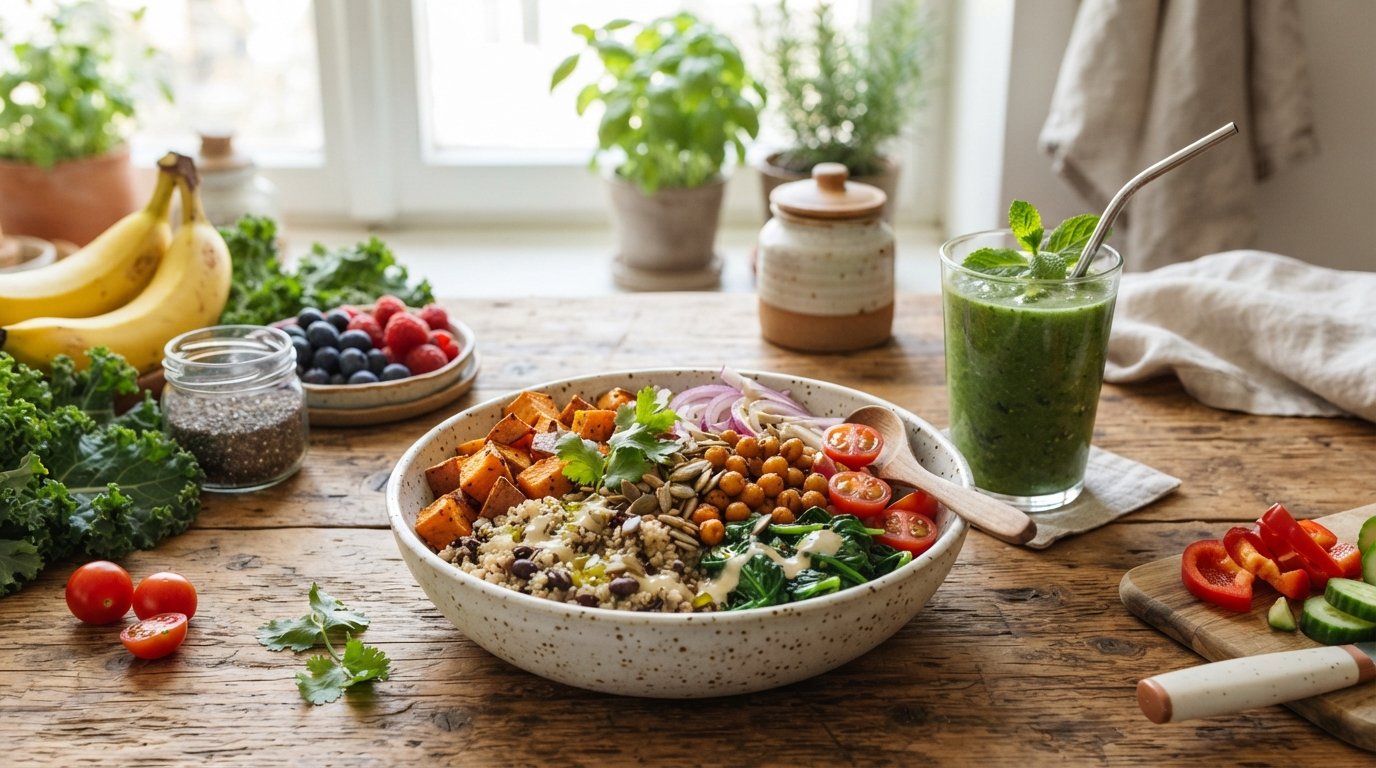
Welcome, friend! I built this guide after years of testing recipes in my own kitchen. I wanted the best plant-based meals for energy and stamina for sunrise workouts and midnight deadlines.
Michael Pollan once said, “Eat food. Not too much. Mostly plants.” That simple idea changed how I cook and, honestly, how I feel every single day.
This guide includes breakfast favorites, hearty lunches, and comforting dinners featuring plant-based meals for energy and stamina.
I also share my go-to pre- and post-workout dishes, smart snacks, and pantry staples I never run out of.
Athletes will find tips from real training days and my weekly system for planning dishes ahead of time.
Every suggestion here comes from lived experience and solid nutrition science. You can trust what reaches your plate.
Key Takeaways
- Fuel your day with nutrient-dense breakfasts, lunches, and dinners built for lasting vitality.
- Pre- and post-workout dishes help your body recover and perform at its best.
- Simple snacks and pantry staples keep your routine easy and consistent.
- Athlete-specific tips are grounded in real training experience, not guesswork.
- A weekly prep system saves time while keeping your nutrition on track.
- Every recommendation blends trusted science with years of hands-on cooking.
🌱 Why Plant-Based Meals for Energy and Stamina Became My Daily Fuel
Three years ago, I hit a wall. My stamina vanished halfway through workouts I once finished without breaking a sweat.
My energy spiked after lunch, then crashed by 2 PM, leaving me needing a nap to function. I blamed stress, poor sleep, and even the weather, but the pattern repeated every day.
I began researching food and energy levels seriously. I discovered that plant-based meals for energy and stamina were not an Instagram fad. They were backed by decades of solid nutrition science.
I changed my plate gradually. I replaced processed meats and greasy fast food with whole grains, legumes, leafy greens, and colorful vegetables.
Within two weeks, something changed. My afternoon crashes disappeared, and my workouts felt stronger. I also recovered faster between sets.
Research shows people who follow plant-based diets have significantly lower rates of cardiovascular disease. This is largely because these diets contain less animal fat and more fiber.
That single fact changed everything for me. I wasn’t just eating for today’s energy boost anymore. I was investing in decades of better health.
“A plant-based diet is cheap, delicious, and could save your life.”
Here’s what kept me motivated during those first few months:
- Steadier blood sugar throughout the day, with no more mid-afternoon crashes
- Faster recovery after intense workouts and long training sessions
- Clearer thinking during back-to-back afternoon meetings
- Better sleep, which fed right back into more daytime energy
Now, plant-based meals for energy and stamina are not a short-term diet for me. They are simply how I fuel my body every day. Honestly, I never looked back.
🔬 The Science Behind Plant-Based Nutrition and Lasting Energy
When I began studying nutrition research, whole plant foods and lasting energy connected clearly. My body relied on real biochemistry, not willpower alone.
Macronutrients That Keep You Going All Day
Whole food plant-based stamina comes from how your body uses three fuel sources: carbohydrates, fats, and protein. Complex carbs from oats, sweet potatoes, and brown rice release glucose slowly into your bloodstream. This steady release keeps blood sugar stable instead of causing spikes and crashes.
Healthy fats from avocados, nuts, and seeds slow digestion even further. They also help your body absorb vitamins A, D, E, and K. Protein completes the trio by repairing tissue and keeping you full between meals.
Together, these macronutrients create steady energy. You are not chasing sugar highs or coffee jolts. You are fueling your body as it was built to run.
Micronutrients That Prevent Fatigue
Even ideal macronutrients need key micronutrients. Iron, vitamin B12, magnesium, and zinc all support energy production. Low levels can leave you sluggish, no matter how many calories you eat.
Iron carries oxygen to your muscles, and lentils, spinach, and pumpkin seeds supply plenty. Pairing these foods with vitamin C sources, such as bell peppers or citrus, boosts absorption significantly. Vitamin B12 does not occur naturally in plants, so I rely on fortified nutritional yeast, plant milk, and cereal to close the gap.
| Nutrient | Role in Energy | Best Plant Sources |
|---|---|---|
| Iron | Carries oxygen to muscles | Lentils, spinach, pumpkin seeds |
| Vitamin B12 | Supports nerve function and red blood cells | Fortified nutritional yeast, plant milk, cereal |
| Magnesium | Fuels energy metabolism | Almonds, black beans, dark chocolate |
| Zinc | Supports immunity and recovery | Chickpeas, cashews, hemp seeds |
Why Plant Protein Supports Endurance
Plant protein for endurance works differently from animal protein, but it works just as well. Complete proteins require nine essential amino acids, and most plant foods contain these in varying amounts, with one tricky exception.
Lysine is often the most limited amino acid in vegan diets. So I pair complementary foods throughout my week. Rice and beans, hummus and pita, and peanut butter on whole grain toast create complete protein profiles.
Some plant foods already provide complete protein. I keep these staples in regular rotation:
- Quinoa and amaranth
- Buckwheat
- Soy foods like tofu, tempeh, and edamame
- Hemp seeds and chia seeds
- Spirulina
- Ezekiel bread
Research shows well-planned vegan diets can provide protein at 12 to 14 percent of daily calories. Active people like me often need more, between 1.4 and 2.0 grams of protein per kilogram of body weight each day. Whole foods help my muscles recover and my stamina climb.
“Appropriately planned vegetarian, including vegan, diets are healthful, nutritionally adequate, and may provide health benefits for the prevention and treatment of certain diseases.”
This science gives me confidence in my meals. They are more than tasty choices; nutritional research supports energy, recovery, and long-term plant protein for endurance.
🍳 Energizing Breakfast Ideas to Start Your Day Strong
I used to grab coffee and call it breakfast until I learned what morning fuel could do for my energy. Skipping a solid first meal left me sluggish by mid-morning, reaching for sugar to stay upright.
Once I built my mornings around energizing plant-based recipes, everything changed. My focus improved, my workouts felt stronger, and I stopped crashing before lunch.
Here are the three breakfasts I rotate most often. Each one keeps my energy steady for hours.
Overnight Oats with Chia Seeds and Berries
This recipe takes little morning effort, so it suits busy weekdays. I mix rolled oats, chia seeds, and plant milk in a jar before bed, then refrigerate it overnight.
By morning, the mixture becomes thick and creamy. I top it with fresh berries for natural sweetness and antioxidants.
Before a tough workout, I stir in protein powder for extra fuel. This can raise the protein count to 33 grams, turning a light snack into a filling meal.
Tofu Scramble with Spinach and Avocado
When I crave something savory, this scramble never disappoints. I crumble firm tofu into a hot pan, then add turmeric, garlic powder, and nutritional yeast for a cheesy, savory flavor.
Fresh spinach wilts into the mix, adding iron and folate without extra prep. Slices of ripe avocado add healthy fats that keep hunger away longer.
This breakfast provides roughly 14 grams of protein per serving. It tastes close enough to scrambled eggs that I never miss them.
“Breakfast is the foundation that determines how your blood sugar, energy, and focus perform for the rest of the day.”
Green Smoothie Bowls with Hemp Seeds
Some mornings call for a cold, refreshing meal, especially after an early run. I blend spinach, banana, frozen mango, and plant milk until smooth, then pour it into a bowl.
Hemp seeds add crunch and omega-3s. I also add granola and sliced fruit for more texture.
With plant-based protein powder and vegan yogurt, this bowl can provide over 35 grams of protein. It is one of my most filling weekly meals.
These three breakfasts show that energizing plant-based recipes can stay simple and effective. They reset my day and guide each stamina-focused meal that follows.
🥗 Power-Packed Lunch Recipes for Midday Stamina
Breakfast sets my day’s tone, but lunch keeps me going until dinner. For years, I treated lunch as an afterthought—a sad desk salad or granola bar between emails.
That habit left me foggy and tired by 2 p.m. Real, satisfying meals changed everything, and these high-energy vegetarian meals now fight my afternoon slump with protein, fiber, and bold flavor.
Quinoa Buddha Bowls with Roasted Vegetables
I start with fluffy quinoa, then add roasted sweet potatoes and crispy chickpeas straight from the oven. A generous tahini drizzle adds a creamy, nutty finish.
This bowl provides complex carbs for steady fuel and plant protein for lasting energy. I add available greens because leafy vegetables provide fiber without weighing down the meal.
Lentil and Sweet Potato Salad
This recipe echoes a favorite from endurance-focused meal plans: a Sweet Potato, Kale, and Chickpea Salad with Quinoa. I replace chickpeas with hearty lentils for extra protein and roast sweet potato cubes until caramelized and tender.
This combination replenishes glycogen stores depleted during a busy morning. It helps me handle back-to-back meetings or a midday workout, while kale adds crunch and lemon-olive oil dressing keeps everything fresh.
Chickpea Wraps with Tahini Sauce
When time is short, chickpea wraps save the day. I mash chickpeas with lemon juice, garlic, and tahini, then wrap them in a whole-grain tortilla with shredded carrots and spinach.
The wrap travels easily, stays mess-free, and keeps me full for hours. Protein and fiber work together here to slow digestion, preventing sudden energy dips an hour later.
“Lunch should hold you. Not flatten you. Go for plant-based meals with protein, fiber, and real flavor — the kind that keeps you steady through the afternoon.”
I choose organic, non-GMO ingredients whenever possible. I also borrow bold flavors from global cuisines, such as smoked paprika or harissa, to make simple bowls exciting.
That is the goal of my high-energy vegetarian meals: incredible taste that carries me through the day without one yawn.
🍲 Satisfying Dinner Meals That Fuel Recovery
Dinner has a special place in my routine because I focus on recovery, not just hunger. After hours of training, work, or both, my body needs nourishment to repair itself overnight. That’s why I choose vegan meals for sustained energy: protein, complex carbs, and healthy fats in one satisfying bowl.
These three dinners rotate through my weekly menu more than any others. Each supports muscle repair while keeping prep short enough for busy weeknights.
Black Bean and Brown Rice Stir-Fry
This is my go-to when time is short but I still want a filling meal. I toss black beans and brown rice with fridge vegetables, usually bell peppers, broccoli, and carrots.
A quick soy-ginger sauce ties everything together in minutes. For extra protein, I sometimes use seitan and black beans, which provide roughly 35 grams of protein per four ounces.
That makes it one of the heartiest stir-fries I’ve ever made.
Stuffed Bell Peppers with Quinoa and Black Beans
These stuffed peppers look impressive but are surprisingly simple to prepare. I mix cooked quinoa with black beans, corn, and spices, then stuff the mixture into halved bell peppers before baking.
The colors alone make this dish feel like a celebration on a plate. I usually make a double batch because the peppers reheat beautifully, making them perfect for meal prep.
Having a few ready in the fridge means I always have a protein-rich dinner after a hard workout.
Creamy Red Lentil Curry
This curry might be my favorite recovery meal of all. It’s inspired by the Red Lentil Curry with Broccoli and Rice that appears in many endurance meal plans. I understand why athletes swear by it.
Red lentils simmer with coconut milk, garlic, ginger, and warming spices like turmeric and cumin until thick and creamy. I serve it over rice with steamed broccoli for extra fiber and vitamins.
“Food is not just fuel, it’s information. It talks to your DNA and tells it what to do.”
That idea stays with me whenever I eat this curry. Lentils provide plant protein and iron, while coconut milk adds healthy fats that help my body absorb nutrients overnight.
It’s one of those vegan meals for sustained energy that feels like a reward after a tough day.
| Dinner | Protein per Serving | Key Recovery Nutrient |
|---|---|---|
| Black Bean & Brown Rice Stir-Fry | 18g | Iron and complex carbs |
| Stuffed Bell Peppers | 15g | Fiber and magnesium |
| Creamy Red Lentil Curry | 20g | Potassium and anti-inflammatory spices |
On different nights, I make white bean chili instead, which offers about 11 grams of protein per serving. Rotating these dinners keeps meals exciting while supporting the muscle recovery I need to show up strong the next day.
🥤 Pre-Workout Plant-Based Meals for Instant Energy
Nothing kills a workout faster than entering the gym empty—or uncomfortably full.
I learned early that food timing matters as much as the workout itself. A good pre-workout meal eaten 30 to 60 minutes before exercise gives my muscles fuel without weighing me down.
Following a plant-based diet for athletic performance taught me this lesson: fast-digesting carbs provide quick fuel. A small amount of protein and healthy fat works better than heavy, protein-loaded meals before hard training. My body craves quick energy, not a slow-digesting feast.
Banana Date Smoothie with Almond Milk
This ten-minute blend is my go-to choice when I need energy quickly. A ripe banana, two pitted dates, a cup of almond milk, and a handful of ice go into my blender.
Natural sugars from the banana and dates digest quickly, giving me an immediate lift without refined sugar’s crash. Almond milk adds light creaminess without weighing down my stomach before a run or lifting session.
I usually sip this smoothie 20 to 30 minutes before moving, and I feel the difference almost instantly.

Whole Grain Toast with Almond Butter and Banana
For a fuller option, I choose whole grain toast with almond butter and sliced banana. This combo gives roughly 8 grams of protein from nut butter alone, plus fiber and healthy fats.
These nutrients help keep my energy steady. Whole grain bread provides complex carbs that top off glycogen stores, while the banana adds a quick-digesting sugar boost before exercise. This easy option is one of my favorite plant-based meals for energy and stamina.
I can prepare it quickly, even on busy mornings.
Here is a quick comparison of both options, based on how much time I have before a workout:
| Pre-Workout Meal | Prep Time | Protein (approx.) | Best Timing |
|---|---|---|---|
| Banana Date Smoothie with Almond Milk | 10 minutes | 3-4g | 20-30 minutes before exercise |
| Whole Grain Toast with Almond Butter and Banana | 5 minutes | 8g | 30-60 minutes before exercise |
Both options show that a plant-based diet for athletic performance can match—or even beat—traditional pre-workout snacks for quick, clean energy.
💪 Post-Workout Recovery Meals Rich in Plant Protein
After exercise, my body begins a 30-minute recovery countdown. During this window, my muscles need real fuel, not just water. I have found that plant protein for endurance helps me feel better the next morning.
The right mix of protein and carbs helps rebuild muscle fibers and restore glycogen stores. When I skip it, soreness can last for days. These two meals are my favorite choices for fast, effective recovery.
Pea Protein Smoothie with Spinach and Berries
My favorite grab-and-go option is a pea protein smoothie with spinach and berries. I blend pea protein powder with frozen berries, fresh spinach, and unsweetened almond milk. Pea protein provides complete amino acids, helping my muscles begin repairs right away.
Berries add natural sugars that help restore glycogen. Spinach provides iron and magnesium, which can help fight fatigue. I can drink this smoothie in under five minutes after an early workout.
Tempeh and Roasted Veggie Bowl
When I have more time, I make a tempeh and roasted veggie bowl for recovery. Tempeh provides about 10.3 grams of protein per 50-gram serving. It offers a strong plant-based protein boost without animal products.
I roast broccoli, bell peppers, and sweet potato, then serve them over brown rice or quinoa. This bowl combines protein, fiber, and complex carbs to keep me full for hours. Tempeh’s fermentation also makes it easier to digest than many soy products.
Since building dinners around meals like this, I have noticed less next-day soreness. I also get steady plant protein for endurance that keeps me fueled.
“Recovery nutrition isn’t an afterthought—it’s the foundation that lets your next workout be even stronger.”
| Plant Protein Source | Serving Size | Protein (g) | Best For |
|---|---|---|---|
| Pea Protein Powder | 1 scoop (30g) | 24g | Quick post-workout shakes |
| Tempeh | 50g | 10.3g | Hearty recovery bowls |
| Quinoa | 1 cup cooked | 8g | Complex carb pairing |
| Lentils | 1 cup cooked | 18g | Fiber-rich muscle repair |
Building post-workout meals around plant protein for endurance has changed my recovery speed. I feel more ready for my next session and no longer dread the day after a hard workout. Instead, I look forward to foods that help me heal.
🍫 Energy-Boosting Snacks for Sustained Stamina Throughout the Day
Snacking often gets a bad reputation. However, the right bites can keep my stamina steady all day.
Without a snack plan, I used to lose focus and energy around 3 p.m. Now, I choose vegan energy-boosting foods with protein, fiber, and healthy fats instead of sugary snacks that cause a crash an hour later.
My favorite vegan energy-boosting foods pack real nutrition into small, portable bites. They taste great, travel well, and support my stamina during busy days.
Homemade Trail Mix with Nuts and Seeds
My go-to trail mix is simple. I combine almonds, pumpkin seeds, and dried fruit, such as apricots or raisins, for natural sweetness.
Roasted nuts alone provide up to 7 grams of protein per ounce, making this mix a strong energy source. Healthy fats and plant protein keep me full for hours, not minutes.
I make a large batch on Sunday and divide it into small bags. Then, grabbing a handful before leaving takes no extra thought.
No-Bake Energy Balls with Oats and Dates
When I want something sweeter, I make no-bake energy balls. This recipe takes about five minutes and needs three ingredients: rolled oats, pitted dates, and nut butter.
I blend everything in my food processor until it forms sticky dough. Then, I roll it into bite-sized balls. Dates add natural sweetness, while oats and nut butter provide lasting energy without refined sugar.
For more protein, I pair these energy balls with hummus or bean dip. A quarter cup of hummus provides anywhere from 2 to 7 grams of protein, completing my snack.
When I need more staying power, edamame is my secret weapon. One cup provides about 16 grams of protein, making it one of the strongest vegan energy-boosting foods in my kitchen.
These snacks show that plant-based meals for energy and stamina do not always require a full plate. Sometimes, trail mix or two energy balls can keep me going strong.
🥦 Stamina-Building Plant Foods to Always Keep in Your Kitchen
I keep stamina-building plant foods in my kitchen, making weeknight cooking easier. With staples in my fridge and pantry, I never scramble to plan dinner. I grab what I have and build a meal that fuels me.
Over time, I narrowed my stamina-building plant foods into three key categories. Each supports steady energy and helps my muscles recover.
Leafy Greens and Cruciferous Vegetables
Kale, spinach, and broccoli fill my grocery cart almost every week. These greens provide serious amounts of iron and micronutrients that help blood carry oxygen more efficiently.
Without enough iron, I feel fatigue by early afternoon. A simple side of sautéed kale or spinach tossed into a smoothie solves it fast.
Broccoli adds fiber and vitamin C to its nutrient load, helping my body absorb iron better. I treat these vegetables as essential kitchen basics.
Whole Grains and Legumes
Legumes form the backbone of my stamina-supporting pantry. Tofu alone delivers 20 grams of protein per cup, making it one of my most efficient plant-based options.
Lentils offer 18 grams per cup, while great northern beans surprise many people with an impressive 19 grams per cup. Chickpeas and kidney beans round out the lineup with solid contributions too.
| Food | Protein Amount | Serving Size |
|---|---|---|
| Tofu | 20g | 1 cup |
| Lentils | 18g | 1 cup |
| Great Northern Beans | 19g | 1 cup |
| Chickpeas | 7.6g | 100g |
| Kidney Beans | 8.3g | 100g |
I pair these legumes with brown rice or quinoa for complex carbohydrates. Together, they keep me full and energized for hours.
Nuts, Seeds, and Healthy Fats
Hemp seeds are a favorite because they’re about 25% protein by weight, giving me 7 grams in two tablespoons. I sprinkle them over oatmeal, salads, and smoothie bowls without a second thought.
Walnuts stay in my pantry for their healthy fats and satisfying crunch. A small handful adds staying power to any snack or meal.
Stocking these stamina-building plant foods keeps me ready to make something nourishing, even during busy weeks.
⚡ Plant-Based Nutrition Tips for Athletes and Active Lifestyles
My training improved after I focused on meal timing and hydration through plant-based nutrition for athletes. Food choices matter, but timing meals and drinking fluids around workouts can make an even bigger difference. These habits turned my plant-based diet from “good enough” into a useful performance tool.
Timing Your Meals Around Workouts
I treat meal timing as part of my training plan, not an afterthought. Eating complex carbs two to three hours before exercise provides steady energy without stomach discomfort. After training, I refuel within 45 minutes with carbs and protein to start recovery.
For longer training blocks, I follow my Endurance Meal Plan. It centers on complex carbohydrates, with roughly 285 grams of carbs, 108 grams of protein, and about 2,200 calories spread across the day.
Active people generally need between 1.4 and 2.0 grams of protein per kilogram of body weight to support muscle repair and endurance. I adjust these numbers based on my goals because plant-based nutrition for athletes is not one-size-fits-all.
Here’s how I adjust my plan for each goal:
| Goal | Calorie Approach | Protein Target | Key Focus |
|---|---|---|---|
| Endurance Training | ~2,200 calories daily | 108g (within 1.4-2.0g/kg) | Complex carbs for sustained energy |
| Weight Loss | 20% caloric deficit | 1.6-3g per kg body weight | Higher protein to preserve muscle |
| Muscle Gain | 10% caloric surplus | 1.6-2.0g per kg body weight | Resistance training plus surplus calories |
Hydration and Electrolyte Balance on a Plant-Based Diet
Staying hydrated means more than drinking plain water during intense training. I use electrolyte-rich plant foods to replace minerals lost through sweat. Coconut water, leafy greens, and bananas top my list.
Coconut water provides natural potassium and sodium without added sugar. Leafy greens, such as spinach and kale, supply magnesium, which helps prevent muscle cramps. Bananas add quick carbs and potassium before or after a workout.
“Proper hydration and electrolyte balance are just as critical to athletic performance as the food on your plate.”
I’ve learned that skipping electrolytes, even on a nutrient-dense plant-based diet, can cause fatigue and cramps during long sessions. Building these habits into my daily routine keeps my energy steady and recovery on track.
📝 How I Plan My Weekly Plant-Based Meals for Maximum Energy
My weekly meal plan keeps my energy steady, even during busy stretches. I’ve learned that consistency beats perfection every time. Planning ahead keeps plant-based meals for energy and stamina ready during hectic weeks.
I used to wing it and grab whatever seemed easy after a long day. That habit left me tired and reaching for processed snacks. Now, I treat Sunday prep as a firm appointment with my future self.
My Simple Meal Prep Strategy
Each Sunday, I spend about two hours batch-cooking staples for the week. It may sound like a lot, but it saves hours on busy weeknights. I start with a big pot of hearty lentil bolognese or chili, because lentils freeze and reheat beautifully.
Next, I make a large batch of chickpea curry or vegetable curry with seasonal produce. While it simmers, I roast tofu with seasonal vegetables for extra texture and flavor. I finish with a grain salad using quinoa or brown rice, which stays fresh in the fridge for days.
After everything cools, I portion it into containers. Each becomes a grab-and-go meal that supports steady energy without extra decisions during the week.
This simple rhythm has become one of my favorite rituals. It turns Sunday into a quiet reset before the week picks up speed.
Grocery List Essentials for Energy and Stamina
My shopping list rarely changes, and that choice is intentional. A core set of ingredients speeds up grocery trips and keeps meals nutritious.
| Category | Staple Items | Why It Fuels Stamina |
|---|---|---|
| Plant Proteins | Lentils, chickpeas, tofu, tempeh | Builds and repairs muscle, keeps hunger in check |
| Whole Grains | Quinoa, brown rice, rolled oats | Provides slow-releasing carbs for lasting energy |
| Produce | Leafy greens, sweet potatoes, berries | Supplies vitamins and antioxidants that fight fatigue |
| Nuts & Seeds | Almonds, chia seeds, hemp seeds | Delivers healthy fats and protein for endurance |
What surprises most people is the cost. My whole-food, plant-based grocery list can run as low as $9 a day. This proves nutrient-dense eating does not require a big budget.
A full plate of beans, grains, and greens costs far less than convenience food—and delivers far more energy.
Keeping these basics stocked means I always have options. Whether I prep lunch or plan dinner, my pantry has what I need. That is the real secret to staying consistent with plant-based meals for energy and stamina week after week.
Conclusion
Building a life powered by plant-based meals for energy and stamina takes time, and it does not need perfection. Show up for yourself each day by choosing foods that help you feel strong, not sluggish.
I did not change my whole kitchen in one weekend. I began with one swap, one recipe, and one batch of energy balls for a busy week. Those small changes built a routine that keeps me fueled, focused, and ready for daily demands.
Your body will show you what works. Some weeks, you may crave more lentils and leafy greens; other weeks, a smoothie bowl feels right. Listen, then adjust your plate until plant-based meals for energy and stamina feel natural, not like a diet.
If you want more recipes and wellness guidance, find plenty waiting at www.healthyvibeslife.com. Explore, try something new, and make each idea your own.
While there, subscribe to the newsletter. You will receive fresh health and wellness tips, wellness-related travel and deals recommendations, and updates on the latest fitness products. You will also get plenty more sent straight to your inbox.
Here’s to eating well, moving through life with steady energy, and feeling genuinely good in your own skin. Keep fueling yourself with plants, keep experimenting, and keep supporting your health one meal at a time.


