
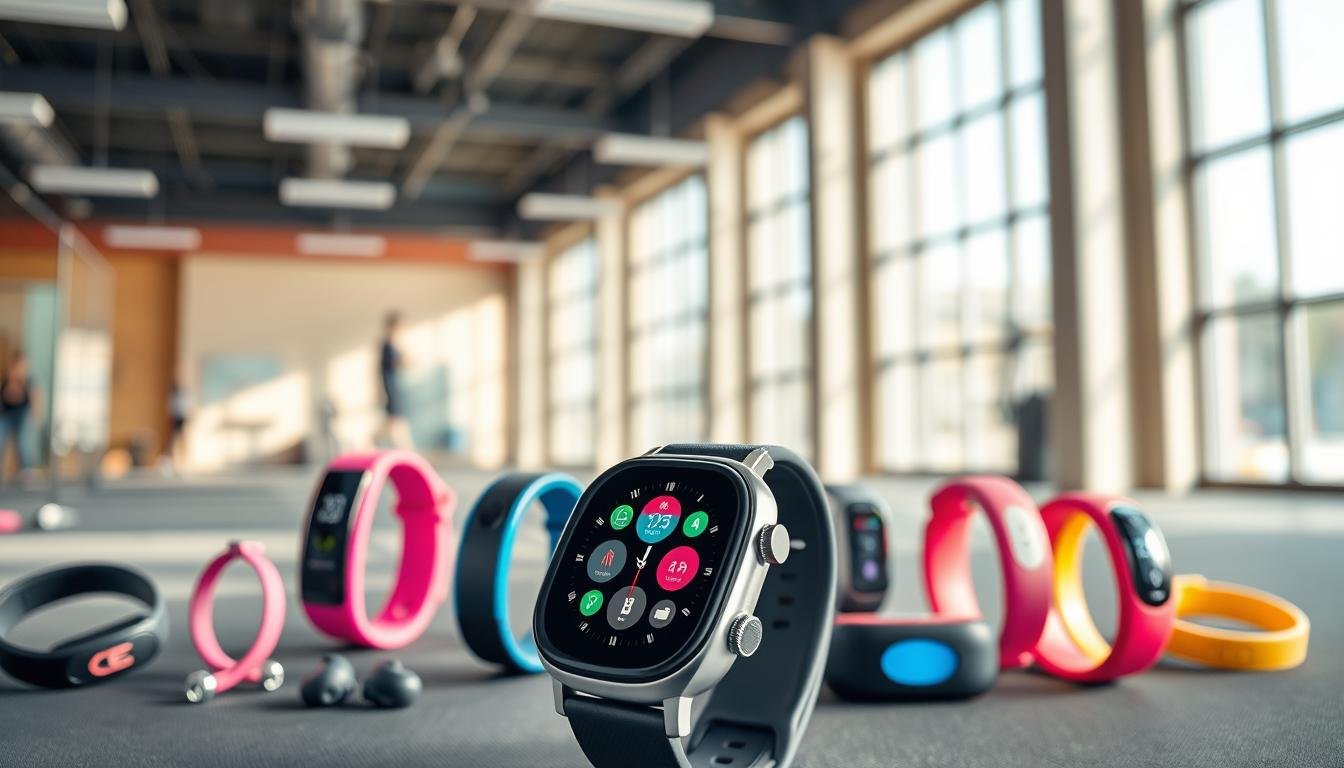
Are you tired of workout routines that feel stuck in the past while innovation races ahead?
I’ve spent the past six months testing the latest fitness tech. My goal was to find out which devices really work and which are just overpriced.
I tried everything from smart rings that track your recovery to AI-powered home gyms that coach you in real-time. I tested budget-friendly wearables, high-end recovery tools, and everything in between.
The fitness tech sector is booming. In the UK alone, it was worth an estimated £6.5 billion in 2025. This growth shows real workout innovation happening now.
I know picking the right device can be tough. That’s why I’ve done the hard work for you.
Whether you’re a serious athlete or just starting, there’s transformative technology for all budgets. By the end of this article, you’ll know which devices are worth your money based on my experience.
Key Takeaways
- Six months of rigorous testing across multiple device categories provides real-world insights into what works
- AI integration and personalized coaching are now standard features in modern workout devices
- Smart rings, wearables, home gyms, and recovery tools each serve different needs and budgets
- The industry’s £6.5 billion UK valuation reflects genuine innovation, not just marketing hype
- Both beginners and athletes can find transformative devices at various price points
- Hands-on testing reveals which products deliver results versus expensive gimmicks
💪 Why I Spent Six Months Testing the Latest Fitness Tech
Six months ago, I made a big change in how I look at fitness tech. I stopped relying on quick reviews and marketing. Instead, I started doing comprehensive, long-term fitness technology testing. This way, I could see what these devices really do in real life.
The fitness tech world has changed a lot. We’re not just talking about simple step counters anymore. Today, we have AI coaching, personalized workouts, and health monitoring that’s like medical equipment.
But, not all new tech is good. Some devices really change your fitness journey. Others are just expensive and don’t live up to their promises.
I wanted to know which tech really works. So, I created a testing method that pushes devices to their limits. I used each device for weeks or months, not just days. This helped me see how durable, accurate, and valuable they are in the long run.
I tested each device in five different workout areas. I wanted to see how well they perform in various fitness scenarios. It wasn’t about finding the best gadget for one thing. It was about finding tech that improves your whole fitness routine.
I tracked important metrics like sleep quality and workout performance. This showed me which devices really help with recovery and strength gains. I also looked at how fast you recover from workouts to see which tech helps prevent injuries.
User experience was just as important as how well the tech works. A device might have amazing sensors, but if it’s hard to use or has a short battery, it’s not good. I checked how easy the app was to use, how long the battery lasted, and if I wanted to use it every day.
| Testing Category | Duration per Device | Key Metrics Evaluated | Workout Types Included |
|---|---|---|---|
| Performance Tracking | 4-6 weeks | Heart rate accuracy, calorie burn precision, distance measurement | Running, cycling, swimming, HIIT |
| Recovery Monitoring | 6-8 weeks | Sleep quality scores, HRV trends, readiness ratings | Rest days, active recovery, yoga sessions |
| Strength Training | 8-12 weeks | Rep counting accuracy, form feedback, progressive overload tracking | Free weights, resistance training, bodyweight exercises |
| User Experience | Entire testing period | App stability, battery life, comfort, ease of use | All workout sessions and daily wear |
I focused on the latest fitness tech from 2025 and 2026. Technology changes fast, and I wanted to give you the latest info. Devices from two years ago often lack features that are now standard.
My goal was to find tech that works well and is easy to use. A device might impress athletes with advanced features, but does it help regular people reach their fitness goals? That’s what I kept asking.
How much a device costs was also important. Some expensive devices are worth it. Others charge a lot for features you won’t use. I looked at whether each device’s benefits are worth its price, including any subscription fees.
Honesty is key in this project. I’ll share what impressed me and what didn’t. Every device has good points and bad. My goal is to help you make smart choices based on your needs and budget.
This deep dive into fitness tech testing took a lot of time and effort. But after six months of testing, I found the top tech that really changes workouts. The insights I gained will help you avoid wasting money and find tech that actually works.
⌚ Smart Rings That Changed My Recovery Game
I was skeptical about a small ring beating big smartwatches. But these devices proved me wrong. Smart rings are some of the most wearable fitness technology I’ve seen. They fit on your finger and collect health data without you noticing.
Smart rings are discreet. Unlike watches, they don’t make you look at your wrist all the time. They track your sleep, recovery, and health quietly, so you can focus on your day.
Two smart rings stood out to me. They changed how I recover and train. Let me tell you about them.
Oura Ring Gen 3: The Sleep and Recovery Champion
The Oura Ring Gen 3 was my constant friend for four months. It’s a sleek titanium ring that focuses on recovery and sleep quality. Unlike other trackers, Oura tells you when to train hard or rest.
I wore it 24/7, even in the shower and pool. It didn’t get in the way during workouts or morning runs. That’s a sign of great tech—you forget it’s there.
What Makes It Special
The Oura Ring Gen 3 has impressive sensors in a small package. Its titanium feels premium and lasts long. It tracks heart rate variability, skin temperature, and respiratory rate with high accuracy.
What sets Oura apart is its daily readiness score. Every morning, the app shows how ready you are to train. This score helps you decide if you should push hard or take it easy.
The health monitoring is impressive. Oura can spot when you’re getting sick before symptoms show. Your skin temperature and readiness score drop before you feel unwell. This early warning helped me avoid getting sick twice.
For women, the ring tracks menstrual cycles. It predicts your cycle based on temperature changes. This helps you understand how different phases affect your energy and recovery.
The first month with Oura was eye-opening. I learned my sleep wasn’t as good as I thought. My sleep score averaged 72 out of 100—decent but not optimal. Eating late dinners hurt my sleep quality by 15-20 points.
I made simple changes based on Oura’s insights. I stopped eating three hours before bed and cut down on alcohol. Within two weeks, my sleep score jumped to 84. I felt genuinely rested for the first time in years.
The readiness score became my training guide. On days when my score was below 70, I did yoga or walking instead of intense workouts. This approach helped me avoid overtraining and prevented two injuries. My performance improved because I trained smarter, not harder.
One surprising discovery: stress from work affected my recovery more than intense workouts. High-stress days showed up as elevated nighttime heart rates and poor HRV scores. This data motivated me to manage stress better.
Ultrahuman Ring Air: The Lightest Wearable Fitness Technology
After trying Oura, I tested the Ultrahuman Ring Air. This ring is incredibly light and comfortable. At just 2.4 grams, it’s the lightest smart ring available. You truly forget you’re wearing it.
Ultrahuman takes a different approach than Oura. While both track sleep and recovery, Ultrahuman focuses on metabolic health. It shows how your body responds to different foods, activities, and stressors throughout the day.
Key Features I Love
The Ultrahuman Ring Air tracks your movement index, sleep quality, and recovery patterns like Oura. But it also integrates with their CGM system for continuous glucose monitoring. This feature helps you understand how different foods affect your energy and performance.
The movement index replaces traditional step counting. It measures all your activity—from walking to weight training—and gives you a complete picture of daily movement. I found this more useful than arbitrary step goals.
Here’s what really matters: Ultrahuman doesn’t charge a monthly subscription. You pay once for the ring and get all features forever. Oura requires a $6 monthly subscription after the first month. Over time, this difference adds up significantly.
The battery life impressed me too. The ring lasted 5-6 days between charges, slightly longer than Oura’s 4-5 days. Both charge quickly using their magnetic docks.
Who Should Buy It
The Ultrahuman Ring Air suits people who want detailed health data without a bulky smartwatch. If you find watches uncomfortable during sleep or workouts, this ring solves that problem completely.
I recommend it for anyone interested in metabolic health optimization. The food scoring feature helps you identify which meals support your energy and which ones cause crashes. Athletes recovering from injuries benefit from the detailed recovery metrics.
People sensitive to subscriptions should choose Ultrahuman over Oura. The one-time purchase removes ongoing costs and provides the same core features. But if sleep tracking and illness detection are your top priorities, Oura’s algorithms are slightly more refined.
Both rings need about a month to calibrate and provide personalized insights. Don’t expect perfect accuracy on day one. The devices learn your patterns over time and improve their recommendations weekly.
| Feature | Oura Ring Gen 3 | Ultrahuman Ring Air |
|---|---|---|
| Weight | 4-6 grams | 2.4 grams |
| Battery Life | 4-5 days | 5-6 days |
| Monthly Subscription | $5.99 after first month | None required |
| Sleep Tracking | Advanced with readiness score | Comprehensive with recovery index |
| Special Features | Illness detection, cycle tracking | Metabolic health, movement index |
Smart rings changed how I view fitness tracking and health monitoring. They offer deeper insights than wrist-based trackers and are unobtrusive. Whether you choose Oura or Ultrahuman depends on your priorities—sleep optimization or metabolic health.
Both devices represent significant fitness tracker innovations that put recovery first. They taught me that rest is as important as training. That lesson alone made them worth every penny.
🤖 AI Fitness Devices That Feel Like Personal Trainers
At first, I was skeptical about ai fitness devices that act like personal trainers. But after trying them, I was amazed. These machines understand my form, adjust the workout intensity, and give feedback in real-time. It’s like having a pro coach at home.
These devices do more than just track workouts. They analyze every move, adjust to my performance, and spot weaknesses I didn’t know about. It feels like a personal trainer is right there with me.
Tonal Smart Home Gym: Strength Training Perfected
The Tonal 2 changed my view on smart strength training. It uses electromagnetic resistance up to 200 pounds, so you don’t need dumbbells or weights. The design is sleek and takes up little space, making it a great choice for small homes.
What really stood out was how the system adapts to my performance during workouts.
Tonal’s AI coaching is a game-changer in fitness tech. It uses 13 built-in sensors to monitor my form, speed, and power. During an overhead press, the resistance adjusted automatically when I struggled on rep eight.
The voice coaching gave me precise tips to improve complex movements. When my form faltered during deadlifts, the AI coach reminded me to engage my core and keep my spine straight. This feedback helped me avoid injury and improve faster.
One thing that surprised me was how Tonal found muscle imbalances I didn’t know about. It detected my left shoulder was weaker than my right during presses. It then created exercises to fix this imbalance, something I’d need expensive tests for.
The key features of Tonal’s AI coaching include:
- Smart Flex technology that reduces weight automatically when you’re fatigued
- Spotter Mode that adds resistance when exercises feel too easy
- Chains Mode that progressively increases resistance through your range of motion
- Eccentric Mode that provides different resistance during lifting versus lowering phases
Performance Tracking
Tonal’s performance tracking changed how I measure my progress. It creates a detailed strength profile by calculating my one-rep max for every movement. I can see how much stronger I’ve gotten over time through clear graphs.
The Strength Score metric makes improving a fun challenge. This single number shows my overall strength, increasing as I get stronger. Watching this score rise from 450 to 580 over three months kept me motivated to push harder.
Tonal’s new Aero feature adds cardio intervals to strength sets. This creates hybrid workouts that build muscle and improve heart health. The system adjusts intensity based on my heart rate and recovery, making the transition between strength and cardio seamless.
Tempo Move: Affordable AI-Powered Workouts
For those looking for affordable ai fitness devices, Tempo Move is a great option. It uses your smartphone or tablet camera, so you don’t need expensive hardware. Setting it up takes less than 10 minutes, and it fits easily into your routine.
Despite being cheaper, Tempo Move’s AI coaching impressed me during testing. It shows that effective AI doesn’t have to cost a lot.
3D Motion Sensors in Action
Tempo’s 3D motion tracking uses advanced computer vision to analyze your movements. It shows a skeleton overlay on the screen, highlighting how your body moves during exercises. During squats, I could see if I reached proper depth or if my knees were caving.
The automatic rep counting worked perfectly during my testing. Tempo accurately counted reps, even during complex movements like burpees or mountain climbers. When my push-up form slipped, the AI coaching immediately pointed out what needed fixing.
The feedback from Tempo is incredibly detailed. Instead of vague cues, it tells me specific things to improve, like “drop your hips two inches lower” or “extend your arms fully at the top.” This precision helped me improve faster than with traditional workout videos.
Value for Money
The cost difference between Tonal and Tempo Move is significant. Tonal costs around $4,295 plus a monthly fee, while Tempo Move starts at $395 with a similar subscription. Both require ongoing memberships for full access to workouts and AI coaching.
Each system meets different fitness goals and budgets effectively:
| Feature | Tonal Smart Home Gym | Tempo Move |
|---|---|---|
| Initial Investment | $4,295 | $395 |
| Resistance Type | Electromagnetic (up to 200 lbs) | External weights required |
| AI Sensors | 13 built-in sensors | 3D camera vision |
| Space Requirements | Wall-mounted (minimal floor space) | Portable (easily stored) |
| Best For | Serious strength training enthusiasts | Budget-conscious beginners to intermediate |
Tonal is worth the premium for serious strength training. It offers electromagnetic resistance and advanced sensor technology. The built-in weights save space and make workouts more effective.
Tempo Move is perfect for beginners or those on a budget. It works with standard dumbbells or kettlebells, and its portability is great for small spaces or frequent moves.
Both ai fitness devices bring expert coaching to your home. They learn your abilities, adapt to your progress, and push you harder than you can on your own. After months of testing, I’m convinced AI coaching offers results similar to a personal trainer at a fraction of the cost.
🏠 Smart Workout Equipment Transforming Home Gyms
My home gym has changed a lot. It started with basic weights and now it’s a high-tech fitness studio. This is thanks to three key smart workout pieces. They didn’t just update old exercises; they created new ones that are as good as gym classes.
What makes top home gym gear stand out is how it mixes quality with fun content. I spent a lot of time testing these machines to see if they really worked.
Mirror by Lululemon: Interactive Fitness Reflection
The Mirror changed how I see home workouts. When off, it looks like a mirror. But turn it on, and it turns into an interactive fitness display with live and on-demand classes.
What’s great is seeing the instructor and yourself at the same time. This helps you correct your form in real-time. It’s like watching yourself do exercises while following the instructor.
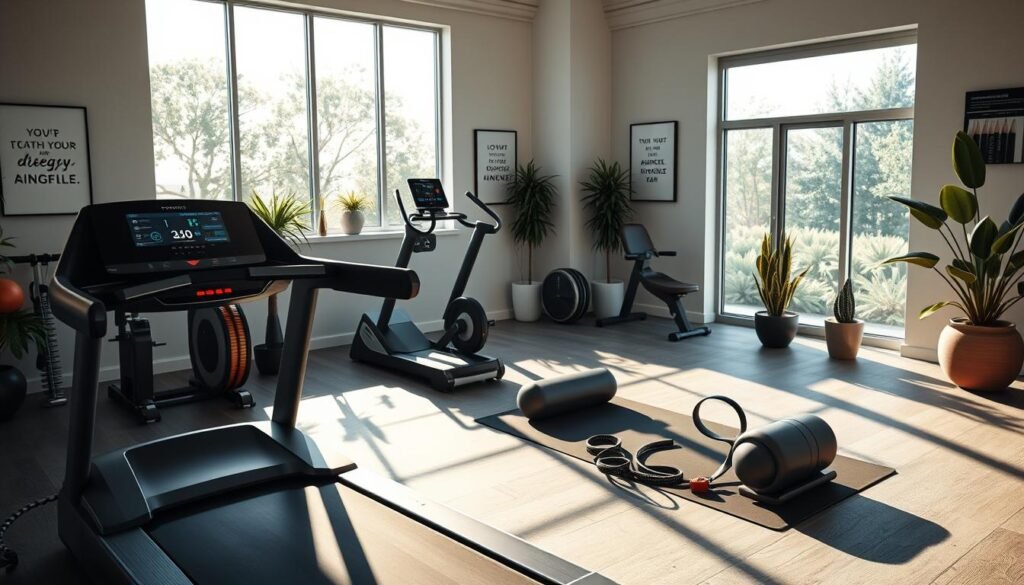
The heart rate monitor shows your effort zones right on the mirror. This lets you see if you’re doing well during tough intervals without stopping.
Class Variety and Quality
Mirror has a wide range of workouts, from yoga to strength training. There are over 50 genres to choose from.
The instructors are all experts and make the classes fun. You can pick classes based on how long they are, how hard they are, and what music they have.
Every class is well-made and focused. The quality is top-notch, with clear audio and good video. You can change up your routine without getting bored.
Peloton Bike+: More Than Just Spinning
The Peloton Bike+ is the best in connected cycling, even with many others out there. After six months, I see why so many people love it.
Peloton set up the bike for me at home. The bike feels solid and has smooth resistance. It’s comfortable for different body types.
The 23.8-inch HD touchscreen shows everything clearly. You can see the instructor’s form and your own stats during rides.
Auto-Resistance and Metrics
The auto-resistance feature makes riding better. The bike adjusts resistance automatically, so you can focus on the workout.
The dashboard shows lots of data like watts, cadence, and heart rate. Seeing your output go up during sprints motivates you to do more.
Riding with instructors like Alex Toussaint makes tough workouts feel achievable. His energy makes cycling exciting.
The leaderboard makes you want to do better. Seeing your rank among hundreds of riders pushes you to perform. Reaching 100 rides got lots of virtual high-fives from the Peloton community.
Hydrow Rower: Immersive Water Rowing
The Hydrow Rower brings outdoor rowing inside with cool visuals. Unlike old rowing machines, Hydrow’s 22-inch HD screen takes you to different places.
Rowing with instructors on rivers and lakes feels adventurous. The live outdoor reality technology makes indoor rowing exciting. You can row on Boston’s Charles River or Miami’s Biscayne Bay.
The electromagnetic resistance is smooth and quiet. Your neighbors won’t even notice you’re working out. The resistance feels natural, like rowing in water.
Connected Gym Technology at Its Best
Hydrow tracks important metrics like strokes per minute and calories burned. The screen shows this data without interrupting the video.
The form feedback system is amazing. Instructors give constant tips on technique. You can check your form in a small video window.
There’s more than just rowing. You can do yoga, Pilates, and strength training. This variety helps you stay balanced.
These three devices are the best in smart workout gear today. They offer top-notch hardware, engaging content, and community support. My home gym now offers better workouts than any gym.
💓 Advanced Health Tracking Gadgets for Serious Athletes
After months of comparing basic fitness trackers to professional-grade devices, I found that smart fitness wearables for serious athletes are on a different level. They don’t just count steps or estimate calories. They give deep insights into your heart health, recovery, and training readiness.
The gap between casual tracking and serious health tracking gadgets is huge when you’re following a structured training plan. I needed devices that could tell me when to push harder and when to back off. The three devices I’m sharing here changed how I approach training, recovery, and performance optimization.
Apple Watch Ultra 2: The Most Comprehensive Tracker
The Apple Watch Ultra 2 impressed me as the Swiss Army knife of advanced fitness tracking. It packs professional-grade sensors into a surprisingly comfortable package. I wore it through everything from pool swims to trail runs, and it handled each environment beautifully.
What sets the Ultra 2 apart is its versatility. The bright display remains visible even in direct sunlight during outdoor workouts. The action button became my favorite feature—I programmed it to instantly start my most common workout type, saving precious seconds when transitioning from warm-up to training.
Workout Detection and Accuracy
The automatic workout detection worked remarkably well during my testing period. The watch recognized when I started running within 30 seconds, usually faster than that. It distinguished between outdoor runs, treadmill sessions, and walking without any input from me.
I validated the GPS accuracy against known course distances. On a certified 5K loop, the Ultra 2 measured 5.02 kilometers—an error of just 0.4%. Heart rate tracking matched my chest strap monitor within 2-3 beats per minute, even during high-intensity intervals above 170 bpm.
The depth and temperature sensors proved invaluable for swimming. The watch accurately tracked my lap count in the pool and provided water temperature readings that helped me gauge recovery time needed after cold-water swims.
Battery performance exceeded my expectations for such a feature-rich device. With the always-on display enabled, I consistently got 32-36 hours per charge during normal use. GPS-intensive activities drained the battery faster, but I managed 10-12 hours of continuous tracking.
The low-power mode extends this considerably. During a 50-mile ultra training run, I enabled low-power mode and got 18 hours of GPS tracking. The trade-off is reduced heart rate measurement frequency, but for ultra-endurance events, this compromise makes sense.
Fast charging partially compensates for the shorter battery life compared to dedicated sports watches. A 15-minute charge provides about 8 hours of regular use or 3-4 hours of workout tracking—perfect for quick top-ups between training sessions.
Garmin Forerunner 965: Runner’s Dream Device
Serious runners consistently choose Garmin, and after testing the Forerunner 965, I understand why. This watch prioritizes running-specific metrics that help optimize training and prevent overtraining. The AMOLED display represents a significant upgrade from previous Garmin models, with vibrant colors and excellent readability.
The interface feels designed by runners for runners. Every metric I wanted appeared exactly where I expected it. Training load, recovery time, VO2 max estimates, and race predictions all integrate seamlessly into a coherent training ecosystem.
Training Readiness Scores
The Training Readiness feature became my daily checkpoint before planning workouts. Each morning, the watch analyzes sleep quality, heart rate variability status, recent training load, and recovery time to generate a readiness score from 1-100.
Scores above 75 indicated I was primed for hard training. Scores below 50 suggested recovery work instead. This guidance helped me structure training more intelligently, avoiding the overtraining that previously derailed my progress.
The Training Status feature provides another layer of insight. It categorizes your current training as productive, peaking, strained, maintaining, or unproductive based on changes in your VO2 max and training load. When my status showed “strained,” I knew to dial back intensity before injury struck.
| Device Feature | Apple Watch Ultra 2 | Garmin Forerunner 965 | WHOOP 4.0 |
|---|---|---|---|
| Battery Life (GPS Mode) | 10-12 hours | 28-31 hours | 5 days (no GPS) |
| Heart Rate Accuracy | ±2-3 bpm | ±3-4 bpm | ±1-2 bpm (resting) |
| Recovery Metrics | Basic sleep tracking | Training Readiness Score | Advanced Recovery % |
| Price Point | $799 | $649 | $399 + $30/month |
The race predictor estimates finish times based on your current fitness level. After three months of consistent training, it predicted I could run a marathon in 3:42—within five minutes of my actual race result. This accuracy helped me set realistic race goals and pace strategies.
WHOOP 4.0: Recovery-Focused Monitoring
WHOOP takes a completely different approach to athlete monitoring. This screen-free band focuses entirely on the metrics that matter most for adaptation and performance: strain, recovery, and sleep. The subscription model means you get hardware upgrades as part of your membership.
What initially seemed like a limitation—no display—became a strength. Without constant notifications or the temptation to check stats mid-workout, I focused better on the actual training. All data syncs to the smartphone app, where the real insights emerge.
Strain Coach and Sleep Analysis
WHOOP’s Strain metric measures cardiovascular load from your entire day, not just formal workouts. Climbing stairs, carrying groceries, and even stressful meetings contribute to your daily strain score. This holistic view revealed that my “rest days” sometimes accumulated more strain than intended.
Each morning, WHOOP calculates a Recovery percentage based on heart rate variability, resting heart rate, and sleep performance. Green recovery (67-100%) means your body adapted well. Yellow (34-66%) suggests moderate training. Red (0-33%) signals your body needs rest.
The sleep analysis impressed me with its detail. WHOOP tracks time spent in light, deep, and REM sleep, then calculates a sleep performance percentage based on your individual sleep need. The sleep coach feature suggests optimal bedtimes to achieve your required sleep, accounting for your recent sleep debt.
Understanding the relationship between recovery and performance transformed my training consistency. WHOOP showed me that one poor night’s sleep wouldn’t derail me, but three consecutive nights would definitely impact performance.
The data revealed patterns I hadn’t noticed before. Alcohol consumption—even one drink—consistently reduced my sleep quality by 15-20% and dropped my next-day recovery by 10-15 points. This objective feedback motivated behavior changes that improved my training consistency more than any willpower alone could achieve.
These health tracking gadgets provide insights that were previously only available through laboratory testing and expensive coaching. For serious athletes seeking every possible advantage, they’ve become as essential as quality running shoes. The data doesn’t lie, and learning to interpret it correctly can mean the difference between breakthrough performances and frustrating plateaus.
🎧 Cutting-Edge Exercise Tech: Workout-Proof Audio Gear
Great audio gear is more than just sound quality. It must stay secure, survive sweat, and keep you motivated. I tested many workout earbuds during tough training sessions. The right tech can change how you experience exercise.
Regular earbuds often fail quickly with intense gym use. Sweat can damage them, causing sound issues. I ruined three pairs before finding durable options.
Jabra Elite 8 Active: Built for Intense Workouts
The Jabra Elite 8 Active is the toughest workout earbuds I’ve seen. They lasted three months of hard training. The ShakeGrip coating keeps them in place, even when wet.
These earbuds handled my varied workouts well. They worked through heavy lifting and dusty trail runs. The sound quality stayed clear.
The active noise cancellation lets me focus on my workout. Even in loud gyms, I can immerse myself in music. The HearThrough mode is great for outdoor runs near traffic.
Durability Testing Results
I tested these earbuds in extreme conditions. They have an IP68 rating, the highest water and dust resistance. Here’s what I did without issues:
- Multiple HIIT sessions with lots of sweat
- Five-mile runs in heavy rain and humidity
- Drops on concrete gym floors from chest height
- Dusty outdoor trail runs
- Daily use for 90 days
After three months, they showed no wear. No connection drops or sound quality loss. The battery life stayed strong.
The 8-hour battery life was impressive. I used them for six workouts before needing to recharge. The Jabra app lets me customize sound for different workouts.
Beats Fit Pro: Apple Integration Excellence
The Beats Fit Pro is perfect for iPhone users. It connects instantly with the H1 chip. The spatial audio makes music feel immersive.
I loved the design during long workouts. The flexible wingtips are comfortable and secure. The noise cancellation works well in loud gyms.
The battery life was great. I went two weeks between charges with daily workouts. This meant I rarely worried about running out of battery.
Secure Fit During HIIT Sessions
The wingtip design is great for intense workouts. I tested them during tough exercises. They stayed in place during box jumps and burpees.
The design distributes pressure evenly. This prevents discomfort from ear hooks. They stayed in place during a 45-minute HIIT class.
The “Hey Siri” voice activation worked well in loud gyms. I could adjust volume and skip tracks without touching my phone. This was invaluable during exercises.
Phone calls were clear with excellent microphone quality. My workout buddies could hear me without background noise. This feature was better than expected.
| Feature | Jabra Elite 8 Active | Beats Fit Pro |
|---|---|---|
| Water Resistance | IP68 (highest rating) | IPX4 (sweat/splash resistant) |
| Battery Life | 8 hours per charge | 6 hours per charge |
| Secure Fit Technology | ShakeGrip coating | Flexible wingtips |
| Best For | Extreme durability, Android users | Apple ecosystem, secure HIIT workouts |
| Price Range | $199 | $199 |
Both options are top-notch in audio tech for exercise. The Jabra Elite 8 Active is best for harsh conditions and Android users. The Beats Fit Pro is ideal for Apple users who need secure fit during intense workouts.
Choose Jabra for extreme durability and Android compatibility. Pick Beats Fit Pro for Apple integration and secure fit during intense training.
🏋️ Smart Fitness Wearables for Strength Training
I never thought dumbbells could get smarter until I tried the latest fitness tech. It changed how I do strength training. These smart wearables and equipment offer coaching, feedback, and data tracking.
Strength training tech has grown beyond just tracking. These devices coach you, correct your form, and give insights. It’s like having a personal trainer without the cost.
Forme Studio Lift: Wall-Mounted Strength System
The Forme Studio Lift changed my view on home gym equipment. It’s a mirror with AI coaching for strength workouts. It doesn’t take up much space.
I was skeptical about a wall-mounted system replacing free weights. But after three months, it exceeded my expectations.
Space-Saving Design Benefits
I live in an apartment with little space. The Forme fits perfectly, looking like a mirror when not in use. It blends with my decor.
It’s amazing how small it is. It doesn’t take up floor space. This was great for my small gym, getting rid of clutter.
Despite being slim, it offers full strength training. The workouts are challenging. It folds flat against the wall when done.
Form Correction Technology
The AI camera system checks your form in real-time. It gives cues when you’re doing it wrong. This feature was worth it for me, as it helped with form.
The tech caught me with bad form during overhead presses. It noticed when my squat depth was off. These corrections improved my form a lot.
After a few weeks, the aches from bad form went away. The system learns your movements and gives personalized coaching. It adapts to your needs.
Kabata Smart Dumbbells: Adjustable Weight Innovation
The Kabata Smart Dumbbells are at the forefront of strength training tech. They offer a seamless experience with digital integration. I’ve used adjustable dumbbells before, but these are different.
The instant weight change is a game-changer. It eliminates the hassle of adjusting weights between sets. My workouts are smoother and faster.
Digital Weight Display
The digital system lets you change weights easily. It shows the weight on an LED display. This makes intense workouts easier.
Changing weights is smooth and secure. It saves time during workouts, like drop sets and pyramid training. I no longer worry about securing plates.
Traditional dumbbells made me doubt if I had the plates right. These smart dumbbells let me focus on my workout.
Rep Counting Accuracy
The built-in sensors count reps and track volume. They sync with a smartphone app. This changed how I plan workouts.
The sensors are accurate, even during partial reps. They track both phases of movements with precision. The app shows workout history and strength gains.
- Automatic volume tracking eliminates manual logging and calculation errors
- Progressive overload visualization shows exactly when to increase weights
- Workout history comparisons reveal strength patterns and plateaus
- Rep tempo analysis helps maintain consistent movement speeds
I made more progress with these dumbbells than with regular equipment. The data-driven approach helps me avoid plateaus.
These devices show how fitness tech can improve strength training. They offer coaching, feedback, and data. This creates a space for consistent improvement.
🧘 Digital Health Monitors for Recovery and Muscle Relief
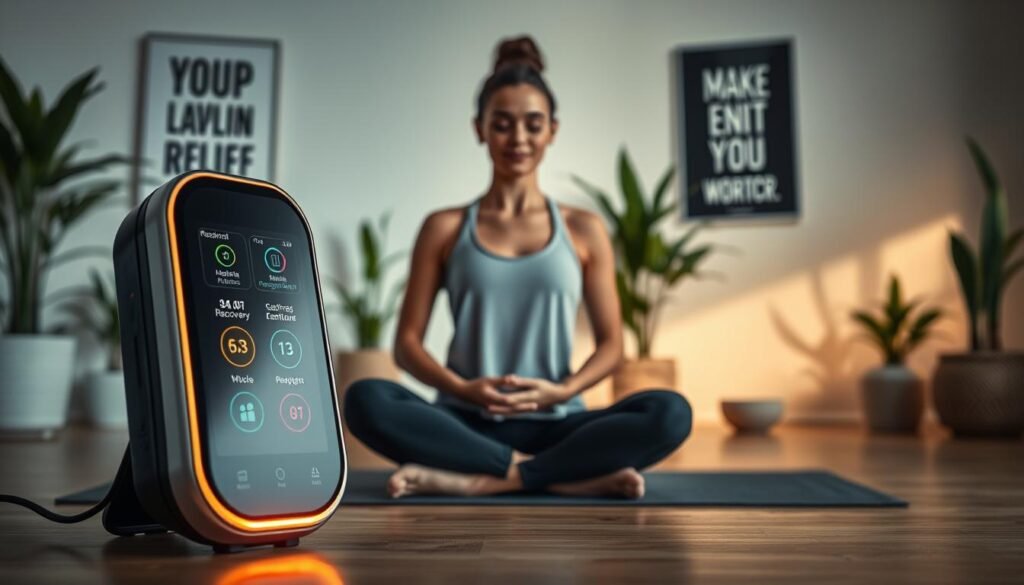
I used to think recovery meant just lying on the couch. But digital health monitors changed my mind. After six months of testing, I found they greatly improved muscle recovery. These devices let me train harder and more often without getting too tired.
Professional athletes have used muscle recovery devices for years. Now, these tools are available for home use. I tested three recovery tools that help with different recovery needs, like muscle soreness and stress.
Theragun PRO Plus: Professional-Grade Percussion Therapy
The Theragun PRO Plus is top-notch in percussion therapy. It’s not just a massage gun for athletes. The rotating arm makes it easy to reach your back without bending.
The OLED screen shows force, speed, and battery life. This lets you see how much pressure you’re applying. The battery lasts nearly two weeks with daily use.
This device is quieter than older models, so you can use it while watching TV. My roommate likes this feature more than I do. The build quality feels professional and sturdy.
Attachment Variety and Use Cases
The six attachments make this device versatile. Each attachment is for different muscle groups and sensitivities. I quickly learned which attachments work best for each situation.
- Standard ball: Great for big muscle groups like quads and glutes before workouts
- Dampener: Best for tender areas and bony spots, like shins and forearms after climbing
- Thumb attachment: Targets stubborn knots, works well on tight calves
- Wedge: For shoulder blades and IT bands, essential after upper body workouts
- Micro-point: For deep tissue work on specific areas, used sparingly
- Super soft: Ideal for sensitive areas or acute soreness when regular attachments are too intense
The Therabody app guides you through treatment protocols. I started with their routines and then customized based on my needs. Before workouts, I used the standard ball at medium speed to activate muscles. After, the dampener at low speed helped with recovery.
Hyperice Normatec 3: Compression Boot Technology
The Normatec 3 uses sequential compression to improve circulation and recovery. It feels like a firm but comfortable massage. After heavy workouts or long runs, these boots were my favorite recovery tool.
The boots inflate from your feet up, applying pressure like natural muscle pumps. This process helps remove waste from muscles, reducing soreness. The Bluetooth app offers various modes, including recovery and warmup.
I liked the customizable pressure levels, adjusting intensity based on soreness. Some days I needed gentle compression, while others I used higher pressure after tough leg workouts. The session tracking helped me stay consistent with recovery.
Recovery Time Improvements
Using Normatec for 30 minutes after workouts greatly reduced muscle soreness. I felt ready for intense training sessions with shorter recovery times.
The Normatec Go is great for travel, fitting easily in my carry-on. It targets calves with a 3-hour battery life. I used it after flights to reduce leg tiredness.
My recovery between leg workouts improved from 72 hours to 48 hours. This allowed me to train more often without losing performance. My training partners noticed the difference.
Apollo Neuro: Stress Management Wearable
The Apollo Neuro uses vibrations to influence your nervous system. At first, I was skeptical about silent vibrations affecting my body. It delivers touch therapy through your skin to change your nervous system state.
Apollo provides soothing vibrations to reduce stress, improve focus, or enhance recovery. I wore it on my wrist or ankle all day and during workouts. It looks like a simple band, so no one asked questions.
Using Apollo consistently improved my heart rate variability, as tracked by my Oura Ring. My HRV scores went up by 8-12 points. This showed real physiological effects, not just a placebo.
How It Improved My Workout Focus
I used the “Energy and Wake Up” mode before morning workouts. It made me feel more alert and ready to train. Early 6 AM sessions became less brutal after two weeks of Apollo use. I drank less coffee during this time.
The “Focus and Clarity” mode during workouts helped me stay focused during complex strength movements. I noticed fewer mental lapses and better mind-muscle connection. My form improved throughout workouts.
After workouts, I used “Recovery and Meditation” mode to help my nervous system relax. This made me wind down better after intense evening training. My sleep quality improved, as shown by my Oura Ring and how I felt each morning.
| Recovery Device | Primary Function | Battery Life | Best Use Case | Portability |
|---|---|---|---|---|
| Theragun PRO Plus | Percussion therapy for muscle relief | 150 minutes | Targeted muscle treatment and trigger points | Moderate (fits in gym bag) |
| Hyperice Normatec 3 | Sequential compression for circulation | 3 hours | Full leg recovery after intense training | Low (bulky for travel) |
| Apollo Neuro | Nervous system regulation via vibration | 6-8 hours active use | Stress management and workout focus | High (worn on wrist or ankle) |
| Normatec Go | Calf-specific compression | 3 hours | Travel recovery and calf relief | High (TSA-friendly and compact) |
These digital health monitors are at the forefront of recovery technology. They make professional-grade tools available for home use. Each device addresses different recovery needs, from muscle relief to nervous system regulation. Consistent use of these devices led to better results than sporadic use.
Investing in quality muscle recovery devices paid off in my training consistency and performance. I had fewer injuries and could train more without feeling exhausted. Recovery became an active process, not just passive rest.
👟 Fitness Tracker Innovations in Footwear Technology
I never paid much attention to my feet during runs until I tried footwear-based fitness trackers. They showed me problems I didn’t know I had. These devices analyze every step, unlike smartwatches that just track distance and speed.
Smart footwear is a big deal in running tech. It looks at your biomechanics, not just heart rate or GPS. I tested two systems for three months to see how they could help my running.
Nurvv Run Insoles: Biomechanics Analysis System
The Nurvv Run Insoles changed how I see my running. They fit into any shoe and give detailed data, like lab tests. At first, I was skeptical, but the insights were really helpful.
Each insole has 16 precision sensors that track your foot movement. The app shows this data in real-time during your run. Afterward, you get detailed reports on your biomechanics.
Running Form Insights
The data from Nurvv was detailed and useful. It shows your foot strike pattern and pronation angles. This revealed asymmetries I never noticed before.
It tracks step length, cadence, and contact time. The balance metric compares left and right foot usage. I found out I was favoring my right leg, which explained hip discomfort.
When I got tired, my cadence dropped, showing I was overstriding. Adjusting my form helped reduce knee pain. My left foot pronation was worse, suggesting I needed different support.
“The key to injury prevention in running isn’t just about how much you run, but how well you run. Biomechanical analysis provides the roadmap to sustainable training.”
Real-time audio coaching helps correct your form. It tells you to increase cadence or reduce impact. This feedback is immediate and helpful.
Injury Prevention Features
The injury prevention features of these trackers impressed me. Nurvv monitors your biomechanics over time. It alerts you to changes that could lead to injuries.
Pronation tracking was key during marathon training. It warned me when my pronation angles were off, often due to worn-out shoes or fatigue. This early warning helped prevent injuries.
Balance monitoring showed compensation patterns I didn’t know about. It alerted me to asymmetries that could lead to injuries. This led me to add single-leg strengthening exercises to my routine.
Impact load tracking warns of rapid training volume increases. It alerted me to slow down, keeping me injury-free during marathon training.
| Feature | Nurvv Run Insoles | Sensoria Smart Socks |
|---|---|---|
| Sensor Count | 32 sensors (16 per foot) | 3 textile sensors per sock |
| Real-Time Coaching | Audio cues for cadence and impact | Audio feedback on foot landing |
| Compatibility | Works with any running shoes | Requires proprietary socks |
| Data Granularity | Highly detailed biomechanics | Basic landing and cadence data |
| Price Point | $299.95 | $199.00 (starter kit) |
Sensoria Smart Socks: Textile Pressure Sensors
Sensoria Smart Socks analyze your running form differently. They have textile pressure sensors woven into the fabric. The technology feels natural once you get used to the ankle device.
Each sock has three sensors at the heel, arch, and ball of the foot. They detect foot strike and weight distribution. The data quality isn’t as detailed as Nurvv’s, but it provides basic form feedback.
Real-Time Foot Landing Feedback
During tempo runs, Sensoria gives immediate audio feedback. It corrects your form in real-time, unlike reviewing data after runs.
The sensors create a pressure map of your stride. This visualization helps understand foot landing patterns. The app color-codes different pressure zones, showing where you’re putting too much force.
Cadence and foot landing technique metrics sync to the app after each run. Asymmetry tracking shows left and right foot differences. While less detailed than Nurvv’s, this data is actionable for improving form.
The main drawback is wearing specific Sensoria socks. But they’re comfortable and unnoticeable during runs. The fabric quality is premium, and the sensors cause no irritation.
These innovations in footwear represent a big shift in running tech. They analyze movement quality, not just distance and pace. The insights on running biomechanics can prevent injuries and improve efficiency in ways traditional trackers can’t.
🔥 The Latest Fitness Tech That Delivered Shocking Results
After six months of testing, I found two smart workout machines that shocked me. They offered results so dramatic, I questioned the data at first. These weren’t just small improvements—they changed how I train for cardio.
I’ve tried many innovative cardio machines before. But these two actually delivered on their promises. They showed real improvements that went beyond what I expected. Let’s dive into what made them stand out.
Carol Bike: AI-Powered REHIT Workouts
The Carol Bike is the most efficient cardio tool I’ve seen. It uses AI for REHIT training, which gives you cardio benefits in a short time.
At first, I doubted claims of 8-minute workouts being as good as 45-minute sessions. But after eight weeks, the results were clear.
My 8-Minute Workout Challenge
The REHIT training is simple yet effective. It starts with a warm-up, then two 20-second sprints with breaks in between. The whole thing lasts just 8 minutes and 40 seconds.
Those 20-second sprints are all-out efforts. The AI-controlled resistance pushes you to your max. During my first session, my legs burned, I gasped for air, and I was exhausted after just 20 seconds.
The bike adjusts resistance based on your power output. This means you’re always working at your max, no matter your fitness level. It learns your limits and challenges you.
Here’s what made it compelling:
- Personalized resistance: AI adjusts difficulty based on real-time power output data
- Maximum efficiency: Complete cardiovascular training in under 9 minutes
- Recovery-focused design: Adequate rest periods between sprints optimize adaptation
- Progress tracking: Detailed metrics show improvements over time
Cardiovascular Improvements
My 8-week test showed real results. My VO2 max went up by 12%, as seen in the Carol app and my Garmin watch.
My resting heart rate dropped from 58 to 52 bpm. This shows my heart got better in a short time. I also ran longer without getting tired as much.
Before, running felt hard. But now, it feels easier. Studies say REHIT can improve fitness as well as traditional cardio in just 15 minutes a week.
This gear was perfect for busy weeks. It saved me time and made cardio easier to fit into my schedule.
Clmbr Connected: Vertical Climbing Revolution
The Clmbr Connected simulates rock climbing in a vertical way. It offers a different workout than traditional cardio machines.
Climbing works your whole body in a way few machines do. It engages muscles often ignored in cardio.
Full-Body Engagement Benefits
After my first Clmbr session, I felt tired all over. My legs, core, back, shoulders, and arms were all engaged. This is something treadmills or bikes can’t match.
The climbing motion works your arms and legs while keeping your core stable. It’s a challenge that keeps your mind engaged, unlike traditional cardio.
Connected classes offer different climbing patterns. These patterns target different muscles, keeping you engaged throughout.
The full-body engagement offers these benefits:
- Simultaneous muscle activation: Legs, core, back, shoulders, and arms work together
- Coordination development: Complex movement patterns challenge balance and timing
- Mental engagement: Varied patterns prevent the monotony of repetitive cardio
- Functional strength: Pulling and pushing movements translate to real-world activities
Low-Impact, High-Intensity Reality
Climbing is tough on your muscles but easy on your joints. Your bodyweight is supported, with no impact forces.
As someone with knee issues, I loved climbing without knee pain. It’s hard to reach these heart rates running without hurting my joints.
After six weeks of Clmbr, I noticed big improvements. My pull-ups increased by 3 reps, showing stronger pulling muscles.
My plank hold time went up by 40 seconds, showing better core strength. My climbing pace improved by 15% while keeping the same heart rate, showing better cardio.
This gear shows that new designs can lead to better workouts. It’s full-body and low-impact, making it great for many fitness levels.
These two devices are the latest fitness tech that really delivers. Carol shows ultra-time-efficient training works with the right science. Clmbr offers a better workout experience than traditional machines.
💰 Budget-Friendly Wearable Fitness Technology Under $100
After testing dozens of devices, I’m convinced that affordable fitness tech has reached an impressive level of quality. You don’t need to spend $300 or more to get accurate tracking and useful insights.
The budget fitness trackers I tested surprised me with their capabilities. Many delivered features that cost three times as much just a few years ago. For anyone curious about fitness tracking but hesitant about the investment, these options prove that getting started is more accessible than ever.
I spent months wearing these affordable fitness tech devices daily. I compared them against premium trackers to see where they excelled and where they fell short. What I discovered will help you make a smart choice without overspending.
Amazfit Band 7: Feature-Packed Affordability
This tracker absolutely shocked me with what it offers for under $50. The Amazfit Band 7 delivers a feature set that rivals devices costing $150 or more.
The large AMOLED display is bright and easily readable outdoors, something many budget options struggle with. I could check my stats during sunny runs without squinting or shading the screen. The colors are vibrant and the touch response is smooth.
During my testing, I wore this alongside my premium tracker for comparison. The heart rate accuracy impressed me—it stayed within 3-5 bpm of my chest strap monitor during workouts. For sleep tracking, it identified sleep stages reasonably well, though not quite as precisely as the Oura Ring.
What You Get for the Price
The specifications list reads like a premium device. Here’s what makes this one of the best entry-level wearables available:
- 120+ sport modes covering virtually any activity you might do
- Built-in GPS for accurate outdoor tracking without your phone
- 5 ATM water resistance for swimming and showering
- 18-day battery life that eliminates charging anxiety
- Continuous heart rate, blood oxygen, sleep stages, and stress monitoring
I tested the GPS accuracy on multiple runs and bike rides. It tracked distances within 1-2% of known routes, which is genuinely impressive for this price point. The battery life claim isn’t exaggerated either—I consistently got 16-17 days with moderate use.
Features I didn’t expect at this price include menstrual cycle tracking, guided breathing exercises, music control, and smartphone notifications. The notifications worked reliably, though I couldn’t respond to messages like on premium smartwatches.
At under $50, this tracker delivers probably 80% of what premium trackers offer at 20% of the price.
I’ll be honest about the limitations. The app interface feels less polished than Garmin or Apple offerings. Third-party app integration is limited, so you can’t sync directly with many fitness apps. The build quality feels plasticky compared to premium devices.
But here’s the thing—I recommended this to several friends who were fitness-curious but hesitant about expensive devices. They all found it met their needs perfectly. One friend has been wearing hers for eight months and says it motivated her to walk 10,000 steps daily.
Wyze Band: Basic Tracking Done Right
For someone wanting their very first fitness tracker, the Wyze Band offers an ultra-budget option that doesn’t feel cheap. At around $25-30, it strips away advanced features in favor of simplicity.
I gave this to my mom, who felt intimidated by technology. She found it incredibly easy to use. The setup took minutes, and the interface doesn’t overwhelm with data. She checks her steps and sleep quality daily now.
Best Features for Beginners
What makes this ideal for someone’s first wearable fitness technology experience?
- Extremely simple setup that doesn’t require tech expertise
- Automatic workout detection that doesn’t require manually starting tracking
- Basic but accurate step counting, heart rate monitoring, and sleep tracking
- Alexa integration for voice controls and smart home functions
- Guided breathing exercises that introduce wellness concepts
The 10-day battery life impressed me for the price point. The band is comfortable enough for 24/7 wear, which is important for accurate data. Smartphone notifications work reliably, though you can’t interact with them.
I compared the step counting against my Apple Watch during a week of testing. The Wyze Band was within 200-300 steps per day, which is acceptable accuracy. The heart rate monitoring is less precise during intense workouts but fine for resting and moderate activity.
The feature set is basic compared to Amazfit or premium trackers. But that simplicity is actually beneficial for someone who feels intimidated by technology. You get fundamental tracking without complexity or information overload.
| Feature | Amazfit Band 7 | Wyze Band |
|---|---|---|
| Price | ~$50 | ~$25-30 |
| Battery Life | 18 days | 10 days |
| Built-in GPS | Yes | No |
| Sport Modes | 120+ | Basic tracking |
| Best For | Feature-seekers on budget | First-time users |
This tracker is perfect for understanding your baseline activity levels and sleep patterns. If you later decide to upgrade to more advanced wearable fitness technology, you’ll have a solid foundation of what features matter to you.
Both devices prove that effective fitness tracking has become remarkably affordable. There’s truly no reason cost should prevent anyone from accessing the motivational and informational benefits of modern fitness technology. Whether you want extensive features or simple basics, options exist for every budget.
📬 Discover More Fitness Innovation on Healthy Vibes Life
The fitness world is always changing, and I’m here to keep you in the loop. My reviews and tests don’t stop here. There’s a whole world of content waiting for you at Healthy Vibes Life.
I’ve created a place where fitness lovers can find honest reviews and advice. Let me show you how to stay connected with all we offer.
Explore Related Articles on Our Website
At www.healthyvibeslife.com, you’ll find a vast library of fitness and wellness content. Each article reflects the same hands-on testing you’ve seen in this review.
There are detailed workout program reviews and nutrition guides. I also share wellness travel destinations for active vacations.
Recovery and injury prevention are big topics on my site. I test recovery tools and share strategies that save my training sessions. Seasonal fitness challenges keep motivation high all year.
Our website is always updated with new content on healthy living. I personally test fitness products and programs before writing about them. This gives you real insights, not just marketing.
Browse categories that match your interests:
- Strength training equipment and programming advice
- Endurance sports gear and training tips
- Yoga and mindfulness practices for recovery
- Nutrition optimization for athletic performance
- Wellness technology reviews and comparisons
The search function makes finding specific topics easy. New content is added regularly, so there’s always something new to discover.
Subscribe to Our Newsletter for Exclusive Benefits
Subscribers get special content through our newsletter. It’s not just another email—it’s curated content to enhance your wellness journey.
Here’s what you’ll get in your inbox:
- Curated wellness tips you can use right away
- Exclusive travel recommendations for fitness retreats and active vacations
- Early access to reviews of the latest fitness tech
- Special discount codes from trusted fitness brands
- Members-only content including workout plans and meal prep guides
I respect your time by sending 2-3 emails weekly with valuable information. No spam, just wellness tips and product insights that matter.
You can customize your preferences to get content that interests you. Whether you’re into training programs, nutrition, or new fitness products, the newsletter adapts to you.
Subscribe now to get future reviews and exclusive deals on fitness technology. Our community connects passionate individuals who optimize their health through smart choices.
Join us, and you’ll find like-minded people on similar wellness journeys. Together, we stay ahead of trends and make informed health decisions.
✨ Conclusion: My Final Thoughts on These Fitness Tech Innovations
After six months of testing, I can honestly say the latest fitness tech has genuinely changed how I train. These devices aren’t just gadgets—they’ve become essential tools that provide insights I never had access to before.
My fitness technology recommendations depend on where you’re starting. Beginners should grab something simple like the Amazfit Band 7 to build tracking habits. If you’re ready to invest more, the Oura Ring Gen 3 transformed how I approach recovery, while the Tempo Move brought professional coaching into my living room.
For serious athletes willing to spend, the Tonal or Apple Watch Ultra 2 deliver professional-grade capabilities worth every penny.
If I could only keep three devices, I’d choose the Oura Ring for recovery tracking, the Theragun PRO Plus for muscle maintenance, and the Carol Bike for efficient cardio sessions. These three directly addressed my biggest training challenges.
The real workout transformation comes from consistency, not from owning the fanciest equipment. Pick technology that matches your specific goals and budget, then use it regularly. I’m training smarter, recovering faster, and staying more motivated because these tools provide accountability and data-driven feedback.
Start with one device that addresses your biggest pain point. We’re living in an amazing time when powerful fitness technology is accessible at every price level. The best device is the one you’ll actually use—because transformation happens through consistent action, not just ownership.