
Could the secret to feeling lighter, sharper, and more energized be waiting in a jar on your kitchen counter?
I used to grab chips and soda every afternoon. My stomach felt heavy, and my energy crashed by 3 p.m.
Then I replaced those snacks with a spoonful of kimchi, a glass of kefir, and a side of sauerkraut. Within weeks, my digestion improved. My energy stayed steady all day long.
That small change made me curious about gut bacteria and their real effects on the body.
This guide explains the science behind this age-old method, its gut value, and health benefits of fermented foods and recipes. I’ll share my top five probiotic-rich picks and the specific perks each one brings. You’ll also find creative ways to use them, recipes, a beginner-friendly DIY recipe, and tips to dodge common storage mistakes.
Think of this as a friendly conversation between two people who care about feeling good from the inside out.
Key Takeaways
- Swapping processed snacks for kimchi, kefir, and sauerkraut can noticeably improve digestion and energy.
- Small, consistent diet changes often show results within just a few weeks.
- This guide covers the science, top picks, meal ideas, and a beginner DIY recipe.
- Gut-friendly eating doesn’t require drastic changes, just smart daily swaps.
- Storage habits play a big role in keeping probiotic-rich foods fresh and effective.
- Understanding common mistakes can help you avoid wasted effort and spoiled batches.
1. What Are Fermented Foods and How Do They Work?
Friendly bacteria and yeast transform foods by consuming natural sugars, creating probiotics, tangy flavors, and longer shelf life. This ancient process turns cabbage, milk, and tea into nutritional powerhouses packed with live cultures. Each kimchi jar or kefir bottle becomes a tiny ecosystem filled with microbes that support my gut.
I explored the gut health fermentation benefits and learned fermentation is not a trendy health fad. Cultures worldwide have used fermentation for thousands of years, long before refrigerators existed.
The Science of Fermentation in Simple Terms
Here is the simple version, with no lab coat required. Good bacteria consume natural sugars in vegetables, releasing lactic acid and carbon dioxide.
That reaction causes sauerkraut’s sour taste and the fizzy bubbles in fermenting kimchi. Billions of live cultures form, turning plain vegetables into a living ecosystem.
- Bacteria consume the natural sugars present in the food
- Lactic acid builds up, creating that signature sour flavor
- Carbon dioxide forms, producing fizz and tiny bubbles
- Billions of live cultures multiply and thrive over time
Why Fermented Foods Differ From Fresh or Raw Foods
A fermented cucumber is more than a flavored fresh one. Fermentation creates a nutritionally different food.
Fermentation improves fermented vegetables nutrition by helping my body absorb certain vitamins and minerals. It also adds beneficial bacteria that raw vegetables do not carry.
Fermentation changes flavor and texture, making crisp, mild produce tangy, soft, and complex. I began seeing fermented foods as a genuine meal upgrade, not just a side dish.
2. Top 5 Fermented Foods: Health Benefits of Fermented Foods and Recipes to Try at Home
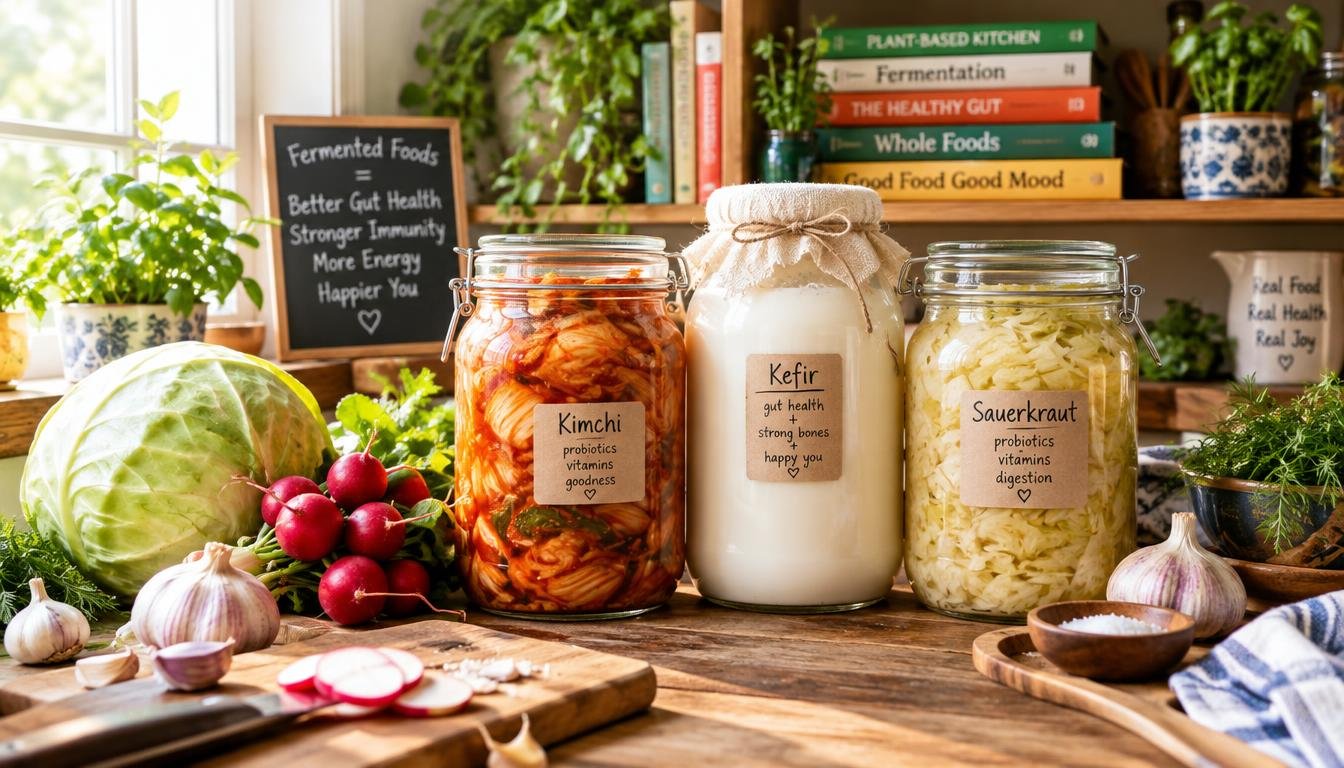
Walk into my kitchen on any given day, and you’ll find at least three jars fermenting on the counter. Each jar holds a different probiotic-rich fermented food that I love for specific reasons. Below, I share my top five picks and the exact health benefit behind each one.
Benefits mean little if the jar stays untouched in the fridge, so I’ll add a quick way to serve each food. Let’s start with the one that began my fermentation passion.
Kimchi: Spicy Probiotic Power From Korea
Kimchi forms when salted napa cabbage ferments with garlic, ginger, and chili flakes for several days. Billions of live cultures multiply inside the jar, while lactic acid and carbon dioxide build up. These changes create kimchi’s sour tang and fizzy bite.
Kimchi supports immune defense through vitamin C, beta-carotene, and active probiotic strains. I add a spoonful to fried rice after cooking. This keeps some live cultures intact and adds a spicy kick.
Kefir: The Tangy Drink That Boosts Digestion
Kefir is fermented milk with more beneficial bacteria strains than most yogurts. One bottle often contains over ten probiotic species. These microbes explain why kombucha and kefir health benefits get compared so often.
Fermentation breaks down much of the milk sugar before it reaches your gut, making lactose digestion easier. My go-to trick is blending plain kefir with frozen berries and honey for a tangy breakfast smoothie.
Sauerkraut: A Simple Cabbage With Big Benefits
Sauerkraut needs just two ingredients: shredded cabbage and salt. Natural bacteria convert cabbage sugars into lactic acid and carbon dioxide. This creates sharp sourness and gentle fizz when you open a fresh jar.
This humble dish packs serious vitamin C, often more than raw cabbage. Its live cultures also support regularity. I pile it on grilled sausages or stir it into a grain bowl for crunch and tang.
Kombucha: Fizzy Tea With Gut-Friendly Perks
Kombucha starts as sweetened black or green tea. A SCOBY (a symbiotic culture of bacteria and yeast) transforms it into a tangy, carbonated drink. Brewing creates organic acids and a small dose of probiotics.
These features help explain why kombucha and kefir health benefits often come up together in gut health conversations. Kombucha’s specific advantage is a satisfying soda replacement. It provides fizz and flavor without a sugar crash.
I keep a bottle chilled for afternoons when I want something bubbly without feeling sluggish an hour later.
Miso and Tempeh: Fermented Soy for Protein and Probiotics
Miso comes from fermented soybeans mixed with salt and koji. Tempeh forms when whole soybeans ferment into a firm, nutty cake. Both provide plant protein and probiotics, making them smart choices for people cutting back on meat.
The standout benefit is a combination of complete protein and B vitamins. Most fermented foods here do not offer these nutrients in the same amount. I stir miso into soup broth before serving, and I cube tempeh for a quick stir-fry with vegetables.
| Fermented Food | Standout Health Benefit | Easy Way to Enjoy It |
|---|---|---|
| Kimchi | Immune support from vitamin C and probiotics | Stir into fried rice |
| Kefir | Eases lactose digestion | Blend into a berry smoothie |
| Sauerkraut | High vitamin C plus regularity support | Top grilled sausages or grain bowls |
| Kombucha | Low-sugar soda alternative with antioxidants | Serve chilled as an afternoon drink |
| Miso/Tempeh | Plant protein paired with probiotics | Add to soup or stir-fry |
Each of these five foods brings a different benefit, from spicy kimchi to protein-packed tempeh. Choose one that fits your taste, and let your gut do the rest.
3. The Science Behind Gut Health and Fermentation
My stomach troubles did not disappear overnight. Learning about probiotics changed how I eat and improved my understanding of digestive health and fermented foods.
Your gut does more than digest food. Trillions of bacteria live there and affect your mood and immunity. Fermented foods feed this hidden ecosystem in ways fresh produce alone cannot match.
How Probiotics Rebuild Your Microbiome
When I eat kimchi or drink kefir, I add live bacterial strains to my digestive tract. These probiotics do more than pass through. They settle in, multiply, and crowd out less helpful microbes.
Probiotics alone are not the whole story. Good bacteria need good fuel to thrive, and fiber-rich fruits and vegetables provide that fuel. I now pair fermented snacks with apples, leafy greens, and oats.
- Fiber-rich vegetables feed beneficial bacteria directly
- A varied diet supports a more diverse microbiome
- Diversity in gut bacteria links to better overall health
As one wellness expert puts it:
Feed your gut well, and let your health flourish.
That simple idea stayed with me. I stopped viewing fermented foods as a stand-alone fix. Instead, I saw them as one piece of a bigger puzzle.
The Connection Between Fermented Foods and Immune Strength
Here is what surprised me: roughly 70 percent of your immune system, by some estimates, lives in your gut lining. This link makes gut health and immune system probiotics closely connected.
After I began eating fermented foods regularly, I noticed fewer minor colds each winter. I cannot promise the same results for everyone. Still, a well-fed, diverse microbiome may help your body identify and fight invaders more efficiently.
Easing Digestive Discomfort Naturally
Bloating once bothered me almost every day. I also dealt with irregularity, discomfort after meals, and a heavy feeling.
After a few weeks of regular kefir and sauerkraut, things changed. My digestion felt smoother, and bloating after meals began to fade.
Fermented foods support digestive health by supplying enzymes that help break down food. Combined with fiber, they create an environment where your gut can work without constant strain.
4. Creative Ways to Incorporate Fermented Foods Into Daily Meals
I do not change my whole diet to enjoy fermentation’s benefits. Instead, I make small swaps in meals I already enjoy. These changes make regular dishes gut-friendly without adding cooking time.
Over the years, I have found several homemade fermented food recipes that fit breakfast, lunch, dinner, and snack time. These recipes need no fancy ingredients or special skills. You need only a jar, a spoon, and some curiosity.
Breakfast Boosts: Kefir Smoothies and Yogurt Bowls
My mornings often start with a kefir smoothie. I blend it with a frozen banana, a handful of berries, and a spoonful of peanut butter.
Its tangy flavor balances the sweetness. I barely notice that I get probiotics before 8 a.m. On slower mornings, I make a yogurt bowl instead.
I top plain yogurt with granola, sliced fruit, and a drizzle of honey. It feels like dessert, yet it is one of the simplest homemade fermented food recipes I make often.
Lunch and Dinner Pairings With Kimchi and Sauerkraut
Kimchi is my favorite topping for rice bowls. I add it with a fried egg, sesame oil, and leftover grilled chicken.
The spice and crunch brighten a plain lunch. For dinner, I spoon sauerkraut beside grilled sausages or tuck it into a sandwich with mustard and turkey.
The sour bite cuts through rich flavors and adds texture without extra stove work.
Snacks and Drinks: Kombucha and Fermented Pickles
When I want something fizzy, I choose kombucha instead of soda. It satisfies the same craving but avoids the sugar crash after a can of cola.
For snacks, I choose fermented pickles. They are crunchy, salty, and easy to grab from the fridge.
These choices never feel like a sacrifice. They show how fermented foods can fit daily life, one bite or sip at a time.
5. Easy DIY Fermentation Recipe for Beginners
I remember opening my first jar of homemade sauerkraut, expecting trouble but finding something delicious instead.
If you’re new to lacto-fermentation recipes, this project is forgiving, inexpensive, and genuinely fun. I’ll show you what you need and how to make your first batch, step by step.
What You’ll Need to Get Started
You don’t need a basement full of crocks or fancy equipment to start fermenting at home. A few kitchen items or grocery store finds will do the trick.
- One medium head of green cabbage
- 1-2 tablespoons of non-iodized salt, like sea salt or kosher salt
- A clean, wide-mouth mason jar (a quart size works well)
- A fermentation weight or a small, clean glass to keep the cabbage submerged
- A sharp knife and a clean cutting board
Step-by-Step Lacto-Fermented Sauerkraut Recipe
This classic lacto-fermentation recipe turns plain cabbage into tangy, probiotic-rich sauerkraut in about a week. Patience matters more than precision here, so do not rush any step.
- Remove the outer leaves of the cabbage and set one aside for later use.
- Shred the remaining cabbage thinly using a knife or mandoline slicer.
- Place the shredded cabbage in a large bowl and sprinkle it evenly with salt.
- Massage the cabbage with your hands for 5 to 10 minutes until it releases its own liquid brine.
- Pack the cabbage tightly into your mason jar, pressing until the brine rises above the surface.
- Lay the reserved cabbage leaf on top, then place your fermentation weight over it to keep everything submerged.
- Cover the jar loosely and let it sit at room temperature, away from direct sunlight, for 5 to 10 days.
Tips for Fermentation Success the First Time
Your first fermentation recipe may not look perfect, and that is normal. A few simple signs can show whether your batch needs attention.
| What You Notice | What It Means | What To Do |
|---|---|---|
| Small bubbles rising | Active fermentation is happening | Keep fermenting as planned |
| Tangy, sour smell | Healthy lactic acid bacteria at work | Start taste-testing after day five |
| Thin white film on top | Harmless kahm yeast, not mold | Skim it off and continue fermenting |
| Fuzzy spots in pink, black, or green | Contamination has occurred | Discard the batch and start fresh |
Don’t let a small setback stop you from trying again. Most homemade lacto-fermentation recipes succeed on the first try when cabbage stays fully submerged and salt ratios remain consistent.
6. Store-Bought vs. Homemade Fermented Foods: Which Is Better?
My pantry reflects compromise. I buy some jars and brew others in my kitchen. Over time, I have learned when each choice works best.
Both paths can deliver real health benefits of fermented foods and recipes you’ll enjoy making or buying. The best choice depends on your budget, schedule, and desired control over the final flavor.
How to Spot Live Cultures on Store Labels
Not every jar on the shelf contains active probiotics. Many store-bought ferments are pasteurized for longer shelf life, killing the beneficial bacteria you pay for.
I always check the label for phrases like “contains live and active cultures” or “raw and unpasteurized.” If I do not see that wording, I assume the good bacteria did not survive processing.
Another trick: Refrigerated ferments near produce are more likely alive than shelf-stable versions near canned goods. Heat and long storage times threaten live cultures.
Comparing Cost, Convenience, and Taste
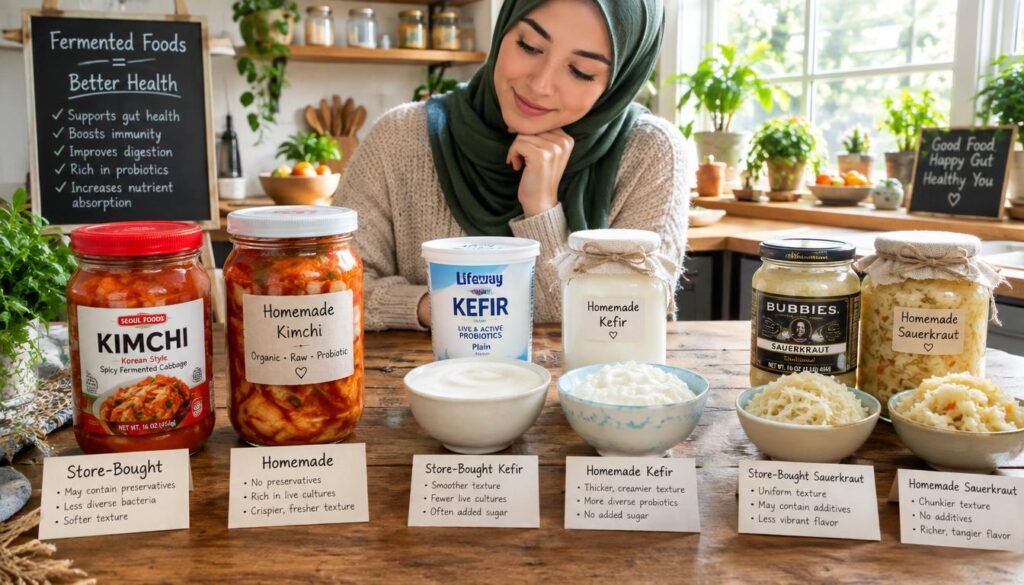
I track my spending and time for both approaches. Here’s how they compare side by side.
| Factor | Homemade | Store-Bought |
|---|---|---|
| Cost | Lower long-term; cabbage and salt cost pennies per batch | Higher per jar, especially for organic or small-batch brands |
| Convenience | Requires patience; days to weeks of waiting | Ready to eat immediately off the shelf |
| Taste Control | Fully customizable spice and tang levels | Fixed flavor profile set by the manufacturer |
| Probiotic Potency | Often higher if fermented properly at home | Varies widely; pasteurized products may have none |
When Making It Yourself Is Worth the Effort
I do not ferment everything at home, but some situations favor DIY. Here is when I choose my fermentation crock instead of the store.
- You want a specific flavor, like extra-garlicky kimchi or low-sodium sauerkraut.
- You’re feeding a family and need to stretch your grocery budget further.
- You care about maximum probiotic counts and want full control over fermentation time.
- You enjoy the hands-on process and find it relaxing, almost like a hobby.
During busy weeks, I grab a trusted store brand without guilt. Both choices can support a healthy gut when you choose wisely.
FAQs: Store-Bought vs. Homemade Fermented Foods
Is store-bought kimchi as healthy as homemade? It can be, if the label confirms live cultures and the product has not been pasteurized. Check the ingredient list for simple, recognizable items too.
How do I know if a product has live cultures? Look for “live and active cultures” on the label, check that it’s refrigerated, and avoid anything marked shelf-stable or pasteurized.
7. Common Mistakes to Avoid When Fermenting at Home
I have ruined many jars of homemade fermented food recipes, but each failure taught me a valuable lesson. Fermentation becomes forgiving when you learn a few key rules. Here are the three mistakes that trouble most beginners.
Getting the Salt Ratio Wrong
Salt does more than add flavor: it controls which bacteria grow and which ones die in your jar. Too little salt invites unwanted mold and makes vegetables soft and mushy. Too much salt slows fermentation or stops it completely.
For most lacto-fermentation recipes, I use 2 to 3 tablespoons of salt per quart of water. That equals about 2% of the vegetable’s total weight. This simple guideline has saved countless batches over the years. Measuring salt accurately matters more than almost any other single step.
Improper Sealing and Storage Conditions
Early on, I sealed my jars too tightly and trapped gas inside. One jar popped its lid and sprayed brine across my kitchen ceiling. Now I use an airlock lid or burp my jars daily to release built-up pressure.
Storage location matters as much as sealing technique. Direct sunlight and warm spots speed fermentation unevenly and can invite spoilage. I keep my jars in a cool, dark cabinet, far from the stove and windows.
Missing the Signs of Spoilage
Cloudy brine, small bubbles, and a sharp, tangy smell are normal signs of active fermentation. Pink or orange fuzz, a slimy texture, or a foul rotten odor mean something is wrong. Throw that batch in the trash.
I always trust my nose first. If something smells wrong instead of pleasantly sour, I never risk my health.
8. How to Store and Preserve Your Fermented Creations
I once thought fermentation ended when sauerkraut tasted right, but proper storage matters just as much. Patient waiting for bubbles and tang can be wasted quickly without proper storage. Luckily, keeping ferments fresh takes only a few simple habits.
Refrigeration slows fermentation but does not stop it completely. It protects flavor and fermented vegetables nutrition, keeping kimchi crunchy and kefir smooth instead of too sour.
Best Practices for Refrigeration
I keep fermented vegetables fully covered in their original brine. This blocks unwanted bacteria and helps preserve their texture.
These methods work well in my kitchen:
- Keep sauerkraut and kimchi submerged using a small weight or plate
- Store kefir and liquid ferments in airtight glass containers
- Set your fridge between 34°F and 40°F for best results
- Use clean utensils every time to avoid contamination
These habits protect taste and the fermented vegetables nutrition I want to preserve.
How Long Fermented Foods Really Last
Most homemade ferments stay delicious for several weeks to a few months when refrigerated properly. Sauerkraut and kimchi can last four to six months and often gain more flavor with age.
Kefir stays fresh for about one to two weeks, while kombucha lasts one to three months. Always check for unusual smells or textures before eating.
When everything looks and smells right, I keep a steady rotation of ferments without wasting a jar.
9. Conclusion
My path into fermented foods began with one jar of homemade sauerkraut on my kitchen counter. It genuinely changed how my gut felt within weeks. My energy rose, my digestion settled, and I grew curious about more foods. That jar filled my kitchen with kimchi, kefir, and kombucha, adding flavor and health perks to my routine.
The health benefits of fermented foods and recipes I’ve shared here are simple and affordable. You don’t need fancy equipment or years of practice. A spoonful of kefir in your morning smoothie or bites of kimchi with dinner can start building a stronger gut and sharper immune system right away.
I’d love for you to use the sauerkraut recipe from earlier in your own kitchen. Watch bubbles form, smell the tangy aroma develop, and taste your fermentation project’s results.
Fermented foods rewarded my patience and curiosity, and I believe they can do the same for you. Start with one jar, one sip, or one bite. Your gut will thank you, and you might discover a new favorite flavor.
Share how your batch turns out. I’m always glad to hear what’s bubbling in other kitchens.