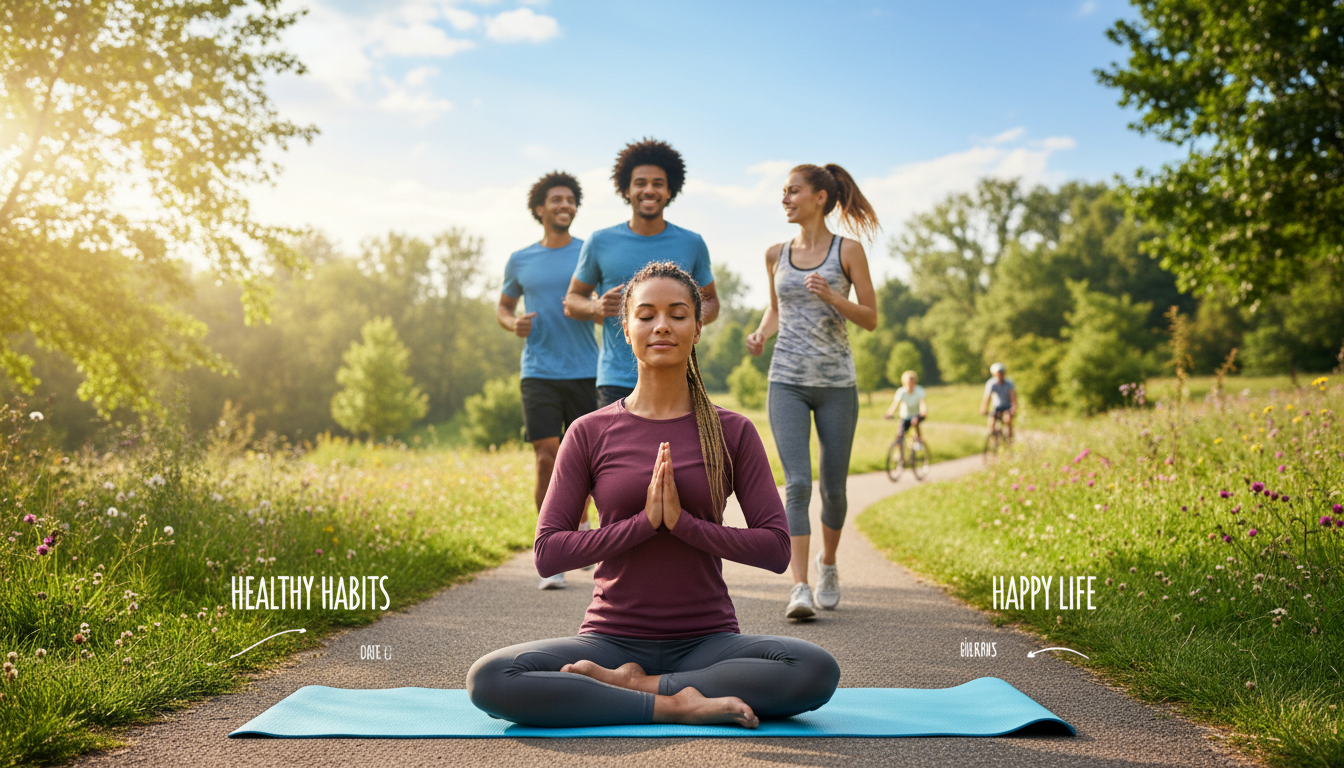
What if I told you real transformation doesn’t need harsh workouts or strict diets? I’ve found that small, steady steps lead to big changes over time.
Welcome to my guide on making healthy living last with 30-day challenges. I’ll show you a path that’s easy, fun, and works for busy people.
My method includes cardio, strength, flexibility, nutrition tips, better sleep, and mental health. These aren’t quick fixes. They’re evidence-based strategies for lasting habits.
Studies say it takes 21 to 66 days to form new habits. That’s why I’ve set these challenges at 30 days—the best time for habits to stick.
Looking to lose weight, feel more energetic, or reduce stress? There’s a mix here for your goals. You can start whenever and go at your pace. Just showing up for a few minutes each day is enough to start your wellness journey.
Key Takeaways
- Transformation comes from small, consistent actions, not extreme measures or perfection
- 30-day challenges match scientific research on habit formation (21-66 days)
- The program covers many wellness areas: cardio, strength, flexibility, nutrition, sleep, and mental health
- These challenges are for busy Americans at any fitness level, from beginners to pros
- Evidence-based principles meet real-world practicality for lasting results
- Just a few minutes of daily commitment is enough to start your transformation
- Customizable challenge combinations support diverse goals like weight loss, stress reduction, and energy boost
💪 Why 30-Day Fitness Challenges Create Healthy Habits, Happy Life Transformations
Starting a 30-day fitness challenge changes your brain for good. I’ve seen it happen many times, and it’s really interesting.
It’s all about your brain’s pathways. Every time you do something, your brain gets better at it. It’s like making a trail in the forest. The first time is hard, but it gets easier with each try.
Creating habits takes time, but 30 days is perfect. It’s long enough to see results but short to stay focused.
Challenges help you avoid making excuses. Every morning, you know what to do. This makes it easier to stick to your daily wellness routines.
Challenges give you clear goals and progress to track. Each day you succeed builds momentum.
Unlike vague goals, challenges tell you exactly what to do. This removes the guesswork and boosts behavioral change.
Challenges also help you find what you like. Healthline says it’s okay to not do everything perfectly. The goal is to find exercises you enjoy, not to force yourself.
Finding exercises you like is key to lasting health. When you enjoy what you’re doing, you’re more likely to keep doing it.
Challenges change how you see yourself. You start to think “I’m someone who exercises daily.” This is where Healthy Habits, Happy Life changes start.
Your daily actions show who you are. The more you do something, the more you become that person.
Apps like Reverse Health show this works. Over 1.1 million women have reached their fitness goals through challenges. Clear actions and support lead to change.
The community aspect is huge. Knowing others are in it with you boosts your chances of success.
Here’s why 30-day challenges are great for improving your life:
- Momentum building: Each day motivates you for the next
- Skill development: You get better at what you’re doing
- Confidence growth: Small wins add up to big self-confidence
- Pattern recognition: You figure out what works for you
- Barrier identification: You find and overcome your obstacles
It’s important to celebrate small wins. Recognizing your progress boosts your confidence. This positive feedback helps you keep going.
Challenges make big goals manageable. Instead of feeling overwhelmed, you focus on today. This approach helps you move forward.
Perhaps most importantly, challenges teach you to value consistency over perfection. Missing a day doesn’t mean you’ve failed. It’s about making progress, not being perfect. This mindset leads to lasting Healthy Habits, Happy Life changes.
🏃 Cardiovascular Fitness Challenges for Building Daily Wellness Routines
I’ve found that the best cardiovascular fitness challenges are those that feel like part of your daily life. These three challenges will make your heart stronger, boost your energy, and help you build lasting physical fitness habits.
Cardiovascular exercise does more than just burn calories. It improves heart health, boosts mental clarity, reduces stress, and builds stamina. These challenges are easy to start, requiring no gym membership, minimal equipment, and modifications for all fitness levels.
The 10,000 Steps Daily Challenge: Foundation of Physical Fitness Habits
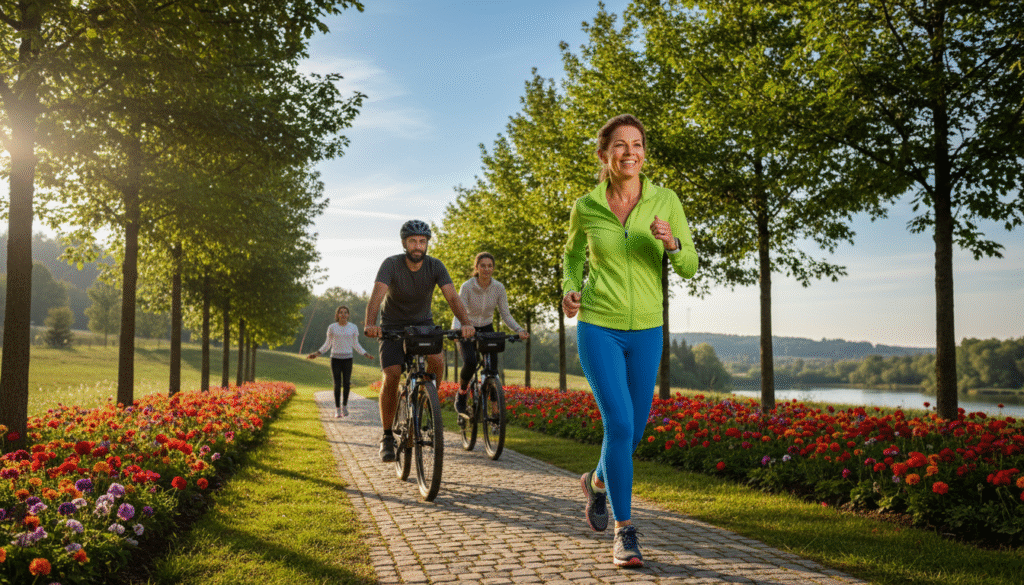
Walking might seem simple, but the 10,000 steps challenge can change your life. It’s a great start for beginners and challenging enough to show real results.
Walking is great because you can do it anywhere, anytime. It’s low-impact, so your joints stay safe while your heart gets stronger.
Week 1-2: Establishing Your Baseline
First, track your daily steps for three days. Use your phone or a pedometer. This is your starting point, and there’s no judgment.
In weeks one and two, aim to add 1,000-2,000 steps to your baseline each day. If you’re averaging 3,000 steps, try for 4,000-5,000. Focus on being consistent, not perfect.
Here are my favorite strategies for adding steps throughout your day:
- Park at the far end of parking lots when shopping or running errands
- Take the stairs instead of elevators whenever possible
- Walk during phone calls, both personal and professional
- Schedule 10-minute walking breaks between work tasks
- Walk to a colleague’s desk instead of sending emails for nearby conversations
- Take a brief walk after each meal to aid digestion and add steps
Week 3-4: Increasing Intensity and Distance
Once you’re walking regularly, it’s time to challenge yourself more. Keep aiming for 10,000 steps, but add intensity for better heart benefits.
Try walking on hills or inclines. If you live in a flat area, find stairs or use a treadmill with an incline. This strengthens your legs and raises your heart rate.
Walk faster during parts of your route. Use intervals: walk at a comfortable pace for three minutes, then briskly for two. This pattern is better for your heart than steady walking.
Consider wearing a weighted vest (start with 5-10 pounds) while walking. This increases calorie burn and strengthens bones without harming your joints.
Progressive Running Challenge: Couch to 30-Minutes Program
If you want to start running but don’t know how, this challenge is for you. It’s designed to help beginners become confident joggers safely.
Be patient when starting to run. Trying too much too soon can lead to injury. This program respects your body’s pace while building fitness.
Beginner-Friendly Interval Training
Start with a five-minute warm-up walk. Then, run for one minute at a comfortable pace, followed by two minutes of walking. Repeat this cycle six times, finishing with a five-minute cool-down walk.
Do this workout three times in week one, with at least one day off in between. Your body needs time to adapt and get stronger. In week two, increase running to 90 seconds with 90 seconds of walking recovery, keeping the same frequency.
By week three, aim for two minutes of running followed by one minute of walking. Week four should be three minutes running with one minute walking. Each step should feel challenging but achievable, allowing you to hold a conversation during running intervals.
Building Endurance Safely
Proper running form prevents injuries and makes your efforts more effective. Keep your shoulders relaxed, arms bent at 90 degrees, and hands loosely closed. Land midfoot instead of on your heels, and keep an upright posture with a slight lean from your ankles.
Listen to your body carefully throughout this progression. Muscle soreness that appears 24-48 hours after running is normal and indicates adaptation. But sharp pain, joint discomfort, or pain that worsens during activity signals a problem needing rest or professional evaluation.
Recovery is when your body gets stronger, not during the workout. Make sure you’re getting enough sleep, staying hydrated, and eating well. Consider cross-training with walking or gentle cycling on non-running days to keep your heart rate up without overloading running muscles.
By the end of 30 days, you’ll be able to run for longer periods, setting a strong foundation for further progress. Many of my readers who complete this challenge go on to run 5Ks and beyond, discovering a lifelong love for running.
Jump Rope Challenge: 20 Minutes Daily for Maximum Results
Jumping rope offers incredible cardiovascular benefits in just 20 minutes. It burns about 200-300 calories, improves coordination, bone density, and endurance. You only need a rope and a small space.
Start with a proper rope length—when you stand on the center, the handles should reach your armpits. Begin with basic two-foot jumps, focusing on rhythm over speed. Land softly on the balls of your feet with slightly bent knees to protect your joints.
For beginners, start with interval training: jump for 30 seconds, rest for 30 seconds, and repeat for 10 minutes total. As you get stronger and more coordinated, increase your jumping time and decrease rest periods. By week two, aim for 45 seconds of jumping with 15 seconds of rest.
Progress through these jump rope variations to maintain engagement:
- Basic bounce: Standard two-foot jumps at a steady rhythm
- Alternate foot step: Like running in place while jumping rope
- High knees: Lift knees toward chest with each jump
- Double-unders: Rope passes under feet twice per jump (advanced)
- Side-to-side: Jump laterally while maintaining rope rhythm
By weeks three and four, aim for continuous 20-minute sessions with minimal breaks. Break the workout into four 5-minute segments if needed, using different variations to target various muscle groups and prevent boredom.
These three cardiovascular challenges offer different benefits and appeal to different preferences, but all deliver exceptional results for building daily wellness routines. Choose the one that excites you most, or rotate through all three throughout the month. Your heart, mind, and overall energy levels will thank you for the investment in your cardiovascular health.
💪 Strength Training Challenges That Build Lasting Physical Fitness Habits
Bodyweight strength challenges can change your life in ways you never thought possible. They help you build sustainable healthy living habits without needing a gym or expensive gear. You can do these exercises anywhere, like in your living room or while traveling.
Strength training is great for your joints, keeps your bones strong, and helps your metabolism. The challenges I share focus on using your own bodyweight. This makes physical fitness habits easy for everyone, no matter your fitness level or schedule.
Bodyweight Strength Challenge: 100 Reps Daily Progression
The 100-rep challenge changes how you see strength training. Instead of one long workout, you do 100 reps in different exercises. This fits into busy lives and keeps your metabolism up all day.
Break your 100 reps into smaller sets. Do 25 reps when you wake up, 25 at lunch, 25 in the afternoon, and 25 before dinner. This way, you avoid getting tired and build endurance and muscle building over 30 days.
Lower body exercises are key for functional fitness. Proper squat form means your feet are shoulder-width apart, knees over toes, and you lower until your thighs are parallel or below. Keep your chest up and core tight.
I suggest this progression:
- Week 1: 4 sets of 25 bodyweight squats daily
- Week 2: Add 50 walking lunges (25 per leg) to your routine
- Week 3: Introduce reverse lunges and lateral lunges for variety
- Week 4: Combine all variations or add jump squats for power
Lunge variations work different muscles and keep things interesting. Forward lunges focus on your quads, reverse lunges work your glutes and hamstrings, and lateral lunges strengthen your hip abductors. Mix these up to build balanced lower body strength.
Tracking Strength Gains
Tracking your progress keeps you motivated. I monitor four key metrics for strength development:
- Total reps completed: Can you finish 100 reps faster each week?
- Time per set: Are you completing sets with better endurance?
- Exercise variations: Have you progressed to more challenging movements?
- Form quality: Can you maintain perfect technique with controlled tempo?
Use a simple tracking sheet or your phone’s notes app. Record your daily totals, any variations, and how you felt. These notes show your progress and celebrate your achievements over the month.
30-Day Plank Challenge: From 30 Seconds to 5 Minutes
The plank challenge boosts your core strength, which supports all physical activities. It improves posture, reduces back pain, and enhances stability. Starting from 30 seconds to 5 minutes shows remarkable endurance growth.
Begin with proper plank form: forearms on the ground, elbows under shoulders, and a straight line from head to heels. Engage your core by pulling your belly button toward your spine. Avoid letting your hips sag or pike.
Here’s the progression schedule I recommend:
| Week | Starting Duration | Daily Increase | End Duration |
|---|---|---|---|
| Week 1 | 30 seconds | 5 seconds every 2 days | 45 seconds |
| Week 2 | 50 seconds | 10 seconds every 2 days | 90 seconds |
| Week 3 | 100 seconds | 15 seconds every 2 days | 2 minutes 30 seconds |
| Week 4 | 3 minutes | 30 seconds every 2 days | 5 minutes |
If you need easier options, start with elevated planks or knee planks. Focus on maintaining perfect form, not holding poor form for longer. Quality is more important than quantity in sustainable healthy living practices.
Push-Up Progression Challenge: Building Upper Body Power
Push-ups strengthen your chest, shoulders, triceps, and core. This challenge helps you go from where you are to doing multiple sets of perfect push-ups. I’ve seen beginners go from not being able to do one push-up to doing 50 in 30 days.
Push-up progressions offer endless variations. You’ll never get bored, and you can always find a challenge that suits your current muscle building level.
Modified to Standard Push-Ups
Start where you are, not where you think you should be. Wall push-ups are great for beginners. Stand arm’s length from a sturdy wall, place your palms flat, and do push-ups against the wall.
Progress through these stages:
- Days 1-5: Wall push-ups, 3 sets of 15-20 reps
- Days 6-12: Incline push-ups using a bench or stairs, 3 sets of 12-15 reps
- Days 13-20: Knee push-ups on the floor, 3 sets of 10-12 reps
- Days 21-30: Standard push-ups, working toward 3 sets of 10 reps
Focus on controlled movement. Lower yourself for a count of three, pause briefly, then push up explosively. This tempo maximizes strength development and reduces injury risk.
Advanced Variations for Week 4
Once you’ve mastered standard push-ups, try these advanced variations. Diamond push-ups, with hands close together, intensely target your triceps.
Wide-grip push-ups, with hands outside shoulder width, focus on your chest muscles. Decline push-ups, with feet elevated, increase difficulty by shifting more weight to your upper body. These variations prevent plateaus and continue building upper body power.
For explosive movements, try clapping push-ups or plyometric variations. Push up with enough force to clap your hands before landing. These exercises develop power and fast-twitch muscle fibers, improving athletic performance.
Programs like Reverse Health have helped over a million women build strength through structured bodyweight training. The app includes exercises like Pilates and calisthenics for home training without equipment. This shows you don’t need expensive gym access to achieve great results in your fitness journey.
Commit to one or all three of these strength challenges for the next 30 days. Track your progress, celebrate small victories, and watch your body transform through consistent effort and smart progression.
🧘 Flexibility and Mindfulness Challenges for Holistic Wellness Approaches
I’ve found that many fitness journeys miss something important. It’s not just more workouts. It’s adding flexibility training and mental health practices. These approaches help your body and mind work together, leading to real change.
These challenges focus on your mental and emotional health. By mixing physical activity with mindfulness, you get a complete wellness plan. This plan supports lasting changes in your life.
The three challenges in this section help reduce stress, improve movement, and bring inner peace. They are key parts of a full fitness program.
Daily Yoga Challenge: 20-Minute Morning Flow for Healthy Habits, Happy Life
Starting your day with yoga sets a calm and focused tone. Spend just 20 minutes each morning on this practice. It boosts flexibility, mind-body awareness, and starts your day right.
You don’t need fancy gear or a gym to do yoga. A simple mat and comfy clothes are all you need to start.
Apps like Reverse Health offer guided yoga sessions. They have chair yoga and somatic flows for all levels. The key is to keep practicing, not to be perfect.
In the first two weeks, focus on basic poses. Start with gentle neck rolls and shoulder circles to warm up.
Here’s a simple progression:
- Sun Salutations: 3-5 rounds to warm the body and link breath with movement
- Standing Poses: Warrior I, Warrior II, and Triangle pose held for 5 breaths each
- Gentle Twists: Seated spinal twists to improve mobility and digestion
- Restorative Poses: Child’s pose and legs-up-the-wall for relaxation
Yoga is about your personal practice, not comparing with others. Always listen to your body to avoid injury.
Intermediate Flows for Week 3-4
As you move into weeks three and four, introduce more challenging sequences. These flows include longer holds to build strength and flexibility.
Intermediate sequences include:
- Balance Poses: Tree pose and Warrior III to develop stability and concentration
- Deeper Hip Openers: Pigeon pose and lizard pose to release tension
- Complex Vinyasa Transitions: Flowing movements that challenge coordination
- Inversions: Downward dog variations and supported shoulder stands
Progressing from beginner to intermediate happens naturally. Your body adapts, and what was once hard becomes easy.
Full-Body Stretching Routine Challenge: Improving Mobility
This stretching routine targets all major muscle groups. It boosts mobility and reduces injury risk. Daily stretching relieves chronic pain, improves posture, and enhances performance in all activities.
Knowing the difference between static and dynamic stretching is key. Static stretching involves holding poses for 30-60 seconds, great for post-workout or dedicated flexibility sessions. Dynamic stretching uses movement-based stretches, perfect for warming up before exercise.
Here’s the complete routine I recommend:
| Body Area | Stretch Type | Duration | Key Benefit |
|---|---|---|---|
| Neck & Shoulders | Neck rolls, shoulder stretches, chest openers | 2 minutes | Reduces upper body tension |
| Spine & Core | Spinal twists, cat-cow stretches | 3 minutes | Improves spinal mobility |
| Lower Body | Hip flexor, hamstring, quad, calf stretches | 5 minutes | Prevents lower back pain |
| Full Body | Forward folds, side stretches | 2 minutes | Increases overall flexibility |
Stretch slowly and breathe deeply. Never bounce or force a stretch beyond what feels comfortable.
Improved mobility means better performance in all physical activities. Your body moves more efficiently when joints have full range of motion.
Meditation and Breathing Challenge: Mental Health Practices for Stress Management
Daily meditation changes your mind just like exercise changes your body. These mental health practices lower stress, improve focus, and even change your brain.
Studies show that mindfulness improves stress management and well-being. I’ve seen these benefits in my own journey.
Starting meditation might seem daunting, but it’s easier than you think. You don’t need special gear or training to begin.
Five-Minute Meditation Starter
Begin with just five minutes daily to establish the habit. Choose a quiet space where you won’t be disturbed.
Follow these exact instructions for breath-focused meditation:
- Sit comfortably with your spine straight, either in a chair or on the floor
- Close your eyes gently or maintain a soft downward gaze
- Bring your attention to your breath without trying to change it
- Notice each inhale and exhale, feeling the air move through your body
- When your mind wanders—which it will—gently return focus to your breath
Other beginner techniques include body scan meditation and guided visualization. Body scan meditation checks in with each body part. Guided visualization uses mental imagery to calm and focus you.
The wandering mind is normal. Each time you notice and return to your breath, you’re getting better at mindfulness.
Progressive Mindfulness Techniques
As you get deeper into meditation, expand your sessions to 10-20 minutes. Try different meditation techniques. This happens naturally as sitting becomes more comfortable.
Advanced practices to explore include:
- Loving-Kindness Meditation: Cultivating compassion for yourself and others
- Walking Meditation: Bringing mindful awareness to each step
- Mindful Daily Activities: Eating, washing dishes, or showering with full presence
Breathing exercises complement meditation well. Box breathing follows a 4-count pattern: inhale for 4, hold for 4, exhale for 4, hold for 4. This calms the nervous system during stress.
The 4-7-8 breathing pattern promotes relaxation: inhale for 4 counts, hold for 7, exhale for 8. Alternate nostril breathing creates balance by alternating which nostril you breathe through.
These holistic wellness approaches complement your physical training perfectly. The mind-body connection you develop through flexibility and mindfulness is just as important as cardiovascular fitness and strength for creating Healthy Habits, Happy Life transformations.
🥗 Nutrition and Hydration Challenges Supporting Balanced Nutrition Choices
Proper nutrition and hydration are key to a healthy lifestyle. They help you reach your fitness goals and improve your overall health. These four challenges focus on nutrition and support your wellness journey.
These challenges are not about cutting out foods. Instead, they encourage you to eat a variety of nutritious foods. By doing so, you’ll see improvements in your energy, mental clarity, and overall health.
Gallon-a-Day Water Challenge: Optimal Hydration Protocol
Drinking a gallon of water a day can greatly improve your health. It boosts your physical and mental performance. Try it for 30 days and see the difference it makes.
Many people don’t drink enough water, leading to fatigue and poor concentration. Drinking enough water can solve these issues.
“Water is the driving force of all nature, and proper hydration is the foundation of human health and performance.”
Benefits of Proper Hydration
Drinking enough water supports your body’s functions. It helps transport nutrients, regulate temperature, and lubricate joints. Your brain works better, and your metabolism improves.
Even a small amount of dehydration can harm your performance. Drinking enough water prevents these problems.
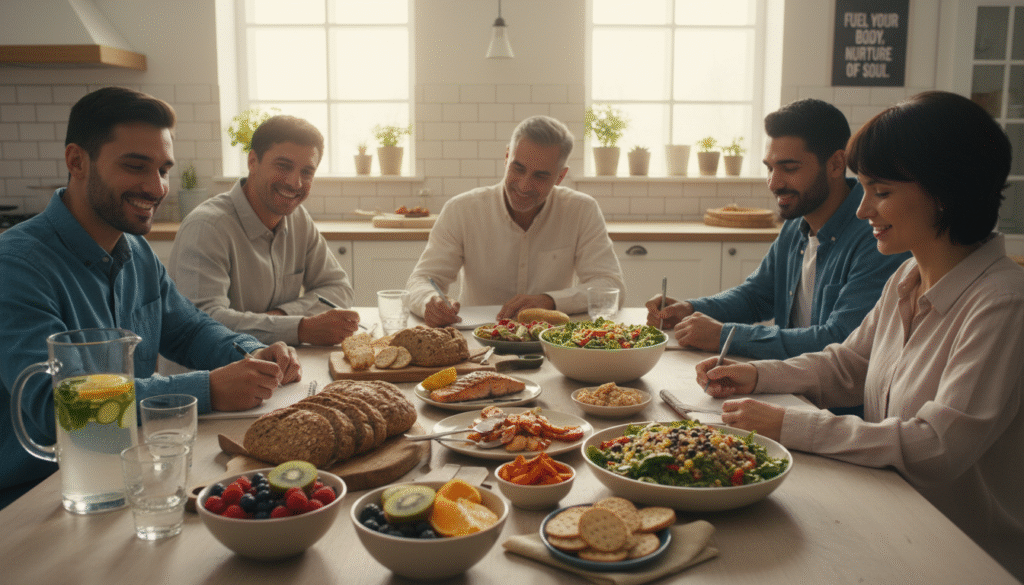
Good hydration also benefits your skin, kidneys, digestion, and weight management. It helps you feel full and satisfied.
Tracking and Timing Strategies
Drink four 32-ounce portions of water throughout the day. This makes it easier to stay hydrated.
Here’s my proven timing strategy:
- Upon waking: Drink 32 ounces to rehydrate after sleep and kickstart your metabolism
- Mid-morning (10 AM): Consume another 32 ounces to maintain energy and focus
- Lunchtime: Drink 32 ounces with your meal to support digestion
- Mid-afternoon (3 PM): Finish your final 32 ounces, stopping a few hours before bed to avoid nighttime bathroom trips
Use a water bottle with markers to track your intake. Apps can also remind you to drink water.
Adjust your water intake based on your size, activity level, and climate. Use a gallon as your starting point.
30-Day Meal Prep Challenge: Planning for Sustainable Success
Meal prep is key to maintaining healthy eating habits. It saves time and helps you avoid unhealthy foods.
Prepare at least five meals a week for 30 days. This habit reduces decision fatigue and saves time.
Your weekly meal prep system should include:
- Planning session: Choose recipes, create shopping lists, and schedule your prep time
- Shopping trip: Purchase all ingredients in one organized visit
- Batch cooking session: Dedicate 2-3 hours (typically Sunday afternoon) to preparing multiple meals
- Storage strategy: Use proper containers, label everything with dates, and organize your refrigerator efficiently
Start with simple recipes that reheat well. Cook proteins like chicken, salmon, or turkey in bulk. Prepare complex carbs like quinoa, brown rice, or sweet potatoes. Chop veggies for quick snacks.
Tools like the Reverse Health app make meal planning easier. It tracks calories and meal plans to help you stay on track.
Added Sugar Elimination Challenge: Breaking the Cycle
Reducing added sugar intake is a game-changer. It boosts energy, reduces inflammation, and supports overall health.
For 30 days, avoid foods with added sugars. Focus on natural sweetness from whole foods. This doesn’t mean cutting out fruit or dairy.
| Food Category | Hidden Sugar Sources | Daily Sugar Content | Healthy Alternative |
|---|---|---|---|
| Beverages | Soda, sweetened coffee drinks, fruit juices | 39-65 grams per serving | Water, unsweetened tea, sparkling water with lemon |
| Breakfast Foods | Flavored yogurt, granola, breakfast cereals | 12-20 grams per serving | Plain Greek yogurt with berries, oatmeal with cinnamon |
| Condiments & Sauces | Ketchup, BBQ sauce, salad dressings | 4-12 grams per tablespoon | Homemade vinaigrettes, mustard, herbs and spices |
| Snack Foods | Granola bars, protein bars, flavored nuts | 8-15 grams per bar | Fresh fruit, raw nuts, vegetables with hummus |
Reading Labels Effectively
Sugar has over 60 names on labels. You need to spot them to avoid added sugars. Look for ingredients ending in “-ose.”
Watch for names like high fructose corn syrup and fruit juice concentrates. Even healthy-sounding options like agave nectar are added sugars.
Check the nutrition facts for “Total Sugars” and “Added Sugars.” The new labels make it easier to spot excessive sugars.
Healthy Substitution Ideas
Breaking your sugar habit doesn’t mean giving up sweetness. There are many alternatives that support healthy eating.
Try these practical swaps:
- Replace candy with fresh berries, sliced apples with almond butter, or frozen grapes
- Swap soda for sparkling water with fresh lemon, lime, or muddled mint
- Choose plain Greek yogurt with fresh berries instead of flavored yogurt loaded with added sugars
- Select 85% dark chocolate instead of milk chocolate for occasional treats
- Use mashed banana or unsweetened applesauce as natural sweeteners in baking
- Blend dates into smoothies for natural sweetness and fiber
Your taste buds will adapt in two weeks. Foods will taste sweeter, and you’ll enjoy natural flavors more.
Rainbow Plate Challenge: Eating Colorful Whole Foods Daily
Eating a rainbow of fruits and vegetables ensures you get all the nutrients. Aim for three colors at each meal.
Red foods like tomatoes and strawberries support heart health. Orange and yellow foods like carrots and oranges boost immune function. Green foods like spinach and kiwi are packed with nutrients.
Blue and purple foods like blueberries and eggplant have anti-inflammatory properties. White and tan foods like cauliflower and onions also offer health benefits.
Sample rainbow plate combinations:
- Breakfast: Spinach and tomato omelet (green, red) with blueberries (blue) and orange slices (orange)
- Lunch: Mixed green salad (green) with purple cabbage (purple), shredded carrots (orange), and cherry tomatoes (red)
- Dinner: Grilled chicken with roasted sweet potato (orange), steamed broccoli (green), and sautéed red peppers (red)
Track your rainbow intake daily. Try new colorful fruits and vegetables each week to expand your diet.
These challenges are not temporary fixes. They lead to sustainable healthy living. Proper hydration, meal prep, reduced sugar intake, and colorful eating support your fitness goals and overall health.
😴 Sleep and Recovery Challenges Essential for Healthy Habits, Happy Life Success
Many fitness fans focus too much on workouts and food. But they often ignore the most important thing: quality sleep. I’ve seen many people exhaust themselves, wondering why they’re not getting better, even with great training and diet.
Sleep is not just downtime. It’s when your body fixes muscles, balances hormones, and cleans your brain. Without good sleep and recovery, you’re building on shaky ground.
Recovery is key to lasting changes, not just quick fixes. The tips below will help you make rest a priority, just like exercise.
Consistent Sleep Schedule Challenge: 7-8 Hours Nightly
Your first challenge is to get 7-8 hours of sleep every night for 30 days. This includes weekends.
Not enough sleep hurts your fitness goals. It makes you hungrier and less satisfied, ruining your diet plans.
It also makes you less motivated and perform worse in workouts. Cutting sleep short means throwing away your hard-earned gains.
Start winding down 60-90 minutes before bed with a routine. This signals your body it’s time to sleep.
Choose relaxing activities for your bedtime routine. Try these:
- Dim lights to boost melatonin
- Take a warm shower to cool down
- Read physical books
- Do gentle stretches or yoga
- Journal about your day
- Listen to calming music
Consistency is key. Going to bed and waking up at the same time improves your sleep quality. This simple habit can boost your energy in just a week.
Optimizing Your Sleep Environment
Your bedroom affects your sleep. Here are some tips to improve it:
Keep your bedroom cool. Aim for 65-68°F for better sleep. Your body needs to cool down to sleep well.
Light can mess with your sleep. Use blackout curtains or masks to block out all light.
Sound can disrupt your sleep. Use white noise machines or earplugs if you live in a noisy area.
Invest in a good mattress and pillows. They should support your spine and be replaced every 7-10 years for mattresses and 1-2 years for pillows.
Make your bedroom a sleep and intimacy zone. Avoid screens and work there.
“Sleep is the best meditation. When we sleep, our body repairs itself, our mind processes information, and we wake up refreshed and ready to face new challenges.”
Other sleep tips include avoiding caffeine after 2 PM, not drinking too much alcohol, and not eating big meals close to bedtime.
Digital Detox Evening Challenge: Screen-Free 90 Minutes Before Bed
Blue light from screens can delay sleep. This challenge helps you avoid that.
Try to avoid phones, tablets, computers, and TV for 90 minutes before bed. This can add 30-60 minutes of quality sleep.
This might be hard at first. We’re all addicted to screens in the evening. But the benefits are worth it for your overall health and happiness.
Instead of screens, do relaxing activities that connect you with others:
- Read physical books or magazines
- Talk to family members
- Do puzzles or play board games
- Journal about your day or tomorrow
- Plan your day
- Practice yoga or meditation
- Get ready for the next day
Use phone alarms to start your digital detox. Use bedtime mode on your phone and charge it outside your room.
Tell your family about your plan. When everyone does it, it becomes quality time together.
Active Recovery Challenge: Gentle Movement on Rest Days
Rest days don’t mean you should do nothing. Gentle movement helps your body recover and stay flexible.
Active recovery can make a big difference. It keeps you moving and helps your body repair itself.
Make sure your active recovery feels easy and energizing. If it feels too hard, you’re pushing too hard.
Foam Rolling and Mobility Work
Foam rolling helps your body recover. Spend 15-20 minutes on it during rest days.
Focus on these areas for 30-60 seconds each:
- Calves and shins
- Quadriceps and hip flexors
- Hamstrings and glutes
- Upper back and lats
- IT band (lateral thigh)
Roll slowly and pause on tender spots. You want a “good hurt” feeling, not sharp pain.
Also, do daily mobility exercises. They keep your joints healthy and flexible:
| Mobility Exercise | Target Area | Repetitions | Frequency |
|---|---|---|---|
| Hip Circles | Hip joint mobility | 10 each direction | Daily |
| Shoulder Rolls | Shoulder girdle | 15 forward and backward | Daily |
| Spinal Twists | Thoracic rotation | 10 each side | Daily |
| Ankle Circles | Ankle mobility | 10 each direction | Daily |
| Cat-Cow Stretches | Spinal flexion/extension | 15 repetitions | Daily |
These exercises take less than 10 minutes. They’re great for your daily routine and don’t take much time.
Restorative Yoga Practices
Gentle yoga is great for recovery days. It improves flexibility and relaxes you.
Yin yoga uses long stretches to target connective tissues. Hold poses for 3-5 minutes for deep release.
Restorative yoga uses props to support your body in relaxing poses. You might hold only a few poses for an hour, focusing on relaxation.
Gentle flow classes mix light movement with breathwork. They keep you moving and relaxed, without overdoing it.
Restorative yoga teaches you to feel the difference between good discomfort and pain. This helps you train smarter in all your fitness habits.
Many people find that adding these recovery strategies helps them reach their fitness goals faster. Rest is not weakness; it’s smart strategy for lasting success.
The American love for constant activity can harm your health and performance. Embrace recovery as a key part of your fitness routine. Your body will thank you with better results, fewer injuries, and more energy for the long haul.
🧠 Mental Wellness and Positive Mindset Development Challenges
I’ve learned that mental health is as important as physical fitness for real change. Your mind influences every decision about what you eat, how you exercise, rest, and take care of yourself. Strengthening your mental and physical health together creates a strong base for lasting change.
This section focuses on positive mindset development and emotional wellness. It aims to build resilience, reduce stress, and improve mental clarity. These practices are essential for any wellness plan.
Daily Gratitude Journal Challenge: Three Things Every Morning
Gratitude boosts happiness, improves relationships, and enhances sleep. It helps you focus on what you have, not what you lack. This simple practice changes your mind to see the positive side of life.
Just write down three things you’re thankful for each morning. Try to change what you’re grateful for each day to stay mindful.
Be thankful for anything, big or small. For example, “the warm sunshine,” “my comfy bed,” or “my friend’s support.” Reflect on the good things in your life.
Gratitude creates new brain paths. By focusing on the good, you train your brain to seek positivity. Use a journal, phone app, or notebook for this daily habit.
Stress Management Techniques Challenge: Box Breathing and Visualization
These stress management techniques can be used anywhere, anytime. They help calm your nervous system and regain control.
Box breathing is simple: inhale for 4 counts, hold for 4, exhale for 4, hold for 4, repeat 5-10 times. It lowers heart rate and promotes calm.
Visualization goes well with box breathing. Imagine peaceful places like beaches or forests. Use all your senses to relax.
Morning Stress-Relief Practices
Start each day with stress management to set a positive tone. Try these morning practices:
- 5-10 minutes of morning meditation or mindful breathing
- Gentle stretching or yoga to release tension
- Mindful coffee or tea drinking without distractions
- Avoid emails, news, or social media for 30-60 minutes after waking
- Set one positive intention for the day
Evening Wind-Down Rituals
Protect your evening for rest and recovery. These mental health practices help you relax:
- Progressive muscle relaxation (tensing and releasing muscles)
- Guided relaxation recordings or calm music
- Journaling worries before bed
- Set a “worry time” earlier in the day
- Reflect on the day’s positive moments
Affirmations Challenge: Positive Self-Talk for 30 Days
Your inner dialogue greatly affects your behavior and emotions. This challenge uses neuroplasticity to change negative thoughts into positive ones.
Effective affirmations are believable, specific, and in the present tense. Avoid statements that feel too far from your reality. Use affirmations that acknowledge your growth.
Here are examples of powerful affirmations for positive mindset development:
| Category | Affirmation Example | Purpose |
|---|---|---|
| Physical Strength | “I am becoming stronger every day” | Acknowledges progress and builds confidence |
| Healthy Choices | “I make choices that support my health” | Reinforces decision-making alignment with goals |
| Self-Care | “I am worthy of rest and self-care” | Combats guilt around taking time for yourself |
| Body Wisdom | “I trust my body’s wisdom and signals” | Develops intuitive awareness and self-trust |
| Goal Achievement | “I am capable of achieving my wellness goals” | Builds self-efficacy and determination |
Practice affirmations morning and evening for the best results. Write them down and place them where you’ll see them. You can also record them for listening during commutes or workouts.
Affirmations work because they create new brain paths. You can change negative thoughts into positive ones. It’s science for emotional wellness.
Social Connection Challenge: Meaningful Interactions Daily
Research shows social connection is as vital as exercise and nutrition. Strong relationships boost longevity, immune function, reduce stress, and increase happiness.
This challenge focuses on quality over quantity. Aim for real conversations, not just small talk. Listen actively, show genuine appreciation, and spend time with loved ones without distractions.
“The quality of your relationships determines the quality of your life.”
Set daily goals for connection:
- Text a friend with a thoughtful message
- Call a family member for a real conversation
- Have dinner with household members without screens
- Join a group fitness class, book club, or community organization
- Volunteer in your community
- Schedule regular coffee dates or walks with friends
In today’s world, building meaningful relationships is a radical act of self-care. We’re wired for connection. Neglecting this need harms our physical and mental health.
Stress management techniques and positive relationships work together. The support you get from connections helps manage stress. Together, they improve your well-being.
Mental wellness is key to physical fitness. Neglecting mental health while focusing on physical goals is unstable. These challenges give you tools to strengthen your foundation every day.
🎯 Combining Challenges for Complete Lifestyle Improvement Strategies
When you mix different challenges into one plan, amazing things happen. I’ve seen many people change their lives by pairing challenges that work well together. It’s all about planning your wellness in a way that covers physical, mental, and nutritional needs.
In this section, I’ll show you how to create your own challenge mix. You’ll learn how to pick challenges that fit together, avoid burnout, and track your progress. This will help you stay on track for 30 days.
Creating Your Personalized Healthy Habits, Happy Life 30-Day Plan
Starting with a clear goal is key. First, understand your current lifestyle and what you want to improve. Take a close look at your daily routine, energy, stress, and health priorities. This self-awareness helps you choose challenges that really make a difference.
The best results come from combining challenges that cover different areas of wellness. Your plan should be challenging but achievable. It should push you to grow while respecting your current limits.
Selecting Compatible Challenges
Challenges that work together are the most effective. I’ve found that mixing 3-5 challenges from different areas is the sweet spot. This way, you avoid competing for time and energy.
Think about how challenges fit into your day. For example, the 10,000 steps challenge goes well with hydration and gratitude journaling. You can do steps all day, drink water everywhere, and journal in the morning.
But, don’t mix too many intense challenges at once. Running, strength training, and meal prep need a lot of time and energy. Start with one challenge from each area for a balanced approach.
Don’t try too much too soon. It’s better to make slow, steady progress than to give up quickly. These strategies are meant to guide you, not control you.
Missing a day doesn’t mean you’ve failed. Life gets in the way, and being flexible is key. Just start again the next day without guilt.
Adjust your challenges based on how you feel. If you’re tired, scale back but keep going. Adapt to your environment if you’re traveling.
Focus on consistency over intensity. Showing up every day, even if imperfectly, leads to lasting change. The goal is to build healthy habits that last, not to prove your willpower.
Tracking Progress and Maintaining Accountability
Keeping track of your progress and celebrating it keeps you motivated. People who track their challenges are more likely to stick with it for 30 days and beyond.
Tracking helps you see patterns, stay consistent, identify obstacles, and adjust your approach. Without it, you might miss opportunities for growth.
Using Habit Tracking Apps and Journals
Technology is great for tracking your progress. Check out apps like Habitica, Streaks, and Productive for habit tracking. They offer rewards and reminders to keep you on track.
If you prefer paper, bullet journals with habit trackers are a great option. There’s something satisfying about checking off tasks and coloring in grids.
Track both the process and the outcome of your challenges. This shows how consistent effort leads to real results.
Use weekly reflection questions to improve your approach. Ask yourself what went well, what challenges you faced, and how you can do better next week.
Having an accountability partner boosts your success rate. They provide motivation, support, and encouragement. Find someone with similar goals and schedules.
Regular check-ins are key. Use texts, calls, or workouts to stay connected. Share your progress and celebrate each other’s successes.
Consider setting up reward systems together. For example, treat yourselves to a healthy meal after a week of consistent challenges. This adds an extra layer of motivation.
Online communities and social media groups also work well. The key is to stay in touch and support each other’s progress.
My Recommended Challenge Combinations for Different Goals
I’ve developed specific challenge combinations for common goals. These are based on what works best for people with similar objectives.
Apps like Reverse Health combine multiple elements like workouts, meal plans, and tracking. This shows that a well-rounded approach can be very effective.
| Primary Goal | Challenge Combination | Why This Works |
|---|---|---|
| Weight Loss | 10,000 steps + bodyweight strength + meal prep + sugar elimination + hydration + consistent sleep | Creates caloric deficit through activity and nutrition while maintaining muscle mass and optimizing hormones |
| Stress Relief | Daily yoga + meditation + gratitude journal + digital detox + consistent sleep + stretching routine | Targets stress reduction through multiple pathways while improving sleep quality and mental clarity |
| Overall Wellness | Progressive running + plank challenge + rainbow plate + hydration + gratitude journal + active recovery | Builds cardiovascular fitness, core strength, nutritional diversity, and positive mindset for complete vitality |
Weight Loss Focus Combination
For weight loss, combine the 10,000 steps challenge with bodyweight strength, meal prep, sugar elimination, hydration, and consistent sleep. This mix creates a calorie deficit and helps you stay healthy.
The bodyweight strength challenge helps maintain muscle mass, which burns more calories. Consistent sleep optimizes hormones that control hunger and metabolism. Proper hydration also helps.
Stress Relief and Mental Clarity Combination
For stress management, try the daily yoga challenge with meditation, gratitude journaling, digital detox, consistent sleep, and stretching. This combination targets stress from different angles.
Yoga and stretching release physical tension. Meditation and breathing calm the mind. Gratitude journaling shifts your focus to the positive. Digital detox reduces stress from technology. Consistent sleep helps with emotional regulation.
Overall Wellness and Energy Combination
For overall vitality, mix progressive running, plank challenge, rainbow plate, hydration, gratitude journal, and active recovery. This balanced approach improves energy from various angles.
This mix boosts cardiovascular fitness, core strength, nutritional diversity, and mental well-being. It promotes sustainable energy without relying on stimulants.
Subscribe to Our Newsletter for More Wellness Tips and Fitness Product Recommendations
Join the HealthyVibesLife.com community by subscribing to our newsletter! As a subscriber, you’ll get regular health and wellness tips to help you keep healthy habits long-term.
Our newsletter includes wellness travel tips, exclusive deals, fitness product reviews, seasonal challenges, healthy recipes, and motivational content. It all comes straight to your inbox, supporting your wellness journey.
Subscribe today at www.healthyvibeslife.com and become part of our thriving wellness community!
Explore Related Articles on HealthyVibesLife.com
Your wellness journey doesn’t stop with this guide. I’ve written articles on topics that complement what you’ve learned here.
Check out our guide on sustainable nutrition strategies for easy, healthy eating. You’ll find meal planning tips, grocery shopping advice, and ways to change your food relationship.
Our home workout equipment reviews help you choose the right fitness gear. I personally test products and share honest reviews of what’s worth your money.
For busy professionals, our stress management techniques article offers practical tips that fit into tight schedules. You don’t need to overhaul your life to manage stress.
The sleep optimization guide explores how to create the perfect sleep environment and improve your sleep quality. It’s packed with evidence-based tips.
Visit www.healthyvibeslife.com to explore our library of wellness resources. You’ll find tools, inspiration, and community support to make your journey more enjoyable and sustainable. Every article is designed to provide actionable information for real results in your life!
✨ Conclusion
Your wellness journey starts when you decide to begin. You don’t need perfect conditions or fancy equipment. Just pick one challenge that excites you and start tomorrow.
These 30-day fitness challenges are about more than just fitness. They help with your body, mind, and spirit. It’s not about being perfect. Showing up for a few minutes each day can lead to big changes.
Over 1.1 million women have changed their lives with programs like Reverse Health. You can too. Choose a challenge that fits your life. Write it down and share it with someone who supports you. Start again in the morning.
Healthy living is a daily process, not something that happens overnight. It’s about making consistent choices. Some days will be easy, others hard. But keep going, even when it’s tough.
These challenges do more than just change your body. They show you what you’re capable of. They build confidence and create lasting habits for your health.
Your journey is important. Every step you take is a victory. Choose your first challenge today. Your future self will be grateful. For inspiration, guidance, or support, visit HealthyVibesLife.com anytime.