
Five years ago, my doctor flagged my cholesterol numbers. Could my dinner plate strengthen my heart more than a pill?
That moment changed everything. I explored a colorful, flavorful eating style built around olive oil, fresh vegetables, and whole grains.
The Mayo Clinic describes this approach as “colorful, satisfying, and anything but boring.” I couldn’t agree more. It is not about bland chicken breasts or steamed broccoli.
In this guide to mediterranean diet meal prep for heart health, I’ll share what I’ve learned. You’ll find my favorite pantry staples, a complete five-day cooking plan, and quick recipes for real life.
I’ll also share my actual cholesterol results as proof that small changes add up. This lifestyle shift is not theory for me. I live it every single week.
Key Takeaways
- Simple ingredient swaps can meaningfully improve cholesterol levels over time.
- A well-stocked pantry makes healthy cooking faster and far less stressful.
- Five days of planned recipes can set the tone for an entire week of better eating.
- Flavorful, satisfying dishes are possible without processed foods or bland recipes.
- Real-life results matter more than theoretical advice.
- Consistency, not perfection, drives long-term wellness improvements.
1. What Is the Mediterranean Diet and Why Is It Good for Your Heart?
The Mediterranean diet centers on vegetables, whole grains, healthy fats, and lean proteins. It is among the most studied eating styles for heart disease prevention, and doctors recommend it.
I chose this diet for more than its popularity. Its strong science and clear results convinced me.
This eating style reflects traditional meals from Greece, Italy, and Spain. It focuses less on strict rules and more on better habits with real food.
The main food groups I use each day include:
- Fruits and vegetables — the foundation of nearly every meal
- Whole grains like brown rice, quinoa, and whole wheat bread
- Potatoes and beans for fiber and steady energy
- Nuts and seeds as go-to snacks and toppings
- Olive oil as my primary cooking fat
- Fish and poultry in moderate portions
- Low to moderate dairy and eggs rather than daily staples
Olive oil adds flavor and deserves special attention. Olive oil helps your body clear excess cholesterol from your arteries, keeping blood vessels open and blood flowing smoothly.
Heart disease prevention depends on what you eat and what you avoid. I keep these foods limited:
- Added sugars and sugary drinks
- Excess salt and sodium-heavy packaged foods
- Saturated fats from butter and fried foods
- Processed and fatty red meats
Within a few weeks, eating fewer of these foods changed how I felt. My energy became steadier, and my heavy afternoon sluggishness stopped.
The heart benefits go beyond daily energy. Research links this diet with lower risks of heart disease and stroke. It also lowers major risks such as obesity, type 2 diabetes, high cholesterol, and high blood pressure.
Some evidence also suggests better brain function and memory support as you age. That benefit comes from eating real, whole foods.
| Food Category | Role in Heart Health | Example Foods |
|---|---|---|
| Olive Oil | Clears cholesterol, keeps arteries open | Extra virgin olive oil |
| Whole Grains | Stabilizes blood sugar, adds fiber | Quinoa, brown rice, oats |
| Fatty Fish | Reduces inflammation, supports vessels | Salmon, sardines, mackerel |
| Legumes | Lowers LDL cholesterol naturally | Lentils, chickpeas, black beans |
Once I understood this plan, diet prep became easier. I knew what to buy and cook for each meal. This clear structure made the diet sustainable long term.
2. Why I Swear By Mediterranean Diet Meal Prep for Heart Health
The first time my doctor discussed my cholesterol numbers, I knew my routine needed to change. I left feeling overwhelmed. I had heard about the Mediterranean diet, but I did not know how to fit it into my busy life.
Then I discovered the real secret: heart-healthy Mediterranean meal prep. It was not enough to know which foods supported my heart. I needed those foods ready before hunger and exhaustion chose for me.
I used to come home starving after long workdays. On those nights, takeout looked easier than chopping vegetables. Meal prep changed that. Now, my fridge holds grilled salmon, roasted chickpeas, and fresh tabbouleh instead of empty shelves and tempting takeout.
Preparing meals ahead keeps me accountable better than willpower alone. I no longer depend on motivation at 7 p.m. on a Tuesday. The hard work is finished, so I only need to heat, plate, and eat.
I also learned that building this habit takes time, not one weekend of good intentions. Covenant HealthCare explains it well:
“Changing eating habits will take time… it took several years to develop your current eating habits, so it will take time to undo them and learn new ways to shop, cook, and eat.”
That quote stayed with me. It helped me be patient with myself. My old habits took years to form, so new ones could not appear overnight.
Meal prep became my bridge between knowing what is healthy and living it. It changed the Mediterranean diet from a short-term resolution into a lifestyle I could maintain for years.
Here is what changed after I committed to preparing meals ahead:
- I stopped grabbing fast food out of sheer convenience.
- My weekly grocery trips became faster and more focused.
- I felt proud of my choices instead of guilty about them.
- My energy stayed steady throughout the week.
If you are considering heart-healthy Mediterranean meal prep, view it as a gift to your future self, not a strict diet. Future you will thank present you for each prepped lentil soup container in the fridge. It will be ready when life gets hectic.
3. The Cardiovascular Benefits of Going Mediterranean
This eating pattern brings measurable changes to key heart-health numbers. I tracked my cholesterol and blood pressure after switching, and my results support decades of research.
The mediterranean diet cardiovascular benefits appear in three key areas: cholesterol, inflammation, and blood pressure. Each area helps keep the heart working well. Here is why this eating style makes such a difference.
3.1 Lowering LDL Cholesterol Naturally
I swapped saturated fats for monounsaturated fats. Butter, fatty red meat, and shortening raise blood cholesterol over time, while olive oil, avocados, and nuts can lower it.
Olive oil does double duty. It helps remove excess cholesterol from arteries and keeps blood vessels flexible and open. I use it for salad dressings and sautéing vegetables.
| Fat Type | Common Sources | Effect on LDL Cholesterol |
|---|---|---|
| Saturated Fat | Butter, fatty beef, shortening | Raises LDL cholesterol |
| Monounsaturated Fat | Olive oil, canola oil, avocados | Lowers LDL cholesterol |
| Polyunsaturated Fat | Walnuts, flaxseed, fatty fish | Supports heart-healthy cholesterol balance |
3.2 Reducing Inflammation Markers
Chronic inflammation quietly damages blood vessels and speeds up heart disease. I learned this after eating more colorful vegetables, fatty fish, and extra virgin olive oil.
These foods contain antioxidants that calm inflammation at its source. Omega-3s from salmon and sardines work with olive oil polyphenols to control inflammatory markers. I have noticed fewer aches and steadier energy since adding these foods daily.
“A Mediterranean-style diet reduces markers of inflammation more effectively than many low-fat diets, largely due to its reliance on healthy fats and plant compounds.”
3.3 Supporting Healthy Blood Pressure
Processed foods often contain more sodium than people realize. I cut packaged snacks and restaurant meals to lower my sodium intake. This moved me closer to the under 1,500 mg per day target recommended by the American Heart Association.
I also ate more potassium-rich foods, including leafy greens, beans, and tomatoes. Potassium balances sodium’s effects on blood pressure, so these changes work together.
- Fewer processed snacks and sauces
- More fresh vegetables and legumes
- Herbs and spices instead of salt for flavor
These small changes added up faster than I expected. Within months, my blood pressure readings moved in a healthier direction, showing that heart-protective eating needn’t require drastic measures.
4. Key Heart-Healthy Ingredients to Stock in Your Pantry
After years of Mediterranean meal prep, I’ve chosen pantry staples that serve me well. These foods make hectic weeknight dinners easy and heart healthy. This personal shopping list reflects daily habits and nutrition science.
I stock dry goods such as beans, lentils, split peas, brown rice, and whole wheat pasta. My shelves also hold olive oil, basil, oregano, curry powder, low-sodium soy sauce, and mixed nuts for snacks.
4.1 Extra Virgin Olive Oil
Extra virgin olive oil is my most important pantry staple, so I never let it run out. It’s rich in monounsaturated fat, which supports healthy cholesterol levels. I use it to sauté vegetables, dress salads, and finish almost any dish.
Research explains why olive oil tops my list. Along with canola oil, it has one of the highest monounsaturated fat levels among common cooking oils. This makes it a smarter choice than butter or heavily processed vegetable oils.
“Olive oil is a cornerstone of the Mediterranean diet and has been linked to improved heart health outcomes, including better cholesterol levels and reduced inflammation.”
| Fat Source | Monounsaturated Fat (g per tablespoon) | Heart Health Benefit |
|---|---|---|
| Extra Virgin Olive Oil | 10g | Lowers LDL cholesterol, reduces inflammation |
| Canola Oil | 8g | Supports heart health, neutral flavor for baking |
| Butter | 3g | High in saturated fat, best used sparingly |
4.2 Whole Grains and Legumes
Whole grains and legumes form the base of almost every meal I prepare. Brown rice, whole wheat pasta, lentils, and dried beans cook well in large batches. They also store well in the fridge or freezer and provide fiber that helps control cholesterol.
I also keep split peas and whole wheat flour on hand to stretch my grocery budget. They add variety to soups and baked goods. One batch of lentils can become soup, a salad topping, or a hearty side dish during the same week.
4.3 Fresh Herbs and Spices
Fresh herbs and spices add flavor without extra salt. Basil, oregano, curry powder, mustard, and black pepper bring depth to simple dishes. A splash of vinegar or low-sodium soy sauce can finish a dish without added guilt.
This habit has helped me use less added salt and butter when cooking. Herbs and spices make plain brown rice or grilled vegetables more enjoyable. They also cost far less than most bottled condiments.
4.4 Nuts and Seeds
Nuts and seeds are my favorite portable snacks for supporting heart health. A small handful of almonds or walnuts provides plenty of healthy fat and plant-based protein. I add them to salads, oatmeal, or eat them straight from the jar.
Keeping nuts in the pantry helps me avoid less healthy snacks when hunger strikes. They are shelf-stable, easy to portion, and fit any Mediterranean meal prep routine. This small habit has noticeably improved how satisfied I feel between meals.
5. Omega-3 Powerhouses: The Mediterranean Foods I Always Keep on Hand
When people ask which food group most improved my heart health, I point to mediterranean diet omega-3 foods. These healthy fats help steady my heart rhythm and keep my triglycerides in a healthy range.
At first, I did not fully understand the science behind omega-3s. After seeing them appear often in heart-health research, I kept them in my kitchen.
Fatty Fish Options: Salmon, Sardines, and Mackerel
Fatty fish are my favorite fast way to get omega-3s. Salmon, sardines, and mackerel contain EPA and DHA, the omega-3 types most linked to heart benefits.
I reach for fresh or frozen fish when cooking, following Covenant HealthCare’s lean-protein guidance for heart-healthy eating.
During busy weeks, I use pantry shortcuts. Canned salmon and tuna packed in water help when cooking is not possible.
“Eating fish at least twice a week is linked to a lower risk of heart disease and stroke.”
I add canned salmon to salads, stir it into pasta, or eat it with lemon. This helps me meet my omega-3 goals without extra prep.
Plant-Based Omega-3 Sources: Walnuts, Flaxseed, and Chia
Fish is not on my plate every day, so I use plant-based omega-3 sources. Walnuts, flaxseed, and chia seeds are everyday kitchen staples.
I add ground flaxseed to oatmeal and stir chia seeds into yogurt for extra nutrition. Walnuts also make a satisfying snack or crunchy salad topping.
These plants contain ALA, a different omega-3 type that my body partly converts into EPA and DHA. The conversion rate is modest, but it still supports my heart health goals.
| Omega-3 Source | Type | Serving Size | Best Use |
|---|---|---|---|
| Salmon | EPA/DHA | 3-4 oz | Grilled or baked dinner |
| Sardines | EPA/DHA | 1 can | Quick lunch topping |
| Walnuts | ALA | 1/4 cup | Snack or salad mix-in |
| Flaxseed | ALA | 1 tbsp ground | Oatmeal or smoothie |
| Chia seeds | ALA | 1 tbsp | Yogurt or overnight pudding |
Mixing fish and plant sources keeps my meals varied and supports my heart health goals. Grilled mackerel, walnuts, and chia seeds make mediterranean diet omega-3 foods easy for busy weeks.
6. My Step-by-Step 5-Day Mediterranean Meal Prep Plan
This five-day system turns weekly Mediterranean meal planning from a chore into something I look forward to. I borrowed ideas from the Mayo Clinic’s Mediterranean Meal Plan, which favors colorful, satisfying meals over strict portion counting.
My goal each week is not perfection. I want a simple rhythm that keeps my kitchen stocked with heart-healthy options I am excited to eat.
Day 1: Setting Up Your Base Ingredients
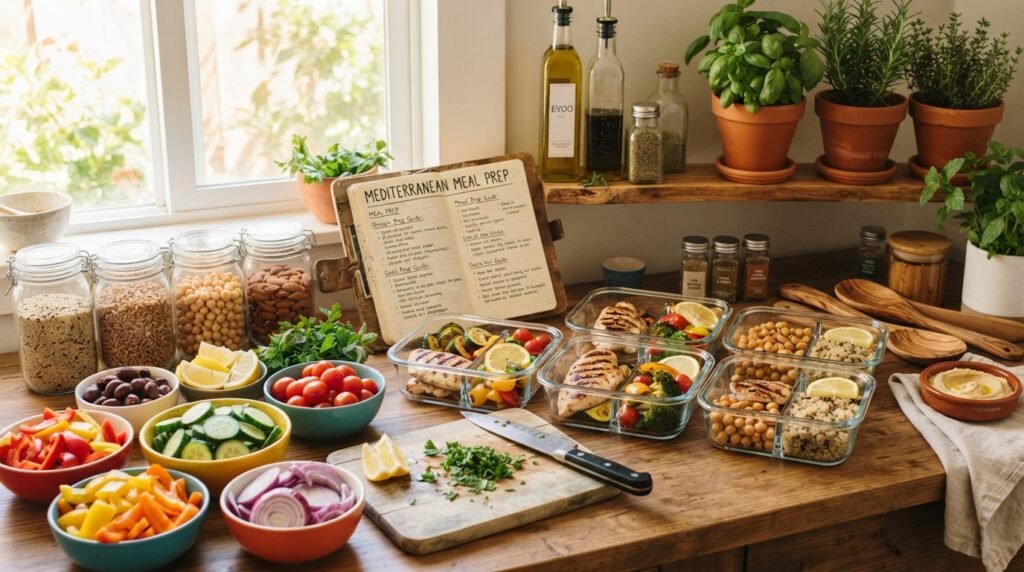
I begin by washing and preparing fresh produce for the week. I rinse berries, leafy greens, and vegetables, then store them well so they stay crisp longer.
Next, I cook a large batch of whole grains, such as quinoa, farro, or brown rice. These grains support almost every meal I make later in the week.
I clear my fridge, discard expired food, and make room for the ingredients I will use. This simple step saves me much more time later.
Day 2: Prepping Proteins and Grains
Day two focuses on protein. I follow Covenant HealthCare’s cooking advice and grill or broil instead of frying. This keeps saturated fat in check without sacrificing flavor.
Portion size matters as much as cooking method. Choosing 3 to 4 ounces instead of the usual 8 to 10 ounces makes a noticeable difference. It lowers fat, cholesterol, and calories.
| Protein | Typical Portion | Mediterranean Portion | Benefit |
|---|---|---|---|
| Steak | 8-10 oz | 3-4 oz | Lower fat and cholesterol |
| Chicken Breast | 8 oz | 3-4 oz | Fewer calories, same satisfaction |
| Salmon | 6-8 oz | 4-5 oz | Balanced omega-3 intake |
I grill several chicken breasts, bake a tray of salmon, and simmer chickpeas or lentils. By day’s end, I have varied proteins ready to mix and match.
Day 3: Chopping Veggies and Making Sauces
Day three focuses on vegetables and sauces. I chop colorful vegetables, including bell peppers, cucumbers, tomatoes, and zucchini, for salads, bowls, or wraps.
I whisk simple sauces with extra virgin olive oil, fresh lemon juice, and herbs such as parsley or oregano. This mix replaces butter and heavy dressings while adding fresh flavor.
Day 4: Assembling Grab-and-Go Meals
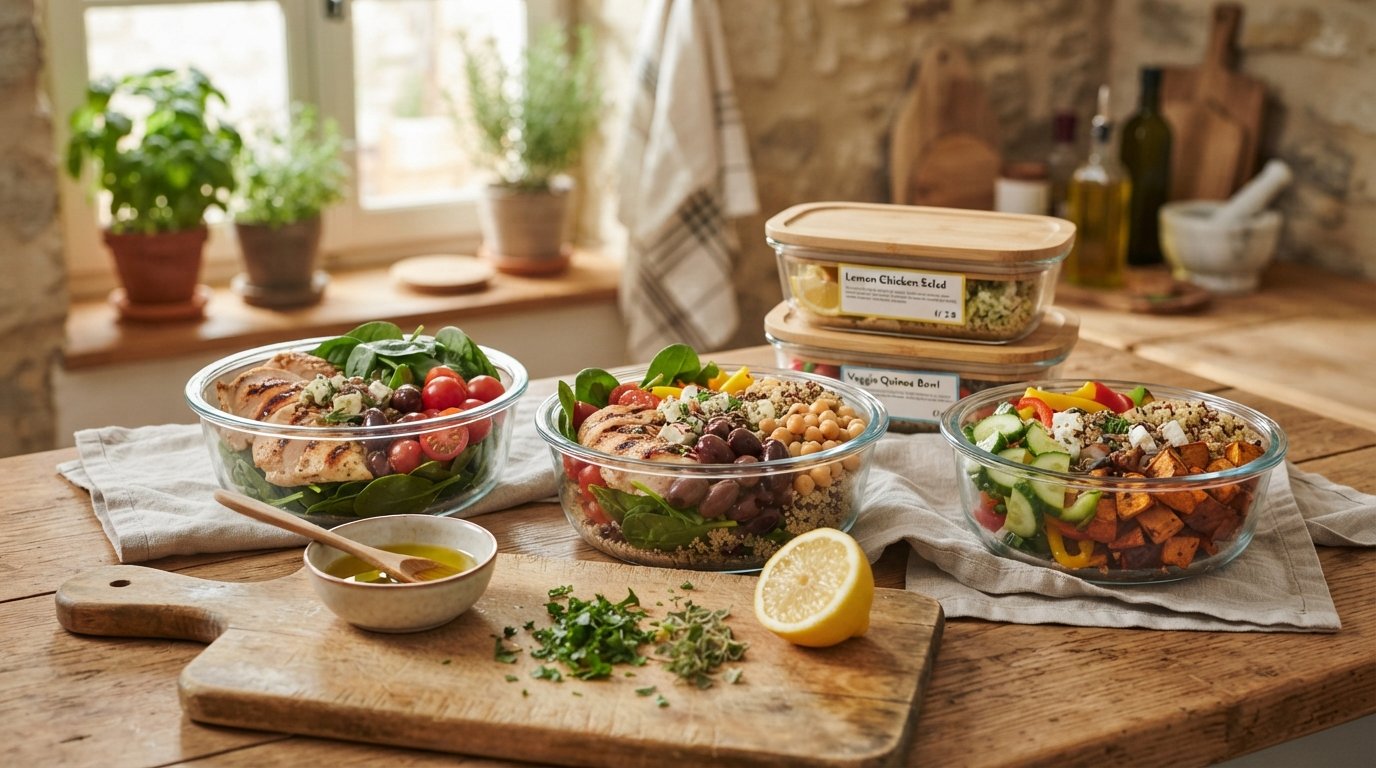
Day four is assembly day and my favorite part of the process. I layer grains, proteins, and vegetables in balanced, colorful containers.
Each container looks like a small Mediterranean plate, vibrant and satisfying. I drizzle homemade dressing over each one before sealing the lids.
After I stack everything in the fridge, I have grab-and-go meals ready for busy mornings and hectic weeknights.
Day 5: Final Touches and Storage Tips
On the last day, I complete one final quality check. I label each container with its preparation date, so nothing gets forgotten in the fridge.
I check portion sizes again to match the heart-healthy guidelines I followed all week. Some meals go into the freezer, while the rest stay chilled for the next four to five days.
This habit keeps my weekly Mediterranean meal planning organized, fresh, and stress-free.
7. Batch Cooking Tips That Make Mediterranean Meal Prep a Breeze
I once thought meal prep meant spending all Sunday chained to the stove. Then I found batch cooking Mediterranean meals, and everything changed. Now I spend about two hours each week and eat well every day.
Batch cooking suits this diet because many Mediterranean dishes taste better after sitting for a day or two. Soups, roasted vegetables, and marinated proteins gain flavor overnight. That bonus makes weeknights much easier.
Covenant HealthCare’s cooking tips support this approach. Their nutrition guidance says roasting, baking, broiling, and grilling are healthier choices than frying. These methods also batch and store well, making them a win-win.
“Choose baking, broiling, grilling, or roasting instead of frying when preparing meats and vegetables.”
I roast a big tray of vegetables or bake several chicken breasts once. Then I have meals for days with no extra effort. Smart planning makes the difference.
7.1 My Favorite Containers and Storage Hacks
The right containers can make or break batch cooking. I learned this after years of soggy lunches and wasted food in my fridge.
Here’s what works best for me now:
- Glass meal-prep containers with compartments keep grains, proteins, and veggies separate until I’m ready to eat.
- Freezer-safe glass jars hold soups, like my turmeric lentil soup, for up to three months without losing flavor.
- Small sauce containers store dressings and tahini sauce separately, so nothing gets soggy or wilted.
- A simple labeling system with masking tape and a marker tells me exactly what’s inside and when I made it.
I bought these containers in bulk once and still use them years later. This small investment saves money and reduces food waste.
7.2 How I Keep Meals Fresh All Week
Freshness shows whether batch cooking works well. Nobody wants wilted salad or rubbery fish by Thursday afternoon.
My rule is simple: keep wet and dry ingredients apart until the last moment. Dressings, sauces, and dips stay in separate containers. Greens and grains remain dry and crisp until I combine them.
Airtight containers are essential in my kitchen. They block air and moisture, helping roasted vegetables and whole grains stay fresh for five to six days.
When reheating, I skip the microwave whenever possible. The oven or stovetop restores baked fish and roasted vegetables better than a microwave.
A quick reheat in a 350-degree oven for ten minutes revives almost anything on my meal prep menu. This habit keeps my batch cooking Mediterranean meals fresh all week, not sad and reheated.
8. Quick & Easy Mediterranean Recipes (Breakfast, Lunch, Dinner)
If you wonder what a full day of Mediterranean eating looks like, this lineup shows you. I built it like Mayo Clinic’s Mediterranean meal plan, with color, protein, and healthy fats from morning to night.
These recipes need no fancy equipment or hours in the kitchen. I return to them often because they are fast, satisfying, and genuinely good for my heart.
Breakfast Recipes
Mornings move fast in my house, so breakfast must be simple and nutritious. Both options take less than ten minutes and use ingredients I usually have.
Greek Yogurt Parfait with Honey and Walnuts
I layer plain Greek yogurt with honey and chopped walnuts. This mix provides protein, calcium, and omega-3 fats before I leave the house.
Sometimes I add fresh berries for extra fiber and bright color. It feels like a treat, but it supports my cholesterol.
Veggie and Feta Egg Muffins
Eggs appear on nearly every heart-healthy grocery list, including Covenant HealthCare’s. I whisk them with chopped bell peppers, spinach, and crumbled feta, then bake them in muffin tins.
I make a batch on Sunday, and it lasts all week. Grab two, and breakfast is done.
Lunch Recipes
Lunch must be quick, portable, and filling enough for the afternoon. These recipes meet every need without reheating.
Mediterranean Chickpea Salad
Canned chickpeas, diced tomatoes, cucumber, and simple olive oil dressing come together in minutes. I add crumbled feta or olives for extra flavor.
This cold salad keeps well in a container for days. I never get tired of it.
Tuna and White Bean Lettuce Wraps
Canned tuna packed in water mixes with white beans, light dressing, and chopped parsley. I spoon it into crisp lettuce leaves for a low-carb, high-protein wrap.
This is my choice when I want something light but filling. It takes five minutes from start to finish.
Dinner Recipes
Dinner lets me slow down slightly, but these recipes still suit busy weeknights. Both use simple seasoning instead of heavy sauces or butter.
Lemon Herb Baked Salmon
I follow Covenant HealthCare’s nutrition guidance: bake fish with lemon and fresh herbs instead of butter. I add lemon, dill, and salmon fillets to the oven.
Twenty minutes later, dinner is ready, and the kitchen smells incredible. This dish never feels like I’m “dieting.”
One-Pan Chicken with Olives and Tomatoes
Skinless chicken breast cooks with halved tomatoes and briny olives in one skillet. Olive oil and oregano bring the dish together.
Cleanup is minimal, and the flavors seem slow-cooked. This is one of my most-requested dinners at home.
| Meal | Recipes Featured | Prep Time | Protein Source | Heart-Health Benefit |
|---|---|---|---|---|
| Breakfast | Yogurt Parfait, Egg Muffins | 5–10 minutes | Greek yogurt, eggs | Omega-3 fats, calcium, steady energy |
| Lunch | Chickpea Salad, Tuna Wraps | 5–8 minutes | Chickpeas, tuna, white beans | Fiber, lean protein, lower LDL support |
| Dinner | Baked Salmon, One-Pan Chicken | 20–25 minutes | Salmon, chicken breast | Omega-3s, reduced saturated fat intake |
9. Anti-Inflammatory Mediterranean Recipes I Make on Repeat
These two dishes appear on my meal prep counter almost every week. Both recipes grew from the inflammation research I mentioned earlier, after I learned chronic inflammation quietly damages blood vessels over time.
These anti-inflammatory Mediterranean recipes are not just good for my heart. They are genuinely delicious, so they earned a permanent place in my rotation instead of feeling like punishment food.
9.1 Turmeric-Spiced Lentil Soup
This soup began as a way to use pantry staples and became my favorite cold-weather comfort food. I sauté garlic and onion in olive oil, then add lentils, vegetable broth, and a generous spoonful of curry powder.
- 1 cup dried lentils
- 1 diced onion and 3 minced garlic cloves
- 2 tablespoons curry powder (for the turmeric boost)
- 4 cups vegetable or chicken broth
- 2 tablespoons extra virgin olive oil
Curry powder contains turmeric, which adds curcumin. That compound has been linked to lower inflammation markers, the same markers discussed earlier in the cardiovascular section.
9.2 Roasted Vegetable and Quinoa Bowl
This bowl is my go-to lunch when I want something colorful and filling. I roast broccoli, zucchini, and bell peppers in olive oil until slightly charred, then pile them over fluffy quinoa.
- 2 cups chopped broccoli, zucchini, and bell peppers
- 1 cup cooked quinoa (brown rice works too)
- 3 tablespoons olive oil for roasting
- Tahini, lemon juice, and water for the drizzle
The lemon-tahini drizzle brings everything together with a creamy, tangy finish. Spinach or kale added at the last minute provides extra antioxidants without extra effort.
Chronic, low-grade inflammation is increasingly recognized as a key driver of heart disease, and anti-inflammatory dietary patterns like the Mediterranean diet can play a meaningful role in reducing that risk over time.
These anti-inflammatory Mediterranean recipes make reducing inflammation a daily habit. That habit supports what we covered about lowering LDL cholesterol and protecting blood vessel health.
| Recipe | Key Anti-Inflammatory Ingredient | Prep Time | Heart Benefit |
|---|---|---|---|
| Turmeric-Spiced Lentil Soup | Curcumin from curry powder | 30 minutes | Lowers inflammation markers |
| Roasted Vegetable and Quinoa Bowl | Antioxidants from peppers and zucchini | 25 minutes | Supports healthy blood pressure |
10. How This Diet Helped Me Manage My Cholesterol Naturally
I still remember the day my doctor raised an eyebrow at my lab results and asked what I had changed. My LDL had dropped, my overall numbers looked better than they had in years, and I had not touched a single prescription. That moment showed me that mediterranean diet cholesterol management is not just a buzzword doctors throw around; it works when you commit to it.
Reaching that point was not magic. It took steady food choices and a few lifestyle changes, which I explain below.
10.1 Foods That Helped Lower My Numbers
The first change I made was swapping butter for extra virgin olive oil in nearly everything I cooked. According to Covenant HealthCare’s breakdown of dietary fats, saturated fat raises cholesterol, while monounsaturated fat helps lower it. That swap set the tone for everything else I did.
I added oats to breakfast, lentils to soups, and beans to salads. Soon, I consistently reached the recommended 25 to 35 grams of fiber each day. That range is tied directly to lower blood cholesterol, and I noticed a difference within a few months.
Fatty fish and nuts completed my plan. Salmon, sardines, and a daily handful of walnuts gave me the omega-3s I needed without adding extra saturated fat.
Here is a quick look at how I tracked my daily fat and sodium targets:
| Nutrient | Recommended Limit | My Go-To Sources |
|---|---|---|
| Total Fat | Less than 30% of daily calories | Olive oil, nuts, avocado |
| Saturated Fat | Less than 10% of daily calories | Replaced butter with olive oil |
| Fiber | 25-35 grams per day | Oats, lentils, beans |
| Sodium | Under 1,500 mg per day | Fresh herbs instead of salt |
10.2 Habits I Added Beyond Meal Prep
Meal prep gave me a foundation, but extra habits made the biggest difference in my results. I began reading nutrition labels closely and checking saturated fat and sodium before putting items in my cart.
Portion sizes mattered more than I expected. Even heart-healthy foods add up quickly when you ignore how much you eat.
I also made physical activity non-negotiable, even with a thirty-minute walk after dinner. Staying below that 1,500 mg sodium target took practice. Fresh herbs and spices made it easier than using the salt shaker.
“Small, consistent changes in diet and lifestyle can have a meaningful impact on cholesterol levels over time.”
Looking back, meal prep and mediterranean diet cholesterol management go hand in hand. Smart food swaps and daily habits moved my numbers in the right direction.
11. Conclusion
Switching to a Mediterranean lifestyle did not happen overnight for me, and it will not for you. My pantry staples, 5-day prep plan, and quick recipes came together slowly through grocery trips and batch-cooked Sundays. The payoff appeared in my cholesterol numbers, but that change required patience.
Building current eating habits took years, so allow yourself a few weeks to learn new shopping and cooking routines. Do not expect perfection by next Tuesday; expect progress.
Can I meal prep this for my whole family? Absolutely. Double the grain and veggie batches, keep proteins separate, and let everyone build their own bowl.
Is olive oil really necessary? It is one of the biggest drivers of heart benefits in this eating style. Yes, keep a good bottle on your counter.
How do I stay consistent? Pick one prep day a week and stick with it. Consistency beats intensity every time.
Start small by prepping one meal this week with olive oil, whole grains, and fresh vegetables. Then build from there. Your heart, taste buds, and future self will thank you for starting today.