

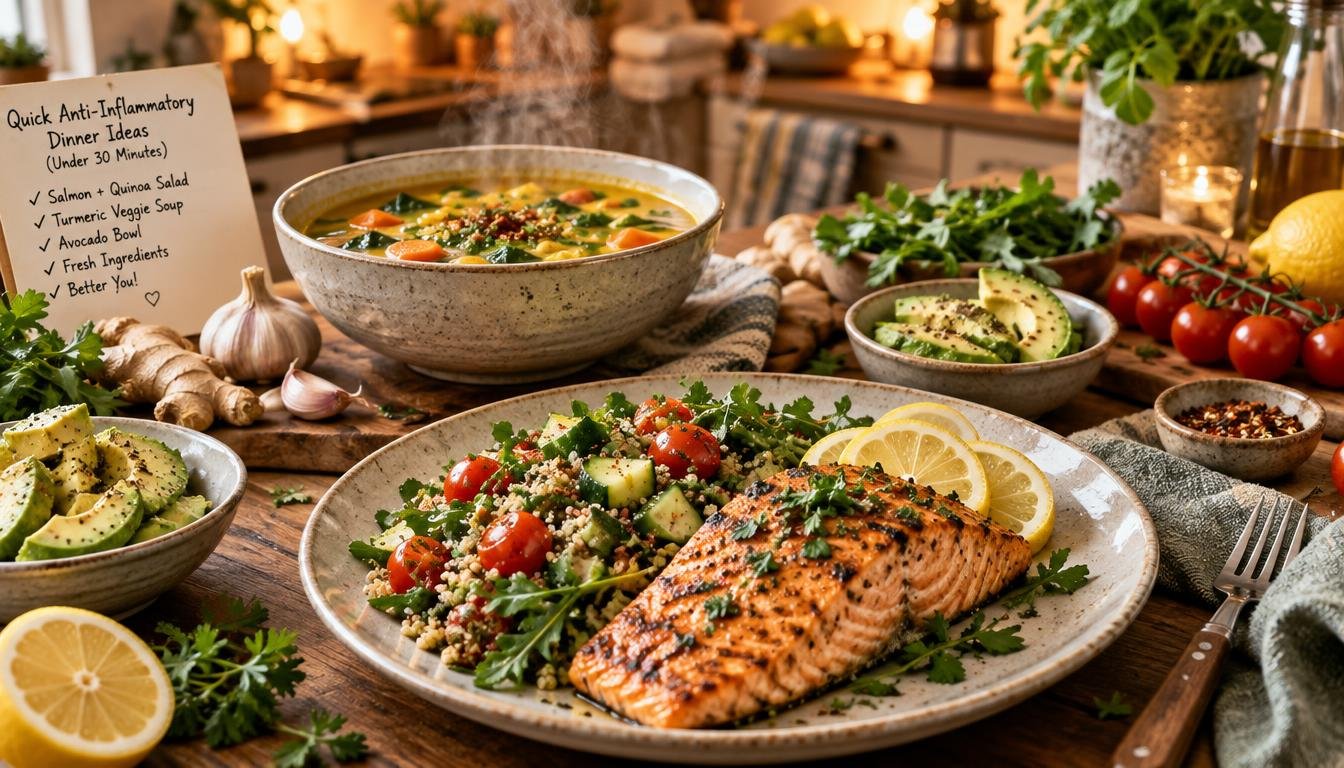
What if tonight’s meal could affect how you feel tomorrow morning?
I used to feel bloated, foggy, and tired at the end of each day. After too many sluggish nights, I created quick anti-inflammatory dinner recipes that take thirty minutes or less.
These dinners taste great and leave me energized instead of weighed down. They also work well for meal prep during busy weeks.
This guide explains what makes food genuinely anti-inflammatory. It also covers my everyday ingredients and four trusted recipes.
I’ll share smart cooking techniques, Mediterranean-inspired favorites, simple ingredient swaps, and answers about chronic inflammation and diet.
Think of this as a friend handing you her favorite weeknight cheat sheet of quick anti-inflammatory dinner recipes.
Key Takeaways
- Fast, flavorful meals can support lower inflammation without sacrificing taste or time.
- Stocking a handful of key ingredients makes thirty-minute cooking realistic on busy nights.
- Simple techniques like sheet-pan roasting or one-skillet sautéing speed up prep without losing nutrition.
- Mediterranean-style ingredients offer some of the most research-backed anti-inflammatory benefits.
- Easy ingredient swaps let you customize meals for allergies, preferences, or what’s already in your fridge.
- These recipes double as meal prep, saving time and reducing food waste throughout the week.
What Makes Food “Anti-Inflammatory”? (AEO Direct Answer)
An anti-inflammatory food is a whole, lightly processed ingredient. It contains antioxidants, omega-3 fatty acids, fiber, and polyphenols that help fight chronic, low-grade inflammation. It supports your body instead of adding to that inflammation.
That’s the short answer. The longer story helps you cook smarter, not harder, on a weeknight.
Fast inflammation fighting foods target specific pathways inside your cells. Colorful fruits and vegetables, fatty fish, extra-virgin olive oil, and spices like turmeric and ginger contain helpful compounds. These compounds slow chemical signals released when your body faces stress, injury, or a bug.
By contrast, refined sugars, trans fats, and heavily processed snack foods can push those pathways into overdrive. Years ago, I noticed stiffer joints and faster energy crashes when I chose packaged meals over real ingredients.
- Antioxidants that neutralize cell-damaging free radicals
- Omega-3 fatty acids that help balance inflammatory and anti-inflammatory signals
- Fiber that feeds beneficial gut bacteria linked to lower inflammation markers
- Polyphenols found in plants that help regulate immune response
The best part is that building a dinner around fast inflammation fighting foods doesn’t require culinary school training. It means choosing the right ingredients before turning on the stove. I’ll walk through this step-by-step in the sections ahead.
To make the contrast clearer, here’s how everyday anti-inflammatory choices compare with more inflammatory counterparts:
| Food Category | Anti-Inflammatory Choice | Pro-Inflammatory Counterpart | Why It Matters |
|---|---|---|---|
| Cooking Fat | Extra-virgin olive oil | Vegetable shortening | Olive oil delivers polyphenols; shortening carries trans fats |
| Protein | Wild salmon | Processed deli meat | Salmon offers omega-3s; deli meat often has nitrates and sodium |
| Grain | Farro or quinoa | White bread | Whole grains add fiber; refined grains spike blood sugar |
| Sweetener | Fresh berries | Refined sugar | Berries bring antioxidants; added sugar fuels inflammatory markers |
Why I Turned to Quick Anti-Inflammatory Dinner Recipes
One rough morning, I woke with puffy eyes, a foggy head, and little energy. I began questioning my nighttime eating habits.
For months, I chose the fastest dinners: microwaved leftovers, greasy takeout, or cereal at the counter. I called it temporary, blaming a busy season. Yet the bloating, sluggish mornings, and brain fog never left.
After another heavy, processed meal left me awake and uncomfortable at 11 PM, something clicked. My body was sending a clear message, and I finally decided to listen.
My body has been craving lighter anti-inflammatory meals that make me feel good without the bloat or fatigue.
That realization led me to try easy anti-inflammatory meals that fit my chaotic weeknight schedule. After a ten-hour workday, I would not cook for an hour or eat bland food just to feel better.
The biggest surprise was how quickly things changed. Within a couple of weeks, simple, colorful meals replaced processed dinners. I slept better, woke without a heavy, swollen feeling, and stopped crashing by 3 PM.
Here’s what changed when I made easy anti-inflammatory meals part of my routine:
| Dinner Habit | Old Routine | New Routine |
|---|---|---|
| Main Ingredients | Processed, fried, packaged foods | Fresh vegetables, fatty fish, olive oil |
| Prep Time | Often rushed or skipped entirely | Under 30 minutes, planned ahead |
| How I Felt After | Bloated, tired, foggy | Light, satisfied, clear-headed |
Top 5 Anti-Inflammatory Ingredients to Cook With Daily
On most nights, these five ingredients do much of the work in my kitchen. I skip complex meal plans and count nothing.
I rely on a small group of foods that fight inflammation and taste great. They are affordable, easy to find, and useful in many dishes.
1. Extra-Virgin Olive Oil
I drizzle it over nearly everything for good reason. Extra-virgin olive oil is loaded with monounsaturated fats and polyphenols, which may calm body inflammation.
A splash brightens roasted vegetables or finished pasta. I keep a good bottle on my counter instead of storing it in a cabinet.
2. Fatty Fish Like Salmon and Sardines
Salmon is my favorite protein when I need dinner fast. It contains omega-3 fatty acids, which research links to lower inflammation markers.
Sardines work well and cost much less. For quick omega-3 dinner options, pan-sear salmon with lemon or toss canned sardines with garlic, chili flakes, and pasta.
3. Leafy Greens Such as Spinach and Kale
Spinach and kale wilt in minutes, making them easy side dishes. They contain antioxidants that help manage oxidative stress, a key cause of chronic inflammation.
I cook a few handfuls with olive oil and garlic at the end. This takes less than three minutes and completes the meal.
4. Turmeric and Fresh Ginger
Turmeric contains curcumin, an active compound with a strong anti-inflammatory reputation. Multiple studies support this reputation.
I add turmeric to rice, soups, and marinades for warm, earthy flavor. For simple turmeric dinner ideas, whisk a spoonful into coconut milk for curry, or grate ginger into vegetable stir-fry.
“Let food be thy medicine and medicine be thy food.”
5. Berries and Other Colorful Produce
Blueberries, raspberries, and blackberries add more than sweetness. Their deep color comes from anthocyanins, which may reduce inflammation and support heart health.
I add berries to salads or serve them with dinner for a quick nutrient boost. This adds color and antioxidants without extra preparation.
| Ingredient | Key Compound | Quick Dinner Use | Primary Benefit |
|---|---|---|---|
| Extra-Virgin Olive Oil | Oleocanthal, Polyphenols | Drizzle over roasted vegetables | Reduces inflammatory markers |
| Salmon & Sardines | Omega-3 Fatty Acids | Pan-seared with lemon | Supports heart and joint health |
| Spinach & Kale | Antioxidants, Vitamin K | Quick wilted side dish | Fights oxidative stress |
| Turmeric & Ginger | Curcumin, Gingerol | Stirred into curry or rice | Lowers chronic inflammation |
| Berries | Anthocyanins | Tossed into salads | Protects cells from damage |
4 Fast Weeknight Recipes You Can Make in 30 Minutes or Less
After plenty of trial and error, I found four weeknight recipes that deliver big flavor without taking much time. These are the 30-minute anti-inflammatory recipes I make again and again.
Each uses a few ingredients, one pan or skillet, and little prep. They taste even better the next day, making them ideal for lunch leftovers.
1. Sheet Pan Salmon with Roasted Vegetables
This is my choice when I want a special meal without much effort. I season salmon fillets with olive oil, salt, and pepper. Then I place them beside cherry tomatoes, sliced shallots, and whole garlic cloves.
Everything roasts together at high heat for about 15 minutes. Fresh dill and crumbled feta add brightness without extra pots or pans.
- Total time: 25 minutes
- One pan, easy cleanup
- Great for meal prep
2. Turmeric Chickpea Curry
When I want a cozy plant-based meal, I make this curry. I sauté garlic and fresh ginger in olive oil, then add turmeric.
Canned chickpeas and coconut milk simmer for about 15 minutes, until the sauce thickens. I serve it over quinoa or with warm pita bread.
This dish proves that weeknight healthy anti-inflammatory dishes can feel satisfying without meat.
3. Mediterranean Shrimp and Quinoa Bowl
Shrimp cooks in minutes, making this bowl helpful on busy nights. I sauté shrimp with garlic, turmeric, and ginger until pink and slightly golden.
I serve the shrimp over fluffy quinoa with chopped cucumber, bell pepper, and olive oil. Lemon juice ties everything together.
- Protein-packed and fiber-rich
- Ready in under 20 minutes
- Easy to customize with seasonal vegetables
4. Ginger-Garlic Stir-Fried Tofu and Broccoli
This stir-fry is my go-to for meatless Mondays. I press firm tofu, cube it, and pan-fry it until golden on each side.
Fresh ginger, minced garlic, and broccoli florets join the tofu in the skillet. A quick soy-based sauce brings everything together in under ten minutes.
Served over brown rice, it is one of the heartiest weeknight healthy anti-inflammatory dishes I make. The leftovers reheat well, making them ideal for next-day lunches.
These meals show me that fast cooking and thoughtful eating can work together. With a well-stocked pantry, any of these 30-minute anti-inflammatory recipes can turn a hectic evening into a satisfying dinner.
Cooking Techniques That Preserve Nutrient Content
For years, I focused only on buying the right foods. Then I realized cooking could cancel out that effort.
How I cook matters as much as what I put in the pan. Small kitchen changes can make dinner more anti-inflammatory without adding time or ingredients.
Steaming and Quick Sautéing Over Boiling
Boiling vegetables seems harmless, but it pulls water-soluble vitamins, including vitamin C and B vitamins, into the water. When that water goes down the drain, those nutrients disappear too.
Steaming or quick sautéing solves this problem. Both methods use less water and time, helping spinach, broccoli, and zucchini keep more nutrient content while staying crisp.
I now save boiling for pasta and grains. I use my steamer basket or skillet for almost everything green.
Using Healthy Fats to Boost Nutrient Absorption
Some nutrients need fat to work properly. Vitamins A, D, E, and K are fat-soluble, so my body absorbs them better with healthy fat.
The same is true for curcumin, the active compound in turmeric that gives it strong anti-inflammatory power. A drizzle of extra-virgin olive oil over turmeric curry or roasted vegetables helps my body use these nutrients.
Cooking at Lower Temperatures
High heat can turn a healthy meal into one that works against me. Charring meat or deep-frying food creates advanced glycation end products, which research links to higher inflammation.
Gentle roasting, sautéing, or moderate-temperature baking protects nutrients and flavor. My salmon still gets a golden crust without blackened edges.
Adding Herbs and Spices at the Right Moment
Fresh herbs are delicate, and heat quickly breaks down their antioxidants. For years, I added basil to a hot pan too early and lost its bright flavor and color.
Now I add fresh herbs like dill, basil, or cilantro during the last minute. I also sprinkle them on before serving. Dried spices like turmeric and cumin benefit from early heat, which releases their full flavor.
Here’s a quick comparison of common cooking methods and their nutrient retention:
| Cooking Method | Nutrient Retention | Inflammation Impact | Best Used For |
|---|---|---|---|
| Steaming | High | Low | Leafy greens, broccoli, fish |
| Quick Sautéing | High | Low | Vegetables, tofu, shrimp |
| Boiling | Low | Moderate | Grains, pasta, beans |
| Charring or Deep-Frying | Low | High | Occasional treats only |
Easy Mediterranean-Inspired Anti-Inflammatory Meals I Love
I return to two Mediterranean-style dinners when I want comfort, speed, and food that truly supports my health. Both recipes use ingredients I usually have, and each takes no more than 30 minutes from start to finish. They are my favorite easy mediterranean anti-inflammatory meals for busy weeknights and relaxed weekend dinners.
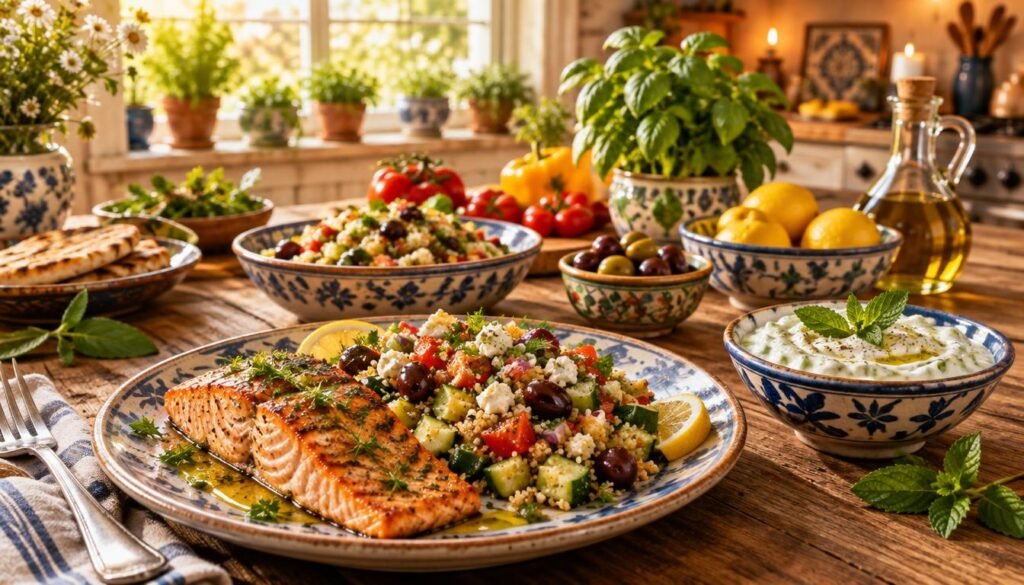
Greek-Style Baked Fish with Lemon and Herbs
This dish began as my attempt to recreate a Greek salmon recipe I loved at a friend’s dinner party. I bake a white fish or salmon fillet, then add lemon, fresh dill, juicy tomatoes, and briny olives.
Feta crumbles, thinly sliced cucumber, and red onion finish the plate. The result feels special enough for guests yet easy enough for a random Tuesday night. Everything bakes on one pan, so cleanup stays simple.
White Bean and Vegetable Skillet
When I want a cozy, plant-based meal, I make this one-pan skillet dinner. I simmer cannellini beans with spinach or escarole in garlicky tomato sauce until tender and fragrant.
A generous drizzle of extra-virgin olive oil finishes the dish, tying flavors together and adding a dose of anti-inflammatory healthy fats. This skillet proves that hearty, satisfying meals need neither meat nor a long ingredient list.
Both recipes show me that easy mediterranean anti-inflammatory meals need no fancy techniques or hard-to-find ingredients. A handful of whole foods, a hot pan, and good olive oil create a dinner that tastes great and loves my body back.
Simple Swaps to Make Any Dinner More Anti-Inflammatory
You don’t need to toss out your entire pantry to eat in a way that fights inflammation.
Small changes can make a big difference, like choosing one ingredient over another while cooking. I call these easy wins, not strict rules.
Here are three swaps I use almost every night.
Swap Refined Oils for Extra-Virgin Olive Oil
Vegetable oil and canola oil sit in many kitchens, but offer little nutritional value. Extra-virgin olive oil, however, is packed with polyphenols, plant compounds known for anti-inflammatory power.
Switching is simple. Use the same amount of EVOO that the recipe calls for in vegetable oil. Your dinner will cook the same way, with more flavor and added health perks.
Swap White Rice for Quinoa or Farro
White rice is a pantry staple, but processing removes much of its fiber. Quinoa and farro keep their fiber and protein, which helps slow digestion and reduce inflammatory blood sugar spikes.
Both grains cook in about 15 to 20 minutes, so dinner takes no longer. Swap the grain and keep the rest of the meal the same.
Swap Sugary Sauces for Fresh Herb Blends
Many bottled sauces hide added sugar, preservatives, and inflammatory oils in long ingredient lists. A quick herb blend solves this problem.
“The simplest sauces are often the most powerful ones for your health.”
Mix fresh parsley, basil, garlic, and olive oil in a blender. It takes two minutes and adds more flavor than anything from a jar.
Understanding Chronic Inflammation and Diet
Let’s answer common questions about diet and chronic inflammation. I once thought one green smoothie could cancel a week of fast food, but the body does not work that way. Learning inflammation’s real timeline and triggers helped me stay consistent instead of chasing quick fixes.
How Daily Food Choices Affect Long-Term Inflammation
Repeated daily choices, not single meals, shape baseline inflammation over months and years. One slice of cake will not raise inflammatory markers forever, but regular processed snacks and sugary drinks can.
I see it as compound interest. Choosing olive oil over butter or whole grains over white bread makes each choice count.
Over time, these small choices move my body’s baseline toward less inflammation and steadier energy. Consistency matters more than perfection.
Eating anti-inflammatory foods most days supports long-term health better than one perfect meal followed by weeks of old habits.
Foods and Habits That Can Worsen Inflammation
Added sugars, refined carbohydrates, trans fats, excessive alcohol, chronic stress, and poor sleep can raise inflammation. Each causes a different reaction, but together they create a hard-to-break cycle.
Here’s a quick breakdown of common culprits and why they matter:
| Food or Habit | Why It Worsens Inflammation | Simple Alternative |
|---|---|---|
| Added sugars | Spikes blood sugar and triggers inflammatory signals | Fresh fruit or a small drizzle of honey |
| Refined carbohydrates | Breaks down quickly, causing blood sugar swings | Whole grains like quinoa or farro |
| Trans fats | Damages cell linings and raises harmful cholesterol | Extra-virgin olive oil |
| Excessive alcohol | Stresses the liver and disrupts gut bacteria balance | Sparkling water with citrus |
| Chronic stress or poor sleep | Raises cortisol, which fuels ongoing inflammation | Consistent sleep schedule and short daily walks |
Cutting back on two or three at once feels more doable than changing everything at once.
How Soon You Might Notice a Difference
Many people feel less bloated and more energetic within one to two weeks of consistent changes. This often shows that the body responds well to a lower-inflammation diet.
Deeper inflammation markers, such as blood test results, usually take longer to change. They may need several weeks or months.
I stay patient and focus on how I feel each day instead of expecting dramatic overnight results. Small, steady changes beat short bursts of perfect eating every time.
Conclusion
Eating to fight inflammation never meant giving up flavor in my kitchen. I use simple ingredients like olive oil, salmon, and fresh ginger, then let them shine in fast recipes.
These anti-inflammatory dinner recipes need no hours of prep or culinary degree. A sheet pan, a skillet, and a handful of pantry staples handle dinner most nights of the week. Mix and match these meals, use the best-looking store vegetables, and prep components ahead, so dinner practically builds itself.
If this feels like a lot, start small. Pick one recipe or swap, such as replacing white rice with quinoa or a sugary sauce with fresh herbs. That single change this week can set the tone for a habit that sticks.
My own plate looks different now, yet it still tastes like food I want to eat. I hope you grab one idea from this list and make it your own. Notice how good consistent, anti-inflammatory cooking can feel, one dinner at a time.