

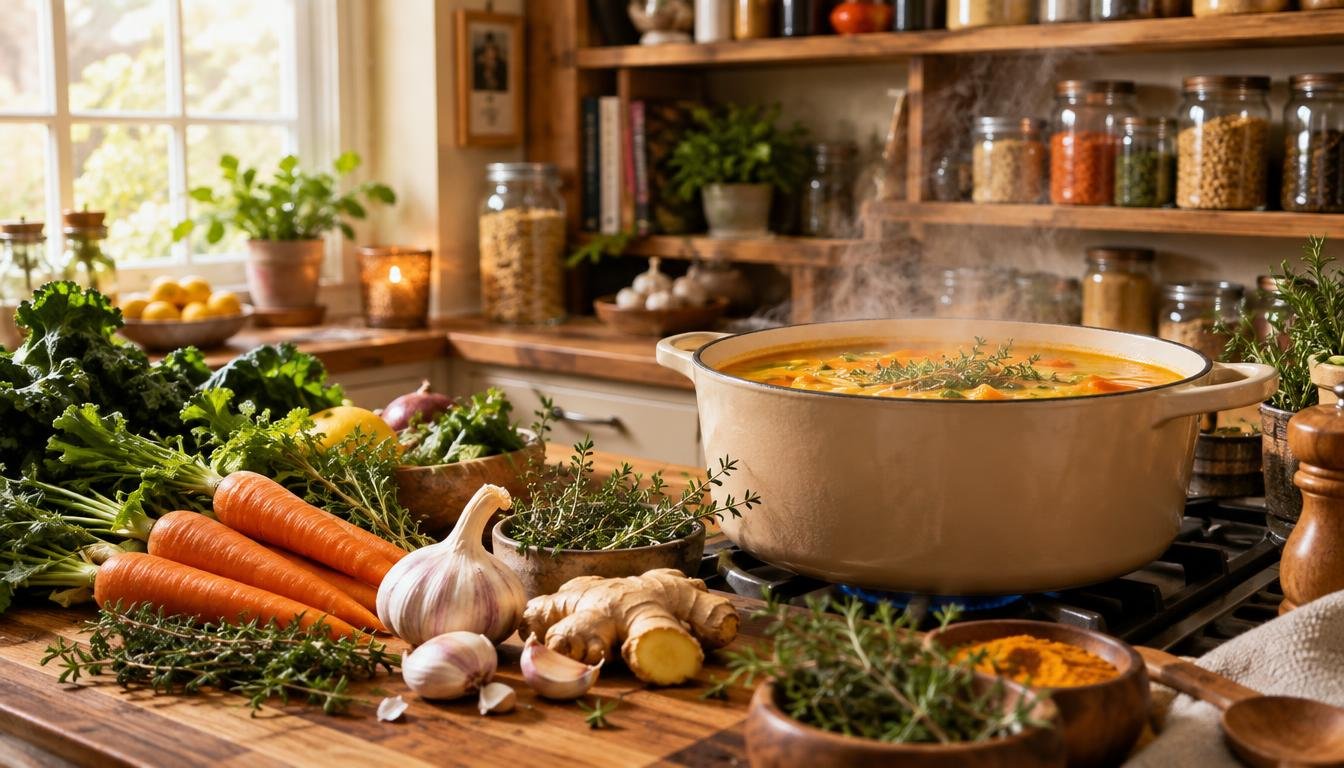
What if your kitchen cabinet already holds what you need for this year’s cold and flu season?
I’ve spent years testing which pantry staples help my family stay well when sniffles move through our home.
Each autumn, I restock shelves with nutrients and spices that support a strong immune system.
I trust these choices, rather than wishful claims from wellness blogs.
This guide shares my favorite immunity-boosting ingredients and soup recipes to help you stay healthy, cozy, and nourished all season.
This guide is part pantry checklist and part cookbook. I’ll show you what to stock, why foods matter, and three favorite healing soups.
Grab a mug of tea, and let’s prepare your kitchen for whatever winter brings.
Key Takeaways
- Stocking a few core pantry staples makes it easy to whip up nourishing meals during cold and flu season.
- Certain spices and nutrients, like ginger, garlic, and vitamin C-rich foods, offer real support for your body’s defenses.
- Simple, warming soups are one of the easiest ways to pack wellness-supporting ingredients into a single bowl.
- This guide includes three tested soup recipes you can start cooking tonight.
- A well-prepared kitchen helps you feel more confident and less stressed when winter illness strikes.
- Small, consistent food choices often matter more than any single “superfood.”
How Nutrient-Rich Foods Support Immune Function
Nutrient-rich foods, including immune system strengthening foods, give your body vitamins, minerals, and antioxidants. These nutrients help make and control immune cells, calm inflammation, and protect cells from oxidative stress. What you eat shapes how well your body responds when germs attack.
I learned the hard way that a diet low in key nutrients can leave your immune system running on empty. Without enough vitamin C, zinc, or antioxidants, your body may struggle to make white blood cells needed to fight germs. So, I encourage people to choose food first, not supplements, when they want to feel strongest.
Whole foods offer benefits that a pill cannot replicate. They provide a complex mix of nutrients that work together, rather than isolated compounds.
Immune system strengthening foods like leafy greens, citrus fruits, and lean proteins provide nutrients, fiber, water, and plant compounds. These additions help your body absorb and use those nutrients more effectively.
That is why soup made with immune system strengthening foods is my go-to meal during cold and flu season. One pot can combine vegetables, protein, herbs, and broth, packing dozens of immune-supporting nutrients into one comforting, easy-to-digest bowl.
Here is a quick look at how different nutrient groups support a stronger immune response:
| Nutrient Group | Immune Role | Food Sources |
|---|---|---|
| Vitamins (C, D, A) | Support immune cell production and strengthen barrier tissues | Citrus, bell peppers, sweet potatoes |
| Minerals (Zinc, Selenium) | Activate enzymes that regulate immune cell activity | Pumpkin seeds, lentils, mushrooms |
| Antioxidants (Polyphenols) | Neutralize free radicals and lower chronic inflammation | Berries, garlic, leafy greens |
| Protein (Amino Acids) | Build antibodies and repair immune cell structures | Chicken, beans, eggs |
When I build soups around these four nutrient groups, I know I am giving my body tools to stay resilient. It is more than a warm meal; it is a strategy.
Essential Immune-Supporting Nutrients (Vitamin C, Zinc, Antioxidants)
Let’s focus on the nutrients doing the most work in a steaming bowl of soup. Three stand out, and I add each one whenever I cook. Once I learned their roles, choosing vitamin-rich soup ingredients felt easy instead of uncertain.
These nutrients work together. Vitamin C fuels immune cells, zinc helps them communicate, and antioxidants calm inflammation after your body fights a bug. Together, they make simple soup a useful wellness tool.
Vitamin C: Your First Line of Defense
Vitamin C helps produce white blood cells, which your immune system uses to fight infection. Without enough vitamin C, your body may struggle during cold and flu season.
I add bright, acidic ingredients to my broths for this reason. Citrus zest, diced bell peppers, and crushed tomatoes provide vitamin C without overpowering the flavor.
These ingredients also brighten soup that has simmered for hours. Adding citrus before serving preserves more vitamin C because heat can break it down.
https://www.youtube.com/watch?v=giN8nNaK7lo
Zinc: The Mineral That Powers Immune Cells
Zinc gets less attention than vitamin C, but it remains just as important. This mineral helps immune cells send signals, keeping your defenses coordinated and ready to respond.
Low zinc levels link to weaker immune responses and longer recovery times. Several pantry staples can help maintain your zinc levels with little effort.
- Beans and lentils – affordable, shelf-stable, and easy to toss into any soup base
- Pumpkin seeds – a crunchy garnish that adds texture and a zinc boost
- Chickpeas – great for thickening soups while adding protein and minerals
I always keep canned beans and pumpkin seeds on hand. They are favorite vitamin-rich soup ingredients when I want extra immune support without another grocery trip.
Antioxidants: Fighting Free Radicals and Inflammation
Antioxidants protect cells from free radicals, unstable molecules that build up during illness, stress, and daily life. When free radicals accumulate, they can trigger inflammation, worsening symptoms and slowing recovery.
Colorful vegetables, berries, and fresh herbs provide many protective compounds. I add kale, carrots, or berries to sweeter soups for an extra antioxidant boost.
Parsley, cilantro, and basil also contain surprising amounts of antioxidants. Stirring them in fresh keeps their nutrients intact and adds an aromatic finish.
| Nutrient | Soup-Friendly Sources | Primary Immune Benefit |
|---|---|---|
| Vitamin C | Citrus zest, bell peppers, tomatoes | Boosts white blood cell production |
| Zinc | Beans, lentils, pumpkin seeds | Supports immune cell communication |
| Antioxidants | Kale, berries, fresh herbs | Reduces inflammation and cell damage |
Remembering these nutrient groups makes grocery shopping simpler. When I stock these three categories, I build soups that taste good and support my body when needed.
Immune-Boosting Herbs and Spices to Stock in Your Kitchen
On most days, my kitchen holds four or five spices at the front, ready to support my health. These immune-boosting herbs and spices are not only for flavor, though they add plenty. Each one contains compounds that may support my body when I need help.
I stock my spice drawer with purpose, not habit. When cold season arrives, I reach for these jars before anything else. Here are my go-to picks and the reasons they have a permanent place in my pantry.
Ginger for Soothing and Circulation
Ginger is a kitchen essential for good reason. This warming root gets my blood moving and quickly settles an upset stomach.
Last winter, I sipped ginger-infused broth during a rough cold. Relief came within minutes as warmth spread through my chest and eased the daylong tightness.
Many vegan soup recipes point out that ginger and turmeric “help soothe sore throats, congestion, and belly aches.”
That matches my own experience, so I never let my ginger supply run low. I add fresh pieces to broths, teas, and stir-fries when a scratchy throat begins.
Turmeric for Anti-Inflammatory Power
Turmeric adds strong anti-inflammatory power through curcumin, its active compound. People have used this golden spice in traditional medicine for centuries, and modern research supports much of that wisdom.
During flu season, I stir a half-teaspoon into almost every soup I make. Its mild flavor does not overpower other ingredients, while its benefits run surprisingly deep.
Curcumin calms inflammation throughout the body, which may ease joint aches and lingering fatigue. Adding a pinch of black pepper with turmeric helps your body absorb curcumin.
Garlic for Natural Antimicrobial Support
Garlic may be the hardest-working ingredient in my kitchen. This pungent bulb contains allicin, a compound known for natural antimicrobial properties.
When I feel something coming on, I add a few extra cloves to my pot. My family teases me, but I prefer too much garlic when my immune system needs support.
Raw garlic offers the strongest benefits, though cooked garlic still provides plenty of support. I add minced garlic near the end of cooking to preserve more helpful compounds.
Cinnamon and Other Warming Spices
Cinnamon, paprika, and black pepper complete my well-stocked spice drawer. Each adds wellness benefits and cozy flavor to soups, stews, and morning oatmeal.
Cinnamon contains antioxidants that help fight cell damage from daily stress and environmental exposure. Paprika provides a gentle dose of vitamin A and a smoky flavor.
Black pepper does more than add heat to food. It helps your body absorb curcumin and plays an important role among my favorite immune-boosting herbs and spices.
| Spice | Active Compound | Primary Benefit | Easy Way to Use |
|---|---|---|---|
| Ginger | Gingerol | Soothes throat, aids circulation | Add fresh to broths or teas |
| Turmeric | Curcumin | Reduces inflammation | Stir into soup with black pepper |
| Garlic | Allicin | Antimicrobial support | Mince and add near end of cooking |
| Cinnamon | Cinnamaldehyde | Antioxidant protection | Sprinkle into oatmeal or stews |
Pantry Staples to Keep Stocked Year-Round
A reliable immunity pantry needs no exotic ingredients. I keep a few smart, versatile staples nearby.
When I open my cabinets, I know what I have. These four categories form the backbone of most soup recipes, especially when I need something nourishing quickly.
Think of this as a grocery list to screenshot before your next shopping trip.
Broths, Stocks, and Bouillon
I keep chicken and vegetable broth on my shelf. Chicken broth adds rich, savory depth, while vegetable broth suits lighter, plant-based meals.
Keeping both means I always have a soup base. Low-sodium versions let me control the salt, making the final dish healthier.
Bouillon cubes or paste are my backup. They take little space and last for months, making them ideal for last-minute soup nights.
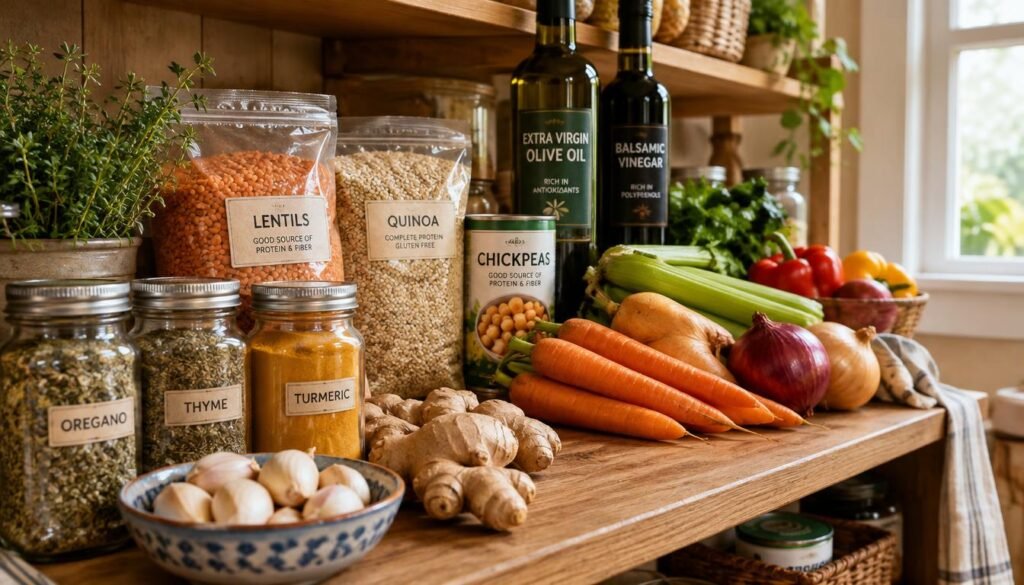
Canned Beans, Lentils, and Vegetables
Canned pinto beans, chickpeas, and diced tomatoes rank among my most-used pantry items. They turn odds and ends into a filling, protein-packed soup within thirty minutes.
My favorite vegan soup recipe relies on exactly this combination: vegetable broth, canned pinto beans, and a few pantry seasonings. It proves that a well-stocked pantry can create a nourishing, immune-supporting meal with almost no prep work.
Canned lentils and mixed vegetables complete the lineup. They provide fiber, plant protein, and extra vitamins without a store trip.
“A well-stocked pantry is the first step toward a home-cooked meal, no matter how busy the week gets.”
Whole Grains and Noodles
Rice, quinoa, and egg noodles are my go-to additions for a complete, satisfying soup. Quinoa adds extra protein and a pleasant, nutty bite.
Egg noodles add familiar comfort-food texture, especially during cold and flu season. Brown rice offers more fiber than white rice, helping me stay full longer.
I keep a mix of these grains on hand. This lets me change the soup based on my mood or its needs.
Healthy Fats and Oils
A drizzle of olive oil at the end adds more than flavor. It also helps my body absorb fat-soluble nutrients like vitamin A and vitamin E from soup vegetables.
Coconut oil is another staple I use, especially with warming spices like turmeric and ginger. Its mild sweetness pairs well with these immune-supporting flavors.
Stocking these oils helps me get the most nutritional value from every bowl.
| Category | Example Staples | Shelf Life | Best Soup Use |
|---|---|---|---|
| Broths & Stocks | Chicken broth, vegetable broth, bouillon cubes | 1–2 years unopened | Base for any soup recipe |
| Canned Beans & Vegetables | Pinto beans, chickpeas, diced tomatoes | 2–5 years | Protein and fiber boost |
| Whole Grains & Noodles | Brown rice, quinoa, egg noodles | 6 months–2 years | Heartier, more filling soups |
| Healthy Fats & Oils | Olive oil, coconut oil | 1–2 years | Nutrient absorption and flavor |
My Favorite Immunity Boosting Ingredients and Soup Recipes for Wellness
Soup season is my favorite time of year, especially when sniffles and scratchy throats spread. I browse cozy soup photos on social media and count the days until my first pot simmers. Nothing matches the first spoonful of something warm and nourishing.
I’m not talking about canned soup loaded with sodium and mystery ingredients. Like the registered dietitians whose soup roundups I follow, I choose real, nutrient-dense ingredients over empty-calorie comfort food. Each bowl offers healing power, not only nostalgic comfort.
That means healthy soup recipes for immunity use the building blocks we’ve covered already. These include vitamin C-rich vegetables, zinc-packed proteins, and antioxidant-loaded herbs and spices. I add warming ginger, anti-inflammatory turmeric, and antimicrobial garlic. Together, these ingredients taste great while supporting my body.
My pantry staples play a starring role, too. Good broth, canned beans, whole grains, and healthy fats make fresh ingredients a complete, satisfying meal. I keep them stocked year-round, so I’m never more than thirty minutes from a pot of wellness soup recipes I trust.
Over the years, I’ve developed a short list of go-to recipes I return to often. These are not fussy, restaurant-style soups that take all day. They are simple, forgiving, and made with ingredients I almost always have stocked.
Next, I’m sharing three absolute favorites. They are golden turmeric chicken soup, garlic ginger vegetable broth, and lemon zest white bean and kale soup. These delicious, healing bowls combine ideas; I repeat them each cold and flu season, and they may become kitchen staples.
3 Healing Broth and Soup Recipes for Cold & Flu Season
I’ve tested dozens of soup combinations over the years. These three recipes are my favorite cold and flu fighting soups for sick days.
Each one uses simple, affordable ingredients from the immunity pantry mentioned earlier. None needs fancy techniques—only a pot, a cutting board, and patience while ingredients simmer. These are my go-to cold and flu fighting soups, and I keep their ingredients on hand all winter.
Recipe 1: Golden Turmeric Chicken Soup
This is my classic sick-day soup. Turmeric gives it a golden color, while chicken provides protein to help your body repair itself as you rest.
Ingredients
- 2 tablespoons olive oil
- 1 pound boneless chicken thighs, cubed
- 1 yellow onion, diced
- 3 carrots, sliced
- 3 celery stalks, sliced
- 4 cloves garlic, minced
- 1 tablespoon fresh grated ginger
- 1 tablespoon ground turmeric
- 6 cups chicken broth
- Salt and black pepper to taste
- Fresh parsley for garnish
Instructions
- Heat the olive oil in a large pot over medium heat.
- Add the chicken and cook until lightly browned on all sides.
- Stir in the onion, carrots, and celery, then cook for about five minutes.
- Add the garlic, ginger, and turmeric, stirring until fragrant.
- Pour in the broth, bring to a boil, then reduce heat and simmer for 20 minutes.
- Season with salt and pepper, top with parsley, and serve warm.
Once it simmers, the kitchen smells like warm spice and comfort. That aroma is perfect when my throat feels scratchy.
Recipe 2: Garlic Ginger Vegetable Broth Soup
This soup came from a simple vegan recipe I love. Chop your vegetables, add them to broth, and let everything simmer together. There is no sautéing step, making it perfect for a low-energy sick day.
Ingredients
- 8 cups vegetable broth
- 1 onion, chopped
- 2 carrots, chopped
- 2 zucchini, chopped
- 1 cup mushrooms, sliced
- 6 cloves garlic, minced
- 2 tablespoons fresh grated ginger
- 1 teaspoon garlic powder
- 1 teaspoon ground turmeric
- 2 tablespoons low-sodium soy sauce
- Salt and pepper to taste
Instructions
- Combine all the chopped vegetables, garlic, and ginger in a large pot.
- Pour the vegetable broth over everything.
- Stir in the garlic powder, turmeric, and soy sauce.
- Bring to a boil, then reduce heat and simmer for 25 to 30 minutes, until the vegetables turn tender.
- Season with salt and pepper to taste.
- Ladle into bowls and serve warm.
This version takes almost no hands-on effort. You chop, simmer, and have dinner ready.
Recipe 3: Lemon Zest White Bean and Kale Soup
Bright lemon juice gives this soup a fresh vitamin C boost, while white beans and kale add fiber, iron, and plant protein. It is one of my favorite cold and flu fighting soups when I need a light but filling meal.
Ingredients
- 2 tablespoons olive oil
- 1 onion, diced
- 3 cloves garlic, minced
- 6 cups vegetable broth
- 2 cans (15 ounces each) white beans, drained and rinsed
- 4 cups chopped kale
- Zest and juice of 1 lemon
- 1 teaspoon dried thyme
- Salt and pepper to taste
Instructions
- Heat the olive oil in a pot and sauté the onion and garlic until fragrant, about three minutes.
- Pour in the vegetable broth, then add the white beans and thyme.
- Let the soup simmer for 15 minutes.
- Stir in the kale and cook until wilted, roughly five minutes.
- Remove the pot from heat and stir in the lemon zest and juice.
- Season with salt and pepper, then serve right away.
Here is a quick side-by-side look at all three recipes. Use it to choose the right one for how you feel today.
| Recipe | Total Time | Protein Source | Standout Immune Booster |
|---|---|---|---|
| Golden Turmeric Chicken Soup | 35 minutes | Chicken thighs | Turmeric and fresh ginger |
| Garlic Ginger Vegetable Broth Soup | 40 minutes | Mushrooms | Six cloves of garlic |
| Lemon Zest White Bean and Kale Soup | 30 minutes | White beans | Fresh lemon zest and juice |
Any of these cold and flu fighting soups fits a weekly rotation, not just a sick-day scramble. I often make a double batch, so something is ready when the first sniffle appears.
Anti-Inflammatory Soup Additions for Extra Healing Power
Every soup I make starts with a strong base. I add extras that fight inflammation in several ways. A few smart add-ins can turn any bowl into one of the most effective anti-inflammatory soup recipes in my rotation. These boosters pair well with the three recipes I shared earlier or any soup in your fridge.
Bone Broth Boosters
Swapping regular stock for bone broth gives your soup a major nutritional upgrade. Bone broth contains collagen and amino acids like glycine and proline, which support gut lining repair and joint comfort. I often simmer chicken or beef bones for 12 to 24 hours to draw out as many compounds as possible.
When time is tight, store-bought bone broth works well. Choose brands with short ingredient lists and no added sugar. Even one cup adds body and real healing power to vegetable soup.
Mushroom Power-Ups
Mushrooms add more than earthy flavor. Varieties like shiitake and maitake contain beta-glucans, natural compounds that support immune cell activity and may calm inflammation throughout the body.
I add a generous handful of sliced mushrooms during the last 15 minutes of cooking. This keeps their texture firm while their flavor blends into the broth. Maitake, often called “hen of the woods,” has a hearty bite that holds up well in soup.
Fresh Herb Garnishes
A sprinkle of fresh herbs before serving does more than brighten a bowl’s appearance. Parsley, cilantro, and dill contain antioxidants that help the body fight free radicals and support natural immune defenses.
I chop a small handful of any herb I have on hand and scatter it over each bowl before eating. This simple step adds a fresh finish. It also makes an already nourishing dish one of the more nutrient-dense anti-inflammatory soup recipes you can make at home.
Quick Tips for Maximizing Nutrient Retention When Cooking Soup
Filling my pot with vitamin-packed vegetables and healing spices means little if cooking destroys their nutrients. I use simple habits to keep nutrient-dense immunity soups as powerful as their ingredients promise.
These tricks need no fancy equipment or extra time. They require attention at the right moments during cooking.
Cook Low and Slow
A rolling boil may get dinner ready faster, but it has a cost. High heat breaks down heat-sensitive vitamins like vitamin C and several B vitamins much faster than a gentle simmer does.
I bring my soup to a boil once, then lower the heat right away. A soft, steady simmer still softens vegetables and melds flavors beautifully.
This method protects the nutritional value I want from the soup.
Add Delicate Ingredients Last
Some ingredients cannot handle a long simmer. Leafy greens, fresh herbs, and citrus juice lose much of their nutritional power when cooked too long.
I stir them in during the final few minutes, like adding fresh parsley before serving. This timing preserves far more vitamin C and other delicate compounds.
Here is a quick reference I keep inside my kitchen cabinet for timing these additions correctly:
| Ingredient | Best Time to Add | Why It Matters |
|---|---|---|
| Leafy greens (spinach, kale) | Last 1-2 minutes | Preserves vitamin C and folate |
| Fresh herbs (parsley, cilantro) | Right before serving | Protects volatile oils and antioxidants |
| Citrus juice (lemon, lime) | Off heat, just before eating | Keeps vitamin C intact |
| Minced garlic | Last 5 minutes | Retains antimicrobial allicin compounds |
Store and Reheat Properly
Nutrient retention continues after cooking. I cool leftovers quickly, within about two hours, then place them in airtight containers in the fridge or freezer.
Soup left out too long invites bacterial growth and speeds nutrient breakdown. When I reheat it, I avoid a high-powered microwave blast.
Gentle stovetop reheating over medium-low heat warms soup evenly without overcooking delicate ingredients added last. These habits keep my nutrient-dense immunity soups just as beneficial on day three as on the night I made them.
Natural Immune Defense Strategies Beyond Soup
My immune system thrives on more than soup; it depends on simple habits I practice daily. Nutrient-rich broths and herbs provide a strong base, but sleep, hydration, and stress control build resilience. I think of these habits as natural immunity boosters working quietly in the background.
Small, steady choices add up over time. Here are the daily habits I rely on most.
Prioritize Quality Sleep
I never underestimate a good night’s rest. While I sleep, my body produces and releases proteins called cytokines, which fight infection and inflammation.
How much sleep do I need to support my immune system? Most adults need 7 to 9 hours each night. Losing sleep for even a few nights can lower infection-fighting cells in my blood.
I keep a consistent bedtime, dim the lights an hour before sleep, and avoid screens when possible. These changes help my body rest and repair.
Stay Hydrated Throughout the Day
Water supports immune health more than many people realize. It moves lymph fluid through my body, carrying infection-fighting cells where they are needed.
Good hydration helps my kidneys remove toxins and waste. I count daily bowls of broth and soup toward my fluid goals because they provide hydration and nutrients.
I aim for at least eight cups of fluid daily, especially when I am active or the weather is warm.
Support Gut Health with Probiotics
About 70% of my immune system lives in my gut, so I make gut health a daily priority. I eat fermented foods like yogurt, kefir, and kimchi to balance my gut bacteria.
Do probiotics really help prevent colds? Research suggests some probiotic strains can shorten colds and reduce how often I catch them. I do not view probiotics as a cure-all, but they are another natural immunity booster for my routine.
Manage Stress Levels
Chronic stress can weaken my immune defenses. It raises cortisol levels, which may suppress protective white blood cells over time.
I manage stress with simple habits: a short walk outside, five minutes of deep breathing, or a break from my desk. These moments reset my nervous system and prevent stress from building.
- Sleep: Aim for 7 to 9 hours nightly
- Hydration: Drink water and broth-based soups consistently
- Gut health: Add fermented foods to meals regularly
- Stress relief: Practice deep breathing or short walks daily
These habits do not require a major lifestyle change. Small, steady choices build immune resilience over time and complement every nourishing bowl of soup I make.
Simple Meal Prep Ideas Using Your Immunity Pantry
Life gets busy, and a freezer full of homemade soup can become a lifesaver.
A little planning turns my immunity pantry into a reliable safety net. When I feel run down, I grab food I made ahead instead of ordering takeout. These two habits help me stay consistent during hectic weeks.
Batch-Cook and Freeze Soup Portions
Whenever I make soup, I double the recipe on purpose. I keep one batch in the fridge for dinner and freeze the rest in single-serving containers.
This habit gives me a healing meal as soon as a sniffle starts. My Lemon Zest White Bean and Kale Soup keeps especially well this way. The recipe says leftovers stay fresh in the fridge for up to a week or can be frozen later.
I use glass jars or freezer-safe bags, leaving room at the top for expansion. Labeling each container with the date helps me rotate my stash and avoid waste.
Build a Soup Starter Kit for Busy Weeks
During hectic weeks, I put together a simple starter kit. I keep dried herbs, spices, canned beans, and broth together in my pantry.
When I cook, everything I need is already grouped together. This step turns a nourishing soup into a fifteen-minute task instead of a full grocery run.
My grab-and-go kit usually includes:
- A measured packet of turmeric, ginger, and garlic powder
- One can of beans or lentils, rinsed and ready
- A quart of stock or a few bouillon cubes
- A handful of dried greens or a small bag of frozen vegetables
This habit ensures I have the tools to make something warm and immune-supportive, even on my busiest days.
Conclusion
A well-stocked immunity pantry helps you face cold and flu season with less worry and better preparation. With ginger, turmeric, garlic, and good broth ready, I found soup-making felt less like work and more like self-care.
The nutrient-rich ingredients, warming herbs and spices, and simple recipes here cannot replace a doctor’s visit when you’re truly sick. They provide a practical, comforting way to support your body’s natural defenses while you rest and recover.
That is the real power of cooking with intention. A pot of golden turmeric chicken soup or lemon zest white bean and kale soup does more than satisfy hunger. It delivers vitamin C, zinc, and antioxidants exactly when your immune system needs backup.
My challenge to you is simple: pick one recipe from this guide and make it this week. Check your pantry and restock missing items, such as bone broth, canned beans, or a fresh bulb of garlic. Small changes like these add up over an entire season.
Cooking for wellness does not require perfection or fancy ingredients. It takes some planning and a few staples you can always count on. Here is to a healthier, soup-filled season ahead.