
What if eating well during a hectic workweek had little to do with willpower?
I once thought clean eating was impossible between my 7 a.m. train and back-to-back meetings. My kitchen, tucked into a cramped city apartment, barely fit a cutting board or space for elaborate cooking.
Does that sound familiar?
If you balance tight deadlines, long commutes, and a real wish to fuel your body better, you are not alone. I have spent years testing shortcuts, batch cooking tricks, and smart grocery hacks for packed calendars.
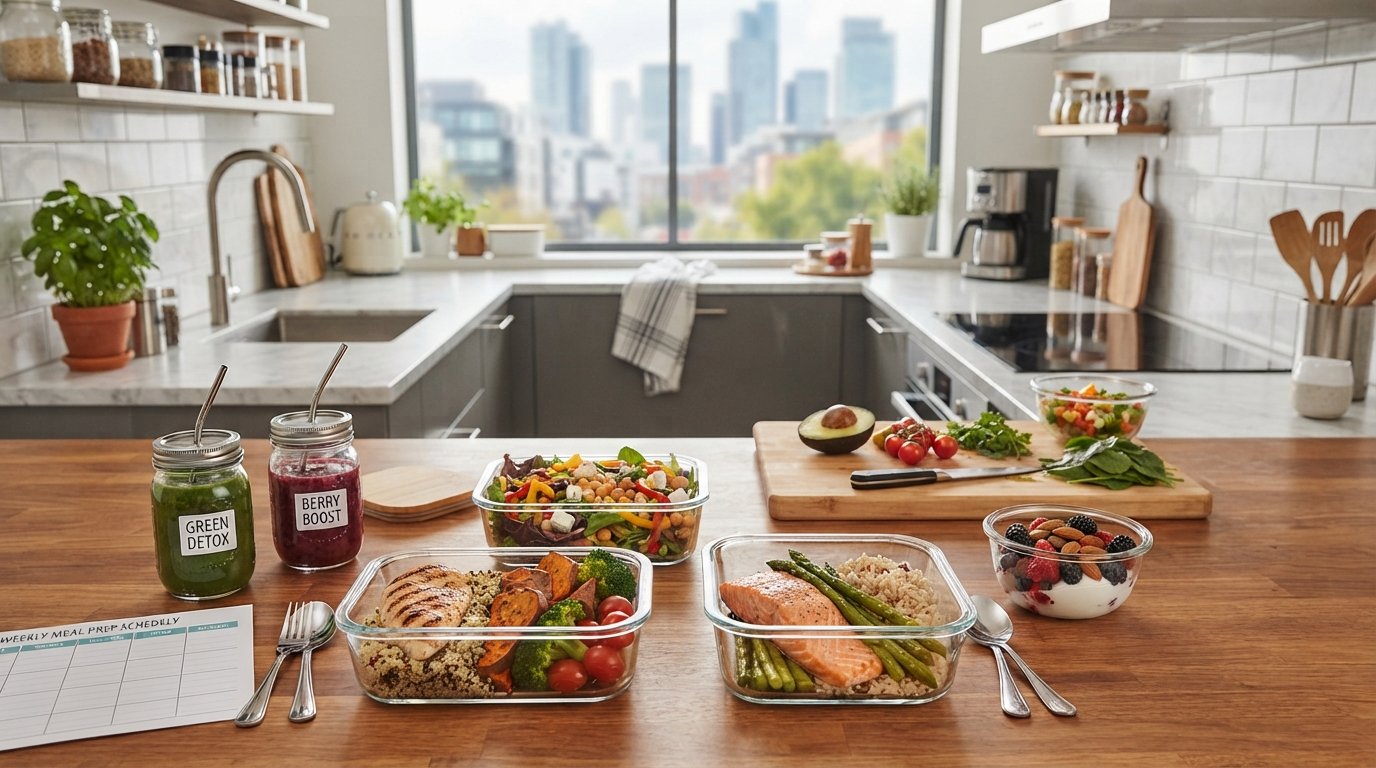
These healthy meal prep ideas for busy urban professionals come from my chaotic routine. They include quick breakfasts, portable high-protein lunches, grocery delivery shortcuts, and tools for easier weeknight cooking.
I will also cover budget-friendly shopping tips that support your wallet and waistline during hectic weeks.
Let’s turn your kitchen chaos into a routine that fits your demanding, fast-paced life.
Key Takeaways
- Batch cooking on weekends can save hours during your workweek.
- Portable, high-protein lunches keep your energy steady between meetings.
- Smart grocery delivery services cut shopping time dramatically.
- Simple breakfast routines remove decision fatigue every morning.
- The right storage tools extend freshness and reduce food waste.
- Budget-friendly shopping strategies make clean eating sustainable long-term.
Time-Saving Healthy Eating Strategies for Fast-Paced Lifestyles
For busy professionals, easy healthy meal prep recipes rely on three habits: batch cooking, repeatable recipes, and smart shortcuts. Choose one prep day and a few go-to meals to cut weekday cooking time by more than half.
Here is the quick answer before I explain each strategy in this guide:
- Batch cook once — prepare proteins, grains, and veggies for three to five days in a single session.
- Repeat a simple rotation — rely on easy healthy meal prep recipes you can make on autopilot.
- Double your dinners — turn time-saving weeknight dinners into next-day lunches without extra effort.
- Pre-cut and pre-portion — buy washed greens and chopped veggies to skip prep work entirely.
This system works because it removes decision fatigue. Instead of choosing dinner each night, you grab food that is already ready.
| Strategy | Time Saved Weekly | Best For |
|---|---|---|
| Batch cooking | 3-4 hours | Office workers with tight lunch breaks |
| Repeatable recipe rotation | 1-2 hours | People who hate daily menu planning |
| Doubling dinners | 2 hours | Solo professionals eating alone |
| Pre-cut ingredients | 30-45 minutes | Tiny city kitchens with less counter space |
The sections ahead explain each strategy step by step. First, learn how to batch-cook three days of meals in under an hour for time-saving weeknight dinners.
Healthy Meal Prep Ideas for Busy Urban Professionals: Why This Approach Works
I did not start meal prepping because I loved cooking. I started because my wallet and waistline demanded change.
After too many fast-food dinners following ten-hour workdays, I knew something had to change. Then I discovered how powerful healthy meal prep ideas for busy urban professionals could be for city life, not merely as a passing trend. It offered a real system that fit my daily routine.
You Save Hours Every Week
Each weekday morning, I spent fifteen minutes deciding what to eat. Across lunch and dinner, that wasted nearly two hours weekly through decision fatigue.
Meal prep removes that mental load. I plan once, cook once, and let the rest of my week run on autopilot. No late-night grocery runs or desperate delivery-app searches follow when I am too tired to think.
You Stop Overspending on Takeout
I finally calculated my spending, and the results shocked me. Spending $15 daily on lunch delivery costs roughly $300 monthly, or more than $3,600 yearly, for one meal.
I would rather put that money toward rent, savings, or an actual vacation. A few hours of meal prep each weekend now saves hundreds of dollars monthly without sacrificing good food.
You Actually Stick to Your Health Goals
Willpower fades quickly after a long shift. I know because I have stood before my fridge at 8 p.m., exhausted. I was ready to order whatever appeared first in an app.
Having ready-to-eat, balanced meals waiting removes that temptation. Consistency stops feeling like discipline and starts feeling automatic. That is why meal prep lasts when other healthy habits do not.
How to Batch-Cook 3 Days of Healthy Meals in Under 1 Hour
Batch cooking for beginners can stay simple, with no complex recipes or long hours in the kitchen. My method uses four steps and takes about one hour. Afterward, I have three days of healthy meals ready to grab and go.
That timeline sounds ambitious, but it works once you build a system. Here is exactly how I do it.
Plan a Simple, Repeatable Menu
The first rule of batch cooking for beginners is to keep the menu simple. I choose two or three proteins, a couple of grains, and several vegetables that roast well. That short list is all I need.
Rather than choose one full recipe, I prepare each component separately: protein, grain, vegetable, and sauce. Then I mix and match them buffet-style throughout the week. This keeps meals interesting without adding cooking time.
This approach also reduces decision fatigue quickly. When each piece is cooked, lunch becomes an assembly job instead of a project.
| Component | Example Choices | Cook Method | Prep Time |
|---|---|---|---|
| Protein | Chicken thighs, ground turkey, baked tofu | Sheet pan or slow cooker | 20–25 minutes |
| Grain | Brown rice, quinoa, farro | Stovetop or rice cooker | 15–20 minutes |
| Vegetables | Broccoli, bell peppers, sweet potatoes | Oven roasting | 20–25 minutes |
| Sauce or Base | Tomato mince base, pesto, tahini dressing | Stovetop simmer | 10–15 minutes |
Prep All Ingredients Before You Cook
Before turning on a burner, I wash, chop, and measure everything. Chefs call this mise en place, and it helps me meet the one-hour goal.
I set out my cutting board and every ingredient. Chopping all my vegetables at once is faster than stopping between cooking steps.
This stage takes about fifteen minutes, but it saves much more time later. Once everything is ready, cooking becomes almost hands-off.
Cook Proteins, Grains, and Veggies Simultaneously
Here is where the biggest time savings happen. Instead of cooking one component at a time, I use three methods at once.
Proteins go into a slow cooker or sheet pan in the oven. Grains simmer on the stovetop, while vegetables roast beside the protein. Everything finishes together with almost no extra effort.
A slow cooker or Instant Pot makes batch cooking for beginners even easier. I add chicken or beans, set a timer, and walk away while grains and vegetables cook.
Most efficient meal preps take about two hours, less than 2% of your entire week. Once you find your rhythm, many sessions move closer to the one-hour goal.
I also like making a large batch of a versatile base, such as seasoned mince sauce. Blogger Lauren Nash built her meal-prep style around this idea. One flavorful base becomes tacos, pasta, and grain bowls throughout the week.
“Make one big batch of a versatile base and let it transform into three or four completely different meals.”
Portion and Store for Grab-and-Go Ease
When everything is cooked, I portion it into containers right away. I keep proteins, grains, and vegetables in separate sections for fresh combinations each day.
For sauces and bases, I use a SouperCubes-style silicone tray to freeze individual portions. Each cube thaws in minutes and upgrades a bowl of rice or roasted vegetables.
I also freeze half of whatever I make. This reduces food waste and keeps me from eating the same meal three days straight.
Labeling containers with the date takes ten extra seconds and prevents later guesswork. This method takes four steps, one hour, and three days of food handled.
4 Portable, High-Protein Lunch and Snack Ideas
Having reliable, protein-packed lunches ready to grab changed my workday routine. I used to dread the eleven o’clock scramble and found takeout menus too tempting. Now, I rotate four recipes that keep me full, focused, and away from delivery apps.
Each one takes under fifteen minutes to assemble and travels well in a bag, backpack, or bike basket. They are not fancy restaurant dishes, but simple, repeatable formulas for real life. They also support consistent high-protein meal prep for the week.
1. Mason Jar Salads with Grilled Chicken
My mason jar salads nearly assemble themselves and stay fresh for up to four days in the fridge. The secret is layering ingredients correctly, so nothing gets soggy before lunch.
- Layer 1: Dressing on the bottom
- Layer 2: Firm veggies like tomatoes, cucumbers, or bell peppers
- Layer 3: Grilled chicken and a grain such as quinoa or brown rice
- Layer 4: Leafy greens on top
At lunchtime, I shake the jar and pour everything into a bowl. The greens stay crisp because they avoid the dressing until I eat.
2. Turkey and Hummus Wrap Roll-Ups
These roll-ups solve the problem of boring sandwich lunches. I spread hummus on a whole-wheat tortilla, then add sliced turkey, spinach, and shredded carrots. Finally, I roll it tightly and slice it into pinwheels.
A batch takes about ten minutes, and I can prepare four or five wraps for the whole week. The bite-sized pieces also make a great snack between meetings.
3. Greek Yogurt Protein Bowls
Greek yogurt protein bowls work for breakfast or lunch, which makes them flexible. I start with a cup of plain Greek yogurt, which provides around twenty grams of protein.
Then I add berries, a handful of granola, and honey. For extra staying power, I sometimes mix in protein powder or nut butter.
I keep the toppings in a separate container, so the granola stays crunchy until lunchtime. This small trick improves the texture.
4. Edamame and Hard-Boiled Egg Snack Packs
When I need food without reheating, I choose edamame and hard-boiled egg snack packs. On Sunday, I boil a dozen eggs and steam a big bag of edamame. Then I portion both into small containers with sea salt.
This combination provides close to fifteen grams of protein per serving. It stays fine at room temperature for a few hours. It works well during an afternoon slump or between back-to-back calls.
These four recipes regularly rotate through my fridge, covering breakfast, lunch, and snacks with little extra effort. They show that quick work lunch ideas do not have to be boring or unhealthy.
Once you add a few options to your routine, high-protein meal prep for the week feels less like a chore. Soon, it becomes second nature.
Grab-and-Go Breakfast Prep for Early Mornings
Hitting snooze too often no longer means skipping breakfast or buying a costly pastry on my way to the office. Grab-and-go breakfast prep has saved my mornings many times. It costs a fraction of the coffee shop muffins I used to buy.
Simple staples, such as oats, eggs, and yogurt, make this prep affordable and filling. I can stock my fridge with a week’s breakfasts for less than two takeout sandwiches.
These three options are my regular rotation. Each takes minutes to prepare and needs no work during my morning rush.
Overnight Oats in Reusable Jars
I use half a cup of rolled oats with half a cup of milk or yogurt. A splash of water creates a looser texture. I stir in chia seeds, a drizzle of honey, and any fruit I have.
On Sunday night, I fill five reusable jars at once. I refrigerate them, and by morning, the oats are soft and creamy. I eat them cold or warm them up.
Mix-ins keep things interesting. I rotate between peanut butter and banana, cinnamon apple, and cocoa with raspberries, so each breakfast feels different.
Freezer-Friendly Egg Muffins
Egg muffins are my budget-friendly favorite because eggs remain one of the cheapest protein sources around. I whisk a dozen eggs with chopped spinach, bell peppers, and a little cheese. Then I pour the mixture into a greased muffin tin.
After twenty minutes in the oven, I let the muffins cool completely before freezing them in a single layer. Once frozen, I toss them into a bag. On hectic mornings, I reheat two or three in the microwave for about forty-five seconds.
Protein Smoothie Packs
I pre-portion spinach, frozen fruit, and a scoop of protein powder into freezer bags, one for each weekday. This removes every decision from my morning routine.
I dump a pack into the blender with milk or water and blend for thirty seconds. Then I leave with breakfast in hand. It is one of the fastest wins in my entire grab-and-go breakfast prep routine.
Here’s how these three options compare when I decide what to prepare each week:
| Breakfast Option | Prep Time | Fridge/Freezer Life | Approx. Cost Per Serving |
|---|---|---|---|
| Overnight Oats | 10 minutes for 5 jars | Up to 5 days refrigerated | $0.75 |
| Egg Muffins | 25 minutes for 12 muffins | Up to 2 months frozen | $0.60 |
| Smoothie Packs | 15 minutes for 5 bags | Up to 3 months frozen | $1.20 |
Whatever I choose, grab-and-go breakfast prep means I never skip the most important meal of the day, even when my alarm fails.
Budget-Friendly Meal Prep Groceries: Shopping Smart in the City
I stared at my grocery receipt in disbelief: one trip cost $80 for food I would eat within three days. That moment changed how I shop for budget-friendly meal prep groceries, especially because city prices rise faster than prices in almost any other place.
Now I follow a simple system that keeps my spending predictable at checkout. It relies on three habits: planning ahead, buying smart, and avoiding full prices.
Build a Weekly Staples List
My first fix was a weekly staples list that I followed like a rulebook. I borrowed this idea from budget-conscious shoppers, including college students who manage food money with weekly and monthly grocery plans.
Their approach breaks spending down to a few dollars per person each day, and mine works the same way. Every item serves at least two or three meals, so nothing goes to waste.
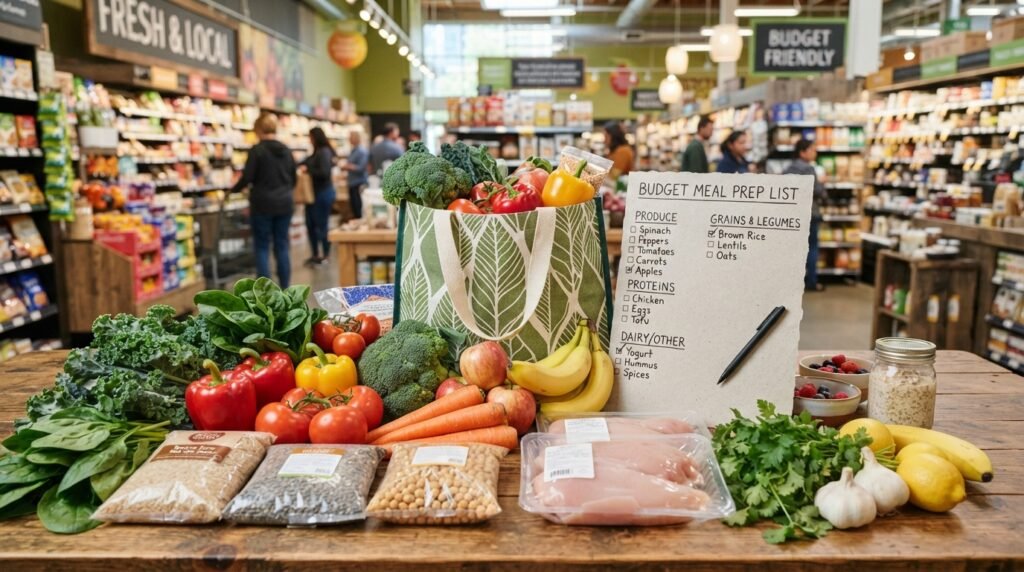
My go-to staples usually include:
- Chicken breast or thighs
- Brown rice or quinoa
- Eggs
- Frozen mixed vegetables
- Plain Greek yogurt
Having a repeatable list means I avoid wandering the aisles and making impulse buys. I know exactly what I need before entering the store.
Buy Proteins and Grains in Bulk
Buying in bulk changed my grocery bill more than any other habit. I buy family-size packs of chicken, rice, or oats, then split and freeze them into meal-size portions at home.
This approach makes budget-friendly meal prep groceries cost less than small weekly purchases. A ten-pound bag of rice, for example, costs far less per serving than tiny microwave pouches.
I also buy frozen fruit and vegetables in bulk because they last longer and cost less than fresh produce that spoils first.
Shop Sales and Store Brands Without Sacrificing Quality
I once assumed name brands were automatically better. After comparing labels, I found store brands often match that quality at a fraction of the price.
| Item | Name Brand Price | Store Brand Price |
|---|---|---|
| Chicken broth (32 oz) | $3.49 | $1.99 |
| Canned black beans | $1.89 | $0.99 |
| Olive oil (16 oz) | $8.99 | $5.49 |
| Dried pasta (16 oz) | $2.29 | $1.19 |
I also keep essentials like oils, spices, stock cubes, pasta, and rice in my pantry. I buy them only sometimes, but they season and build dozens of meals over time.
“A well-stocked pantry is the secret weapon of anyone trying to eat well on a tight budget.”
With a staples list, bulk buying, and smart swaps, I cut my weekly grocery spending significantly. I never feel like I’m eating cheap, and my wallet thanks me at checkout.
Local Grocery Delivery & Fresh Market Hacks for City Living
I spent years carrying grocery bags up four flights of stairs. Then I mixed delivery apps, weekend markets, and produce subscriptions. Now grocery shopping takes less of my weekend, even with a packed calendar and tiny kitchen.
Best Grocery Delivery Apps for Busy Schedules
Instacart and Amazon’s Prime Now are my go-to apps for ordering groceries from home. I can browse several local stores at once and usually receive everything within a few hours.
For specialty items, I use Thrive Market for pantry staples and Butcher Box for high-quality meat. Both services save me from searching multiple stores for decent ingredients.
Grocery delivery is not instant. During peak hours in big cities, shoppers book up fast, so I plan orders a day ahead to avoid disappointment.
When delivery fees feel steep, I choose in-store pickup instead. I skip long checkout lines without paying extra for personal shopping.
Farmers Markets and Co-Ops Worth Your Time
Saturday mornings are for my neighborhood farmers market. The produce tastes fresher, prices often beat grocery stores, and I support local growers directly.
Walking through a market also gives me a break from my phone and laptop. It has become a favorite part of my week, not just another errand.
Food co-ops offer membership prices on staples I buy often. I’ve found co-ops especially useful for bulk grains, nuts, and spices that could cost a fortune downtown.
Subscription Produce Boxes for Small City Kitchens
A weekly or biweekly produce box simplifies shopping when my kitchen barely fits one person. I get seasonal fruits and vegetables without wandering supermarket aisles to find what’s fresh.
These boxes also reduce food waste because portions suit one or two people. That matters when your fridge is roughly the size of a mini cooler.
On weeks when I skip the box, I use simple grocery store shortcuts instead. Pre-cut veggies and a rotisserie chicken from the deli save real prep time. I also make a quick request to the butcher counter for trimmed or portioned meat during hectic weeks.
Must-Have Meal Prep Containers and Tools for the Office
I once thought any container would work for meal prep, until soup spilled inside my work bag. Good gear protects your lunch, schedule, desk, and sanity on a busy Tuesday. After testing more brands than I can count, I chose tools that earn their place in my kitchen and commute bag.
These tools are not flashy or expensive. They are practical, durable, and made for real life in a small city kitchen each week.
Leak-Proof, Microwave-Safe Containers
Good meal prep containers for office use must handle travel, reheating, and portion control. I choose BPA-free plastic or glass containers with snap-tight lids that seal under pressure.
Divided compartments keep sauces separate from grains, so food stays fresh until lunchtime. Stackable designs save space in a crowded office fridge or narrow desk drawer at home.
Compact Tools for Tiny Kitchens
You do not need a huge kitchen to prepare a week’s meals. I use three tools: a sharp chef’s knife, one sturdy cutting board, and a small sheet pan for a standard oven.
These basics handle chopping, roasting, and portioning without crowding limited counter space. This compact setup works in a studio apartment kitchen or a full-size one.
Insulated Bags for Commuting with Food
An insulated bag keeps lunches and smoothies at a safe temperature during long subway rides or sweaty summer walks home. I look for one with a wipeable lining and room for a container plus a slim ice pack.
The best bags fold flat when empty, sliding into a backpack or tote without adding bulk to your morning commute.
Conclusion
I truly believe healthy meal prep ideas for busy urban professionals don’t need to be complicated to work. A little planning and the right storage systems make a bigger difference than any fancy diet plan ever could.
I still get asked how to stay consistent during crazy workweeks or last-minute travel. My honest answer: You don’t have to prep everything. Handling breakfasts or packing lunches a few days weekly saves money and supports better eating than grabbing takeout on autopilot.
I didn’t build these habits overnight, and you don’t need to either. Pick one idea from this guide—overnight oats, batch-grilled chicken, or a better grocery list—and try it this week. Once it feels easy, add another piece.
Small, sustainable changes are what actually stick when your schedule is packed and your energy is limited. The real secret: healthy meal prep ideas for busy urban professionals mean progress over perfection, one container at a time.
Your future self, standing in a rushed kitchen at 7 a.m., will thank you for starting small today.